
• Welcome to Photrio!
    Registration is fast and free. Join today to unlock search, see fewer ads, and access all forum features.
    Click here to sign up

Divided D23 and TMax 400, possible to push?

High Street

A
High Street

  • 0
  • 0
  • 4
Plato's Philosophy.

A
Plato's Philosophy.

  • 2
  • 2
  • 76

Recent Classifieds

Forum statistics

Threads
201,869
Messages
2,831,433
Members
100,992
Latest member
bob531
Recent bookmarks
0

simgrant

Member
Allowing Ads
Joined
Feb 3, 2015
Messages
28
Location
Melbourne, A
Format
Medium Format
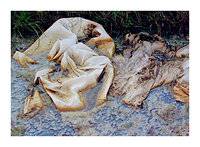
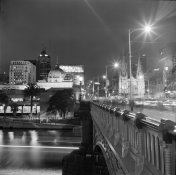
I have tried Divided D23 as per the Anchell recipe (Solution A 100g sodium sulphite, 5g metol) with 4.5g of sodium carbonate in solution B, with Fuji Acros 100 120, EI 100. I gave 3 minutes each bath continuous agitation. I was quite happy with the results, as it seems the give good shadow detail, and the highlights were overblown. I have attached two example below:

attachment.php
attachment.php


As I understand it, changing the accelerator in the second bath to a more or less active one will increase or decrease contrast, and the time in either bath affects the overall density. I read somewhere else that with this developer, bath A will develop the highlights, and bath B the shadow areas.

My question is, which of the variables would allow me to increase the EI of my film? that is, primarily increase development of the lower zones? I am wanting to see if this developer can push TMY 400 to 800 or 1600. Has anyone tried pushing with this developer? In the past I have been pushing TMax films using TMax developer using minimal agitation at 1:7 dilution, but even then highlights can be overdeveloped. I am not greatly concerned by an increase in grain.
 

Attachments

  • IMG_20150504_0043.jpg
    IMG_20150504_0043.jpg
    482.6 KB · Views: 845
  • IMG_20150504_0042.jpg
    IMG_20150504_0042.jpg
    514.2 KB · Views: 681

Bill Burk

Subscriber
Allowing Ads
Joined
Feb 9, 2010
Messages
9,471
Format
4x5 Format
simgrant,

I would say no, don't look to push TMAX400 to 800 or 1600 when doing this kind of work.

The photography you are showing, night photography with mix of natural and street lights, isn't the kind of photography where you "push".

Do what you are doing here, exposing adequately to make the scene visible allowing additional exposure time to overcome reciprocity law failure, while developing in divided developer to prevent the highlights getting too well-developed (because relatively-speaking, highlights didn't get affected as much by reciprocity law failure).

Push processing is for a different style of night photography, where you don't care about how dark the scene looks because there is a dominant subject in somewhat brighter light.
 
OP
OP

simgrant

Member
Allowing Ads
Joined
Feb 3, 2015
Messages
28
Location
Melbourne, A
Format
Medium Format
Thanks Bill,

Yes, I probably misled you about my intentions by showing this photo. For ones like this I would always do a very long exposure with small aperture on a tripod. The long exposure hides people walking into the scene a bit. BTW I used Acros due to low reciprocity failure for this photo.

However I usually only push when I want to shoot indoors handheld, where I am not concerned about grain or depth of field. I was more curious than anything else with regard to how Divided D23 might be pushed, as you can push with most other general purpose developers such as D76 by developing longer and/or warmer. I seem to recall something about D76 giving greater film speed when developed longer and diluted, with an increase in grain also.

Regards, Simon.
 

Athiril

Subscriber
Allowing Ads
Joined
Feb 6, 2009
Messages
3,062
Location
Tokyo
Format
Medium Format
Increase time in bath A to develop/push the image more, as with all split-bath developers.
 

jochen

Member
Allowing Ads
Joined
May 13, 2008
Messages
350
Location
Germany
Format
35mm
Hello,
did you think using divided D-76 instead of DD-23? The combination of metol with hydroquinone is synergistic. A divided developers always shows a somewhat better useful film speed than the undevided type. There are several formulations for DD-76, I use 30 g sodiumtetraborate-decahydrate (borax) as the 2nd bath for 5 minutes, sometimes you'll find formulations with sodiumcarbonate or sodiummetaborate (Kodalk). Besides, the fotos you show here, are superb.
 
OP
OP

simgrant

Member
Allowing Ads
Joined
Feb 3, 2015
Messages
28
Location
Melbourne, A
Format
Medium Format
Thanks Jochen, haven't tried Divided D76. Thought I would start with a simple formula and learn all it's ins and outs first.
 
OP
OP

simgrant

Member
Allowing Ads
Joined
Feb 3, 2015
Messages
28
Location
Melbourne, A
Format
Medium Format
This page: http://unblinkingeye.com/Articles/DD-23/dd-23.html says: "...whereas increasing the time in solution B will only raise shadow detail if the film is returned briefly to solution A first.".

Presumably a very thorough rinse would be required before bringing the film from B back to A, if for no other reason than to prevent spoiling A so it can be reused.
 

Xmas

Member
Allowing Ads
Joined
Sep 4, 2006
Messages
6,398
Location
UK
Format
35mm RF
Try

Tx, HP5+, or Delta 3200
 

ParkerSmithPhoto

Member
Allowing Ads
Joined
Jan 16, 2010
Messages
1,685
Location
Atlanta, GA
Format
Medium Format
Sim,

I have been experimenting with Barry Thorton's Two Bath developer (a divided D23 variant) for a while now and, contrary to popular opinion (even Thornton's own), this divided developer is sensitive to time and temperature and agitation.

When testing TMAX (standardized at 25 degrees C, stainless tanks with a water bath for control) I found that three minutes in A with agitation, followed by 3 minutes in B STANDING gave a nice, rich negative with all of the tones under control.

My BTZS curves show a distinct increase in contrast by extending the B Bath to 4 minutes, and even more contrast (although starting to flatten out a bit) at 5 minutes. Other tests show that temp and agitation also affect contrast.

I would suggest you shoot a whole roll under the conditions you want to replicate, put a sticky note in the picture with the settings, ISO, etc., and then snip the roll into three or four parts and process them as follows:

3A (with agitation) +3B (stand develop)
3A (with agitation) +4B (stand develop)
3A (with agitation) +5B (stand develop)

Make some contacts and you should have your answer.

Extending the time in the A bath does add density, so whatever you choose for A, keep it consistent. Also, you may want to search Barry Thorton's Two Bath and look at David Allen's comments. He was the first person that clued me into the variability of this developer and the need to do some testing.
 

Paul Verizzo

Member
Joined
Jan 20, 2008
Messages
1,648
Location
Round Rock, TX
Format
35mm
OP, beautiful pictures! To be honest, I'm surprised you are getting the density you are at those short times, but I'm a big believer in empirical evidence.

I have been "putzing" with DD's for about 35 years, seeking that holy grail of one size fits all film types at any temperature above freezing. Ha ha.......

My advice on the DD-76 is to not do it if you are getting those great results. Hydroquinone is hugely more thermally variable than Metol. It's a confounder you don't need.

Here is a DD thread that you should find very interesting: (there was a url link here which no longer exists)

One of the things I discovered in my long DD journey is that there are a lot of myths out there being repeated decade after decade. Things repeated generation to generation without any empirical evidence. The biggest one is that no development takes place Bath A. I have mixed Bath A's with a pH low enough to not develop at all, and even with a high pH Bath B, could not get an image.

My newly resuscitated interests are on the lines of:

1) Using ascorbate instead of HQ for improved acutance and microcontrast, and
2) Using a very un-buffered Bath B with varying pH's but attained with TSP or sodium hydroxide. My theory is that such a "thin" bath should wear itself out real fast in the highlights.

Back to the la-bore-uh-tree.
 

Paul Verizzo

Member
Joined
Jan 20, 2008
Messages
1,648
Location
Round Rock, TX
Format
35mm
OK, found my notes about thermal gradients: HQ's coefficient is 2.5 times that of Metol or Phenidone.

Also, the products of development, mostly bromide, cause Metol to be less active, but HQ to be more active. This is the biggest reason MQ developers can change characteristics a lot with use. Phenidone is far less sensitive to bromide.

So, if you are getting what you want with only Metol, K.I.S.S. (You are definitely not "Stupid!")
 
OP
OP

simgrant

Member
Allowing Ads
Joined
Feb 3, 2015
Messages
28
Location
Melbourne, A
Format
Medium Format
Hi Michael R 1974,

When I pushed a lot with TMax film and TMAX developer, I do sometimes get blown out highlights, so that it is hard to see any detail even with the negative on a light table. To print this would require very controlled burning to avoid a dark halo. When I get burnt highlights like that they certainly don't scan to reveal any sort of detail.

Regards, Simon.
 

jochen

Member
Allowing Ads
Joined
May 13, 2008
Messages
350
Location
Germany
Format
35mm
Hello,
over the weekend I've found the original article from the 80ies about the 2-bath D-76. The time in Bath A is always 5 minutes, the time in Bath B varies from 6 to 14 minutes, most films have about 7 to 9 minutes. When this article was published there were only the old TMax emulsions on the market. For pushing they have recommended to increase the time in bath B. The ingredients in bath A are the same as with the normal D-76 with the exemption that 1.0 g KBr is added to 1000 ml as antifog.
 
OP
OP

simgrant

Member
Allowing Ads
Joined
Feb 3, 2015
Messages
28
Location
Melbourne, A
Format
Medium Format
Thanks all.

I guess different formulations could also give different film speeds.

So I am guessing no one has tried with divided developers washing after 2nd bath, then back to 1st bath followed by 2nd bath (again)?

Interesting side note, I think that by restraining the highlights, it actually causes a reduction in contrast with areas of high exposure. Below is a scan of a negative that was shot in heavy fog. It was metered with a digital camera with a matrix meter, so the fog is probably zone 7-8, not zone 5. The scene was already low in contrast, but the negative has almost no contrast. When I tried to print this on Ilford MG, I got less contrast than the negative scan, even though I was print at Grade 5. I think that by the time the lowest zones got developed the developer was already exhausted. What do you guys think?

attachment.php


The print of this is even more delicate.

Regards, Simon.

PS: Unfortunately there is also a pinhole in the negative.
 

jochen

Member
Allowing Ads
Joined
May 13, 2008
Messages
350
Location
Germany
Format
35mm
Hello,
here are the times for the a.m. DD-76: TMax 400: 5 + 8 min; Push 800: 5 + 10: Push 1600: 5 + 12. TMax p3200: 5 + 14; Push 6400: 5 + 17. Tri-X: 5 + 8. Neopan 400: 5 + 9; Push 800: 5 + 11. Neopan 1600: 5 + 6.5; Push 3200: 5 + 14. HP 5/135: 5 + 7.5; HP 5/120: 5 + 8.5. Delta 400: 5 + 6. All data were published in 1991. Temperature: 20° C. Movement in first minute 16 x, after 1 min 2 x every 60 sec.
The data for pushing could be a first hint for own experiments with DD-23 too.
 
OP
OP

simgrant

Member
Allowing Ads
Joined
Feb 3, 2015
Messages
28
Location
Melbourne, A
Format
Medium Format
Jochen I am surprised development continues for so long in bath B of DD76. I assume the MQ in the emulsion must last a very long time due to superadditivity compared to the Metol only in DD23.
 
OP
OP

simgrant

Member
Allowing Ads
Joined
Feb 3, 2015
Messages
28
Location
Melbourne, A
Format
Medium Format
Hi Michael,

You data confirms a lot of what is implied in the Anchell book and some other websites (www.unblinkingeye.com) regarding Divided D23:

Fig. 1: For a given bath B formulation there is a time beyond which no further development will occur.
Fig. 2: Full development takes place in bath A, albeit with a low density in the low values (little shadow detail). There appears to be little difference between Borax and Sodium Metaborate in Bath B, although it is not known how long was given in bath B. Perhaps bath B wasn't long enough for complete exhaustion of the developer absorbed in the emulsion.
Fig. 3: Sodium Carbonate is more energetic than Borax, giving greater density and and contrast. Also the energy of the accelerator is more important than the concentration in this particular instance.

In a couple of weeks I will do some experiments on the effect of different times and B baths on the speed and contrast of a given film (probably tmax 400) and post them back here. I don't have a densitometer so I will have to do contact prints for comparison. If I get around to actually doing this I will post back on this thread.
 
OP
OP

simgrant

Member
Allowing Ads
Joined
Feb 3, 2015
Messages
28
Location
Melbourne, A
Format
Medium Format
Really? So my conclusions regarding each diagram are wrong? Not sure were I went wrong in my reasoning, although it is quite possible that I have :wink:. I don't have much experience interpreting exposure vs. density curves.
 

Paul Verizzo

Member
Joined
Jan 20, 2008
Messages
1,648
Location
Round Rock, TX
Format
35mm
Jochen I am surprised development continues for so long in bath B of DD76. I assume the MQ in the emulsion must last a very long time due to superadditivity compared to the Metol only in DD23.

It's the low pH of the borax mixture.

Along my 25 year road in DD's, I've had some super fine images snap into place with a super high pH in one minute in Bath B. TSP, almost pH 11.
 

Gerald C Koch

Member
Allowing Ads
Joined
Jul 12, 2010
Messages
8,131
Location
Southern USA
Format
Multi Format
D-23 or two bath D-23 is a poor choice for pushing film. What is needed is a PQ formula which is what Diafine uses. You need the true speed increase that Phenidone and its derivatives provide. Metol is not going to do this.

Diafine Substitute

Bath A


Distilled water (50°C) …………………………………………… 750 ml
Sodium sulfite (anhy) ……………………………………………… 35.0 g
Hydroquinone ……………………………………………………………………… 6.0 g
Phenidone ……………………………………………………………………………… 0.2 g
Sodium bisulfite …………………………………………………………… 6.0 g
Distilled water to make ………………………………………… 1.0 l

Bath B

Distilled water (50°C) …………………………………………… 750 ml
Sodium sulfite (anhy) ……………………………………………… 30.0 g
Sodium metaborate ………………………………………………………… 20.0 g
Distilled water to make ………………………………………… 1.0 l

Usage

Do not pre-soak films. Immerse the film in Bath A for 3 minutes with gentle agitation for 10seconds initially and then for 5 seconds every minute. Without rinsing, transfer the film to Bath B with the same agitation scheme as for Bath A.

Development temperature should be in the range 21° to 30°C.

Lengthening the time in the baths will not increase negative density.
 
Last edited by a moderator:
OP
OP

simgrant

Member
Allowing Ads
Joined
Feb 3, 2015
Messages
28
Location
Melbourne, A
Format
Medium Format
Does anyone know if solution A is able to be reused and if so how many rolls per litre?
 

Gerald C Koch

Member
Allowing Ads
Joined
Jul 12, 2010
Messages
8,131
Location
Southern USA
Format
Multi Format
Solution A can be used many times. I have never seen an actual limit given. Usually when they get rather cruddy people replace the baths of divided developers. I would say to keep track of the density of negatives and when they show signs of becoming thin then discard the bath.
 
Last edited by a moderator:
OP
OP

simgrant

Member
Allowing Ads
Joined
Feb 3, 2015
Messages
28
Location
Melbourne, A
Format
Medium Format
I ask because I ran a roll of film through it yesterday that ended up being very thin with little shadow detail. That being said, it was the first time I had used that film or that camera. So could have been camera (old Kodak Brownie Six 20 C) or just that particular film wasn't suitable (TMY-400). Wondering whether to use next roll in same solution or make a fresh one.
 

Gerald C Koch

Member
Allowing Ads
Joined
Jul 12, 2010
Messages
8,131
Location
Southern USA
Format
Multi Format
The following comments are directed towards true two bath developers where no development takes place in bath A. In some respects these two bath developers are similar to monobaths. The results that one gets are very film specific and they provide no contrast control. I consider two bath developers useful in special instances but not for general purpose use. I only use them for films exposed with simple non-adjustable cameras such as box Brownies.
 

flavio81

Member
Allowing Ads
Joined
Oct 24, 2014
Messages
5,241
Location
Lima, Peru
Format
Medium Format
I'm not sure if this is a good answer to the OP, but if he needs 1600 speed and he's in the 120 format, HP5+ pushed with Microphen will work wonderfully at 1600, so good that perhaps he/she will never need to look back.
 
Photrio.com contains affiliate links to products. We may receive a commission for purchases made through these links.
To read our full affiliate disclosure statement please click Here.

PHOTRIO PARTNERS EQUALLY FUNDING OUR COMMUNITY:


Ilford ADOX Freestyle Photographic Stearman Press Weldon Color Lab Blue Moon Camera & Machine
Top Bottom