• Welcome to Photrio!
    Registration is fast and free. Join today to unlock search, see fewer ads, and access all forum features.
    Click here to sign up

Dirty Photography

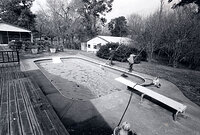
Ellis Island 1976

H
Ellis Island 1976

  • Tel
  • Jan 26, 2026
  • 3
  • 7
  • 45
Facades

A
Facades

  • 7
  • 0
  • 74

Recent Classifieds

Forum statistics

Threads
201,972
Messages
2,833,030
Members
101,039
Latest member
juanfarrias888@gmail
Recent bookmarks
0

MattKing

Moderator
Moderator
Joined
Apr 24, 2005
Messages
55,288
Location
Delta, BC Canada
Format
Medium Format
The EOS 650 also has a "partial" metering mode which will work fine without imposing the vagaries of evaluative metering.

Like any other meter, you will need to learn how it works, but at least you can predict its functionality.
 

baachitraka

Member
Joined
Apr 6, 2011
Messages
3,650
Location
Bremen, Germany.
Format
Multi Format
EOS 650 is rather good except at difficult lighting conditions...
 

Poisson Du Jour

Member
Allowing Ads
Joined
Jul 1, 2008
Messages
5,462
Location
.
Format
Digital
The 650 is still using evaluative metering when in manual mode ("metered manual"). The only time it is not using any meter is in Bulb.
You will grow out of it, for sure (anybody with GAS grows out of things...:wink: ). I suggest you hang on to it and look after it; it's a recognised collector's item, along with others of that epoch e.g. the 620, 750, 850, 600/630 and RT (the RT was the last before the EOS 1 came along).
 

MattKing

Moderator
Moderator
Joined
Apr 24, 2005
Messages
55,288
Location
Delta, BC Canada
Format
Medium Format
The 650 is still using evaluative metering when in manual mode ("metered manual"). The only time it is not using any meter is in Bulb.
You will grow out of it, for sure (anybody with GAS grows out of things...:wink: ). I suggest you hang on to it and look after it; it's a recognised collector's item, along with others of that epoch e.g. the 620, 750, 850, 600/630 and RT (the RT was the last before the EOS 1 came along).

Gary:

From the manual:

"Light Metering System: TTL full aperture metering using SPC. Two selectable metering patterns: evaluative metering and partial metering (approx. 6.5% of the picture area). Stopped-down metering is not possible. "
 
OP
OP
jaydebruyne

jaydebruyne

Member
Allowing Ads
Joined
Dec 8, 2013
Messages
150
Location
London, UK
Format
35mm
The 650 is still using evaluative metering when in manual mode ("metered manual"). The only time it is not using any meter is in Bulb.
Can I not just ignore the metering and adjust the shutter/aperture, using a spot meter?

I'm going to run with both hands..
 

Bill Burk

Subscriber
Allowing Ads
Joined
Feb 9, 2010
Messages
9,477
Format
4x5 Format
Love the print over the scan. Did you add any adjustments to the scan or is that a raw scan?

Thanks, That was a straight negative scan. For the print, I dodged my daughter's face so slightly that there isn't a tell-tale sign of dodging.
 

Poisson Du Jour

Member
Allowing Ads
Joined
Jul 1, 2008
Messages
5,462
Location
.
Format
Digital
Can I not just ignore the metering and adjust the shutter/aperture, using a spot meter?

I'm going to run with both hands..


A spot meter!? That was quick. GAS already?? :confused:
OK...well, if you have the basics of spot metering sorted you can do a parallel comparison of your (spot metered) aggregate reading vs the camera. A comparison may or may not be useful, and may or may not show a similarity, but there is no harm in trying and there will quite possibly be something to learn. I recall a parallel test of my spot metering vs the smart-arsed 16 zone evaluative system of the EOS 1N! I metered the scene as I normally do, just above the camera. Then the meter of the 1N was activated. Surprise, surprise, the readings matched: the camera was reading the same parts of the scene (an evening sunlit sandstone rock outcrop on an open beach with a tinted sky behind, green vegetation on the hillside on my left and light reflecting off the sand — all areas I spot metered individually). Note for that experiment both the EOS 1N and Sekonic L758D were set to 0.3 steps). Subsequent tests showed quite large variations, indicating how the evaluative system weights some areas incorrectly in challenging light situations where a spot meter would be more explicit.
 

StoneNYC

Member
Allowing Ads
Joined
Aug 5, 2012
Messages
8,345
Location
Antarctica
Format
8x10 Format
A spot meter!? That was quick. GAS already?? :confused:
OK...well, if you have the basics of spot metering sorted you can do a parallel comparison of your (spot metered) aggregate reading vs the camera. A comparison may or may not be useful, and may or may not show a similarity, but there is no harm in trying and there will quite possibly be something to learn. I recall a parallel test of my spot metering vs the smart-arsed 16 zone evaluative system of the EOS 1N! I metered the scene as I normally do, just above the camera. Then the meter of the 1N was activated. Surprise, surprise, the readings matched: the camera was reading the same parts of the scene (an evening sunlit sandstone rock outcrop on an open beach with a tinted sky behind, green vegetation on the hillside on my left and light reflecting off the sand — all areas I spot metered individually). Note for that experiment both the EOS 1N and Sekonic L758D were set to 0.3 steps). Subsequent tests showed quite large variations, indicating how the evaluative system weights some areas incorrectly in challenging light situations where a spot meter would be more explicit.

Agree with the sekonic recommendation but if you're spending that kind of money, go with the 1V ... 45 point auto focus :smile:
 

Poisson Du Jour

Member
Allowing Ads
Joined
Jul 1, 2008
Messages
5,462
Location
.
Format
Digital
Agree with the sekonic recommendation but if you're spending that kind of money, go with the 1V ... 45 point auto focus :smile:


You missed something. You're handing control and decision-making of metering the scene to the camera. (also, the central-bias 45pt focus is not where I actually focus, but where the camera wishes me to focus!).The Sekonic gives the user — me, you...others, absolute control over what is metered and how. The 1V is undeniably good, certainly, but I can do much better armed with a spot meter in lighting conditions which have been known to throw off even the 1V (and 1N). But not for my work and the precision and detail of MF.
 

removed account4

Subscriber
Allowing Ads
Joined
Jun 21, 2003
Messages
29,832
Format
Hybrid
Can I not just ignore the metering and adjust the shutter/aperture, using a spot meter?

I'm going to run with both hands..

dude

do this simple thing

for a whole roll of film
put your iso on the iso stated on the film box

when you take your photographs
bracket your exposures ... take one as the meter says, then one 1 full stop above then 1 a full stop below what the meter says
( meter says f 11 do f 11, f 8 and f 16 ) for a full roll
process the film normally as you would .
then look at the resulted negatives

scan them and lnvert them and see which ones look best to you
then expose another roll of film 1 stop over or under or box speed ( what ever the "test" tells you to do )
and see what they look like.

calibrate your in camera exposures the way you like them ( personal box speed ) and do this little test for ever film
you want to shoot. you don't need another meter, just use what is in your camera and save your money for film.


have fun !
john
 
Last edited by a moderator:

StoneNYC

Member
Allowing Ads
Joined
Aug 5, 2012
Messages
8,345
Location
Antarctica
Format
8x10 Format
You missed something. You're handing control and decision-making of metering the scene to the camera. (also, the central-bias 45pt focus is not where I actually focus, but where the camera wishes me to focus!).The Sekonic gives the user — me, you...others, absolute control over what is metered and how. The 1V is undeniably good, certainly, but I can do much better armed with a spot meter in lighting conditions which have been known to throw off even the 1V (and 1N). But not for my work and the precision and detail of MF.

Simmah! Hah!

Not sure about the 1N I can't recall, but the 1V has a very sophisticated (something like 64 point metering grid over the entire scene) on top if which it has a SPOT metering that can be set to spot ON YOUR FOCUS POINT not just central location.

This is one of many reasons I said the 1V.

But mostly because just because it matches digital features better (that the OP is used to) like multi point AF etc.

Ultimately I was just kidding, you're suggesting an ultra expensive meter, when he could easily get something less expansive since he already he was keeping the current model camera he already had. I was saying it and jest.

I personally own the same sekonic meter that you have. I only bought it because I use the pocket wizard with my strobes, and didn't want to have to connect a wire to the strobes for testing, had I not been shooting that kind of studio lighting and just been out doing light metering in a normal space I would have probably purchased the Minolta F or similar meter at a fraction of the price with just as good quality.

Just something to chew on :smile:
 
OP
OP
jaydebruyne

jaydebruyne

Member
Allowing Ads
Joined
Dec 8, 2013
Messages
150
Location
London, UK
Format
35mm
dude

do this simple thing

for a whole roll of film
put your iso on the iso stated on the film box

when you take your photographs
bracket your exposures ... take one as the meter says, then one 1 full stop above then 1 a full stop below what the meter says
( meter says f 11 do f 11, f 8 and f 16 ) for a full roll
process the film normally as you would .
then look at the resulted negatives

scan them and lnvert them and see which ones look best to you
then expose another roll of film 1 stop over or under or box speed ( what ever the "test" tells you to do )
and see what they look like.

calibrate your in camera exposures the way you like them ( personal box speed ) and do this little test for ever film
you want to shoot. you don't need another meter, just use what is in your camera and save your money for film.


have fun !
john

Done deal. Think I'll try this. I promised myself to not buy any more equipment!!

Box speed meaning ISO? I use FP4 which is 125, bracket this 1 stop under/over for each shot? And I would develop normally also, I assume?

Thanks John :smile: I'm gonna start this test today ...

I'm going to run with both hands..
 
OP
OP
jaydebruyne

jaydebruyne

Member
Allowing Ads
Joined
Dec 8, 2013
Messages
150
Location
London, UK
Format
35mm
then expose another roll of film 1 stop over or under or box speed ( what ever the "test" tells you to do )
and see what they look like.

Sorry to bug,

I just want to make sure I get this right.

So the film I'm currently using while I learn is ISO125. A stop under would be 64 and a stop above would be 250? A full stop is literally double (+/-) the box speed?

Cheers
Jay
 

Michael W

Member
Allowing Ads
Joined
Feb 11, 2005
Messages
1,594
Location
Sydney
Format
Multi Format
Sorry to bug,

I just want to make sure I get this right.

So the film I'm currently using while I learn is ISO125. A stop under would be 64 and a stop above would be 250? A full stop is literally double (+/-) the box speed?

Cheers
Jay
Pretty much, except 64 is one stop over as you will be giving it more light and 250 will be one stop under as it is a higher speed, therefore gets less light. FP4 is a great film. Are you processing it yourself at home? If so consider developing in Rodinal (sold these days as Adonal and Maco R09). This film and developer are a good match.
 

removed account4

Subscriber
Allowing Ads
Joined
Jun 21, 2003
Messages
29,832
Format
Hybrid
Sorry to bug,

I just want to make sure I get this right.

So the film I'm currently using while I learn is ISO125. A stop under would be 64 and a stop above would be 250? A full stop is literally double (+/-) the box speed?

Cheers
Jay

hijay

yup develop as normal + no worries !

set your camera to iso asa 125 for that film

notice what the fstop is on your lens ring
and just click it over to the next number.
focus, compose in camera meter expose ( look at fstop ring its on f 5.6 )
click the lens over to f 4 ( recompose, refocus, expose )
click the lens over to f 8 ( recompose, refocus, expose )

since you already figured out that asa / iso and fstop are connected at the hip :smile:
and to confuse you a bit more :smile:
changing the shutter speed +/- one speed will do the same thing
for example
the in camera meter says f 11 and 1/60th second ...
over and under would be f 11 @ 30th (slower shutter, more light .. over 1 stop ) and f 11 @ 125 ( faster shutter, less light under one stop )

so ... in the end you have a few different options ..

changing the iso on the camera each shot
changing the fstops each shot
changing the shutter speeds each shot

they will all do exactly the same thing ..

hope i didn't confuse you !

enjoy your film test to get your personal film speed :smile:
john

ps thanks michael w, i just woke up and was asleep at the switch !
 
OP
OP
jaydebruyne

jaydebruyne

Member
Allowing Ads
Joined
Dec 8, 2013
Messages
150
Location
London, UK
Format
35mm
Pretty much, except 64 is one stop over as you will be giving it more light and 250 will be one stop under as it is a higher speed, therefore gets less light. FP4 is a great film. Are you processing it yourself at home? If so consider developing in Rodinal (sold these days as Adonal and Maco R09). This film and developer are a good match.
Oh dear, of course *slaps head* that's what I meant! I must sound like a right t**t! Excuse my incompetence, I got a bit excited about learning new stuff and forgot my basic facts!

Yes, I develop at home (I've only shot & developed 1 roll so far). I bought DD-X as that was what the Ilford guidelines said is best (of course they would, to sell more products). I will give Rodinal a try next. Thanks for the tip, Michael :smile:

I also use Ilfostop, Ilford Rapid Fixer and wetting agent. Are there any better alternatives? Also, I've seen not everyone uses wetting agent, is it necessary? I have a litre of it now and may as well continue until I finish it, but if it's not essential/beneficial, I won't buy any more.

Thanks
Jay
 
OP
OP
jaydebruyne

jaydebruyne

Member
Allowing Ads
Joined
Dec 8, 2013
Messages
150
Location
London, UK
Format
35mm
notice what the fstop is on your lens ring
and just click it over to the next number.
I only have AF lenses :/ so I'll just note it on my display on camera and adjust the f/stop electronically.
(I can set them to MF, which I always do anyway). I learned to use my first camera in Manual mode and never looked back.
I forced myself to learn the relationship between ISO/Shutter/Aperture. Right or wrong, who cares, I guess I'm a bit of a snob like that.
I hate anything automated. I'm a control freak, what can I say :wink:

and to confuse you a bit more :smile:
changing the shutter speed +/- one speed will do the same thing
Yup. This much I do know :wink: but a refresher never hurt anybody! :smile:

I really appreciate all the help, sincerely. I've already learned so much from everyone here.

Cheers
Jay
 

Michael W

Member
Allowing Ads
Joined
Feb 11, 2005
Messages
1,594
Location
Sydney
Format
Multi Format
Oh dear, of course *slaps head* that's what I meant! I must sound like a right t**t! Excuse my incompetence, I got a bit excited about learning new stuff and forgot my basic facts!

Yes, I develop at home (I've only shot & developed 1 roll so far). I bought DD-X as that was what the Ilford guidelines said is best (of course they would, to sell more products). I will give Rodinal a try next. Thanks for the tip, Michael :smile:

I also use Ilfostop, Ilford Rapid Fixer and wetting agent. Are there any better alternatives? Also, I've seen not everyone uses wetting agent, is it necessary? I have a litre of it now and may as well continue until I finish it, but if it's not essential/beneficial, I won't buy any more.

Thanks
Jay
DD-X is also a very good developer. I think you will find the Ilford stop and fix to be fine as well. Wetting agent is necessary. If you don't soak the film in it at the end but just hang it to dry straight out of the wash, you are likely to get drying marks, which are basically water spots on the film. These will show up when you scan or wet print and are annoying. It can also be good to do that final soak in distilled or demineralised water - you might be able to buy this cheaply from a supermarket. When you say you have a litre of wetting agent does that mean you bought it pre-mixed? Generally it comes in concentrated form and you add a few drops to the water you are giving the final soak in. The best brand that I have found is LFN - I put a few drops in the final soak water and never get water spots. If it isn't pre-mixed with water one liter of concentrated wetting agent will probably last you a lifetime.
 
OP
OP
jaydebruyne

jaydebruyne

Member
Allowing Ads
Joined
Dec 8, 2013
Messages
150
Location
London, UK
Format
35mm
When you say you have a litre of wetting agent does that mean you bought it pre-mixed? If it isn't pre-mixed with water one liter of concentrated wetting agent will probably last you a lifetime.

It's concentrated! :wink: I bought them all as a bundle when I got my film developer stuff. At least I'll never need to buy wetting agent again :smile:

So after rinsing it 3 times, I should let it soak in water with wetting agent for a while?

With the roll I developed, I rinsed 3 times: first time inverting the tank 5 times, second rinse 10 times and final rinse , including wetting agent, 20 times.

I'm going to run with both hands..
 

Terry Christian

Member
Allowing Ads
Joined
Dec 2, 2011
Messages
693
Location
Memphis, TN
Format
35mm
Yes, jay, you're doing it exactly right: the diluted wetting agent should be the last thing that touches the film, after a thorough washing with filtered, distilled, or deionized water.

As for jnanian's bracketing suggestion, I'd recommend doing that by varying the shutter speed instead of the aperture, since varying aperture affects depth of field.
 
OP
OP
jaydebruyne

jaydebruyne

Member
Allowing Ads
Joined
Dec 8, 2013
Messages
150
Location
London, UK
Format
35mm
Yes, jay, you're doing it exactly right: the diluted wetting agent should be the last thing that touches the film, after a thorough washing with filtered, distilled, or deionized water.

As for jnanian's bracketing suggestion, I'd recommend doing that by varying the shutter speed instead of the aperture, since varying aperture affects depth of field.
I never knew it had to be a deskilled water :/ Everywhere I've seen/read uses tap water?

Regarding bracketing, I usually always have a preference on aperture/DOF as it's a love of mine, so generally I will set it, leave it and adjust other perimeters to get my exposure. Of course, when light doesn't permit this I have no choice. But I tend to like to get what I want so I'll wait for a brighter moment on another day or bring in some type of light source.

Thanks for the tip, Terry :smile:
 

effae

Member
Allowing Ads
Joined
Oct 22, 2012
Messages
17
Format
35mm
I never knew it had to be a deskilled water :/ Everywhere I've seen/read uses tap water?

Tap water usually contain different impurities, of which some will remain on your film once the water evaporates. I tend to rinse in distilled water to avoid white stains caused by the relatively hard water in my area..
 
Photrio.com contains affiliate links to products. We may receive a commission for purchases made through these links.
To read our full affiliate disclosure statement please click Here.

PHOTRIO PARTNERS EQUALLY FUNDING OUR COMMUNITY:



Ilford ADOX Freestyle Photographic Stearman Press Weldon Color Lab Blue Moon Camera & Machine
Top Bottom