
• Welcome to Photrio!
    Registration is fast and free. Join today to unlock search, see fewer ads, and access all forum features.
    Click here to sign up

Direct positive paper, dev. and safety for kids

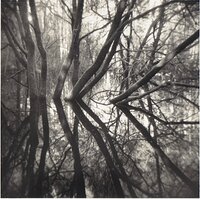
Flooded woodland

Flooded woodland

  • 15
  • 1
  • 103
Babylon

D
Babylon

  • 3
  • 1
  • 91

Recent Classifieds

Forum statistics

Threads
202,843
Messages
2,846,363
Members
101,561
Latest member
SBurns28804
Recent bookmarks
0

Daniela

Member
Joined
Feb 20, 2017
Messages
1,188
Location
France
Format
Multi Format
I had a 10 year old ask me to teach him to make black and white pictures. I've decided to use a pinhole camera and direct positive paper. I have found two brands: Harman and Imago.

Is there any other (and cheaper) paper option?

What would be the safest developer and fixer to use with a kid? What about other safety considerations?

Thanks!
 
Those are the only two DP papers I've seen. I used the Harmon version quite a bit when I was messing about with 4x5 pinhole and later with a 4x5 press camera. Exposures were really long, especially with the pinhole.

I think any standard paper developer would be safe enough for a 10yo who can follow instructions and understands that developers require moderately careful handling. I was mowing the lawn and refueling the lawn mower at that age. I used cafenol and later Ilford PQ. I preferred the results I got with PQ.

BTW, you might also consider making paper negatives that you can scan and reverse on the computer. Paper negatives are much cheaper than DP paper, allowing for more experimentation. That's what I was doing toward the end of my 4x5 excursion.

Chris
 
The great thing about if you choose to make paper negatives is you can use outdated, slightly foggy paper. As in, paper that would be no good for enlarging. That can keep costs low.

If you make a paper developer using phenidone and ascorbic acid, the toxicity will be low. The stuff to avoid is metol (found in Dektol and ID11), which can become a skin irritant very easily.
 
Those are the only two DP papers I've seen. I used the Harmon version quite a bit when I was messing about with 4x5 pinhole and later with a 4x5 press camera. Exposures were really long, especially with the pinhole.

I think any standard paper developer would be safe enough for a 10yo who can follow instructions and understands that developers require moderately careful handling. I was mowing the lawn and refueling the lawn mower at that age. I used cafenol and later Ilford PQ. I preferred the results I got with PQ.

BTW, you might also consider making paper negatives that you can scan and reverse on the computer. Paper negatives are much cheaper than DP paper, allowing for more experimentation. That's what I was doing toward the end of my 4x5 excursion.

Chris


Thanks for mentioning scanning and reversing the negatives, everyone...I didn't consider that! As for careful handling, well, we're working on impulse control so cafenol (and goggles and gloves) might be the safest bet.
 
Agree on making a paper neg.
Also paper has an iso of about one, so can be a long wait to get an image using a pinhole.....but fun.

Yes, I know my little pinhole pretty well, so I know a couple of minutes on a sunny day will do and will be good practice for waiting patiently.
 
Thanks for mentioning scanning and reversing the negatives, everyone...I didn't consider that! As for careful handling, well, we're working on impulse control so cafenol (and goggles and gloves) might be the safest bet.

Cafenol is neat, but one thing to keep in mind is it will stain your paper (either DPP or paper negs) giving it a sepia toned look. Not a problem if that's what you want, but something to be aware of. Also, you can't as easily watch the image appear, which is kind of neat with DPP or paper negs and a clear developer. :smile:

Chris
 
Danila, the safest photographic process to use with kids is cyanotype (develop in water).
 
Make sure the kid(s) wear gloves when handling the chemistry and tell them not to drink it or sniff it; supervise, supervise and... everything will be fine.
(I had my children in the darkroom with me throughout the years - from about the age of 5 - it was very enjoyable for all of us).
 
I've been using the Ilford DPP to dial in my 11x14 camera, developing in Caffenol. I don't get sepia staining but I also haven't found a recipe that gives me the 'snap' I get from Caffenol with almost any film. I've mostly been toying with exposure and preflash to try and fix this, it's probably time to tweak the Caf recipe a bit and see if that helps.
 
11x14 imo is heading into crazy town. (in a good way) Did you build your own camera?

I vaguely remember Sprint chemistry as being "safe."
 
11x14 imo is heading into crazy town. (in a good way) Did you build your own camera?

Nope, just the lensboard, which carries a Packard shutter and an old process lens in barrel (Scientific lens Co. 20" f/10 or something like that). The camera is an old Korona which seemed like a good deal. The oddest part of it is the 'floating' ground glass-- the GG frame is held on solely by the tension of the hold-down springs, it's not fixed to the rest of the back. I wonder if it was always like this, or if some previous owner just clipped the springs when they got slack-ish.
 
Just a side comment that I'm somewhat bemused by all this concern for photo chemical exposure.

I spent hours nearly daily for YEARS, starting around age 10 or 11 (after having just been a frequent studio visitor until then), in a tiny film darkroom with no ventilation and standing tanks of DK-50 and hypo. Our larger paper darkroom had no ventilation either. We didn't ever wear gloves, our hands were in the soup all the time - my dad's nails and hands were often stained brown from litho developer.

And all that second-hand smoke: Mom smoked cigs nonstop, as did lots of customers and friends who stopped by daily. Again, no real ventilation, just a fan at the front of the store and a bathroom window at the back... and they were only used in summer. By modern standards, it was a "dangerous" place to spend your childhood.

So now I'm 68 years old, with no lung issues or any other syndrome that can be traced to all that chemical exposure. Just sayin'...

Picture: at the studio in 1957, Mom pregnant with my sister... and besides all the daily chemical exposure, she was still smoking and drinking (like most 50s moms). Yet we both turned out healthy!

cowboy.jpg
 
I'm somewhat bemused by all this concern for photo chemical exposure

That's called luck. Whether or not someone develops an allergy to metol has as much to do with the person as it does to metol and the amount of exposure. I can't get any of the stuff on me at all - never could. But I have a lot of allergies. So, it's just luck.

Swishing your hands around in developer is called "pressing your luck."
 
Yup. Luck/genetics. Some folks have high sensitivity, some don't. I think most of the "warnings" scattered throughout the forums are there so that complete novices see the warnings more than once and can make an informed decision. I would say that any minors being brought in into the photography fold these days should be encouraged to be safe as it's best practice and habit forming. As an adult they can choose to eschew the gear they deem unnecessary.
 
A ten year old should be able to handle the usual chemicals employed in black and white photography. As some have already noted, safety goggles and perhaps vinyl gloves. It should be approached as a serious but enjoyable enterprise, and not as a “fun game”.
Why not a camera. I explained to my grandson that light is similar to water in a bucket. The same amount of water comes out if a small hole for a long time, of a big hole for short time. A simple explanation of f stops and time.
My grandson began shooting rifle at range with his father when he was about eight yrs old, and was taught all safety rules. As a result he feels very grown up. He is now nine and races in ocean with one man (boy) sailboat.
The real tragedy for boys was the dumbing down of chemistry sets and erector sets. LEGO can not take the place of nuts and bolts.
 
So now I'm 68 years old, with no lung issues or any other syndrome that can be traced to all that chemical exposure. Just sayin'...
Congratulations. I hope we'll have you around for many years to come. Keep in mind that the ones who aren't as fortunate as you are, aren't here to tell their story. We can only ever hear directly from the survivors. There's a massive bias in these stories as a matter of course.

Of course, it doesn't have to be all that dramatic, and usually, it fortunately isn't. We mostly get away with lots of stuff that's supposedly bad. Yet again, there are plenty of people also on this forum who can relate first-hand how contact dermatitis feels and that it's something they'd rather do without. Since this comes with repeated exposure over time, it's a 'great way' to start exposing kids to this at a young age so that they have an optimal chance of developing such conditions later on in life...right? Think about it - if you do this with ten kids, and nine of them are just fine, and the tenth develops an annoying contact dermatitis, will you still argue that "hey, the other 9 are just fine so let's not make too much of this"? Do we, amateur photographers, really know so much about the immune system of a kid and how it responds to exposure to stuff like hydroquinone, metol etc.? I'd rather leave this to endocrinologists.

There's nothing wrong with being cautious when it comes to kids. They have a long future ahead of them (hopefully) and they're not as capable as us adults are in deciding which risks they want to accept as a matter of course. It's overall a very good thing that it has become taboo to expose kids to things we know are detrimental to their health (e.g. second hand smoke). Yes, by all means find ways to responsibly engage them in interesting hobbies.
 
I don't want to come off as being dismissive: Of course precautions should be taken with photo chemistry and fumes, especially for vulnerable kids.

The point of my post was just showing how safety concerns have changed in my lifetime. My parents simply didn't for a second think that industrial-strength photo chemistry could be dangerous to us (or them).

Hey, it was the early 60s - the world was an endless fog of cigarette smoke, most cars didn't have seatbelts (we had to pay for them as an option on our 62 Chevvy), there was no such thing as a bicycle helmet, and I walked to/from school at 6 and 7 years old without my folks being worried about abduction or molestation. A different world!
 
The point of my post was just showing how safety concerns have changed in my lifetime.

Point taken, and I understand - thanks for clarifying! Yes, a lot has changed. Some of it for the better, but not all of it. There are sad side-effects to the emphasis on caution - i.e. kids come into contact less and less with how things are made, have less room to experiment with (what we now experience as) risky stuff, etc. We've probably lost at least as much as we've gained.
 
Photrio.com contains affiliate links to products. We may receive a commission for purchases made through these links.
To read our full affiliate disclosure statement please click Here.

PHOTRIO PARTNERS EQUALLY FUNDING OUR COMMUNITY:


Ilford ADOX Freestyle Photographic Stearman Press Weldon Color Lab Blue Moon Camera & Machine
Top Bottom