

• Welcome to Photrio!
    Registration is fast and free. Join today to unlock search, see fewer ads, and access all forum features.
    Click here to sign up

Developers for sharp grain?

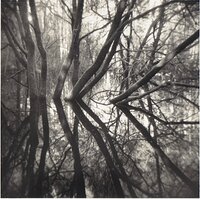
Flooded woodland

Flooded woodland

  • 15
  • 2
  • 111
Babylon

D
Babylon

  • 3
  • 1
  • 94

Recent Classifieds

Forum statistics

Threads
202,843
Messages
2,846,377
Members
101,561
Latest member
SBurns28804
Recent bookmarks
0

Juan Valdenebro

Member
Allowing Ads
Joined
Jan 26, 2010
Messages
1,286
Location
South America
Format
Multi Format
Hello,
I didn't find any thread with deep information precisely on this...
I guess APUG is the right place for this question as here I've read tons of great information by real experts who have taken this seriously for a lifetime, and love and understand developers, films and chemistry...
When I've used Rodinal and Microphen, I've enjoyed beautiful tone, and totally crisp grain... Dillution matters sometimes, agitation sometimes, and temperature can be really relevant, or not that much... Some good for slow film, some for pushing...
I know some people prefer no grain (they call it fine grain, but it's dissolved and mushy, instead of fine...). I'd like to hear about all available developers that produce grain that's really sharp... Of course, even more enjoyable would be also knowing how they act, and how different visually and chemically they are and why, and which films seem to work better in which developers...
I hope this thread finds a good spirit to unite different members' perceptions, becoming a rich one in the long term... I find crisp grain is interesting for both tonality and perceived sharpness, and it's one of my favorite visual characteristics in a photograph, so I'll be checking this thread constantly, I hope every day for months... Thanks!
 
watching
 
Hello,
I didn't find any thread with deep information precisely on this...
I guess APUG is the right place for this question as here I've read tons of great information by real experts who have taken this seriously for a lifetime, and love and understand developers, films and chemistry...
When I've used Rodinal and Microphen, I've enjoyed beautiful tone, and totally crisp grain... Dillution matters sometimes, agitation sometimes, and temperature can be really relevant, or not that much... Some good for slow film, some for pushing...
I know some people prefer no grain (they call it fine grain, but it's dissolved and mushy, instead of fine...). I'd like to hear about all available developers that produce grain that's really sharp... Of course, even more enjoyable would be also knowing how they act, and how different visually and chemically they are and why, and which films seem to work better in which developers...
I hope this thread finds a good spirit to unite different members' perceptions, becoming a rich one in the long term... I find crisp grain is interesting for both tonality and perceived sharpness, and it's one of my favorite visual characteristics in a photograph, so I'll be checking this thread constantly, I hope every day for months... Thanks!

Search on acutance developers.
And don't be surprised if Ian Grant's posts show up. :smile:
 
From Kodak on its developers:
upload_2017-7-18_19-42-11.png
 
From my testing:

1st off, there's grain in the neg, based on your film and dev choice and your process, and the final usage of that neg - all will affect apparent grain, so I'll get to usage in a bit.

Film - I hate Delta's grain structure, it's a detail-killing mush of popcorn, so for grain I'd play with HP5+ and Rollei IR 400 (which, without filters, with Rodinal seems about a 100 speed film in my tests. Barely 100). You can pre-wash and dry and re-roll the IR400 (removes the halation layer) and highlights will bloom a bit like an old-school IR film. A hassle but a cool look, I have yet to try it more than testing to see if it works well for general shooting. Gives you about a half stop more exposure, too.

I haven't tried all the developers out there - the Kodak chart above shows HC-110 as being their "grainiest". But after a couple years of Rodinal, I tried 110 and just felt it was kind of boring. Rodinal really has a "character" to it.

If you want to max the grain from Rodinal, use it at 1+25 - my testing has explicitly and unarguably shown me that the grain strengthens noticeably with higher ratios. But higher ratios move the shadows up the curve - your point where shadow detail falls off gets higher (it's a "compensating" developer and different ratios will affect tonality - that's why it's popular for stand developing), so you may want to try for shots with more fill light or overexpose and hold back the highs with developing. I do find portraits can really pop with stronger mixes, eyes, facial details, lashes and eyebrows go a bit darker and I generally like the look, but you have to compensate for low-mids (fill light in a studio setting, etc). Testing is the only way to dial that in.

I found reasonable temp. changes to have little effect. Agitation does seem to boost grain, but again, test to find out how much to reduce dev. time to match. Get a roll of 35 and a bottle of Rodinal, shoot a ton of brackets, chop up the film and develop in chunks. Test test test!

If darkroom printing is your final output, I'd experiment with unsharp masks, since you don't need pin-register equipment to use those (esp. with 120 film). You can google about registering with push-pins and tape. I'd try weak masks that are made without an inter-layer of film and also with. Mask density is a contrast killer, so read up on masking and try some scenarios. I've never made an unsharp mask to enhance grain, but man, they can bring on the detail.

And... if you're up to an entirely new challenge, you could look into lith printing, which really can bring the grain and even grit. Currently there's few papers made that lith well (Foma 123 has made a comeback but it may be temporary, Slavich Unibrom generally has a "broken xerox machine" look, I think Foma 132 is still very good? there is a current Foma that liths well, but I think it's more of a cream base than pure white). I only do "straight" prints for dialing in a neg before moving to lith, I do really love it.
 
For both good gain and sharpness Edwal 12 and MCM 100.
I do agree that MCM 100 is a very sharp surface developer and if it weren't a pain to mix or get(no Meritol anymore) I might even use it myself. It's neat in how it really etches the emulsion of the film and it's really hard to tell which is the emulsion side because they are both very shiny. You have to hold the negative o an angle toward a light source to see the etching and then you can determine the emulsion side. This is a very good developer none the less.
 
I don't know too much about developers for sharp grain. I've heard that sodium sulfite is a silver solvent and will dissolve edges of silver grains for finer grain. So is sharp grain called "high Acutance" vs "fine grain" developers? As for me, my long time favorite developer is HC-110. I also use X-TOL and Pyro. For me, it's the tonality of the combination of film and developer.
 
I do agree that MCM 100 is a very sharp surface developer and if it weren't a pain to mix or get(no Meritol anymore) I might even use it myself. It's neat in how it really etches the emulsion of the film and it's really hard to tell which is the emulsion side because they are both very shiny. You have to hold the negative o an angle toward a light source to see the etching and then you can determine the emulsion side. This is a very good developer none the less.

I get my MCM from Photography Formulary, they replaced Meritol with Catchal.
 
And... if you're up to an entirely new challenge, you could look into lith printing, which really can bring the grain and even grit. Currently there's few papers made that lith well (Foma 123 has made a comeback but it may be temporary, Slavich Unibrom generally has a "broken xerox machine" look, I think Foma 132 is still very good? there is a current Foma that liths well, but I think it's more of a cream base than pure white). I only do "straight" prints for dialing in a neg before moving to lith, I do really love it.

Not that it's much (or any) help to the OP but Foma 133 has a cream base and liths very nicely.
 
Replenished XTOL
 
Pyrocat-HD semi-stand.

Should I start first ... :smile: ... ?
Rodinal!

For both good gain and sharpness Edwal 12 and MCM 100.

Replenished XTOL

FX-39 is also known for sharpness.

The problem is all these developers give fine grain and overall image sharpness which is not what the OP is asking about.

Out of this list I've used 3 extensively Rodinal, Xtol (replenished0 and Pyrocat HD and I hate grain so can assure people that the negatives I produce(d) with them, 35mm and upwards, are sharp (good definition), tonal, and low grain even with the 35mm films I use.

I've used Beutler, FX1 & FX2 etc and plenty of other developers over the yearsand in all honesty the best commercially available developer for tight crisp grain like the OP's asking about is Microphen (ID-68) and a film like HP5. Probably the most exaggerated grain would be Paterson's long discontinued Acutol S, followed by Acutol.

Ian
 
Grain exaggeration is a question of technique, not developer choice. An overexposed & overdeveloped neg printed on a hard grade of paper will bring up obvious, crisp grain. Not hard to do. ID-11 at 1+1 will do it just fine. I wouldn't call Rodinal a 'compensating' developer either.

What everyone seems to be forgetting here is that your paper grade is essential to the perception of 'grain' & its sharpness - if you have to print on G00, grain is of course going to look softer & mushier than at G4-5. Thus the calumniation of Delta as 'mush' is nonsense if we are not told what grade the negatives had to printed on. Neither Delta 400 nor 3200 are mushy in my experience - I have made prints from Delta 400 where the grain is incredibly punchy & sharp & it didn't involve esoteric pseudo-scientific practices with Rodinal.
 
Grain exaggeration is a question of technique, not developer choice. An overexposed & overdeveloped neg printed on a hard grade of paper will bring up obvious, crisp grain.

poor highlights :sad:
 
Photrio.com contains affiliate links to products. We may receive a commission for purchases made through these links.
To read our full affiliate disclosure statement please click Here.

PHOTRIO PARTNERS EQUALLY FUNDING OUR COMMUNITY:


Ilford ADOX Freestyle Photographic Stearman Press Weldon Color Lab Blue Moon Camera & Machine
Top Bottom
