• Welcome to Photrio!
    Registration is fast and free. Join today to unlock search, see fewer ads, and access all forum features.
    Click here to sign up

DARK HALO Around Blacks on 35mm neg

Flooded woodland

Flooded woodland

  • 14
  • 1
  • 96
Babylon

D
Babylon

  • 3
  • 1
  • 85

Recent Classifieds

Forum statistics

Threads
202,841
Messages
2,846,339
Members
101,559
Latest member
gnafin61
Recent bookmarks
0
Actually Ron this is almost definitely a scanning problem. The darker areas are flare, probably from a dirty/cheap scanner. I've seen it many times before.

First time I have known something that Ron didn't know. Not sure what to do now. I feel like I have gone through some sort of Twilight Zone door. Do I quit photography? Get a beer? Find out if I am in some exclusive private club now? The world seems strange!

I respectfully disagree. But, until we see the negatives it is still open as I said above.

PE
 
Looks like super dense and/or contrasty negs scanned in a linear mode; the toe being crushed into too narrow a region of the entire scan. What looks like bromide drag is probably just the data falling apart when the scanner tries to "open up" the shadows and it has too few code values to differentiate the shadow detail.

This brings up an interesting point: no matter how bent out of shape anyone gets about bringing digital into the analog portion of this site, you're eventually going to have to make a FAQ or set of rules about posting images that are scanned, or you'll endlessly be debugging images and trying to decide it it's a film or digital fault.
 
Last edited:
I would try taking a direct image of the negatives on a light box, but be sure to set your camera to neutral settings (i.e., no unusual gamma, contrast, saturation, etc.)

Might be helpful if you place another negative that has scanned well next to the new negative and identify each...

(woops! you posted that to PE while I was responding...)
 
Looks like super dense and/or contrasty negs scanned in a linear mode; the toe being crushed into too narrow a region of the entire scan. What looks like bromide drag is probably just the data falling apart when the scanner tries to "open up" the shadows and it has too few code values to differentiate the shadow detail.

This brings up an interesting point: no matter how bent out of shape anyone gets about bringing digital into the analog portion of this site, you're eventually going to have to make a FAQ or set of rules about posting images that are scanned, or you'll endlessly be debugging images and trying to decide it it's a film or digital fault.

Am I not supposed to be posting scanned images here? I figured as it's film it'd be okay...
 
Am I not supposed to be posting scanned images here? I figured as it's film it'd be okay...
That's not what I meant. Some form of electronic conversion has to happen to get online, it's just that without knowing the baseline circumstances of the scan, (which can be manifold and complex depending on the scanner, the program and the operator), its damn near impossible to troubleshoot a scanned image without a known control.

And yes, some purists resent scans over prints that are scanned, but we won't get into that now...
 
Any chance you didn't dilute the HC110 and used pure concentrate?

Arrrrrrrrgh! Yes, I just re-looked at the chart... I used 4 oz of pure hc110 to one quart water vs. 2 oz to one quart. So the solution was double strength. I have no idea why I did that. I've been developing negs for years! So that's what caused the halo/bleeding effect?
 
Arrrrrrrrgh! Yes, I just re-looked at the chart... I used 4 oz of pure hc110 to one quart water vs. 2 oz to one quart. So the solution was double strength. I have no idea why I did that. I've been developing negs for years! So that's what caused the halo/bleeding effect?

I'll still shoot the negs and get some feedback. I really appreciate everyone responding!
 
Yep. I'd say that's the problem. Super high gamma/contrast coupled with a scanner program that is trying to compensate for the very high density.

Oh well, happens to the best of us...
 
Am I not supposed to be posting scanned images here? I figured as it's film it'd be okay...
There is two parts to the answer to your question.
1) in general, APUG discourages discussion about digitized (scanned) negatives, because discussing questions of digitization/scanning or dealing with digital files is off topic for APUG; however
2) the real problem with using scans to try to resolve problems with film is that the scanning process adds a whole host of variables, many of which are hidden in the scanning process, that make analysis of the problems extremely difficult.
In so many cases, the problems aren't with the film, its exposure or its development, but rather how the film, its exposure and its development interact with the scanner, the scanning software and the choices made by the operator of the scanner.
Show us nice, clear and detailed pictures of your negatives, including the film rebate, and we can tell you more about the film.
If this turns out to be more a problem with scanning, APUG does have a much quieter sister site - DPUG.ORG - which was set up to allow discussions of that sort.
Both sites are in the midst of an important revamp, which will make it easier to move back and forth between them, but for now you need to register there separately. You can use the same user name as here.
But show us your negatives, because we would like to help.

 
First off on the negativity surrounding scanning. Yes, this is *analog* photography...and in an ideal world we'd all be exclusively making or buying darkroom prints from our negs. It is not an ideal world and it is counter-productive to snipe at everyone who scans. Ultimately every image here has been electronically converted, no matter how it ended up here. Sniping at people who scan will just put them off. As an example, one of my earlier posts on APUG was in a thread about what cameras we use...I rattled off a whole raft of film cameras which I use and mentioned one DLSR and some "helpful" member had a go at me in a manner which made me feel most unwelcome here. I very nearly didn't come back.

For some people there is no viable darkroom option for various reasons, and their choices may well be to shoot film and scan...or to shoot no film at all. I know I shoot a good deal more film and use more chemicals than I would if I had to rely on darkroom time or paying a lab to make prints. I see that as supporting the manufacturers of the film and chemicals, which I see as A Good Thing.

It is perfectly possible to get decent scans of B&W negatives from even the cheap plastic CCD scanners if you know what you're doing and use the software with some care. You still bought and shot film, you still bought chemicals and hand processed it. Good on you. I also find that there is no consistency regarding how acceptable it is to mention some non-chemical means of imaging. Some threads on APUG go on for pages happily discussing electronic capture of film images whereas others are killed instantly with someone acting as the APUG police and saying such discussion is simply not allowed. Usually the self-appointed APUG police pounce on people with few posts....Which is why, as I understand from reading elsewhere in these hallowed forums, a hybrid alternative is proposed.

Now...the developer being too strong will have probably resulted in an increase in contrast and may be at least partially responsible. The black edges are a concern too. The best way to show us the negatives is to illuminate them from behind and capture a photo with.....a digital camera (will I be whipped and boiled for mentioning that device?). If you have access to a light box all the better, but holding it up to a window or to any lamp with a good diffuser will do if not. It's best if we can see a strip of 4-6 negatives to get an idea what's going on. Include the rebate area (where the frame number, film name and codes are) and the sprocket holes too so we can see everything. Also of use would be the identity of the camera and lens used, and if you can remember the exposure and aperture details.

Hopefully we can help you identify what, if anything, is wrong with your negatives so that you can make better negatives next time...and...yes....scan these negatives with more success once we've helped you figure out what to do.
 
Last edited:
But show us your negatives, because we would like to help.

The ideal way is to do this is to lay them on a light table/light box and photograph them with a digital camera, but not everyone, least of all newcomers, have such a light table.
Alternatives: lay them on a tablet or large-screen smartphone or even a laptop screen, with the brightness up to max and a blank white page as background (there are apps to do just this)
Failing that, tape a negative to an ordinary piece of A4 printer paper, hold it up to a bright diffuse light source (at a window say) and photograph that.
Try and make the offending negative frames fill the frame (you know what I mean!) without cutting off the rebates - those are the clear portions surrounding the actual exposed area and usually including the sprocket holes and any edge printing from the manufacturer.
 
Last edited:
Ha! Agulliver beat me to it while I was typing!
 
My scanner can scan film "as is" so I can get a negative. I have no idea how to do it otherwise.

However, as we see above, it is a process problem as I suspected.

PE
 
There is two parts to the answer to your question.
1) in general, APUG discourages discussion about digitized (scanned) negatives, because discussing questions of digitization/scanning or dealing with digital files is off topic for APUG; however
2) the real problem with using scans to try to resolve problems with film is that the scanning process adds a whole host of variables, many of which are hidden in the scanning process, that make analysis of the problems extremely difficult.
In so many cases, the problems aren't with the film, its exposure or its development, but rather how the film, its exposure and its development interact with the scanner, the scanning software and the choices made by the operator of the scanner.
Show us nice, clear and detailed pictures of your negatives, including the film rebate, and we can tell you more about the film.
If this turns out to be more a problem with scanning, APUG does have a much quieter sister site - DPUG.ORG - which was set up to allow discussions of that sort.
Both sites are in the midst of an important revamp, which will make it easier to move back and forth between them, but for now you need to register there separately. You can use the same user name as here.
But show us your negatives, because we would like to help.

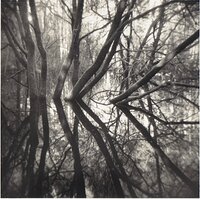

I have no opposition ('philosophical' or otherwise) to posting scanned images. I shoot color negative film and have it scanned all the time and get very good results (see attached image). The problem is strictly with conventional B&W film, and that problem is that scanning does not give a good image because of the Callier effect. I have scanned B&W prints when a digital image is needed. It's scanning the B&W negatives that is the issue. The Callier effect does not occur with color film. If you don't have an enlarger, there are thousands of used ones out there selling for very cheap prices.
 

Attachments

  • Copy of 0886184-R1-016-6A.jpg
    Copy of 0886184-R1-016-6A.jpg
    272.5 KB · Views: 95
Last edited:
First off on the negativity surrounding scanning.
I don't think this is addressed to me, but I will refer to it.
I totally agree that it is inappropriate to say anything negative about anyone who chooses to scan film. I applaud those who are happy with those choices, even if I would advocate that they do darkroom prints instead or as well.
Personally, I take pains to differentiate between those who choose to scan (no problem at all) and those who go off topic and initiate discussions about scanning on APUG (where those discussions are almost always against site rules).
There is one exception though to my unwillingness to complain about those who scan, and this thread highlights it. If you show us the results of a scan instead of the slides or negatives themselves, the intermediate step of scanning can make it hard for people on the other side of the internet to help with problems, because it is difficult to determine where the problems originate.
 
There is two parts to the answer to your question.
1) in general, APUG discourages discussion about digitized (scanned) negatives, because discussing questions of digitization/scanning or dealing with digital files is off topic for APUG; however
2) the real problem with using scans to try to resolve problems with film is that the scanning process adds a whole host of variables, many of which are hidden in the scanning process, that make analysis of the problems extremely difficult.
In so many cases, the problems aren't with the film, its exposure or its development, but rather how the film, its exposure and its development interact with the scanner, the scanning software and the choices made by the operator of the scanner.
Show us nice, clear and detailed pictures of your negatives, including the film rebate, and we can tell you more about the film.
If this turns out to be more a problem with scanning, APUG does have a much quieter sister site - DPUG.ORG - which was set up to allow discussions of that sort.
Both sites are in the midst of an important revamp, which will make it easier to move back and forth between them, but for now you need to register there separately. You can use the same user name as here.
But show us your negatives, because we would like to help.


Thank you Matt for your thorough explanation. This is my first post on the site and I'm extremely impressed with how quickly and generously people have responded to my question. I will certainly limit any "scanning" questions from now on... Thanks!
 
First off on the negativity surrounding scanning. Yes, this is *analog* photography...and in an ideal world we'd all be exclusively making or buying darkroom prints from our negs. It is not an ideal world and it is counter-productive to snipe at everyone who scans. Ultimately every image here has been electronically converted, no matter how it ended up here. Sniping at people who scan will just put them off. As an example, one of my earlier posts on APUG was in a thread about what cameras we use...I rattled off a whole raft of film cameras which I use and mentioned one DLSR and some "helpful" member had a go at me in a manner which made me feel most unwelcome here. I very nearly didn't come back.

For some people there is no viable darkroom option for various reasons, and their choices may well be to shoot film and scan...or to shoot no film at all. I know I shoot a good deal more film and use more chemicals than I would if I had to rely on darkroom time or paying a lab to make prints. I see that as supporting the manufacturers of the film and chemicals, which I see as A Good Thing.

It is perfectly possible to get decent scans of B&W negatives from even the cheap plastic CCD scanners if you know what you're doing and use the software with some care. You still bought and shot film, you still bought chemicals and hand processed it. Good on you. I also find that there is no consistency regarding how acceptable it is to mention some non-chemical means of imaging. Some threads on APUG go on for pages happily discussing electronic capture of film images whereas others are killed instantly with someone acting as the APUG police and saying such discussion is simply not allowed. Usually the self-appointed APUG police pounce on people with few posts....Which is why, as I understand from reading elsewhere in these hallowed forums, a hybrid alternative is proposed.

Now...the developer being too strong will have probably resulted in an increase in contrast and may be at least partially responsible. The black edges are a concern too. The best way to show us the negatives is to illuminate them from behind and capture a photo with.....a digital camera (will I be whipped and boiled for mentioning that device?). If you have access to a light box all the better, but holding it up to a window or to any lamp with a good diffuser will do if not. It's best if we can see a strip of 4-6 negatives to get an idea what's going on. Include the rebate area (where the frame number, film name and codes are) and the sprocket holes too so we can see everything. Also of use would be the identity of the camera and lens used, and if you can remember the exposure and aperture details.

Hopefully we can help you identify what, if anything, is wrong with your negatives so that you can make better negatives next time...and...yes....scan these negatives with more success once we've helped you figure out what to do.


Thank you so much for your detailed reply... I will do just as you describe with the negs... I'm still curious as to what happened as I want to improve my technique!
 
I look forward to seeing the negatives, but your development procedure seems somewhat out of the ordinary.
You apparently usually use dilation A (2 ounces in one quart). This would require a very short development time. Kodak recommends 3 3/4 minutes with dilution B (although many of us use 5-6 minutes - I use 5 - there are entire threads on this). Dilution A would require even shorter times (Kodak's datasheet on TX400 doesn't mention dilution A). Most users avoid such short times. I can speculate that the accidental 4 ounces in 1 quart (32 ounces) would require an extremely short development time and if developed for your usual timing would create extreme contrast.
If your system works for you then stick with it, but, you may want to try dilution B for 5-6 minutes.
 
Thank you so much for your detailed reply... I will do just as you describe with the negs... I'm still curious as to what happened as I want to improve my technique!


Here is one strip of the negs. It includes the photos I posted...
 

Attachments

  • negatives 015.jpg
    negatives 015.jpg
    954 KB · Views: 152
Thanks for posting this Phil. Those are really dense negatives! It doesn't surprise me that the scans you posted early look as strange as they do.
This article about assessing negatives may give you an idea about how negatives should appear: https://www.ephotozine.com/article/assessing-negatives-4682
 
Here is one strip of the negs. It includes the photos I posted...
Those are indeed overdeveloped. Without the 'feedback' of printing negatives, it is hard to judge what a good negative should look like. A good negative is much less contrasty than that.
 
Last edited:
Photrio.com contains affiliate links to products. We may receive a commission for purchases made through these links.
To read our full affiliate disclosure statement please click Here.

PHOTRIO PARTNERS EQUALLY FUNDING OUR COMMUNITY:


Ilford ADOX Freestyle Photographic Stearman Press Weldon Color Lab Blue Moon Camera & Machine
Top Bottom