
-
Welcome to Photrio!Registration is fast and free. Join today to unlock search, see fewer ads, and access all forum features.Click here to sign up
- Home
- Forums
- Analog Workflow Forums (100% Analog/Traditional)
- Analog Equipment
- 35mm Cameras and Accessories
You are using an out of date browser. It may not display this or other websites correctly.
You should upgrade or use an alternative browser.
You should upgrade or use an alternative browser.
Correct way to pronounce "nikon"?
-
A
- Thread starter chip j
- Start date
Recent Classifieds
-
For Sale (NOS) Fuji Slide Processing Mailers
- Started by UsedFilmCameras
-
Want to Buy Arca swiss plate for Mamiya RZ67
- Started by blee1996
-
For Sale Hi-Con IR film
- Started by MCB18
-
Want to Buy Hasselblad tripod quick release plate... level
- Started by eli griggs
-
For Sale Fotodiox Pronto AF adapter
- Started by OAPOli
Forum statistics
As Kodak the name Nikon is made up. I assume already with international clientele in mind. So there seemingly was no certain pronunciation thought of.
Over here we pronounce Kodak other than at your side of the pond. And with AGFA, also made up, the own Agfa people pronounce it differently than in its "original" form...
Over here we pronounce Kodak other than at your side of the pond. And with AGFA, also made up, the own Agfa people pronounce it differently than in its "original" form...

Spelling it with an extra “k” doesn’t change the pronunciation for me. In English I say nye-kon, in Japanese knee-kon, which is the proper pronunciation here. I have to remember who I’m talking to, since most Japanese’s won’t recognize the English pronunciation of Nikon, similar to how they don’t recognize the way many Westerners butcher words like karate, karaoke, and sake.

Agulliver
Member
I've heard Nee-Kon.....Nye-Kon....Nickon.......
My photography partner who's fluent in several Japanese dialects says "Nye-Kon" is wrong and both "Nee-Kon" and "Nickon" are OK.
My photography partner who's fluent in several Japanese dialects says "Nye-Kon" is wrong and both "Nee-Kon" and "Nickon" are OK.
- Joined
- Sep 10, 2009
- Messages
- 3,588
- Format
- Medium Format
Each and every language has unique sounds and difficulty pronouncing sounds foreign to it. When loan words are taken in usually pronunciation is modified. Few Americans can recognize common English words that have been taken into everyday Japanese. Same is true of every language. And if a Japanese used a standard English pronunciation few Japanese would recognize the word.
Even with English. I often find early British prewar English, before US movies and TV became ubiquitous, unintelligible, especially when local dialects are used.
As long as you can be understood when referring to your Nikon, any pronunciation is o.k. ...even a pedantic one.
Even with English. I often find early British prewar English, before US movies and TV became ubiquitous, unintelligible, especially when local dialects are used.
As long as you can be understood when referring to your Nikon, any pronunciation is o.k. ...even a pedantic one.
When I lived in the US I had to get used to Nigh-kon for Nick-on. Knee-sarn for Nissan, Hah-salblad for Hassleblad, Marzda for Mazda, As-a-hi for Ashai, Ad-e-das for Adidas, oh and the best was when my mother in law threatened to kick me in the fanny, in Australia "fanny" describes a woman's genitals!

Japanese is an open syllabic language. This means that every "character" in their alphabet consists of a consonant and a vowel.
In this case, it is "ni", "ko" and "n" which is the exception. Doubling of the vowel or consonant requires a sub character or a phonetic marker of some sort. So, how is it "spelled" in Japanese?
BTW: Coca Cola is Ko Ka Ko Ra or 4 characters.
And, there is another thread here on this subject.
OTOH, Asahi can be looked at 2 ways. Asa Hi and A Sa Hi. The first is written with a Kanji (Kan Ji) which allows such combinations but not for made up words. Asahi means Morning Sun or Rising Sun.
It is so difficult to translate languages between one another, especially the non Roman alphabetic ones.
PE
In this case, it is "ni", "ko" and "n" which is the exception. Doubling of the vowel or consonant requires a sub character or a phonetic marker of some sort. So, how is it "spelled" in Japanese?
BTW: Coca Cola is Ko Ka Ko Ra or 4 characters.
And, there is another thread here on this subject.
OTOH, Asahi can be looked at 2 ways. Asa Hi and A Sa Hi. The first is written with a Kanji (Kan Ji) which allows such combinations but not for made up words. Asahi means Morning Sun or Rising Sun.
It is so difficult to translate languages between one another, especially the non Roman alphabetic ones.
PE
abruzzi
Member
https://petapixel.com/2018/09/07/the-official-way-to-pronounce-nikon/
Nikon’s rule is that all regional pronunciations around the world are equally correct.
- Joined
- May 1, 2008
- Messages
- 168
- Format
- Medium Format
What is particularly difficult to all people not english speaking, is to correlate its pronunciation and its writing ; examples :
LIBerty - LIBrary
gOOd - dOOr
and most curiously :
womAn and womEn, the difference in writing is on the second syllabe and the pronunciation differs on the first !
In french, italian, and most other langages written with an alphabet (or in Japan with a"Syllabeth"), there are pronunciation rules related to writing, so that the best way learning to read are in "syllabic methods" - whereas the best way to learn to read english is the "global method" - you have to recognize the whole word to pronounce it.
POLKa (speaking also french, german, russian, and reading italian and spanish)
LIBerty - LIBrary
gOOd - dOOr
and most curiously :
womAn and womEn, the difference in writing is on the second syllabe and the pronunciation differs on the first !
In french, italian, and most other langages written with an alphabet (or in Japan with a"Syllabeth"), there are pronunciation rules related to writing, so that the best way learning to read are in "syllabic methods" - whereas the best way to learn to read english is the "global method" - you have to recognize the whole word to pronounce it.
POLKa (speaking also french, german, russian, and reading italian and spanish)
Oren Grad
Member
- Joined
- Feb 17, 2005
- Messages
- 1,620
- Format
- Large Format
I have to remember who I’m talking to, since most Japanese’s won’t recognize the English pronunciation of Nikon, similar to how they don’t recognize the way many Westerners butcher words like karate, karaoke, and sake.
Sometimes this works in counterintuitive ways. Many, many moons ago I went to check out Fujiya Camera in Nakano. Not yet knowing any better, I asked about the nice-looking "Mamiya roku" that I saw in one of the cases. This elicited "what planet is he from, what on earth is he talking about?" stares, until one of the salespeople figured it out: "Nyuu Mamiya shikkusu desu yo!"


For those who haven't quite followed: in Japan, they read "Mamiya 6" (マミヤ 6) as "Mamiya shikkusu" - they don't use the Japanese word for the number 6. Similarly, Mamiya 7 is "Mamiya sebun".
(Actually, strictly speaking, they call the Mamiya 6 the "New Mamiya 6" ("Nyuu Mamiya shikkusu") to distinguish it from the '40s-'50s-era folder.)

GRHazelton
Subscriber
Really interesting thread!

Curious about how Olympus is pronounced in Japan, or whether they refer to it differently.
My understanding is that there is no "L" sound in Japanese, often substituting "R" (and perhaps the opposite is true in Chinese).
Hence the "lalapalooza" shibboleth test during WW II to discover Japanese claiming to be Chinese.
My understanding is that there is no "L" sound in Japanese, often substituting "R" (and perhaps the opposite is true in Chinese).
Hence the "lalapalooza" shibboleth test during WW II to discover Japanese claiming to be Chinese.
Last edited:
George Bush says Knew-kler for nuclear. 'Merican's say nigh-con. .
Of course when I watch British television I use the English closed caption because I can't understand the accent. .
.
. Of course when I watch British television I use the English closed caption because I can't understand the accent.
.Oren Grad
Member
- Joined
- Feb 17, 2005
- Messages
- 1,620
- Format
- Large Format
Curious about how Olympus is pronounced in Japan, or whether they refer to it differently.
オリンパス = o-reem-pasu. As with the "shikkusu" I mentioned above, the "u" is barely vocalized, so it basically sounds like "oreempas". But the "r" is actually about halfway between our "r" and our "l", so it's readily recognizable as our "olympus".
Oren Grad
Member
- Joined
- Feb 17, 2005
- Messages
- 1,620
- Format
- Large Format
BTW, and also--how is "nikkor" pronounced?
Neek-ko-ru, again with the "u" barely vocalized.
I was happy when "Asahi" appeared on Pentax cameras rather than "Honeywell", which seemed so artificial. Yes, I know Honeywell was the U.S. distributor.
I also love these Nikon logos and company name:
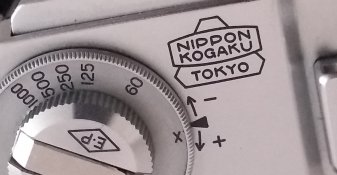
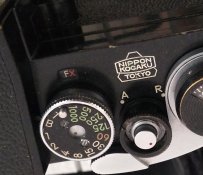
I also love these Nikon logos and company name:
- Joined
- Jun 21, 2003
- Messages
- 29,810
- Format
- Hybrid
i say HUN DAY like SUN DAY
oh, sorry wrong ad ..
oh, sorry wrong ad ..

The “i” in “Nikon” is pronounced just like it is in “Sinar” 
In Oklahoma, we say warsh instead of wash, wrasslin instead of wrestling, pin instead of pen, rut instead of root, ray road instead of railroad, yonder instead of there, and good instead of well. We also observe the plural you as ya'll. As far as cameras go, we mostly stick with the common U.S. pronunciations, with the exceptions of SLR's and DSLR's being referred to as Professional Cameras and large format as Old Timey Cameras.
It could be worse. If you play guitar, you say tremolo instead of vibrato and vibrato instead of tremolo. Sheet music is also called Greek.
It could be worse. If you play guitar, you say tremolo instead of vibrato and vibrato instead of tremolo. Sheet music is also called Greek.
THAT does me no good--how is "sinar" pronounced??The “i” in “Nikon” is pronounced just like it is in “Sinar”
Oren Grad
Member
- Joined
- Feb 17, 2005
- Messages
- 1,620
- Format
- Large Format
AND, BTW, how is "nikkormat" pronounced?
Hah, trick question! The answer is that it wasn't pronounced, because in the home market those cameras were branded "Nikomat".
| Photrio.com contains affiliate links to products. We may receive a commission for purchases made through these links. To read our full affiliate disclosure statement please click Here. |
PHOTRIO PARTNERS EQUALLY FUNDING OUR COMMUNITY:  |