



peter k.
Member
Are they both the same just a different way to refer to them?
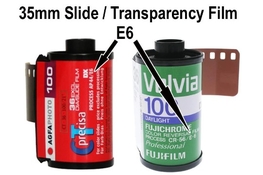
As slide film can be refereed to as color reversal, transparency or e-6
As slide film can be refereed to as color reversal, transparency or e-6
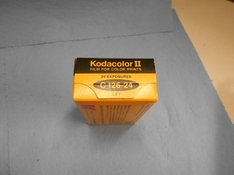
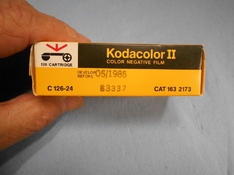


Are they both the same just a different way to refer to them?
As slide film can be refereed to as color reversal, transparency or e-6

Matt, as usual, is correct.
Color Print Film was a Kodak speciality, about the best in the business and possibly the only one outside of Agfa.
Attached is a picture of the last of my stock of kodak Color Print Film 4111.
This is a colour negative film designed to be developed in the C41 process. Essentially it is designed to take a (usually) contact exposure from a colour negative film and give you a colour slide, or transparency.
My professional use of this was in my work in an industrial colour lab where we made colour slides from colour negative film. Usually this was for advertising purposes where the colour balance was impossible to work out, or was impossible to correct for. This meant that colour negative film was exposed, the film developed, usually a colour contact sheet(s) was/were made. Then the chosen frames were enlarged, or contact printed onto C41 colour negative film to make colour transparencies for the advertising executives or art director to choose.
My personal use was to make myself able to supply a picture library with difficult lighting situation stock pictures. My method was to use 135 cameras, always tripod mounted, using very sharp lenses, like a 55mm Micro Nikkor to record industrial machinery under interesting light conditions. From the ensuing contact sheets, I would enlarge the colour negative film onto Kodak Color Print Film, then develop it to produce a colour corrected, or at the least a very nice coloured scene, 4x5" transparency.
I did this for around 5 years before they found out I was supplying them film images that originated from 35mm colour negative camera work. It was around this time that this kind of work was drying up as electronic photography started taking over and colour correction from an electronic file was their preferred method.
For the very best colour possible, I started using Fuji Reala 4 layer colour negative film the week it became available in Australia. The colour accuracy of this film combined with Kodak Print Film, was something to behold.
As you can see from the attached image, I bought my last lot in 1991. The demand for this product basically dropped off of a cliff around the end of 1991.
You can see my enlarger settings on the open box in the plastic bag.
View attachment 355715
$21.50 AUD? 25 sheets?

You wish.
Nope, it is for 10 sheets. I had to go to the darkroom to check. Expiry date is 3/1992.
I've had these last two boxes in my refrigerator for the last 32 years; would you believe?


If I hear someone referring to "colour print" film now, I expect them to have been in and around the industry prior to about 2000.
"Colour print" film was a label you would have been most likely to encounter in the world inhabited by those involved in the photo-finishing industry - prior to 2000.Really? I'm decidedly in the pre-2k camp, but I doubt that 99% of film users post 2000 know that "print film" refers to anything other than film for color prints. I think people our age think movies were shot on Kodachrome or other "movie film" as in Super 8 in the good old days

| Photrio.com contains affiliate links to products. We may receive a commission for purchases made through these links. To read our full affiliate disclosure statement please click Here. |
PHOTRIO PARTNERS EQUALLY FUNDING OUR COMMUNITY:  |