
• Welcome to Photrio!
    Registration is fast and free. Join today to unlock search, see fewer ads, and access all forum features.
    Click here to sign up

Colour cast on home-developed C41 negatives

Recent Classifieds

Forum statistics

Threads
202,607
Messages
2,842,942
Members
101,403
Latest member
buckdaddy
Recent bookmarks
0

Cybertrash

Member
Joined
Nov 1, 2012
Messages
240
Location
Stockholm, Sweden
Format
Multi Format
Hello all,

I've noticed that almost all images from C41 negatives that I have developed by myself have some sort of magenta or red cast to them on the resulting positive. So far I haven't been able to do actually print them, but I am fairly confident that it is the development process where something goes wrong, as I've scanned self-developed negatives and lab-developed negatives right after another with the exact same settings, just to rule that out as a variable (else I'd be posting in the Hybrid forum).

I currently develop using a Jobo CPE2 with a lift and the Jobo 6-bath C41 kit, using their recommended process, I have also been re-using the chemistry as advised by them and I store the working solutions in brown glass bottles with and I use these vacuvin stoppers to pump out extra air from the bottles. However after going through a number of developed rolls it appears as if the issue is apparent regardless of the age of the working solution.

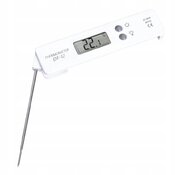
For measuring the temperature I use an Adox dial thermometer (seems to have been discontinued, so there's no English description on their website, hopefully it's clear enough what it is anyway). Typically the water bath in the Jobo will ned to be set a little higher than 38°C in order for the solutions in the bottles to reach the desired temperature.

Looking at the negatives themselves it is quite hard to tell the difference with the naked eye, here the left strip is lab-developed and the right one is home-developed and to me it appears as if the base of the right strip is slightly blue or purple than the left one:

1772485250298.jpeg


Bringing them into the computer the difference is more notable (forgive the slight trespassing into hybird territory here), this time the lab-developed negative on the right and the home-developed negative on the left. To me it looks like the home-developed negative has a blue cast to the base, and it becomes very apparent in the colour of the trees.

1772485840463.jpeg


I think in the end, when inverted, this has the effect of adding a red or magenta cast to the resutling positive, which is quite troublesome to colour correct. I would imagine that this might be an even larger problem if I were to do RA4 prints of these.

Does anyone know what might be the cause of this issue? I have tried finding information online, and I've seen some suggestions that exhausted developer might cause something like this, but since I've developed using newly mixed developer and still gotten these results I'm not conviced that is the case here.

Ideally I would get some process control strips, but if I've understood things correctly you also need a colour densitometer to use these, which I do not own.


Could I have issues mixing up the chemicals? I've split the initial 2.5L batch into several 1l batches according to the Jobo instructions, and I mix using graduated cylinders which I would expect to be accurate enough. Or could it be a temperature issue? Or light leaks? Any advice would be appreciated.

Thanks!
 
I think you have the right idea: When I had a CPE2+, I measured temperature from the developer bottle. Precise temperature is critical for color work, else you may see color shifts. Markings on the Jobo's temperature dial aren't particularly accurate. IIRC, I used to wait an hour or more for the processor to reach thermal equilibrium.
 
Lower the temp of developer and less agitation, according to Unicolor troubleshooting tips I have here.
 
Vänta håll!
What is "Jobo 6 bath C-41 kit"? Standard E-6 is six bath, not C-41.

For a remarkable red or magenta cast, the temperature difference should be also quite remarkable. C-41 does have some tolerance. I don´t know, but I would rather think there is an error in mixing the developer, or possible contamination.. Wrong temperature does affect colors, but we are then talking about problems occurring when people try to develop at wrong temperature, compensating it with time. Since this is not the case, and the density of the negatives seems to be correct (by naked eye), I don´t think temperature is the issue.

It is possible, although not very likely that you have received damaged concentrates. For instance, it is possible they have frozen during the transport.

Besides a chemical issue, is it possible you have a faint red LED, or some other, very faint red light source somewhere in your darkroom? I have made otherwise fine looking negatives with a bright green base, with colors impossible to correct by just forgetting to switch one small red LED off.
 
Check your thermometer.

Contact a good film lab in your country. They should be able to help you with reading the values of your control strips. (They are doing this every day, don't they?). My lab could not help me but they recommended a colour consultant who took the measurements at a very reasonable cost.

You obviously know about the Kodak C-41 process control documentation. It should help you once you get the data from your control strips.

Looking at scans of your negatives is not very helpful in troubleshooting your process.

I wonder if Jobo will be of any help if you contact their support. After all you are using their chemistry and the processing machine.
 
Besides a chemical issue, is it possible you have a faint red LED, or some other, very faint red light source somewhere in your darkroom?

I agree with (some of) the other things you suggest, but I do not see an indication for a red LED in the darkroom. Green perhaps! The base of the DIY strip is noticeably more magenta. The color balance is evidently different.

The scan seems to balance out quite OK regardless:
1772565699914.png

However, I agree the situation is not optimal.

I store the working solutions in brown glass bottles with and I use these vacuvin stoppers to pump out extra air from the bottles. However after going through a number of developed rolls it appears as if the issue is apparent regardless of the age of the working solution.
Please clarify: have these problems been around from the first roll you developed with the chemistry? I assume from the quote above that you have been re-using your chemistry; is this correct? How many times/rolls over what kind of time? Do you adjust the development temperature based on the no. of rolls already processed?

My first thought is too long development time or too concentrated developer; so either a timing or a mixing problem.

a Jobo CPE2 with a lift
I'm not a fan of these as it has happened very often that chemistry stuck in the tubes and cross-contamination occurred. This might also very well explain the problems you're seeing. Typically the problems then get worse as you re-use the chemistry as the degree of cross-contamination increases, although this is not guaranteed.

I'd try adding a stop bath step (although this should not make a difference with your chemistry) and avoid using the lift and associated tubing in the Jobo. Verify correct temperature and time for the development step.

It's also worth a shot to re-bleach and re-fix the negatives as a matter of course, although this will likely not make a difference. Yet, it's easy to exclude potential problems with bleach & fix by doing this; it works best to do this on one strip of the film so you can compare it to a strip that's not re-processed to see if there's a difference.
 
Thank you all for the thoughtful replies, some good food for thought, I will attempt to address some of the specific comments below:

Vänta håll!
What is "Jobo 6 bath C-41 kit"? Standard E-6 is six bath, not C-41.
Mistake on my part, I mean the 3-bath C-41 kit, just got my numbers mixed up!
For a remarkable red or magenta cast, the temperature difference should be also quite remarkable. C-41 does have some tolerance. I don´t know, but I would rather think there is an error in mixing the developer, or possible contamination.. Wrong temperature does affect colors, but we are then talking about problems occurring when people try to develop at wrong temperature, compensating it with time. Since this is not the case, and the density of the negatives seems to be correct (by naked eye), I don´t think temperature is the issue.

It is possible, although not very likely that you have received damaged concentrates. For instance, it is possible they have frozen during the transport.

Besides a chemical issue, is it possible you have a faint red LED, or some other, very faint red light source somewhere in your darkroom? I have made otherwise fine looking negatives with a bright green base, with colors impossible to correct by just forgetting to switch one small red LED off.
The concentrates are probably not the issue since I've observed this across two different batches of the same kit, I store them in a a small closet in my apartment that does get fairly cold in the winters, but never even close to freezing.

Contamination is an interesting thought, I take care to use separate graduated cylinders for mixing up my chemicals, but maybe there is some step in between that I am missing. As is the light contamination idea. I load the film in aforementioned closet, but Ive added black rubber strips to the door frame and use a blackout curtain in front of it, which I have thought would keep things fairly light tight. One idea might be to load a test film in a proper dark bag instead to see if it makes any difference.

I agree with (some of) the other things you suggest, but I do not see an indication for a red LED in the darkroom. Green perhaps! The base of the DIY strip is noticeably more magenta. The color balance is evidently different.

The scan seems to balance out quite OK regardless:
View attachment 419468
However, I agree the situation is not optimal.


Please clarify: have these problems been around from the first roll you developed with the chemistry? I assume from the quote above that you have been re-using your chemistry; is this correct? How many times/rolls over what kind of time? Do you adjust the development temperature based on the no. of rolls already processed?
From what I can tell I've had these problems from the first rolls developed with a newly opened kit. But I have been re-using the chemistry over the period of about a week, up until the maximum number of rolls specified in the kit manual (~16 rolls, although I have typically stopped at 15), increasing the processing time (development, bleach) according to the printed instructions.

My first thought is too long development time or too concentrated developer; so either a timing or a mixing problem.


I'm not a fan of these as it has happened very often that chemistry stuck in the tubes and cross-contamination occurred. This might also very well explain the problems you're seeing. Typically the problems then get worse as you re-use the chemistry as the degree of cross-contamination increases, although this is not guaranteed.

I'd try adding a stop bath step (although this should not make a difference with your chemistry) and avoid using the lift and associated tubing in the Jobo. Verify correct temperature and time for the development step.

It's also worth a shot to re-bleach and re-fix the negatives as a matter of course, although this will likely not make a difference. Yet, it's easy to exclude potential problems with bleach & fix by doing this; it works best to do this on one strip of the film so you can compare it to a strip that's not re-processed to see if there's a difference.

Lift is interesting, I typically take care to wash it out with warm water after each development session, but maybe that needs to be more thorough. As for stop bath, that isn't mentioned in the manual, would I be able to use a regular stop bath like in b&w processing for this purpose?


Several commenters also mentioned temperature and that the thermometer might be an issue. What would be another good option for a thermometer? Are the Jobo or Paterson colour thermometers trustworthy?

I think I might try to cut up a roll of colour film into test strips and try shooting a colour chart and then isolating these variables in processing to see what might lead to a change, quite cumbersome but it'll probably be worth it.

Thanks again for the comments.
 
I agree with (some of) the other things you suggest, but I do not see an indication for a red LED in the darkroom. Green perhaps! The base of the DIY strip is noticeably more magenta. The color balance is evidently different.

True, I mixed up the lab and self developed negatives, and the one on the left had more cyan in it. It is impossible to say, which one is the right color looking at pictures on my laptop, which is not perfectly calibrated.
 
Photrio.com contains affiliate links to products. We may receive a commission for purchases made through these links.
To read our full affiliate disclosure statement please click Here.

PHOTRIO PARTNERS EQUALLY FUNDING OUR COMMUNITY:


Ilford ADOX Freestyle Photographic Stearman Press Weldon Color Lab Blue Moon Camera & Machine
Top Bottom