• Welcome to Photrio!
    Registration is fast and free. Join today to unlock search, see fewer ads, and access all forum features.
    Click here to sign up

Color vs Black and White, the eternal debate

Pond

H
Pond

  • 0
  • 0
  • 8
1000002053.jpg

A
1000002053.jpg

  • 2
  • 0
  • 59

Recent Classifieds

Forum statistics

Threads
202,697
Messages
2,844,393
Members
101,475
Latest member
Melascha
Recent bookmarks
0
Status
Not open for further replies.
No he said that if he sees a photograph that looks exactly like the reality is useless to him. He had a very specfic criteria of transformation.
He did not hold his color photography of great value. He called his color camera his Schmulz toy camera. I also don't think of his color photographs as particularly good

So we need to judge photography by the narrow parameters as set by Winogrand?
 
So we need to judge photography by the narrow parameters as set by Winogrand?

No of course not.
We judge them by our own criteria (I guess)
I like Winogrand's parameters though. They set some very interesting standards.
Winogrand was one of the first photographers of his generation to acknowledge Atget or Arbus.
Through his brutal and simplistic way I find the stuff he said about photography the most insightful ever said together with HCB
 
Still a huge "if".

Be careful not always taking photographers' statements at face value. Especially Winogrand's. He was an expert at irony and self-depreciation, not to forget that some of his statements — "There is nothing as mysterious as a fact clearly described" — have that typical Yogi-Berra-ish ring that he obviously enjoyed using, half seriously, half to confound people. He seemed to have had quite a mischievous sense of humour.
So True
What's interesting with Winogrand's colour experiments is, as the editors of the recent book Winogrand: Color point out, that it forced him to work differently, that is, much slower due to the lower ISO that he got from black and white film. The results still bear Winogrand's curiosity about American people and American culture, but with something a bit more deliberate in them.

Very interesting never thought of it.
I like his colour photographs. They show possibilities, what could have been. And they are much better than a lot of his later, California photographs. He obviously had a sense of the role of colour in the American psyche, but expressed in a very different way than a William Eggleston or a Saul Leiter, to name two other great colour photographers.

Damn how did I forget those two? 😀
 
I have printed some color a couple decades ago (RA4). We had an Ilford Cibachrome processor we used for RA4 at the university, and since chemicals would die in it after a few days, I'd make a few prints when the chemicals were about to die rather than waste them. It was a good lesson is seeing color, but too bad I was a lousy student.

My hat off to all those working in color. We all see color differently (with color blindness on one end of the scale) and react emotionally to color differently. Watching a sunset a few years ago, the colors were finally all gone and I was ready to head back, but the lady I was with wanted to stay and enjoy all the colors until they were gone.

Sometimes I think I just do B&W because it is easier (for me...YMMD).

I enjoy the color work of Cape Light by Joel Meyerowitz. 8x10 color negative (tungsten balanced) film.
 
There are many black and white photos that could have been done in colour, and many colour photos that could have been done in black in white.

The difference is in the intent. In the sense that in some cases, the colour photograph is not only about the subject it depicts, but also in part about colour itself—to a point where sometimes you wonder if the photograph isn't solely about colour.

There are contemporary photographers for whom this holds true, i.e., who use colour as an integral and essential part of composition itself. Top of my mind, I can think of:

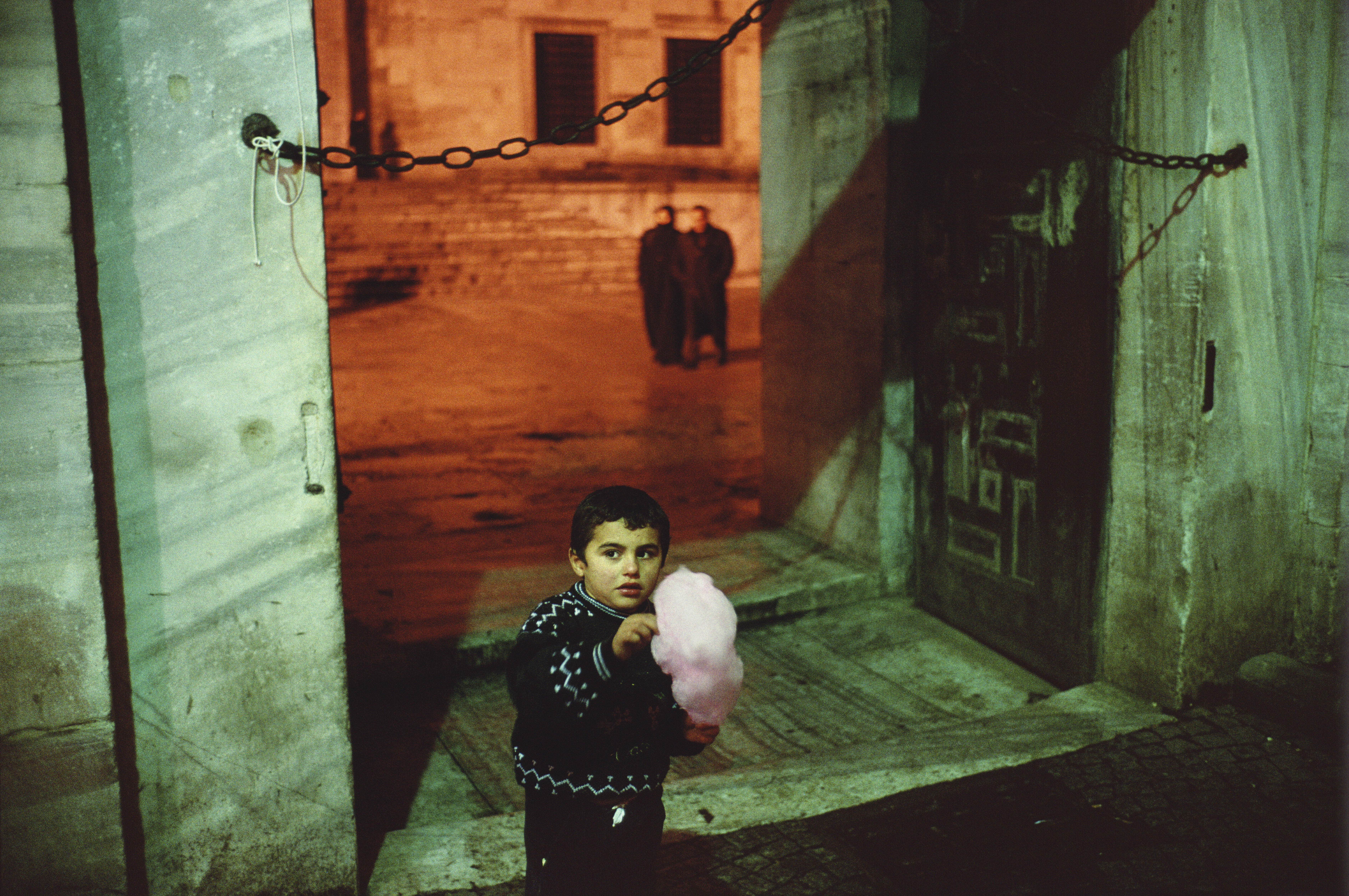
Alex Webb and his wife Rebecca Norris Webb


Harry Gruyaert

 
There are many black and white photos that could have been done in colour, and many colour photos that could have been done in black in white.

The difference is in the intent. In the sense that in some cases, the colour photograph is not only about the subject it depicts, but also in part about colour itself—to a point where sometimes you wonder if the photograph isn't solely about colour.

There are contemporary photographers for whom this holds true, i.e., who use colour as an integral and essential part of composition itself. Top of my mind, I can think of:

Alex Webb and his wife Rebecca Norris Webb


Harry Gruyaert


I see what you mean. In my mind when a photograph is solely about color is usually a weak one, more like a design game of marching colors
 
  • koraks
  • koraks
  • Deleted
  • Reason: Who am I kidding anyway
In my mind when a photograph is solely about color is usually a weak one, more like a design game of marching colors

Why not try to understand things on their terms rather than on your own?
 
I see what you mean. In my mind when a photograph is solely about color is usually a weak one, more like a design game of marching colors

I’m not sure I know what that means. Can you give an example of a photo that is “solely about color”?
 
Last edited:
I see what you mean. In my mind when a photograph is solely about color is usually a weak one, more like a design game of marching colors

I agree in that some people photograph a patch of color with the same inattention as photographing an object -- ending up with a unimaginative image and hoping just the patch of color or the object will make it interesting. A successful photograph that is solely about color (or solely about anything) is a challenge to make without leaning heavily on form, texture, reason, etc.
 
when a photograph is solely about color is usually a weak one
A successful photograph that is solely about color (or solely about anything) is a challenge to make without leaning heavily on form, texture, reason, etc.

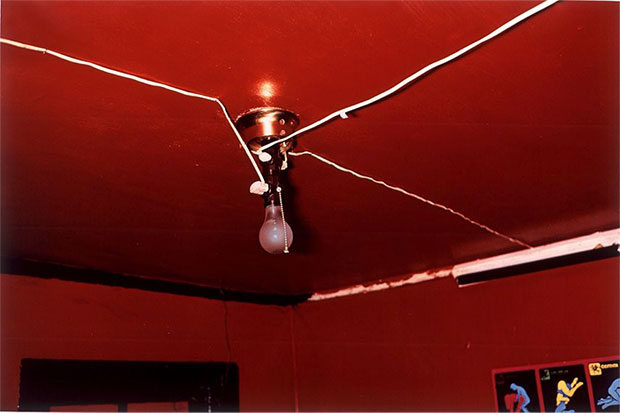
William Eggleston, Untitled (Greenwood, Mississippi), 1973.

Is this about a lamp? About the ceiling? About a lamp on the ceiling? About a red ceiling? About a lamp on a red ceiling? About the colour red? About a photograph of the colour red? About bad taste? About nothing other than the fact that it existed? Is the blood-like red a metaphor? What's interesting about it, the fact that there is (was) a lamp and wires on a ceiling that someone decided to paint a bloody red, that it's a photograph of a lamp and wires on a ceiling that is painted a bloody red, or that William Eggleston thought it interesting to take a photograph of a lamp and wires on a ceiling that is painted a bloody red?

The difficulty is always figuring out what it's about, if, indeed, it's about anything.


egglestonceiling.jpg
 
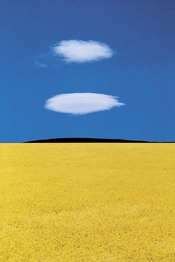
I’m not sure I know what that means. Can you give an example of a photo that is “solely about color”?

Maybe the Italian photographer Fontana?
 

Attachments

  • Landscape-Italy-1978-OK-2.jpg
    Landscape-Italy-1978-OK-2.jpg
    149.5 KB · Views: 70
It is just a game of form I understand it. But for me photography needs to at least incorporate the time and space aspect of it

I don’t think it can truly ever be solely about colour. The closest you can probably get would be an abstract photograph but even then there is something else unless it’s just a uniform colour filling the frame.
 
William Eggleston, Untitled (Greenwood, Mississippi), 1973.

If this picture was in black and white, I don't think anyone would pay much attention to it. Indeed, it's a good example of a photo that's " all about color. "
 
Hello, perhaps this is a question that many of you had asked themselves or answered but I want to hear your opinion on it.
Personally, I believe a good photograph is mainly about the form and composition and will be good in both black and white and color.
However, I think that color is an extra element or problem to solve. For example black and white usually tends to "blend" and "fuse" things together under the umbrella of monochromatic tones. The color on the other hand might be too distracting or out of context. Also black and white "wants" and "screams" for editing in the darkroom/lightroom, color on the other hand resists exaggerated editing.

Then I noticed that many people shoot black and white because they think that their photos look more "artistic". I agree they tend to have an "artistic" look that takes benefit from the black and white properties and the historical legacy of the medium but in reality their photos could very well be weak.
In the end I have uttermost respect to people who try to do good photography nevertheless the medium (analog, digital, bw or color film). But perhaps I have some more secret admiration to the ones that do good color photography.

Color lends itself cartoons (entertaining) and vacation pictures (recording reality).

Monochrome lends itself to interpreting and manipulating reality. In theory, that should be possible with color as well, but I have seen precious little work that does.

The "great" color photographs I have seen are almost always some version of capturing the moment as seen, photojournalism, or flogging product (usualy clothing or accessories).

But that's just me. I may just lack the sophistication to grasp color.

In any case its not one or the other. It's whichever one serves the scene in question best.
 
Last edited:
The world is colorful, and a black and white picture is one step removed from the world. In that sense B&W is an "abstraction", which IMHO makes it more "intellectual," more engaging of thought and consideration than a simple rendering of the real, colorful world. And that is more or less why I find B&W much more interesting. I do tone many of my prints, which in a way seems to add an element of color.

The other reason is that I'm a darkroom printer with no digital component. I don't scan, use Photoshop or Lightroom. My post processing is all chemical and manual. At one time I did shoot and print color, but that was when color processors and Cibachrome were available. To shoot color today I would have to invest in a digital "darkroom" with all that entails, which I am unwilling to do.
 
The world is colorful, and a black and white picture is one step removed from the world. In that sense B&W is an "abstraction", which IMHO makes it more "intellectual,"

I'm not sure I buy that. I think it makes the outcomes more "interpretive".

For example, compare the work of Joel Meyerowitz to that of Vivian Maier. There is a retrospective of his in the current issue of LFI and, frankly, they pretty much mostly look like tourist snapshots to me. Maier seems to capture the essence of the times in which she worked. The starkness of monochrome propels her images.
 
The world is colorful, and a black and white picture is one step removed from the world. In that sense B&W is an "abstraction", which IMHO makes it more "intellectual," more engaging of thought and consideration than a simple rendering of the real, colorful world. And that is more or less why I find B&W much more interesting. I do tone many of my prints, which in a way seems to add an element of color.

The other reason is that I'm a darkroom printer with no digital component. I don't scan, use Photoshop or Lightroom. My post processing is all chemical and manual. At one time I did shoot and print color, but that was when color processors and Cibachrome were available. To shoot color today I would have to invest in a digital "darkroom" with all that entails, which I am unwilling to do.

Yes with BW you gain automatically the abstraction
 
I'm not sure I buy that. I think it makes the outcomes more "interpretive".

For example, compare the work of Joel Meyerowitz to that of Vivian Maier. There is a retrospective of his in the current issue of LFI and, frankly, they pretty much mostly look like tourist snapshots to me. Maier seems to capture the essence of the times in which she worked. The starkness of monochrome propels her images.

I think that's what I was trying to say.
 
William Eggleston, Untitled (Greenwood, Mississippi), 1973.

Is this about a lamp? About the ceiling? About a lamp on the ceiling? About a red ceiling? About a lamp on a red ceiling? About the colour red? About a photograph of the colour red? About bad taste? About nothing other than the fact that it existed? Is the blood-like red a metaphor? What's interesting about it, the fact that there is (was) a lamp and wires on a ceiling that someone decided to paint a bloody red, that it's a photograph of a lamp and wires on a ceiling that is painted a bloody red, or that William Eggleston thought it interesting to take a photograph of a lamp and wires on a ceiling that is painted a bloody red?

The difficulty is always figuring out what it's about, if, indeed, it's about anything.


egglestonceiling.jpg

To my eye it's the equivalent of a mobile phone "butt dial". I applaud your intellelectual list of questions, though.
 
I do appreciate B&W photogaphs from other photographers but I myself do not to it. Why simple because I am not good at it.
 
This one is simple for me b+w , because I'm color blind.
Color printing was somewhat futile
William Eggleston, Untitled (Greenwood, Mississippi), 1973.

Is this about a lamp? About the ceiling? About a lamp on the ceiling? About a red ceiling? About a lamp on a red ceiling? About the colour red? About a photograph of the colour red? About bad taste? About nothing other than the fact that it existed? Is the blood-like red a metaphor? What's interesting about it, the fact that there is (was) a lamp and wires on a ceiling that someone decided to paint a bloody red, that it's a photograph of a lamp and wires on a ceiling that is painted a bloody red, or that William Eggleston thought it interesting to take a photograph of a lamp and wires on a ceiling that is painted a bloody red?

The difficulty is always figuring out what it's about, if, indeed, it's about anything.


egglestonceiling.jpg

The poster is suggestive
 
The world is colorful, and a black and white picture is one step removed from the world. In that sense B&W is an "abstraction"
Yes with BW you gain automatically the abstraction

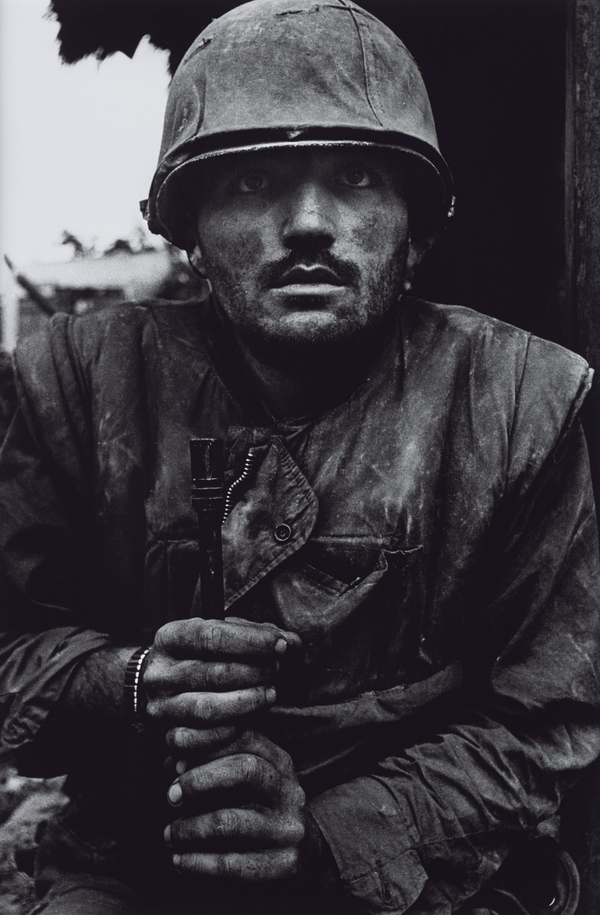
You'll have to work very hard to convince me that these two photos by Don McCullin are "abstractions". I don't feel at all "removed from the world," but, on the contrary, fully in the terrible, absurd, reality of it. Nothing abstract here.

image


84672.jpg


But for me photography needs to at least incorporate the time and space aspect of it

Let me put this another way: Why not try to understand things on their terms rather than from what you need them to be?
 
Status
Not open for further replies.
Photrio.com contains affiliate links to products. We may receive a commission for purchases made through these links.
To read our full affiliate disclosure statement please click Here.

PHOTRIO PARTNERS EQUALLY FUNDING OUR COMMUNITY:


Ilford ADOX Freestyle Photographic Stearman Press Weldon Color Lab Blue Moon Camera & Machine
Top Bottom