
• Welcome to Photrio!
    Registration is fast and free. Join today to unlock search, see fewer ads, and access all forum features.
    Click here to sign up

Color vs Black and White, the eternal debate

Lost....

A
Lost....

  • 0
  • 0
  • 0
Foggy Swans.jpg

D
Foggy Swans.jpg

  • 0
  • 0
  • 11

Recent Classifieds

Forum statistics

Threads
202,691
Messages
2,844,310
Members
101,473
Latest member
suprapco
Recent bookmarks
0
Status
Not open for further replies.
Am I the only one who finds this thread rather shameful?

I don't think I've been insulting with anything I've said. Of course, ye old OP hasn't responded to anything I've said, so perhaps I'm on his ignore list (I'm probably on a few).

People are incensed by a basically callous disregard for, well, the entire history of aesthetics on the part of @nikos79. Some very well-thought-out ideas were expounded in this thread that he simply brushed aside as so much b.s. Also, people tend not to like "xxxx is bad/awful/fake" when the justification is just personal preference with complete disregard for anything else. It's pretty bad when what can condemn you as a photographer is posting on Instagram or having a group of photos that are all thematically similar. People work hard to establish a style and that style can be the complete key to their success. Anyway....
 
I don't think I've been insulting with anything I've said. Of course, ye old OP hasn't responded to anything I've said, so perhaps I'm on his ignore list (I'm probably on a few).

People are incensed by a basically callous disregard for, well, the entire history of aesthetics on the part of @nikos79. Some very well-thought-out ideas were expounded in this thread that he simply brushed aside as so much b.s. Also, people tend not to like "xxxx is bad/awful/fake" when the justification is just personal preference with complete disregard for anything else. It's pretty bad when what can condemn you as a photographer is posting on Instagram or having a group of photos that are all thematically similar. People work hard to establish a style and that style can be the complete key to their success. Anyway....

You are not in my ignore list.
I just didn't have anything to say to you because I either kind of agreed with you on some posts or totally disagreed (as the importance on color on some photos) but then you formulated your arguments quite solid so I didn't have anything to reply to you. Simply a different perspective/opinion which nevertheless contributed to the dialogue
 
nikos79...Thanks for link to Rivellis' piece. I read much truth in it, and also questionable generalities and interesting opinions. it would be interesting going thru his points one at a time (if I wanted to be on the computer that long!)

Glad you enjoyed it.
Feel free to bring any interesting topic for discussion
 
An interesting idea. We must also consider that there were black and white images way before film and TV, so the concept of B&W is as old as ink. And the B&W of night has been with us since sight.

nikos79...Thanks for link to Rivellis' piece. I read much truth in it, and also questionable generalities and interesting opinions. it would be interesting going thru his points one at a time (if I wanted to be on the computer that long!)

I grew up with BW TV and BW photos. Color came on slowly. Newspapers only had BW photos until relatively recently. Color news print wasn't developed until much later. I remember when the NY Times came out with it. Many still show mainly BW.
 
Yep Alan, you're old as dirt like many, or most, of us. 😎

If you are old enough, you might have seen the first color photographic image projected onto a wall in 1861. Or perhaps seen the first digitally colored photographs made not long after that (actually, I do not know when the first hand-colored photographic prints were made and sold). Color photography developed almost side-by-side with B&W photography -- maybe a half-step behind.

I make monochrome carbon prints...a process patented in 1864. By 1868, full color carbon prints were being made -- and held the position as The Way to make color prints until replaced by dye-transfer.
 
Last edited:
battle between tones vs hues. I am sure there are no losers.
 
Last edited:
battle between tones vs hues. I am sure there are no losers.

I don't subscribe to your point of view. The loser is the artists freedom to choose. It’s all about the influence of ethics on aesthetics.
 
Last edited:
There were many forms of color printing developed over the decades. Carbro was the most important commercial option prior to dye transfer, which itself had a running start quite a ways back. The earliest convenient DIY color exposure system was Autochrome. The necessary quantum leap behind most color printmaking was the development of panchromatic film itself.

Hand-coloring is a different matter. There were many hand-colored Daguerrotypes.
 
The loser is the artists freedom to choose.

Well, truthfully, the artist is free to choose no matter what armchair (or otherwise) critics say. The artist (or craftsman, for that matter) will choose what is best suited within the chosen mode of expression. If anyone truly stopped to think about it, it is very obvious that colour is of great relevance with regard to colour photographs. It's just absurd to think otherwise.
 
Well, truthfully, the artist is free to choose no matter what armchair (or otherwise) critics say. The artist (or craftsman, for that matter) will choose what is best suited within the chosen mode of expression. If anyone truly stopped to think about it, it is very obvious that colour is of great relevance with regard to colour photographs. It's just absurd to think otherwise.

On the end of the day we all are zoon politikón. We like to feel , as photographer, at home some ware. Maybe Photrio can provide that.
 
Meanwhile back to the original question, I'd suggest that this is one example of simply superb color work that mostly wouldn't be as compelling in monochrome:

 
Last edited:
... If anyone truly stopped to think about it, it is very obvious that colour is of great relevance with regard to colour photographs. It's just absurd to think otherwise.

And I do not think that the OP thinks that. He just approaches it from a different direction and we have a hard time wrapping our heads around it.

It happens quite a bit around here (and in life in general). We defend our viewpoints rather than risk thinking differently.

For example, I like to consider my carbon prints as being able to exhibit Zone -I (minus 1) -- that is, having image forming relief (image detail) in my deepest shadows after giving the print another stop of exposure after reaching a Zone 0 (no longer any tonal variation) on the print. When I first mentioned this concept, a moderator basically shut me down because he could not wrap his mind around it, so it was not worth continuing.
 
Last edited:
we have a hard time wrapping our heads around it

It's not hard to wrap your head around it. Just go read what he's said.

a good photograph can work either way in black and white or color

That means colour is non-essential.

There's no great mystery as to why he thinks that. He simply believes that what makes a photo good doesn't involve colour.
 
Meanwhile back to the original question, I'd suggest that this is one example of simply superb color work that mostly wouldn't be as compelling in monochrome:


CR, One of my very favourite photographers. WAA is a master of composition. I remember his "Vanishing Breed" book......perfection I thought... managing those low light bar shots. I did think however, some of those would have worked (not been better...) in b/w. He's been an icon for me as far as composition of images.
 
Last edited:
It's not hard to wrap your head around it. Just go read what he's said.


That means colour is non-essential.

There's no great mystery as to why he thinks that. He simply believes that what makes a photo good doesn't involve colour.

Just proved my point...
 
It all depends on how wants to wrap one's mind around something. And I agree, it is nothing special, just life and our differences in how we see the world.
 
I want to applaud the sunset examples that have been submitted. In a bid to be democratic, they are all pretty decent in b&w.

I'll single out @Craig for his samples; the sky in the inversion looks positively menacing. Without the color capture for reference, I like to think that the photographer grabbed that shot over their shoulder while hightailing it out of the area.
 
I like to consider my carbon prints as being able to exhibit Zone -I (minus 1)

I remember that discussion and while I still disagree with your terminology, it's an instance that wasn't jarred by an inexplicably dogmatic basis. At worst, we had an axiomatic definition of zones to contend with. That makes it very different from this case here.
 
If anyone truly stopped to think about it, it is very obvious that colour is of great relevance with regard to colour photographs. It's just absurd to think otherwise.
I have been thinking about it, and I don’t think that can be right, given that most digital photos are taken in colour by default, and presumably some of those would work equally well or better in b/w. So colour is dispensable in at least some cases. Alternatively, would you say that if one is to make a successful b/w image, it is necessary to imagine the scene in b/w before taking the shot? Actually I’m somewhat inclined to the latter view, although I am not aware of doing this myself.
 
I have been thinking about it, and I don’t think that can be right, given that most digital photos are taken in colour by default, and presumably some of those would work equally well or better in b/w. So colour is dispensable in at least some cases. Alternatively, would you say that if one is to make a successful b/w image, it is necessary to imagine the scene in b/w before taking the shot? Actually I’m somewhat inclined to the latter view, although I am not aware of doing this myself.

I like to think that when you take a photo you record an "experience", you take one frame of the real world that is of great matter to you and you want to keep it dear and close to your heart by excluding like a skilled sculptor everything else outside the frame in order to build that small part of reality that you want to keep. In a sense you create your own reality. Colour can be a weapon in the arms of the photographer but imo the photo is never just about the colour.

William Albert Allard was mentioned before. He is my favourite "colour" photographer of all time. Not many know that he started in black and white and according to his own words he loved working in black and white. Nevertheless, none of his work in black and white is saved or known today. Allard used the color so naturally as part of his composition as if it was already there and he just recorded it, he never exaggerated it and you could think that his photographs were always above just colour but touched something "deeper". But that is my personal way of reading them. Someone else might say that Allard was just about the deep red/blueish hues of the Basque Country and the Mid West.

P.S. Jonathan, I don't think it is necessary to imagine the scene in black and white. This can come after when you see the photo you took. I find it a great mental practice (though very hard to do it myself) that when you photograph, you don’t think about the photo you’re going to take, but rather what is alive in front of you
 
Last edited:
I like to think that when you take a photo you record an "experience", you take one frame of the real world that is of great matter to you and you want to keep it dear and close to your heart by excluding like a skilled sculptor everything else outside the frame in order to build that small part of reality that you want to keep. In a sense you create your own reality. Colour can be a weapon in the arms of the photographer but imo the photo is never just about the colour.

William Albert Allard was mentioned before. He is my favourite "colour" photographer of all time. Not many know that he started in black and white and according to his own words he loved working in black and white. Nevertheless, none of his work in black and white is saved or known today. Allard used the color so naturally as part of his composition as if it was already there and he just recorded it, he never exaggerated it and you could think that his photographs were always above just colour but touched something "deeper". But that is my personal way of reading them. Someone else might say that Allard was just about the deep red/blueish hues of the Basque Country and the Mid West.

P.S. Jonathan, I don't think it is necessary to imagine the scene in black and white. This can come after when you see the photo you took. I find it a great mental practice (though very hard to do it myself) that when you photograph, you don’t think about the photo you’re going to take, but rather what is alive in front of you

You surprise me. I didn’t know Allard’s work, but I’ve just tried de-saturating a few of his photos, and they seem to lose their interest quite dramatically…which is what I’d expect, but you did say that a good photo should work either way.
 
You surprise me. I didn’t know Allard’s work, but I’ve just tried de-saturating a few of his photos, and they seem to lose their interest quite dramatically…which is what I’d expect, but you did say that a good photo should work either way.

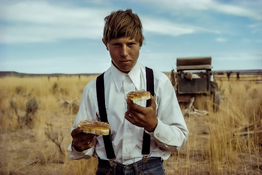
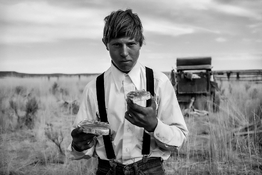
Why don't we share some examples here? Allard is a prominent colour photographer would be quite interesting to compare
 
What do you think? They both look equally good to me. I prefer the colour version but again I don't think that something changed dramatically
 

Attachments

  • Bill-Allard-(1937-)-0.jpg
    Bill-Allard-(1937-)-0.jpg
    281.5 KB · Views: 53
  • Bill-Allard-(1937-)-0.jpg
    Bill-Allard-(1937-)-0.jpg
    407.8 KB · Views: 47
Status
Not open for further replies.
Photrio.com contains affiliate links to products. We may receive a commission for purchases made through these links.
To read our full affiliate disclosure statement please click Here.

PHOTRIO PARTNERS EQUALLY FUNDING OUR COMMUNITY:


Ilford ADOX Freestyle Photographic Stearman Press Weldon Color Lab Blue Moon Camera & Machine
Top Bottom