
• Welcome to Photrio!
    Registration is fast and free. Join today to unlock search, see fewer ads, and access all forum features.
    Click here to sign up

Color images from B&W film...

Forum statistics

Threads
203,442
Messages
2,854,769
Members
101,845
Latest member
azak
Recent bookmarks
0
Joined
Aug 9, 2011
Messages
3,605
Location
On a boat.
Format
Multi Format
Didn't know where to put this, so its going here. I'm figuring this isn't a new thing, but I found it very interesting. I might like to try it one day, just to say that I did.
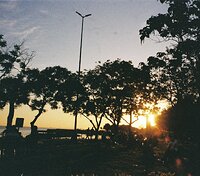
 
I remember seeing decades ago at the Eastman House in Rochester NY a demo of this done with three slide projectors. Impressive. I also seem to remember, also at Eastman House, a color image from only TWO images! And of course I think that Technicolor is a development out of the three color process.
 
The filmmaker shows us a colour print which was done a hundred years ago. And then the answer to "But how was it made?" is "in the Computer"? Ay Dios ...

This is the way it works without a computer:

 
I've done a fair bit of work like this. I especially like it for outdoor shots with natural lighting, where the sun slightly changes position between exposures. The final print gives these interesting rainbow like effects around the shadows as they progress throughout the exposures.

I learned it from my job, which is prepress for a print shop. In the old days, that's how you made color plates for color printing. You photographed the mock up onto some giant film with a giant, large format camera onto B&W film, and used red, green, blue, and no filter for the C,M,Y,K plates. The no filter exposure was used for the black, and was usually reduced somewhat, so as not to over saturate the final print. The black or K layer isn't necessary, as full cyan, magenta, and yellow will produce a black. But you'll get a deeper looking print with more dynamic range if you do use it. It just takes some experimenting to get the right amount, or you'll make the final print too dark. Usually around 20% will do.

Early technicolor examples did use two colors, usually red and green. Then the red filtered exposure was printed as a green image, and the green filtered exposure was printed with a red image. It actually works quite well, and you can get a lot more colors than you'd think by doing it that way. You can actually do this with many different colors. The trick is to pick colors that are complimentary, in a triad, tetradic, or whatever, so long as they're evenly spaced on a color wheel, and then use the complimentary colors for the print ink that you used for the filters during exposure. The reason we use R,G,B and C,M,Y,K isn't because it's the only options that work, but because due to the way that the human eye works (it only senses the color red, green, and blue directly), it's the most efficient. Be warned though, that the more colors you choose, the harder it becomes to balance them. That's why CMYOGVK (cyan, magenta, yellow, orange, green, violet, black), like what you'll find in some high end inkjet printers and some commercial print shops, printing didn't really take off until computers became powerful enough to make those separations. Doing those by hand is a nightmare!
 
The filmmaker shows us a colour print which was done a hundred years ago. And then the answer to "But how was it made?" is "in the Computer"? Ay Dios ...

I don't think the intent was about the computer. I think the intent was to illustrate how color is determined by density, because whether its done via analog or digital means, the ingredients are all the same.
 
a person named mark antony has a blog called photo utopia. he give detailed easy to follow instructions on how to do this :smile:
http://photo-utopia.blogspot.com/2007/11/colour-images-from-b-film.html
if you are using PS to scan and layer the negatives the filters don't have to be the exact filter #'s that hard core tri chrome image makers use I wanted to make tri chromes ( well you know modern ones ) with lenses with a large diameter and CC filters would have cost me a kings ransom, so I just bought RGB lighting gels ( for like $5 total ) and threw caution to the wind, its worked out fine.
 
What's even more fun is printing the negatives through the filters again onto color paper in the darkroom.
 
This is really back to basics and it's great.
Whatever method your use, it has to be fun and the more improvised the better, IMO.
It just shows the basic idea behind the tripack colour film that we take for granted today.

I learned it from my job, which is prepress for a print shop. In the old days, that's how you made color plates for color printing. You photographed the mock up onto some giant film with a giant, large format camera onto B&W film, and used red, green, blue, and no filter for the C,M,Y,K plates. The no filter exposure was used for the black, and was usually reduced somewhat, so as not to over saturate the final print. The black or K layer isn't necessary, as full cyan, magenta, and yellow will produce a black. But you'll get a deeper looking print with more dynamic range if you do use it. It just takes some experimenting to get the right amount, or you'll make the final print too dark. Usually around 20% will do.

I remember watching a guy make colour separations for a local newspaper back in the early 1980's and it was a joy to watch. BTW they weren't made locally, this was a specialist company that did separations for the print industry.
We now take colour for granted in magazines and publications but there was a lot of work involved back then, and this was just before they went digital.
 
I watched this video, sorry, have to go now and drive my 18 wheeler Kenworth two blocks to go get a litre of milk.
 
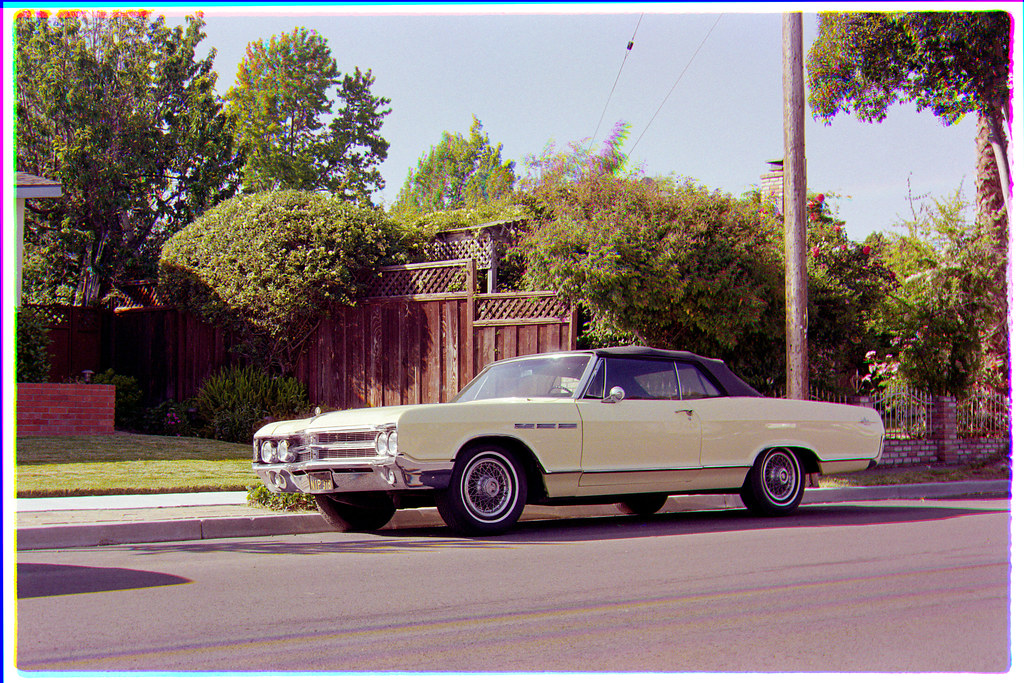
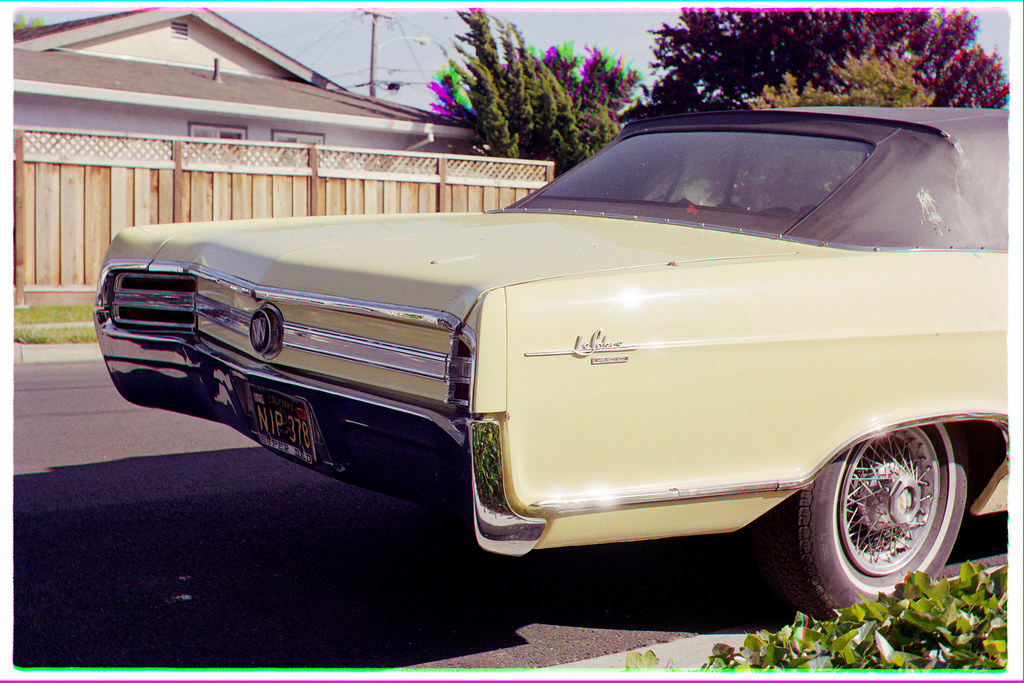
This was from a project I did in college. The contact print shows the bracketed images for the rd, green, and blue filters. The separations were to determine the correct exposure for each layer. The full color is from the three separate and registered negatives.
FE03095F-BD25-46EF-BF42-6E3010592469.jpeg
 
Last edited:
Well done! I do note that the trees in the upper left show some "fringing". Was there a little breeze between the exposures?
 
Well done! I do note that the trees in the upper left show some "fringing". Was there a little breeze between the exposures?
Thank you! Yes, there must have been a bit of a breeze between exposures, but I was too preoccupied with not bumping my tripod to notice in the moment. :D
 
The filmmaker shows us a colour print which was done a hundred years ago. And then the answer to "But how was it made?" is "in the Computer"? Ay Dios ...

This is the way it works without a computer:


I'm fascinated by this process and would like to try it some day, but how is the correct color balance achieved? Seems way to complicated a process to do by trial and error like we do with common RA-4 printing.
 
The reason you use black and white is because you want black and white.
 
You're right, good thing I have not just one black and white image, but three of them! :wink:


Filtered Tulips No. 2
by dourbalistar, on Flickr

p.s. The reason why I do photography is to have fun, experiment, and hopefully make some interesting images. :smile:

I think you did a great job of it and yes it is fun to experiment and I like your 3 filtered tulips shots showing the different filtration effects in B&W.

This is colour photography at its simplest.

Why bother with modern tripack colour film when you can do this???:D
 
I think you did a great job of it and yes it is fun to experiment and I like your 3 filtered tulips shots showing the different filtration effects in B&W.

This is colour photography at its simplest.

Why bother with modern tripack colour film when you can do this???:D
Thank you for the kind words, foc! Although, arguably, it would be simpler to just shoot color film. I mean, the reason why you shoot color is because you want color, right? :wink: Of course, this method is much more fun and interesting, at least to me. :D
 
Photrio.com contains affiliate links to products. We may receive a commission for purchases made through these links.
To read our full affiliate disclosure statement please click Here.

PHOTRIO PARTNERS EQUALLY FUNDING OUR COMMUNITY:



Ilford ADOX Freestyle Photographic Stearman Press Weldon Color Lab Blue Moon Camera & Machine
Top Bottom