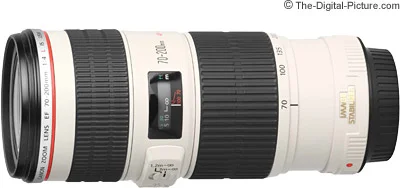
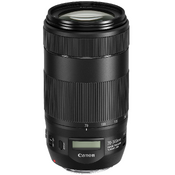
I remember the opposite and that the hypothesis was that the moving IS group somehow affected the optimization of the optical design negatively. However, I never attributed much value to this discourse which to me sounded like splitting hairs; AFAIK all Canon 70-200 L lenses are absolutely excellent and leave nothing to desired in terms of optical quality.
It's a more modest lens in terms of bulk and weight; I think that's certainly a relevant matter.
Actually, old write-ups did support the fact that IS version was optically a bit superior to non-IS predecessor. For example:
Is the Canon EF 70-200mm f/4L IS USM Lens right for you? Learn all you need to know in The-Digital-Picture.com's review!

www.the-digital-picture.com
"And the 70-200 f/4 IS delivers incredibly in this area. The f/4 IS lens adds 2 elements and 4 groups to the non-IS lens. From what I can see, the additional glass has not adversely affected image quality in any way.
This lens is extremely sharp wide open and from corner to corner even on a full frame body. There is little improvement when stopping down - the f/4 IS starts out sharp wide open. Impressive performance.
The non-IS 70-200 f/4 is similarly sharp in the center over the mid and long portion of the focal length range, but the f/4 IS is sharper in the center through 85mm or so and is noticeably sharper in the corners over most of the focal length range. These two lenses are most similar at 200mm. These differences are reduced as the subject distance is increased (the non-IS lens performs more similarly to the IS lens). The f/4 IS and f/2.8 IS 70-200mm L lenses are similarly sharp at identical aperture and focal length settings."
The subjective opinion expressed by owners of both was often 'the same' in optical performance, however.
One reply does quote both photozone.de testing for both lenses, in which objective tests show superiority of the IS version...
Explore Canon Forum photography discussions. Share your photos, discuss gear and techniques, and buy or sell equipment in our marketplace.
www.fredmiranda.com
Unfortunately the photozone.de reviews of the non-IS version are no longer available direcly from its current website listing of test reports, and the tests available via the above link use a lower resolution digital sensor camera, so the resolution values are not appropriate to higher resolution sensors; but the
relative superiority of the IS version are borne out in the reported lens resolution values.