• Welcome to Photrio!
    Registration is fast and free. Join today to unlock search, see fewer ads, and access all forum features.
    Click here to sign up

c41 reverse development using rodinal possible?

Forum statistics

Threads
203,265
Messages
2,852,115
Members
101,753
Latest member
Janek201
Recent bookmarks
0

jrmions

Member
Allowing Ads
Joined
Apr 15, 2010
Messages
15
Format
35mm
I've been reading the internet for weeks.

I mainly use kodak farbwelt 100, because they are 0.30usd in my country(poland) and give quite nice results.

I've been able to develop c41 using caffenol, bad results.

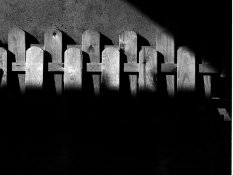
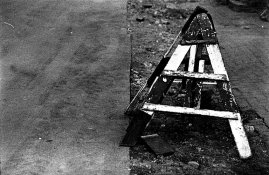
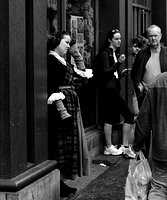
Later after many trials I've managed to combine a good recipe for developing kodak 100@800 in rodinal stand development.(24 celsius, 1:100, first 60 seconds of agitation, 65mins stand development, fix 5mins, wash)


Please give me a straight forward answer: will I be able to reverse develop(to get positives) a c41 film using rodinal + some other chemicals (I think it should be color bleach, c41 developer). I don't know anything about color developers, the names like CD4, it's so confusing for me, my english is not so perfect and I can't understand it.

thanks

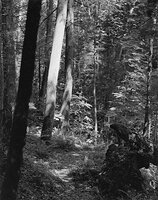
PS. I've attached, my 800 EI rodinal pushed kodak 100.

PS2. IF you are interested, I can also show you some extreme pushes like 1600/3200 :smile:
 

Attachments

  • defadddsadasult.jpg
    defadddsadasult.jpg
    334.4 KB · Views: 303
  • defau228lt.jpg
    defau228lt.jpg
    188.3 KB · Views: 264
  • default.jpg
    default.jpg
    380.5 KB · Views: 268
I do not have an answer to your question, but I am interested in seeing your extreme pushes.
 
You can try this:

Develop in Rodinal
Wash well
Take out of tank and expose for a minute or two in bright room light
Put back to tank
Do normal C-41 development (color dev, bleach, wash, fix, wash, final rinse).

I've never tried it. The "slides" you get will probably have the orange mask and will be low in contrast. If they are too dark, add more time in Rodinal next time. If they are too light, reduce Rodinal time.

Rodinal is probably not the best BW developer for this purpose.
 
I've tried a reversal development of color slide film using Rodinal as the first developer and found the stuff activated some of the dye couplers. Dektol works better.
 
You can try this:

Develop in Rodinal
Wash well
Take out of tank and expose for a minute or two in bright room light
Put back to tank
Do normal C-41 development (color dev, bleach, wash, fix, wash, final rinse).

I've never tried it. The "slides" you get will probably have the orange mask and will be low in contrast. If they are too dark, add more time in Rodinal next time. If they are too light, reduce Rodinal time.

Rodinal is probably not the best BW developer for this purpose.

should I fix before exposing to sunlight after rodinal?
 
should I fix before exposing to sunlight after rodinal?

No, that would remove the silver halide and you would be left with a BW negative image. If you then continued with the C41 process the bleach would remove that and you would be left with nothing!
 
Rodinal works as a E-6 first developer when it is run hot, when it is run cold, I find I get extremely dense to black slides,e ven when the b&w neg is 'perfect'.

1+100, 20c, 1 hour stand works for a negative development on C-41 film, either b&w neg, or follow by fix, bleach, colour develop, bleach fix for a good colour neg. It does not work for colour positive though as for the above reasons.

1+50, 40c, 2 hours 20 minutes with agitation every 15-20 minutes works as a first developer for colour positive using C-41 film.


For reversal on colour film you want: first developer, wash, expose to light or sunlight, either way, colour develop until completion, wash, bleach, wash, fix, wash, stabilise if you have stabiliser.

I've found using Rodinal 1+25 + 5g of table salt per 300ml of working solution, 20c, 8 minutes, agitation every minute, (follow by wash, fix, wash, colour develop (C-41 or E-6 CD), wash, bleach, wash, fix, wash, stablise) gives great C-41 results 1 stop faster than box speed, with box speed being pretty decent, and slower than box speed being bad, I also found it gives good results up to +3 stops faster than box speed, with decent +4 stops faster results.
 
I'm developing 100@3200 at the moment. I will try to post some results in the evening.

Can you tell me what will happen if I develop a c41 negative in rodinal, expose to sunlight, develop again(rodinal), fix, wash?

thanks
 
You'll get basically a black negative, which will be white scanned as a negative.

Firstly, because you've developed a negative on silver, then the opposite on silver (positive), which together is a flat image containing no pictorial information, because you've just fixed, which hasnt removed anything (or very little) in this case, as fix removes undeveloped silver halides, which you have none (or very little left).

You need to bleach before fix to convert silver back to silver halides, so the fix can remove them.


Rodinal only develops an extremely thin weak (almost invisible) colour image, using the same developer as a first developer and second developer, no matter how little or how much colour it forms, will just give you a flat image, zero contrast = zero picture.

Any image, from what -little- dye Rodinal will form will be cancelled out in the process you mentioned above.


I've tried to get reasonable colour from Rodinal before, put it on the back burner due to uni workload, the problem with Rodinal as a colour developer is that it's a weak colour developer, which is probably also the problem with it as a first developer possibly too.

Look at Hydroquinone (b&w developer), and p-phenylene diamine (b&w and colour developer) on wiki, then look at 4-aminophenol (Rodinal), you'll notice the rodinal looks like a cross between the two with one OH group and one NH2 group.

The NH2 group is responsible for colour formation, it develops a b&w silver image and forms colour through what its developed simultaneously from its oxidation product, the OH group does not, it only develops a b&w silver image.

So while both parts develo a b&w image, only one will form colour, the colour forms at a much slower rate than the silver image being developed.

The best results I had was from mixing small amounts of potassium ferricyanide into the developer, though they were still barely there and very shitty at best.

The other thing to try would be mixing in hydrogen peroxide which would probably give best results.
 
You'll get basically a black negative, which will be white scanned as a negative.

Firstly, because you've developed a negative on silver, then the opposite on silver (positive), which together is a flat image containing no pictorial information, because you've just fixed, which hasnt removed anything (or very little) in this case, as fix removes undeveloped silver halides, which you have none (or very little left).

You need to bleach before fix to convert silver back to silver halides, so the fix can remove them.


Rodinal only develops an extremely thin weak (almost invisible) colour image, using the same developer as a first developer and second developer, no matter how little or how much colour it forms, will just give you a flat image, zero contrast = zero picture.

Any image, from what -little- dye Rodinal will form will be cancelled out in the process you mentioned above.


I've tried to get reasonable colour from Rodinal before, put it on the back burner due to uni workload, the problem with Rodinal as a colour developer is that it's a weak colour developer, which is probably also the problem with it as a first developer possibly too.

Look at Hydroquinone (b&w developer), and p-phenylene diamine (b&w and colour developer) on wiki, then look at 4-aminophenol (Rodinal), you'll notice the rodinal looks like a cross between the two with one OH group and one NH2 group.

The NH2 group is responsible for colour formation, it develops a b&w silver image and forms colour through what its developed simultaneously from its oxidation product, the OH group does not, it only develops a b&w silver image.

So while both parts develo a b&w image, only one will form colour, the colour forms at a much slower rate than the silver image being developed.

The best results I had was from mixing small amounts of potassium ferricyanide into the developer, though they were still barely there and very shitty at best.

The other thing to try would be mixing in hydrogen peroxide which would probably give best results.


thanks it clarifies things to me.

about the potassium ferricyanide, I understand you mix it with when developing the second time, but with rodinal or c41 developer?

does it mean that rodinal with potassium ferricyanide will develop some colour layers?
 
after reading some threads and articles(http://unblinkingeye.com/Articles/NbyR/nbyr.html), I understand this, please tell me if im right:

rodinal, bleach(potassium ferricyanide), exposure, rodinal, wash. No fix needed.

Can you tell me what dillution should I use for the bleach, and how long?
 
No I mixed mine with every developer stage, then fixed, before bleach and fixing after last dev, as I was trying to develop a colour negative, potassium ferricyanide I presumed mixed with rodinal would still have a bleaching action, turning the silver back to silver halides, but the little colour formed from the rodinal would remain and be built up over time by continued development.

That's not right, read this http://en.wikipedia.org/wiki/E-6_process

This is the basic essential process:
First Developer in a b&w-only developer makes a b&w neg.
Reversal step (chemical fogging or exposure to light - exposes the opposite of the neg)
Colour Developer - develops remaining silver halides (positive image) while forming colour through what it develops.
Bleach - turns silver back to silver halides
Fix - removes silver halides, leaving just the colour dye behind.


What youre suggesting will just give you a black piece of film, the bleach will 'erase' the negative image, it doesnt actually remove any silver, it converts it back to silver halide allowing the fix to remove it - or allowing re-development, the exposure will expose all silver halide, which is neither a negative or positive, its 'everything' after a colour bleach.

If you want to physically remove the negative image, you need a b&w bleach, ie: potassium permanganate or potassium dichromate bleach, i find working with permanganate difficult for this purpose, and i havent tried dichromate because of its carcinogenic warnings in the MSDS sheet.
 
thanks i will try with ferricyanide.

i just tried: rodinal>expose>rodinal>fix and there is a positive image, but i can hardly see it:
im curious why it isnt completely black

http://img406.imageshack.us/i/defaultr.png/

can you tell me:
can I use the same developer solution twice?
how much ferricyanide should i add to rodinal 400ml water, 5ml rodinal

thanks :smile:))
 
It will not work with ferricyanide and you should not add ferricyanide to the developer. Ferricyanide can be used with a traditional color development process under the right circumstances, but cannot be used in the traditional B&W reversal process even if you are trying to then get color.

Ferricyanide removes all silver metal images and renders them redevelopable.

Dichromate and Permanganate bleaches remove silver metal images and render them undevelopable. This is what you want in a B&W reversal process.

PE
 
Either way you don't need ferricyanide bleach.

To get b&w slides you need the mentioned special bleach, not the ferricyanide.

To get color slides you need b&w developer and c41 kit (or a lab which would process a suspiciously looking film).

First you develop it in b&w developer. Then stop, do not fix. Open the developing tank and wash it exposed to light.

Now run it through normal c41 process.

The slides will probably be low in contrast. The whole process will probably need some tweaking mentioned earlier.

BTW: It can be seen in scans that you're not agitating. Uneven development can be seen as lighter band on the scans you've posted.

PS. Jakby co mogę wyjaśnić po polsku.
 
Thanks for the help guys. I'm not interested in color.

As for the special bleach "Dichromate/Permanganate", do you have any recipe for that? preferably the least toxic one. If it involves mixing strong acids, i'm out, i don't have perfect ventilation and dont want to risk.

cheers.
 
Photrio.com contains affiliate links to products. We may receive a commission for purchases made through these links.
To read our full affiliate disclosure statement please click Here.

PHOTRIO PARTNERS EQUALLY FUNDING OUR COMMUNITY:


Ilford ADOX Freestyle Photographic Stearman Press Weldon Color Lab Blue Moon Camera & Machine
Top Bottom