
• Welcome to Photrio!
    Registration is fast and free. Join today to unlock search, see fewer ads, and access all forum features.
    Click here to sign up

Brown stains in T-Max 100 120 film. Need help please!

Do Not Come Here

A
Do Not Come Here

  • 6
  • 3
  • 71
Heavy

H
Heavy

  • 12
  • 5
  • 117

Recent Classifieds

Forum statistics

Threads
201,923
Messages
2,832,129
Members
101,019
Latest member
ferbert72
Recent bookmarks
0

noanns

Member
Allowing Ads
Joined
Sep 5, 2014
Messages
4
Format
Medium Format
Yellow Negative.jpg

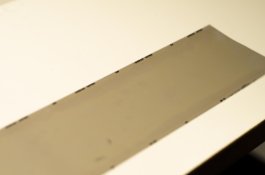
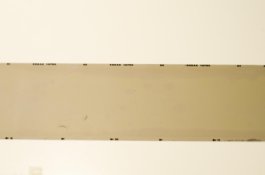
My negative is showing a brown/yellow stain in the middle of the film. I've been reading about bromide drag and dichroic fog but none of these seem to be my problem. I have been developing for about a year and this is the first time i encounter this stain. I'll go on and describe my developing method:

The Film:


  • [*=1]One NEW T-Max 100 120 film

Development:


  • [*=1]T-Max RS
    [*=1]1:9 diltuion (50ml developer + 450ml water)
    [*=1]24 degrees celsius
    [*=1]9 minutes
    [*=1]Constant agitation (i put the tank in the floor and roll it for the whole 9 minutes)

Stop bath:


  • [*=1]2 rinses with water at 22 degrees celsius

Fixation:


  • [*=1]Pure Kodak fixer for black and white film and paper (powder) prepared as the recipe indicates.
    [*=1]1:1 dilution 500ml of pure fixer.
    [*=1]6 minutes constant agitation just like with the development at room temperature

Wash:


  • [*=1]4 rinses with water at 40 degrees celsius
    [*=1]Film left for 15 minutes washing
    [*=1]Photo Flo
    [*=1]Hanged and left to dry for several hours


Attachments
  • Yellow Negative_1.jpg
    Yellow Negative_1.jpg
    169.3 KB · Views: 181
Last edited by a moderator:

pdeeh

Member
Allowing Ads
Joined
Jun 8, 2012
Messages
4,770
Location
UK
Format
Multi Format
Lets hear a little more about your fixer and fixing:

What brand, what dilution, and how long have you been using the same batch of working solution (and how many films have you put through it)?

Because it looks like a fixing issue to me
 
OP
OP

noanns

Member
Allowing Ads
Joined
Sep 5, 2014
Messages
4
Format
Medium Format
Thanks for the welcome and the quick reply! I updated the fixer info, it is pure (1:1) kodak fixer for b&w film and paper i fixed a tri-x roll before and i am only developing one roll of film. The method i am using is the same as my photographer teacher taught me and he is an established photographer with a long career in film photography. I've always used the same chemicals same times and temperatures.
 

Xmas

Member
Allowing Ads
Joined
Sep 4, 2006
Messages
6,398
Location
UK
Format
35mm RF
Thanks for the welcome and the quick reply! I updated the fixer info, it is pure (1:1) kodak fixer for b&w film and paper i fixed a tri-x roll before and i am only developing one roll of film. The method i am using is the same as my photographer teacher taught me and he is an established photographer with a long career in film photography. I've always used the same chemicals same times and temperatures.

Tmax needs twice as long as Tri-X, the tabular grain films are slower to fix than cubic grain, ACROS and Delta same as Tmax

The Kodak data sheets should say this. I fix by inspection, after three mins in plain hypo like yours it is safe to open tank and inspect, with Trix the film should be clear of milky appearance so you fix for another three, with tabular film like TMAX it may not be clear until five so you give it another five.

Fix and wash are both temperature dependent like development.

Put the film back in fix as soon as you can it may clear as normal...
 
Last edited by a moderator:
OP
OP

noanns

Member
Allowing Ads
Joined
Sep 5, 2014
Messages
4
Format
Medium Format
Tmax needs twice as long as Tri-X, the tabular grain films are slower to fix than cubic grain, ACROS and Delta same as Tmax

The Kodak data sheets should say this. I fix by inspection, after three mins in plain hypo like yours it is safe to open tank and inspect, with Trix the film should be clear of milky appearance so you fix for another three, with tabular film like TMAX it may not be clear until five so you give it another five.

Fix and wash are both temperature dependent like development.

Put the film back in fix as soon as you can it may clear as normal...

It is a fixing issue because i let a strip in the fixer for some more minutes and it cleared out. I've always fixed t-max for 6 minutes 1:1 dilution but never controlled the temperature. At what temperature should i keep my fixer?
 

Xmas

Member
Allowing Ads
Joined
Sep 4, 2006
Messages
6,398
Location
UK
Format
35mm RF
Fix temperature has two reqirements.

Minimise shock to gelatine swelling (emulsion)
Sufficient for archival stability

With Kodak film you can ignore the first almost, with e.g. Foma hold successive solutions within 0.5C or pay...

At 20C with plain fix you need more than 6 mins with Trix more then 12 with Tmax, you have little margin for reuse of fix, think archival stability for 50 years...

Don't try fix at 15C or below.

But fix by inspection is the cautious way - wait three minutes before opening tank in normal light is ok. They used to develop by inspection with ortho film... time and temperature is risky, old dev = film ruined

Put the film back in fix...
 

Pat Erson

Member
Allowing Ads
Joined
Dec 5, 2008
Messages
336
Format
35mm RF
View attachment 94035

Pure Kodak fixer for black and white film and paper (powder)

Have you tried going the easy modern route by using a liquid rapid fixer such as Hypam or Tetenal Superfix (diluted 1+4)?

I've never ever used a powder fixer myself...
 
Last edited by a moderator:

miha

Member
Allowing Ads
Joined
Feb 15, 2007
Messages
3,044
Location
Slovenia
Format
Multi Format
View attachment 94035


  • [*=1]Pure Kodak fixer for black and white film and paper (powder) prepared as the recipe indicates.
    [*=1]1:1 dilution 500ml of pure fixer.
    [*=1]6 minutes constant agitation just like with the development at room temperature


Kodak fixer mixes to working strength. Why did you dilute it further?
 

jochen

Member
Allowing Ads
Joined
May 13, 2008
Messages
350
Location
Germany
Format
35mm
Hello,
beside the possibly too short fixing time there are two black spots like little crescent moons. This comes frome bending the film during handling. Determine the clearing time of TMax in your fixer and take three times of that time as your fixing time. You need a little glas with fixer and a little strip of your fresh film. The test can be done at daylight. Put one drop of fixer onto the emulsion side and wait until the film gets nearly clear on this area, then immerse the total strip in fixer and take the time until you cannot see any difference between the drop area and the rest of film. You can see it better if you put a piece of a newspaper with printed letters under the glas. "Normal" b&W films without structure crystals like TriX need only two times of the clearing time to fix completely.
With this test you can easily determine the correct fixing time of your used fixer too. With this test you can use even "oldfashioned" sodiumthiosulfate fixers for TMax.
 

pentaxuser

Member
Joined
May 9, 2005
Messages
20,351
Location
Daventry, No
Format
35mm
Also I am wondering about your attachment - that was test film? There are no pictures on it, just plain empty negative.
Me too but it doesn't seem to have bothered anyone else and from what the OP has said this occurred in the middle of the film which suggests that there was no stain elsewhere??

pentaxuser
 

Jaf-Photo

Member
Allowing Ads
Joined
Feb 12, 2014
Messages
495
Format
Medium Format
Using T-MAX fixer makes a world of difference.

It is extra strength for t-grain but works excellently on traditional films too.

Dilute to 1+4, fix for 7 mins for first roll, add a minute per roll and mix fresh after the fourth.
 

miha

Member
Allowing Ads
Joined
Feb 15, 2007
Messages
3,044
Location
Slovenia
Format
Multi Format
Using T-MAX fixer makes a world of difference.

It is extra strength for t-grain but works excellently on traditional films too.

Dilute to 1+4, fix for 7 mins for first roll, add a minute per roll and mix fresh after the fourth.

I believe T-Max fixer is only available in Europe.
 

Simonh82

Member
Allowing Ads
Joined
Aug 9, 2011
Messages
251
Location
London, Unit
Format
Multi Format
Using T-MAX fixer makes a world of difference.

It is extra strength for t-grain but works excellently on traditional films too.

Dilute to 1+4, fix for 7 mins for first roll, add a minute per roll and mix fresh after the fourth.

That doesn't sound like very efficient fixer to me. I want more than four films out of my fixer before I have to tip it away.
 

MattKing

Moderator
Moderator
Joined
Apr 24, 2005
Messages
55,260
Location
Delta, BC Canada
Format
Medium Format
Kodak recommends 5 - 10 minutes fixing with powdered Kodafix - depending on the film. T-Max 100 is one of the films that requires more fixing, so I would expect a single fixing bath would require close to 10 minutes.

I am assuming that your reference to "pure" fixer and 1:1 dilution is your way of saying that you are using stock (as in mixed as per Kodak's instructions) fixer without further dilution - that is correct. If you are actually diluting the fixer further, that is a mistake.

If you are using T-Max 100 in 120, my suggestion is that you buy a roll of T-Max 100 in 135 to be used for clip tests - you should probably be able to get 36 or so clips out of it.

Then for each developing session, do a clip test by checking on how long it takes to clear a clip of film while your subject roll is in the fixer. If it takes six minutes to clear the clip, your total fixing time should be a minimum of twice that.

The powdered Kodafix has to work really hard to fix the T-grain films like T-Max 100. Rapid fixers are usually better.
 
OP
OP

noanns

Member
Allowing Ads
Joined
Sep 5, 2014
Messages
4
Format
Medium Format
Thanks everyone for your responses. The film was not exposed and the two crescent moons are due to bending, when i develop exposed film i am much more careful. After reading your responses i understood it was too little fixing time, so i left part of the strip in fixer for several minutes and the stains were removed. This happened for the first time and in my opinion this is because it's winter over here and temperatures are pretty low, making the fixer less efficient. Next time fixing i will check the film and see if it needs more fixing time, thanks to all of you, your replies were very useful.
 

Jaf-Photo

Member
Allowing Ads
Joined
Feb 12, 2014
Messages
495
Format
Medium Format
That doesn't sound like very efficient fixer to me. I want more than four films out of my fixer before I have to tip it away.

You can use it a lot longer if you want. But if you want absolutely clear a film in the shortest time, that is good advice.

I tried it. A lot.
 
Photrio.com contains affiliate links to products. We may receive a commission for purchases made through these links.
To read our full affiliate disclosure statement please click Here.

PHOTRIO PARTNERS EQUALLY FUNDING OUR COMMUNITY:


Ilford ADOX Freestyle Photographic Stearman Press Weldon Color Lab Blue Moon Camera & Machine
Top Bottom