
• Welcome to Photrio!
    Registration is fast and free. Join today to unlock search, see fewer ads, and access all forum features.
    Click here to sign up

Box ISO rate and Real ISO

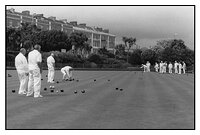
The bowling green

A
The bowling green

  • 0
  • 0
  • 0
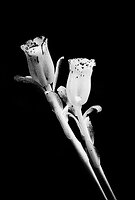
Indian ghost pipe plant.

H
Indian ghost pipe plant.

  • 3
  • 1
  • 28

Forum statistics

Threads
202,942
Messages
2,847,839
Members
101,548
Latest member
mdlewingt
Recent bookmarks
0
Alan, see the article Simple Methods for Approximating the Fractional Gradient Speeds of Photographic Materials.

Who are the authors? (It makes it easier to search if I have one or more author names.)

Never mind. I found it. Thanks.
 
Ron, do you recognize this. Can you tell us who wrote it and is it a good primer for someone looking for an introduction to the characteristic curve?
 
This document was prepared by one of the technical writers at Kodak office most likely, or as a generic paper for a conference. It is a seminal article on the sensitometry of film and is also described in Haist and in Mees. It shows curves of the film items I posted, most notably showing how a contrast increase can be mistaken for increased speed. It also shows threshold speed which is the first deviation of that straight "x" line from following the "x" axis.

We had to just about memorize the contents of this paper to pass our course in product building. And, we had to pass a graded test. It is an excellent primer!

PE
 
Nelson and Simonds. I have it somewhere but don't have access to my files right now. However if you search APUG I'm sure Stephen Benskin has posted it before.

EDIT: Stephen even posted the paper in this very thread! Posts 67 and 78 for both parts. Stephen has also written an easy-to-read summary of the Delta-X Criterion.

Two other papers of interest are Calibration Levels of Films and Exposure Devices by D. Connelly from post #89 and C.N. Nelson, Safety Factors in Camera Exposure, Photographic Science and Engineering, v 4, n 1, Jan-Feb 1960 in post #68.
 
Logarithms were introduced by John Napier in the early 17th century as a means to simplify calculations. Logarithmic scales reduce wide-ranging quantities to smaller scopes.

"By now you are probably wondering: why Logarithms? On one side we use density, which is the log of opacity, and on
the other side we use the log of exposure (in millilux seconds). The reason is because logs can compact the information. It is a lot more compact to make a logarithm scale from 0 to 3, than it is to make an arithmetic scale from 1 to 1000. " - The 1st Kodak paper that Michael R. referenced.
 
Last edited by a moderator:
Hi,

So, I shot and develop a roll of 35mm Fomapan 400 with Rodinal following the data in digitaltrhth.com.
But later on I founded out the real ISO of fomapan 400 is 250 with Rodinal.
So I wonder of the data in digitaltruth.com, dispite it says ISO 400, is indicating the development time for its real ISO which is 250?

I god a good result from development but I usually over expose a bit.

The "Real ISO" is as tested and indicated by the manufacturer. It does not change unless the manufacturer changes the emulsion.
What you are talking about is the "Effective Exposure Index" as it relates to your equipment and your use of it along with your processing. It is entirely possible that because of quirks in your system and processing your EI is different from every other user of the material.
 
After reading all of the discussions and getting, possibly, confused, my advice to you is don't change anything. After looking at your photograph, it has everything needed. Good shadow detail, good highlight detail and the grain was certainly great. However you shot it make that your EI and go from there.....Regards
 
Photrio.com contains affiliate links to products. We may receive a commission for purchases made through these links.
To read our full affiliate disclosure statement please click Here.

PHOTRIO PARTNERS EQUALLY FUNDING OUR COMMUNITY:


Ilford ADOX Freestyle Photographic Stearman Press Weldon Color Lab Blue Moon Camera & Machine
Top Bottom
