• Welcome to Photrio!
    Registration is fast and free. Join today to unlock search, see fewer ads, and access all forum features.
    Click here to sign up

Beginner Paper

PenStocks

A
PenStocks

  • 3
  • 0
  • 54
Landed Here

H
Landed Here

  • 4
  • 5
  • 62

Recent Classifieds

Forum statistics

Threads
201,835
Messages
2,830,900
Members
100,977
Latest member
Earl_matveev
Recent bookmarks
0
OP
OP
ivanlow

ivanlow

Member
Allowing Ads
Joined
Dec 4, 2015
Messages
48
Location
Singapore
Format
35mm
Thanks Roger,

For exposure, I'm still working on my flash calculation. I think manual flash exposure is the hardest but it keep me thinking. :D

The other tips are fine, but WRT inexpensive papers I agree - I doubt very much that it's true, because house branded papers are just re-branded stuff made by the same few manufacturers and, even if it is true as far as not providing the same range of contrast, that's ok. You should rarely if ever need the softest or hardest grade the paper can produce anyway. If you do you are rescuing a poorly exposed or developed negative. Learn to expose and develop properly and consistently and you should rarely need to deviate more than a grade of contrast either way.
 
OP
OP
ivanlow

ivanlow

Member
Allowing Ads
Joined
Dec 4, 2015
Messages
48
Location
Singapore
Format
35mm
Hi LarsAC,

I'm not sure what kind of safe light to use with paper. How many kind of safe light are there? I cannot find it on the Ilford website.
I started with PE / RC paper in 5x7 which can be bought reasonably cheap from several brands. I actually used MCP by Adox.

Make sure you use fresh paper and suitable safelights.

Lars
 
OP
OP
ivanlow

ivanlow

Member
Allowing Ads
Joined
Dec 4, 2015
Messages
48
Location
Singapore
Format
35mm
Hi David,

Thank you for your valuable insight in choosing paper.
You recommend FB paper and I want to try them out. How do I know what safe light is right for the paper I want to use? Does it write on the box? Do I need a few safe light if I want to try different brand paper?

It depends upon where you live.

For example, Foma paper in Berlin is considerably cheaper than Ilford and the FOMA Fomabrom Variant 111 that I use as my standard paper is excellent. Add this to the fact that, for a box of 50 sheets of 30 x 40cm, the Foma is half the price of ILFORD Multigrade FB Classic and you can use a top grade paper for learning.

I would personally suggest that learning on poor quality paper will hinder your learning (for example some cheap brands of multigrade RC paper made for students, etc do not give a full range of contrast grades). Use the best paper you can afford and follow best developing practice from day one:
  • Always develop fibre-based paper for at least 3 minutes.
  • Never 'pull' prints (this is taking them out of the developer before they are fully developed).
  • Always use fresh chemicals.
  • Test that your safelights are truly safe for the paper that you are using.
  • Always dry your test prints (old microwave or hair drier will do the job quickly) before deciding on the correct exposure (this is because fibre-based prints always are darker when they are dry).
  • Always assess your dried test prints with a light level that is similar to where you might display them (i.e most homes in Europe have low light levels due to the use of energy efficient bulbs, galleries with older lighting systems have yellower tungsten bulbs that are much brighter than illumination in the home and newly opened galleriies tend now to have very bright neutral LED spotlights).

Good luck with learning to print - it is a great experience and helps all areas of your photographic development.
Bests,

David.
www.dsallen.de
 

bence8810

Member
Allowing Ads
Joined
Oct 18, 2015
Messages
377
Location
Tokyo
Format
Multi Format
Hello,

Fuji is only available in Japan I think and the retailers here (Yodobashi etc) don't ship overseas unfortunately.

Ilford is a great brand otherwise - wish it was more accessible in Japan.

On Expired paper - I print a lot of graded Fibre paper from the 90's and they work great. I also have a pack of Iford 20x24's that expired just 10 years ago and it's totally fogged. Your results will vary.

I'd get Ilford RC paper to start with and have a feel for it.
I think you guys have a club in Singapore - try to look for Ray Toei - he is very resourceful and knows the Singapore market well I believe.

Good luck and happy printing.
Ben
 

mooseontheloose

Moderator
Allowing Ads
Joined
Sep 20, 2007
Messages
4,110
Location
Kyoto, Japan
Format
Multi Format
Ivanlow,

Ben is right, Fujibro is only available in Japan, but I mentioned it on the off-chance that it may have made its way to other Asian countries. Japan Exposures does sell some Fujibro, but it is the graded kind, not variable contrast. The cost is a little higher than what we pay in Japan, and with shipping and the exchange rate it may not be worth getting. That said, I've always had great service from them when I used them in the past (they even sent some emergency film for me when I ran out in Burma, it was waiting for me at the hotel when I arrived in Chiang Mai a few days later).

However, if Ilford is all that you have available to you in Singapore, then I'd suggest to go with that. It's a great brand and their papers are excellent. If you want to save money, start with RC, do contact prints of your negs (if you want) on 8x10 but practice enlarging prints using 5x7. And, as Ben mentioned, find others who are doing darkroom work - they can probably help you with sourcing materials better than we can. If you do find some useful information, it would be great to mention it in this thread for future reference.
 

Loren Sattler

Subscriber
Allowing Ads
Joined
Dec 25, 2005
Messages
384
Location
Toledo, Ohio
Format
Medium Format
Safelights Try reading the data sheet that comes with the paper in the box (or envelope). There will be information on recommended safelights there. Most variable contrast papers recommend a Kodak OC filter. Some Foma papers require red filters. Not sure of the equivalent Ilford filter nomenclature.
RC vs. Fiber Many experienced printers use both RC and fiber papers. Personally, I use RC for proofs and fiber paper for favorite prints I intend to mount.
Advice When learning to print it can be helpful to have some examples of fine prints on hand in the darkroom for reference. These will help train your vision to see appropriate contrast and exposure in your prints.
 

MattKing

Moderator
Moderator
Allowing Ads
Joined
Apr 24, 2005
Messages
55,191
Location
Delta, BC Canada
Format
Medium Format
The Ilford website has data sheet links for each of their papers - the menus with those links are at the top of the information page for each of their respective papers. Each data sheet includes a safelight recomendation. The Ilford papers are generally designed to work with the most common safelights designed for variable contrast papers.
 

Roger Cole

Member
Allowing Ads
Joined
Jan 20, 2011
Messages
6,069
Location
Atlanta GA
Format
Multi Format
Safelights Try reading the data sheet that comes with the paper in the box (or envelope). There will be information on recommended safelights there. Most variable contrast papers recommend a Kodak OC filter. Some Foma papers require red filters. Not sure of the equivalent Ilford filter nomenclature.
RC vs. Fiber Many experienced printers use both RC and fiber papers. Personally, I use RC for proofs and fiber paper for favorite prints I intend to mount.
Advice When learning to print it can be helpful to have some examples of fine prints on hand in the darkroom for reference. These will help train your vision to see appropriate contrast and exposure in your prints.

I do the same with RC and fiber. But I recommend RC for someone learning to print. It's far easier to wash, always lays flat (or near enough, sometimes a slight curl depending on humidity) and the basics of exposing, developing, burning, dodging, flashing etc. are exactly the same. Plus it's less expensive. And modern RC papers are quite good.
 

Anon Ymous

Member
Allowing Ads
Joined
Feb 7, 2008
Messages
3,679
Location
Greece
Format
35mm
Ivanlow, the simplest answer I could give regarding safelights is use a red one, that is the safest choice.

It isn't the most comfortable light for your eyes (because they're not very sensitive in that light), but it is the best choice if you can only have one safelight. Regardless of what paper and safelight you use, you should check how safe it is with a procedure outlined here. Keep in mind that you need to test your safelight for every different paper that you use, not all papers are the same.
 

David Allen

Member
Allowing Ads
Joined
Nov 6, 2008
Messages
991
Location
Berlin
Format
Med. Format RF
Ivanlow, the simplest answer I could give regarding safelights is use a red one, that is the safest choice.

It isn't the most comfortable light for your eyes (because they're not very sensitive in that light), but it is the best choice if you can only have one safelight. Regardless of what paper and safelight you use, you should check how safe it is with a procedure outlined here. Keep in mind that you need to test your safelight for every different paper that you use, not all papers are the same.

Sound advice.

Bests,

David.
www.dsallen.de
 

sfaber17

Member
Allowing Ads
Joined
Jun 1, 2014
Messages
245
Location
Illinois
Format
35mm
I do the same with RC and fiber. But I recommend RC for someone learning to print. It's far easier to wash, always lays flat (or near enough, sometimes a slight curl depending on humidity) and the basics of exposing, developing, burning, dodging, flashing etc. are exactly the same. Plus it's less expensive. And modern RC papers are quite good.

So why is FB paper better for display? Is it the absence of the glossiness?
 

Roger Cole

Member
Allowing Ads
Joined
Jan 20, 2011
Messages
6,069
Location
Atlanta GA
Format
Multi Format
So why is FB paper better for display? Is it the absence of the glossiness?

Not exactly. But FB paper surfaces do look different, and to many of us better, than any RC surface. The Ilford Pearl and similar RC surfaces come closest (but I recommend RC glossy for contact sheets, particularly from 35mm negatives, because there's no texture to obscure fine detail under a loupe and better D-max than matte papers.) Speaking of matte papers many people like FB matte but I've never seen an RC matte I liked (others may differ.) The early RC papers had some longevity issues. Those have been resolved, at least if one believes the manufacturers (otherwise check back in 100 years to verify.) Honestly, most of the surface differences will also be much less obvious once a print is framed under glass. Perhaps the real reason is mainly tradition. I definitely recommend learning to print with RC. After you have a pretty good idea what you're doing try a pack of FB paper and see what you think. You may like it, or you may find it way more trouble than the minor difference is worth and just stay with RC.

I'm sometimes tempted to go to RC myself (in Ilford's premium weight) for 16x20 prints because FB paper that size is so easy to accidentally crease once it gets really wet and floppy.
 

AgX

Member
Allowing Ads
Joined
Apr 5, 2007
Messages
29,972
Location
Germany
Format
Multi Format
What would be wrong with buying the cheapest available RC paper, to learn on that the basics and then buy small packages of different papers in RC and FB to learn to distinguish characteristics as handling, surfaces, base hue, silver hue, response to different developers, lith-capacity etc. ?

And then to decide what papers one would like to stick to. And then get a economical stock of those in house.


Aside of David's remark on "cheap" papers, this seems to me a sound way to go.
 

MattKing

Moderator
Moderator
Allowing Ads
Joined
Apr 24, 2005
Messages
55,191
Location
Delta, BC Canada
Format
Medium Format
The downside to starting with a cheaper option is not that it is cheaper, but rather that availability is undependable. Cheaper, off brand solutions tend to change more frequently than the name brands.

And when you are learning, it can be very difficult if your materials are changing unpredictbly.

I would suggest RC and 5x7 or 5x8 for learning. In some cases, the least expensive way to obtain 5x8 is to use a paper cutter to cut 8x10 in two. So a paper trimmer/cutter is a prudent purchase.
 

cliveh

Subscriber
Allowing Ads
Joined
Oct 9, 2010
Messages
7,797
Format
35mm RF
What would be wrong with buying the cheapest available RC paper, to learn on that the basics and then buy small packages of different papers in RC and FB to learn to distinguish characteristics as handling, surfaces, base hue, silver hue, response to different developers, lith-capacity etc. ?

And then to decide what papers one would like to stick to. And then get a economical stock of those in house.


Aside of David's remark on "cheap" papers, this seems to me a sound way to go.

Because you want consistency of quality and repeatable results. The more variables you put into your system the more difficult it is to learn.
 

Loren Sattler

Subscriber
Allowing Ads
Joined
Dec 25, 2005
Messages
384
Location
Toledo, Ohio
Format
Medium Format
So why is FB paper better for display? Is it the absence of the glossiness?

It is not glossy vs. non glossy, it is the quality of the gloss. Many people do not like the plastic look of the gloss on RC glossy paper for displaying fine art photos. They prefer the "more natural" look of glossy fiber paper (which is not very glossy at all). It is easier to understand the different opinions if you view different papers side by side.
 

Roger Cole

Member
Allowing Ads
Joined
Jan 20, 2011
Messages
6,069
Location
Atlanta GA
Format
Multi Format
"Glossy" fiber paper was originally intended to be ferrotyped, which results in a finish even shinier than RC gloss. What we usually do today with it was at one time called "glossy dried matte." You can find that phrase all through photo magazines of the 70s. I think I still have a few stacks of them. (The magazines, not ferrotyped prints, though I did have some plates and tried it a few times. It is really difficult to get the plates clean enough and not to get air bubbles.)

No RC paper really looks like it, though Ilford Pearl comes closest IMO.
 

AgX

Member
Allowing Ads
Joined
Apr 5, 2007
Messages
29,972
Location
Germany
Format
Multi Format
Referred to a glossy FB print I think first of a ferrotyped one, not a "glossy dried matte".
 

removed account4

Subscriber
Allowing Ads
Joined
Jun 21, 2003
Messages
29,832
Format
Hybrid
unfortunately a lot of folks are running on the "pre-good rc paper" fuel
seeing rc paper wasn't top shelf for a long time until the technology caught up
with the paper. according to kodak and the image permanency institute rc paper
can be just as every bit archival as fiber paper, even more.
and unfortunately a lot of people who used to remember how bad rc paper was pre 1980s maybe
still give rc a bum-rap ... behind glass / on display rc and fiber can be indistinguishable ...
to each their own .. i like rc paper, it saves me tons of water, fixer and time too, and every an rc print i make
i remember how much fun it was to print 500 portraits in a few hours on rc paper //

good times...
 

cmacd123

Subscriber
Allowing Ads
Joined
May 24, 2007
Messages
4,331
Location
Stittsville, Ontario
Format
35mm
Another +1 for RC - if Ilford is the locally available brand it is a fine paper and excellent quality. to use the Variable contrast you will need to use Multigrade filters (unless you have a colour enlarger)

Fresh paper is much better for learning. I don't really know why there is such a bias against RC.

the first time I ever saw it was at a trade show where Ilford was showing their then new Ilfospeed Graded paper. The set up a plexiglass darkroom in a an exhibit hall so the work was done under safelighting but the audience could see what was going on. as part of the demo they made a series of prints washed them quickly and dried them in the impingement dryer they sold at the time. The prints were then passed out to the audience, and mine still looked great 30 years later with no detectable deterioration.

the graded version is now obsolete as the multi-grade is much handier.
 

Arklatexian

Member
Allowing Ads
Joined
Jul 28, 2014
Messages
1,777
Location
Shreveport,
Format
Multi Format
Beginner Paper!

Hi, I'll be starting to print on my own, was looking into Ilford paper, they are not really low budget paper. I'm not complaining, just don't want get expensive paper before I learn how to print. What will be a good paper to start for beginner like me? If there are other brands please let me know.


I have seen beginners "turned completely off from printing" because they bought or were given cheap, outdated paper and never suceeded in making a nice well made print and it was really not their fault in technique other than trying to save money. Now is the time to buy good paper from one of several manufacturers, learn how to make a good photograph, then you can play around with different papers, film, etc.......Plus, you will probably have pictures early on that you will be proud to show...However, I am talking about Black and White..Color might not be the same but don't count on it.......Regards!
 

John51

Member
Allowing Ads
Joined
May 18, 2014
Messages
797
Format
35mm
What will help keep costs down while learning is a multi format easel. Most of them let you make four 5x4 prints from one 10x8 sheet. Usually a few going on the auction site.
 

canvassy

Member
Allowing Ads
Joined
May 22, 2015
Messages
263
Location
St Paul, MN
Format
Multi Format
Based on a recommendation in this thread, I picked up the Ilford Multigrade IV RC paper value pack with 25 pages 8x10 and 2 rolls of HP5+. This will be my first time printing, so it was good to have a suggestion.
 
OP
OP
ivanlow

ivanlow

Member
Allowing Ads
Joined
Dec 4, 2015
Messages
48
Location
Singapore
Format
35mm
Hi John51,

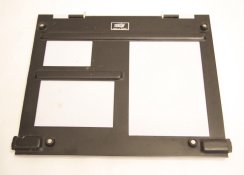
Are you talking about this?
attachment.php

4-in-1 Enlarging Easel Darkroom Photo Processing Photography Prints

What will help keep costs down while learning is a multi format easel. Most of them let you make four 5x4 prints from one 10x8 sheet. Usually a few going on the auction site.
 

Attachments

  • s-l1600.jpg
    s-l1600.jpg
    81.2 KB · Views: 218
Photrio.com contains affiliate links to products. We may receive a commission for purchases made through these links.
To read our full affiliate disclosure statement please click Here.

PHOTRIO PARTNERS EQUALLY FUNDING OUR COMMUNITY:


Ilford ADOX Freestyle Photographic Stearman Press Weldon Color Lab Blue Moon Camera & Machine
Top Bottom