It really doesn't matter, regardless of how much you press the point. The matter is irrelevant.
That doesn't mean I shut it down - the thread is open and anyone is welcome to respond (and so am I!) You're free to express your interest in the technical minutiae involved in a small part of making this work, and I'm free to express the viewpoint that the answer has no utility.
There's a reason why in all the interviews and books about this body of work you won't be able to find whether or not they used a cyan filter, and weather or not on some shots there was a bleak fraction of sunlight filtering through the cloudbase.
Sometimes, the real answer to the question is in the lack of a clear answer. Again, you're free to ask it anyway, and anyone is free to go into the depths of the spectral sensitivity of the film used etc. I still think it's a silly exercise: regardless of how they did it, what they did was deliberate as they made that explicit. As for the technicalities, we all know at least a couple of ways it could be achieved - so from that angle, there's also very utility (and at worst, a distraction) in the exercise of figuring it out.
As to your question why I don't simply ignore it: you're right to ask. For me, it's perplexing how there's apparently a tendency to look for some kind of technical deus ex machina in work that's so evidently not about technique. Moreover, they've been explicit as to this aspect of the "how", which happens to boil down to something entirely unrelated to gear, so the attempt to dig until we hit upon camera hardware (or other bits of photographic paraphernalia) is downright puzzling.
Even more so, insofar as technique played a role, it was to render it as transparent as physically possible - essentially to remove it from the equation. The makers of these works did this deliberately. In interviews, the Bechers never directed the course of the conversation into the direction of technique - which surely they would have done if they had believed it to be essential. They answered direct questions about it, but for the most part appear to have discussed the heart of the matter, i.e. (my interpretation) an ontological investigation of our constructed environment. How does a filter enter that story? Does the narrative surrounding this work somehow benefit from the observation that somewhere down the line, it involves a cyan filter to blank out the sky? I don't think so.
The reason I pick up the subject (which is not about you personally in any way), is that I recognize this as a systematic characteristic of the discourse of artistic photography among esp. amateur photographers. That I think is interesting. Not the question of the filter or the development or whatever - but the fact that apparently, for some reason, the question is inescapable on a forum like this one.
It seems my enquiry triggered a response that for you goes far beyond my post. That's okay, although I'm clear that's ultimately got nothing much to do with my original query. I genuinely think its OTT.
I will briefly engage your last response on one point, which I think may be the nub of the issue for you. That's the discussion of 'technical character' of the Becher's work.
I agree, because it's obvious to anyone educated in the history of Conceptual Art & Photography, that the critical reception of the Becher's work does not discuss the technical qualities of the work. There's several reasons for that. The photographs are very purposely subdued, restrained etc and that is a significant influence on the critical reception itself. For example in contrast, take their peers Avedon / Mapplethorpe / Eggleston or more recently the likes of Wall / Crewdson / Sally Mann etc. They are all, in one way or another pictorialists in their approach to photography. They work with mood, composition, narrative and other ideas about picture making and story telling historically derived from painting. Some are more inclined to technical virtuosity than others, but they are all working with the narrative capacity of pictures, made photographically. I think we can agree on that, and also concur that the Becher's take a radically different approach that carefully eschews those widely held expectations around photographic art. Their lineage is really very German - with August Sander and Renger-Patzsch as the key historical precedents. Lewis Baltz et.al would be American peers. Their work also derives from Conceptual Art - what was sometimes characterised as an 'aesthetics of administration.' Their former students - Gursky, Struth et.al are followers of sorts although they seem to have reverted to pictorialism as the prints got bigger.
The Bechers care in defining their work carefully, in interviews, commissioned critical texts etc, was simply the work of the professional artist. I know this, because I am a professional artist, and a professor in the field. That business of critical positioning deserves due respect, and consideration, but it is not
a priori the only way to reflect or engage on any artistic practice. You seem to be arguing that because they eschewed the technical in their interviews etc, and encouraged supportive critics to likewise discuss their work as such, therefore the technical cannot be considered in a critical reevaluation of their work. I disagree with you.
There's an interesting pattern here. I mentioned a discussion I had with Buchloh when I was a grad student. He was likewise defensive and uncomfortable discussing the 'look' of the Becher's work, albeit his reaction was the opposite of yours. When I pointed out how carefully 'mundane / subdued' (c 30 years ago!) the images looked, he reacted by proclaiming the care and refined skill that his close friend Hilla Becher took in making her prints. That's undoubtedly so. But there is a level of confusion my enquiry seems to trigger, which I think hinges around a confusion between the works non-pictorialism, and its technical exactitude, as if in order for the work to be non-pictorial, it cannot be acknowledged technically. This stems from an art historical binary between virtuosity and rigour, possibly a legacy of the Baroque. It doesn't map well onto Photography, which has a much broader and more pluralistic range of traditions to draw upon.
As Tessasmall (obviously a younger photographer- a recent graduate) obverses clearly in their post above this one - the prints in person are really impressive. They are hugely technical in their realisation, even as they exude a self-effacing modesty. If you walked into Spruth Magers tomorrow and baldly asked "These look simple. Were they difficult to make?' we all know what the answer would be.
The final irony of this technical phobia around the Bechers work is that their 'subject-matter' is more often than not
technical - water towers, blast furnaces, Gas tanks etc. Industrial architecture for the most part. And their photographs are highly technical aesthetically. Any photographer on this forum would see that. Straight verticals, level camera, no vignetting, in focus, correct exposure etc etc etc. I'm not even mentioning the contrast control. So it's simply perverse and a profound misrepresentation of the work, notwithstanding the artists own time-specific claims for their work, to refuse to look at the technical aesthetic of the photographs. In hindsight their positioning is clearly a
contre-temps of a moment in time in contemporary art criticism. The very history of photography that the Bechers worked from, is premised in a highly technical conception of photography, rather than an 'artistic' or pictorial conception of photography. They used photography like Carl Andre used fire bricks, or Richard Serra used molten lead. I also have in mind the classic essay by Alan Sekula - "The Body and the Archive" which you likely know, which argues a historical underpinning of photography in the apparatuses of medicalisation, incarceration etc rather than painting. This idea understands the camera principly as an apparatus; a tool used to extend a regime of power, and control.
So why bring up a technical question on this forum (another seeming bugbear of yours)? Well l come to Photrio for wonderful technical insight. I don't choose to show my work here, or for the most part to get into discussions about aesthetics, art history, or the like here. Photography is a wonderfully pluralistic field. I appreciate the plurality of it, and I'm comfortable with that. I like that I can share discussion with photographers working with really different ideas and end goals. Wonderful. I don't come here to learn about things I'm already steeped in in my professional life. There are some blow-hards who think of photography as a largely technical operation (and they are the experts!) but filtering out those guys (and it seems like they are men?) is a cost factored in any time I log onto Photrio. I guess if you are a moderator, that's less optional.


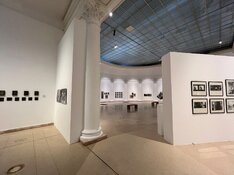

 spruethmagers.com



 I was in fact a 'mature' student in my early 60's when I did the course. But also thank you for your reply, I have learnt a few more names to look up and educate myself more.
