
• Welcome to Photrio!
    Registration is fast and free. Join today to unlock search, see fewer ads, and access all forum features.
    Click here to sign up

Batteries problem

Tied to the dock

D
Tied to the dock

  • 4
  • 0
  • 51
Running in the Snow

H
Running in the Snow

  • 1
  • 2
  • 61

Recent Classifieds

Forum statistics

Threads
203,081
Messages
2,849,590
Members
101,649
Latest member
fat-totoro-cat
Recent bookmarks
1

Dinis Figueira

Member
Allowing Ads
Joined
May 4, 2016
Messages
182
Location
Portugal
Format
35mm
Hi guys,

I've received a Agfa Optima Pocket 5000 to use in a future mini-project.
I have 1 major problem that brings out 2 questions, being the problem - mercury batteries - this camera uses 3 and they were still there...

About my questions, how can I remove the green corrosed stuff from the mini "metal" plate?

And, what would be the best replacement for them, considering they are 3 625PX?

Thank you very much,
Dinis Figueira
 
Last edited:
I use a fiber glass pen to clean corroded contacts.
Can't be of any help regarding the batteries but I'm sure there are solutions.
 
Here's a solution to the mercury cell quandary: http://www.weincell.com/ It uses an "air cell" which begins its useful life when a tab is removed. I doubt it will last as long as the mercury cells. Re: the mercury problem, I'd imagine that we could still use them if the purchase price included a hefty deposit, which would be refunded when the cell was returned to a recycling center. Jus' sayin....
 
Baking soda helps a lot with the fg pen,
There are adapters to use 675 batteries that use a dropping resistor to get 1.35V they are pricey though
 
Both ways are kinda expensive for a short project :/
Isn't there any way to adapt a camera like this to use another type of batteries?
 
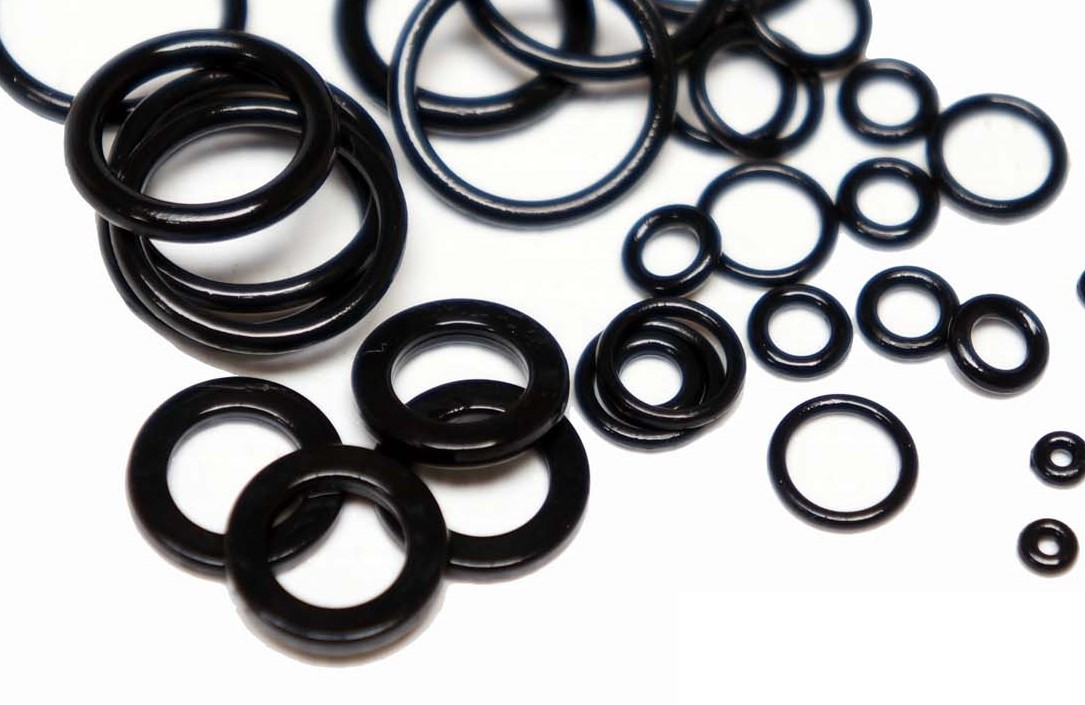
"O" rings plus 675 hearing aid batteries may work.
 
Here, O rings:
orings.jpg


ZA675 hearing aid batteries:
gp_za675.jpg

There you go!
Boa sorte / good luck!
 
As I understand the problem, back in the day Mercury cells were chosen because they furnished a voltage which was essentially constant for most of the cells life, unlike alkaline cells, for example. The voltage was, I think, 1.35 volts, as compared to 1.5 for alkaline or silver oxide cells. The Mercury cell was cheaper than incorporating an internal voltage regulator. Thus if a meter circuit relies on a voltage of 1.35 volts for proper readings it will be inaccurate at 1.5 volts. Whether or not the meter can be re-calibrated for 1.5 volts depends on the camera.

Now. If, as in the case of my Praktica LTL the metering process involves changing aperture or shutter speed to center the needle in the viewfinder on a fixed marker, a circle or whatever, the meter probably uses a bridge circuit, in which the battery voltage is not really critical, other than not so high as to damage the light cell or other internals. Of course a voltage too low will give poor low light sensitivity. I don't know how to detect a bridge circuit meter other than the fixed "target" for the needle.
 
Personally, I would skip the battery all together, and use a handheld meter. Especially for a small project. Or, if you absolutely want an in-camera meter, just use the 1.5V, and adjust accordingly.
 
For removing green, white and blue oxidization I use white vinegar. After it has done the job, I neutralize with water.
 
Personally, I would skip the battery all together, and use a handheld meter. Especially for a small project. Or, if you absolutely want an in-camera meter, just use the 1.5V, and adjust accordingly.
Your intentions are honourable and your advice is sound, that is until you see what camera Dinis is talking about.
Here is the manual: http://www.submin.com/110/manuals/agfa/5000.htm
A reference page: http://www.collection-appareils.fr/x/html/page_standard_eng.php?id_appareil=10016
Unfortunately it does need the batteries to work.
 
I doubt that there's any way to adjust the ASA to compensate for the higher voltage of silver cells. Didn't the 110 cameras set ASA automatically?
 
I tought it could be other "O" rings. I have tons of those at my house xD

I gotta say. Is it really worth all the money, or should I get another 110 for the project?
It seems that either way, I'm going for temporary fix's and expensive things.

By the way, thank you all for the kind help you've been giving to me.

E saudações ao tuga :D
 
I agree with using zinc air hearing aid batteries and adapters. It is very doubtful that the slight voltage difference will be noticeable. You are more likely to see exposure shifts from a sticky shutter, etc. You may have to experiment with o-ring sizes to get a good fit if you go that route. Some cameras made contact on the shoulders of the mercury cells, in that case you can make a ring out of solid copper wire, 14 gauge I believe if I remember correctly.
 
At least you don't have to look for the hard to find and always dead Kodak K battery which is essentially the same three batteries in a case.

I recommend using alkaline 675 and just taking the inaccurate exposures that you may get. How far can the exposures be off when using the wrong batteries? And how much does it matter when you are likely using expired film anyway.

Ask me how I know - I use a Kodak Pocket Instamatic 60 and it doesn't even have a setting for 400 speed film. So it will treat all film as 100 anyway. And I've had to carve a battery holder out of wood. Wish it would just take the 675's
 
At least you don't have to look for the hard to find and always dead Kodak K battery which is essentially the same three batteries in a case.

I recommend using alkaline 675 and just taking the inaccurate exposures that you may get. How far can the exposures be off when using the wrong batteries? And how much does it matter when you are likely using expired film anyway.

Ask me how I know - I use a Kodak Pocket Instamatic 60 and it doesn't even have a setting for 400 speed film. So it will treat all film as 100 anyway. And I've had to carve a battery holder out of wood. Wish it would just take the 675's

I heard about the K battery - lucky.

Ill be using lomography b&w film for this. 110 ISO.
About the compensation, the camera is fully automatic, except for the focus (Which I find neat). Do you think there will be alot of innacurate exposures?
 
But it's too much expensive for what it is.
30$ x3, it's kinda much.

So. Without any adapter and stuff, i'm stuck with LR44 type (the only ones that seem to hold up), right?
 
But it's too much expensive for what it is.
30$ x3, it's kinda much.

So. Without any adapter and stuff, i'm stuck with LR44 type (the only ones that seem to hold up), right?
Looks like it. I imagine that the cells are used for the shutter, thus improper voltage could well affect it. Film latitude may well accommodate that. Keep us posted on the progress of the project, and good luck!
 
Looks like it. I imagine that the cells are used for the shutter, thus improper voltage could well affect it. Film latitude may well accommodate that. Keep us posted on the progress of the project, and good luck!

Gonna buy them then. I hope the camera wont go crazy with its auto exposure :/
 
Photrio.com contains affiliate links to products. We may receive a commission for purchases made through these links.
To read our full affiliate disclosure statement please click Here.

PHOTRIO PARTNERS EQUALLY FUNDING OUR COMMUNITY:


Ilford ADOX Freestyle Photographic Stearman Press Weldon Color Lab Blue Moon Camera & Machine
Top Bottom