
• Welcome to Photrio!
    Registration is fast and free. Join today to unlock search, see fewer ads, and access all forum features.
    Click here to sign up

Base Fog with Flexicolor Developer

Recent Classifieds

Forum statistics

Threads
201,679
Messages
2,828,458
Members
100,887
Latest member
markcesene
Recent bookmarks
0
Joined
Jan 1, 2025
Messages
70
Location
Puerto Rico
Format
35mm
Greetings all, I have recently switched to using Flexicolor developer and am experiencing an issue with elevated base fog/D-Min compared to all the developers I've used previously. I was in contact with Kodak directly and they were unable to give me any good answers besides confirming my liter mix ratios were correct. They thought that the potassium ferricyanide bleach I use instead of the official EDTA could be causing cyan dye problems, but I have been using these chemicals for a year with consistent results and never seen this before. I ran a test strip through CS blix instead of the ferri bleach and saw no improvement. The developer has been pH adjusted to the 10.1 spec, no difference made there either.

I am using LORR developer replenisher without the starter. I am aware that the freshly mixed LORR is more active and can cause fogging in the first few rolls, but the issue has not resolved itself even after bromide seasoning with 20+rolls run through the replenished solution. I ran a back to back dev with CS powder developer and got a normal base D-Min, so it is not related to depleted bleach or fix.

All in all the developer is giving me acceptable results, but in some low-density sections of under-exposed negatives the shadows are quite muddy compared to other developers.

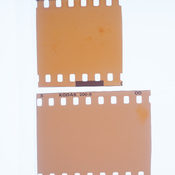
At this point I've run out of things to test. I had assumed that switching to Flexicolor would be an upgrade but that has not necessarily been the case. Here is an image comparing the CS powder developer (top) negatives to the Flexicolor (bottom).

If anyone has any ideas please let me know.
 

Attachments

  • FOG COMPARISON-1.jpg
    FOG COMPARISON-1.jpg
    827.1 KB · Views: 57

koraks

Moderator
Moderator
Joined
Nov 29, 2018
Messages
26,679
Location
Europe
Format
Multi Format
potassium ferricyanide bleach
Not the best idea, but I understand this is sometimes done to deal with unavailability of the proper C41 bleach.
If you must use a ferricyanide bleach, then use a stop bath followed by a sulfite clearing bath between the color developer and the bleach. This should avoid the excess dye formation resulting from instantaneous oxidation of carried-over developer in the bleach bath.
 
OP
OP
originalwinslow
Joined
Jan 1, 2025
Messages
70
Location
Puerto Rico
Format
35mm
Not the best idea, but I understand this is sometimes done to deal with unavailability of the proper C41 bleach.
If you must use a ferricyanide bleach, then use a stop bath followed by a sulfite clearing bath between the color developer and the bleach. This should avoid the excess dye formation resulting from instantaneous oxidation of carried-over developer in the bleach bath.
Hey koraks

Yep, you and I have run the full gamut of diagnosing issues with ferri bleach but the strange part here is the fog is not present when using CS developer. Kodak confirmed to me that the CS powder is chemically almost identical to flexicolor. Not sure why this would occur only with the EK chems and not the CS all other things being equal. It also did not ever occur with my DIY C-41 developer.

On a side note the contact at kodak commented that integrating the SS into the acetic acid stop bath is useless and actually diminishes the stopping ability of the bath. I mention this because someone (maybe you?) had previously said in another thread that stop/SS clearing could be combined.

I will try the separate clearing bath and see if that has any effect, although I do not think this is a developer crossover issue. In my experience, developer crossover into the ferri bleach created distinct staining and not a universal fog of the entire roll.

I also ran a strip through factory-made blix and it exhibited the same level of fog.
 

koraks

Moderator
Moderator
Joined
Nov 29, 2018
Messages
26,679
Location
Europe
Format
Multi Format
On a side note the contact at kodak commented that integrating the SS into the acetic acid stop bath is useless and actually diminishes the stopping ability of the bath. I mention this because someone (maybe you?) had previously said in another thread that stop/SS clearing could be combined.
Someone suggested it and I was one of the people who emphasized that no, the sulfite bath and stop bath can NOT be combined! So the info you got from Kodak is consistent with this. Btw, out of interest - have you been talking to Kodak proper, or to PSI? Kodak isn't the manufacturer in this case, after all.

In my experience, developer crossover into the ferri bleach created distinct staining and not a universal fog of the entire roll.
We've seen several examples recently on the forum where this was exactly what happened. So my guess for now is that you're still running into the same problem. There may be a difference between the CineStill powder and the PSI/Kodak liquid that plays a role here.

To be clear, have you been putting the sulfite into the stop bath up to now? Because that's indeed not the best idea. It's not so much that it will bar the stop bath from doing it's job; it's more that you basically destroy (some or all of) the sulfite by incorporating it into the stop bath, depending on how acidic the stop bath is. So it renders the clearing action ineffective; not so much the stop bath.
 

Spektrum

Subscriber
Joined
Apr 11, 2025
Messages
115
Location
Poland
Format
35mm
Someone suggested it and I was one of the people who emphasized that no, the sulfite bath and stop bath can NOT be combined!

I admit it. 😎 I was the one who suggested this several times. Perhaps a few others did too.

I also use Ferri Bleach.
I tried separating the STOP bath (2% acetic acid) from the clearing bath in sodium sulfite (20g/liter), as suggested by @koraks.
The results were consistent and very satisfactory.
I believe this is the best way and I can recommend it.

But I insisted on combining the STOP bath with the CLEARING bath for personal, (perhaps silly, reasons) – I use a sous vide machine to maintain the proper temperature of the chemicals.
The container of water in which I heat the bottles is too small to hold an additional bottle of sodium sulfite solution, and I really want each bath to be the same temperature so as not to shock the film with temperature changes.

That's why I've been successfully using the STOP-CLEARING recipe from this post:

This recipe uses twice as much sodium sulfite (40g) and also includes sodium acetate, which buffers the solution, protecting the sodium sulfite from decomposition in an acidic environment.
The pH is suitable for stopping development (between 5.2 and 5.4).
I use this bath once (I throw it away after use) for both the C-41 and ECN2 processes.

In my case, I use FujiHunt EnviroNeg Developer 60 AC. I develop a maximum of 4 films and then throw it away.
It's cheap and there's a lot of it (10 l) , and I want to keep the results consistent.
Of course I use a starter FujiHunt C-41.

I'll probably buy Fuji Hunt C-41RA AC bleach by the end of the year. It's only about €80 for 5 liters, and this bleach should last me a long time.
I will still use the STOP bath after developing, but I will no longer need to use sodium sulfite.
 

koraks

Moderator
Moderator
Joined
Nov 29, 2018
Messages
26,679
Location
Europe
Format
Multi Format
This recipe uses twice as much sodium sulfite (40g) and also includes sodium acetate, which buffers the solution, protecting the sodium sulfite from decomposition in an acidic environment.

Yes, very good that you added this; I totally forgot and in this way i can see this works well. The buffered stop bath will be strongly buffered enough to still be effective as a stop bath, and at the same time it'll be mild enough for the sulfite to (at least largely) survive.
 

Spektrum

Subscriber
Joined
Apr 11, 2025
Messages
115
Location
Poland
Format
35mm
Thank you, but I must add one more very important piece of information.

This buffered solution should be prepared soon before starting the development process.
Sodium acetate works, but not forever.
I had a situation where I decided to develop color negatives over the weekend and prepared the chemicals.
Unfortunately, for family reasons, I had to abandon my plan.
I returned to the development after a week, and when I unscrewed the cap from the brown glass bottle containing the STOP-CLEARING solution, I heard the characteristic hiss of escaping gas.
There was quite a lot of it, and I smelled sulfur.
I poured it out and mixed the bath solution again.
 

Spektrum

Subscriber
Joined
Apr 11, 2025
Messages
115
Location
Poland
Format
35mm
I don't know. It was summer. That bottle was quickly put in the attic. It's very warm there in the summer, and there are two skylights.
Perhaps the sun was shining on that brown glass bottle and that caused the solution to become unstable.
There were too many variables, and too much at stake, to skimp on chemicals.
 

koraks

Moderator
Moderator
Joined
Nov 29, 2018
Messages
26,679
Location
Europe
Format
Multi Format
Maybe there was a minor mixing error involved and your acetate buffer ended up at a slightly lower pH (a little below 4.0). In that case there would be some sulfur dioxide gas being formed.
 

Spektrum

Subscriber
Joined
Apr 11, 2025
Messages
115
Location
Poland
Format
35mm
I'm too lazy to mix by hand. I use a very inexpensive (available in Poland for about 25 euros) Vevor magnetic stirrer.
It's an inexpensive stirrer, but it does the job well. I usually stir for about 15 minutes, even if everything has already dissolved.
I simply prepare other things I need for the development process during that time.

I measure the chemicals using a cheap jewelry scale, but this is the fourth scale I've tested, and it really does give repeatable results with an accuracy of 0.05g.
The manufacturer claims accuracy is 0.01g, but I use laboratory calibration weights before each chemical weighing and confirm its repeatable accuracy at 0.05g.

This is sufficient accuracy for me. Using a dose of 30g of sodium acetate per liter, it's unlikely that a measurement error could affect its performance.

But there's one important detail that could affect the performance of sodium acetate, and then your suspicion would make sense.
Namely, its purity/quality. On the Polish "Korex" forum I read information about the very poor quality of sodium acetate.
However, I use 99% pure sodium acetate from Hadron Scientific. This is fresh chemistry.
It's a good brand and I haven't heard of them ever having any quality issues.

I measured the acidity of the solution using a cheap (but not the cheapest) pH meter. It was around 5.4.
I've prepared this bath many times, and always using a freshly calibrated meter, I've obtained a pH between 5.2 and 5.4.

I believe the problem isn't with the mixing of the chemicals, but with the accuracy of the pH meter's readings.

I did not measure the pH of the solution before adding the acetic acid.

I ALWAYS use good-quality distilled water to mix all chemicals.
Unfortunately, the distilled/demineralized water available in Poland can sometimes be of poor quality.

Once again, I am not sure what caused the buffer to become unstable. Again, there are many variables.
But since then, I've been preparing this solution just before use.
 

koraks

Moderator
Moderator
Joined
Nov 29, 2018
Messages
26,679
Location
Europe
Format
Multi Format
OK, I see; I thought perhaps you were preparing the sodium acetate in situ by combining acetic acid and e.g. sodium hydroxide. This is the way I'd do it, but it would be fairly easy to end up at a slightly different pH. In your workflow this is unlikely to happen.
 

Spektrum

Subscriber
Joined
Apr 11, 2025
Messages
115
Location
Poland
Format
35mm
I prepare it exactly in the order I wrote here:
 
OP
OP
originalwinslow
Joined
Jan 1, 2025
Messages
70
Location
Puerto Rico
Format
35mm
I admit it. 😎 I was the one who suggested this several times. Perhaps a few others did too.

Ok that's good my sanity, I thought maybe I had just imagined that.

I am going to mix fresh and run another test dev today to see if the separate clearing bath makes a difference. The outlier for me here continues to be the persistence of the fog even when omitting the ferri bleach and using blix instead.
 
OP
OP
originalwinslow
Joined
Jan 1, 2025
Messages
70
Location
Puerto Rico
Format
35mm
Resolved, all it took was a separate clearing bath. Base density looks correct now. Mild fogging from bromide deficiency due to not using starter appears to resolve itself after a couple rolls.

Thanks all.
 
OP
OP
originalwinslow
Joined
Jan 1, 2025
Messages
70
Location
Puerto Rico
Format
35mm
Ha! Developer puns.

Is there an agitation and/or time guideline I have missed? I have been doing the same as the stop bath (1 minute, first 30 seconds constant inversion agitation) and noticed that the fogging problem seemed to persist when I did less agitation in the clearing bath.

I also might up the stop to 2% from 1.5%.
 
OP
OP
originalwinslow
Joined
Jan 1, 2025
Messages
70
Location
Puerto Rico
Format
35mm
Unfortunately, I am still having issues.

I thought the fogging/thicker base density had resolved itself with the 20g/L SS clearing bath, but yesterday experienced an issue with a dev that left the color mask distinctly cyan instead the standard orange. The strange part about this is that it was only visible on two rolls of portra but not on the roll of gold 200 that I developed in the same tank. The gold does exhibit a thicker base density, but not a strong mask color shift. As you can imagine the portra rolls have a strong color shift in the conversions, but strangely enough the gold did not.

My first thought was that this was clearly a case of developer crossover because of the cyan bias of the mask, but the fact that the gold did not seem as strongly affected is confusing. The portra rolls have yellow surge marks on one side of the sprockets as well, perhaps indicative of staining. In any case, the color masks are varying noticably day-to-day in the same chemicals and same emulsions. Not great.

After I saw the affected color mask I decided to use CS developer on the next dev round to check and see if the issue was related to the (freshly mixed) bleach and fix. These rolls came out fine using the exact same methodology, so my conclusion is that this is somehow specifically related to the flexicolor developer.

I feel like I am chasing my tail. I do not understand why this seems to be an issue only with the flexicolor and not with the CS or homebrew developers. I've now got 40L of LORR so it's imperitive that I figure this out lest it all be rendered unusable.

At this point I have shifted to thinking it could be an over-agitation issue. I have been doing 15 seconds of initial agitation with 4 inversions every 30 seconds for years, but the official kodak literature says 30 seconds initial then 2 seconds of agitation every 15 seconds. In application, 4 inversions can take 8-12 seconds PLUS whatever additional time it takes for the developer to fully come to rest again in the tank. This is far more than the 2 seconds kodak outlines, which would essentially just be 1 inversion every 15 seconds.

Could over-agitation cause this density and/or color mask shift? It could explain the surge marks around the sprocket holes, but those surges are only present on the portra not on the gold. I have raked through the internet trying to find information on how over-agitation affects the color mask but haven't found much.

I have included comparisons. One is between the portra and gold developed in the same tank, the other is a fuji 400 developed in CS developer vs the gold developed in the flexicolor. The variations are easily visible.
 

Attachments

  • PORTRA VS GOLD (FLEXI)-1.jpg
    PORTRA VS GOLD (FLEXI)-1.jpg
    802.7 KB · Views: 31
  • GOLD(FLEXI) VS FUJI (CS)-1.jpg
    GOLD(FLEXI) VS FUJI (CS)-1.jpg
    766.1 KB · Views: 37

koraks

Moderator
Moderator
Joined
Nov 29, 2018
Messages
26,679
Location
Europe
Format
Multi Format
No,this isn't due to agitation. The first things I think of with the very cyan Portra film is massive xray fog due to carry-on CT scanner damage combined with insufficient fixing.
 
OP
OP
originalwinslow
Joined
Jan 1, 2025
Messages
70
Location
Puerto Rico
Format
35mm
I just ran a test to see if there were any noticeable differences between the agitation methods. I think there may be some conclusive results here, barring an unknown error on my part. I developed two blank strips from a fresh roll of film to purely compare the mask. I used 2% stop and 20g/L SS clearing bath.

The method of one inversion every 15 seconds shows a much cleaner film base more in line with what I have come to expect. Comparing the white balance to my fresh CS control they are nearly identical, whereas the WB of my initial fresh flexicolor test was far off that control mark. The method of 4 inversions every 30 seconds displays an uneven mask color and color/density shift that I have been seeing in the recent flexicolor devs. There are a couple fingerprints, but we can probably just ignore that.

I will be updating my agitation method and hopefully that is the end of my woes.
No,this isn't due to agitation. The first things I think of with the very cyan Portra film is massive xray fog due to carry-on CT scanner damage combined with insufficient fixing.

The portra rolls did go through the airport but supposedly were hand checked...maybe security did a fake out. The fixer was fresh so they should've been fully fixed.
 

Attachments

  • AGITATION COMPARISON-1.jpg
    AGITATION COMPARISON-1.jpg
    402.8 KB · Views: 24
OP
OP
originalwinslow
Joined
Jan 1, 2025
Messages
70
Location
Puerto Rico
Format
35mm
This really cannot be explained by agitation. Something else is going on.

Sure, an angry god perhaps.

All aspects of the methodology are the same. Stop bath plus clearing bath should eliminate any risk of developer crossover to cause staining. Dev temps identical. Bleach and fix identical. Wash cycles and temps identical.

And yet the recommended agitation method gave better results and while also being the only variable? Call me crazy.

Still none of this explains why there is such a gap between the CS/HB and EK chems. If this is staining caused by the ferri bleach then why did my test with factory blix render the same (actually worse) result?

Zero answers.
 
Photrio.com contains affiliate links to products. We may receive a commission for purchases made through these links.
To read our full affiliate disclosure statement please click Here.

PHOTRIO PARTNERS EQUALLY FUNDING OUR COMMUNITY:


Ilford ADOX Freestyle Photographic Stearman Press Weldon Color Lab Blue Moon Camera & Machine
Top Bottom