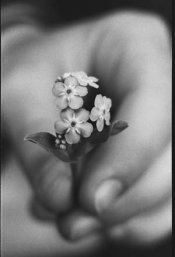
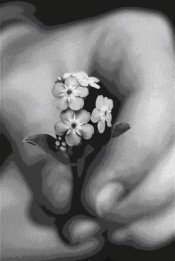
I assume that demi-water is deionized water (sometimes known as demineralized water)??
Yes, I used demineralized water. From everything I read the only effect "bad" water causes is that it gives black spots in the negative, embedded in the emulsion layer and not resulting in the effect Wishy and I both experienced.
Thank you Wishy for posting up your experiences and thanx to linking to the larger image as it contains several comments of which one is from Fotohuis.
Really too bad he can't post it up here, as it does contain some helpful information which not many people can provide us with here appearantly, at least not on this subject.
I just got back from Berlin and got an email back from Rollei. I'll post it below but I think I somewhat have my answer which is similar to the post of Henning (thank you as well

).
"Hi Indra,
we have received your sample film strips. We recognize in a film strip both a "solarisation effect" and ordinary images without this effect. It is precisely the consequence of those specialists, who have being working with the Technical Pan film for 20 years now: It was extremly overexposed! This type of exposure is in professional circles very popular, if these efects are intended.
You must therefore, arrange your exposures to the requirements of the film/developer needs.
With the ROLLEI RLC developer, you have a special developer specifically produced for the community of Technical Pan film users. Its task is to help to bend the GRADATION of the film, and thus, to tap for the image photography. If you use an HC110, then the gradation is harder and there are effects, which can increase the drama. With a highly concentrated print developer you are going to force this effect also.
The entry into the world of Technical Pan films is all other than simple!
But, the results can be extremely interesting!
Your film strips with some sample films are on the way back to you.
With kind regards
Hartmuth"
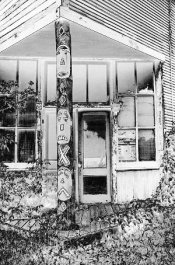
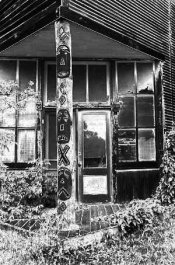
Especially the last photo I posted here contained a white spot which is due overexposure. Well, to be more exact, because the contrast in the photo was too high, as in the light part being too light compared to the dark parts, resulting in an overexposed part of the image where you can also find the "solarizing effect" taking place. It does not affect the darker parts.
What kind of bothers me is that when using a white background, like in the watch-photos, it's also "overexposed" because that's where I get this effect as well, but the negatives were actually kind of grey and still this effect appears.
I will keep on testing this combination because I want to research what's causing this. I'll shoot another ATP bracketing the same set-up and developing again in RLC and see what I'll come up with.
I got a testkit from Rollei which is really great but not with the RLC developer but with the DC developer which makes me think that that is the specific developer for this kind of film and not the RLC. Or the RLC is much more sensitive to decent exposure than the DC, the latter providing you with more freedom to screw around <---- merely speculating...again..but we'll see.
Thank you all for commenting. It gets us closer to pinpointing exactly where it went wrong and it sure is an interesting process
The Berlin films will be developed in HC110 though as I know what I'll get, although I'll have to determine the perfect dillution first.