

• Welcome to Photrio!
    Registration is fast and free. Join today to unlock search, see fewer ads, and access all forum features.
    Click here to sign up

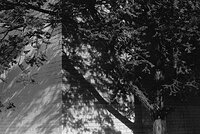
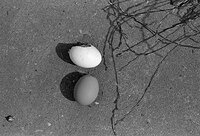
Artifacts of some sort on Tri-X

Grill

H
Grill

  • 1
  • 0
  • 39
Cemetery Chapel

H
Cemetery Chapel

  • 2
  • 0
  • 63

Recent Classifieds

Forum statistics

Threads
202,775
Messages
2,845,418
Members
101,517
Latest member
grant.goodes
Recent bookmarks
0
That sure does look like reticulation. That said, I've shot a fair amount of old Tri-X recently, some from 2010 and some from the late 1980s. All of it was poorly stored (in an attic) with temperatures ranging from the 50sF to the 90sF. None of it reticulated. Sure, the grain was like oatmeal and it had lost some speed but no reticulation. definitely makes me wonder what happened here!
 
Retuclation for sure.
However not at a bath temperature difference of just 3K. Others used icewater to induce reticulation with modern films. There must be someting more to it.
 
Been developing black and white film for more than 20 years and has seen reticulation only once. Stop bath (running water) temp was way too high ( around 90f versus 68 developer temp).


Like some other had guessed, I will stick with reticulation before the development process.

Being honest, it looks pretty cool! :smile: would like to be able to get the effect (without using PS) on some of my photos.

Best regards

Marcelo
 
Acid vapor?. I once or twice would place a cotton ball soaked with concentrated glacial acetic acid in the tank prior to development to try to intensify the latent image. The result was something like reticulation.
2006-32-28c.jpg
 
Like some other had guessed, I will stick with reticulation before the development process.
I dropped my camera on stone floor mid-roll so the film must have reticulated due to post-traumatic shock. I know I had one when pslatic hit the floor :laugh:
 
Last edited:
Reticulation is not known to take place outside of the processing cycle itself, although I guess it might be possible.

PE
 
Reticulation is not known to take place outside of the processing cycle itself, although I guess it might be possible.

PE
That was just a joke. I guess I'll never know what happened, but I'll be more careful with next roll.
 
Acid vapor?. I once or twice would place a cotton ball soaked with concentrated glacial acetic acid in the tank prior to development to try to intensify the latent image. The result was something like reticulation.
Yes indeed!

Very interesting.
 
I dropped my camera on stone floor mid-roll so the film must have reticulated due to post-traumatic shock. I know I had one when plastic hit the floor :laugh:

That makes the latent image slide to the edge of the film.
 
I think I got it better. I shot the first one at EI400 and second - at EI250. Developed both for 7 minutes in stock solution at 20 degrees, fixed at 19.5 and washed at 18.5. Grain is still higher than usual and there are still some effects similar to reticulation visible in white areas of the second picture. But it is less pronounced than in previous case.

ZzigxUa.jpg


6cwqiHm.jpg
 
Nice images. The subjects are high contrast, which night images are, because of black, or nearly black, sky and white, or nearly white, lights.

D-76 stock for 7 minutes is a pretty strong development prescription. It will bring out the grain, especially with Tri-X, especially with high contrast scenes.

If you care to, try a subject in flat lighting, exposed at box speed, developed in D-76 1+2 for 14 minutes. It will help show you another aspect of the same film and developer combination.
 
Nice images. The subjects are high contrast, which night images are, because of black, or nearly black, sky and white, or nearly white, lights.
Thank you, I thought they were good as well, but upon closer inspection I've noticed the same problem as before, which is in fact described in that post. And, what can I say, I like high contrast. Perhaps because of their resemblance to my childhood photos.

D-76 stock for 7 minutes is a pretty strong development prescription. It will bring out the grain, especially with Tri-X, especially with high contrast scenes.
I took the values from here:
https://www.digitaltruth.com/devcha...per=%D-76%&mdc=Search&TempUnits=C&TimeUnits=D

Even though for some reason unclear to me, ISO 400 and ISO 800 have exact same given values and I can't fathom how is that supposed to work.

If you care to, try a subject in flat lighting, exposed at box speed, developed in D-76 1+2 for 14 minutes. It will help show you another aspect of the same film and developer combination.
Yes I do care to and certainly will give your suggestion a try. However, as I've read, stock solution has less grain than 1+1. Doesn't it mean that 1+2 will have the highest grain of them all? The film is expired nearly eight years ago, that is why I exposed it at EI250 (and the previous roll at EI320).

Thank you for your time!
 
Even though for some reason unclear to me, ISO 400 and ISO 800 have exact same given values and I can't fathom how is that supposed to work.
Why do you go to digitaltruth when the Kodak recommended information is directly available from Kodak?
http://imaging.kodakalaris.com/sites/prod/files/files/products/f4017_trix_320400.pdf
And as for films metered and exposed at the ISO of 400 or an alternative EI of 800, the times are identical because, in Kodak's estimation, the response of the film is optimized at that development time for both levels of exposure.
You need to understand that the sensitivity of the film is essentially fixed at time of development. Changing the development time merely changes the contrast of the negative. If you under-expose a negative (meter at 800 instead of 400) you will lose shadow detail, and increasing the development ("pushing") won't help that. What may be improved by the increase in contrast is the appearance of the near shadows and mid-tones, but that improvement may also be accompanied by a reduction of quality in the highlights. Kodak doesn't recommend an increase of development for Tri-X metered at 800 and developed in D-76 because, according to their criteria, the improvements in the near shadow and midtones are outweighed by the reduction of quality in the highlights.
Your criteria (subjective or objective) may vary from Kodak's - you may care more about the near shadows and midtones and may be less worried about the highlights. If so, you may elect to increase the development. As Kodak says, the suggested development times are a starting point and you are free to adjust them as you might prefer.
 
Why do you go to digitaltruth when the Kodak recommended information is directly available from Kodak?
http://imaging.kodakalaris.com/sites/prod/files/files/products/f4017_trix_320400.pdf
It's because I can never find them on their website, unlike Ilford. Or maybe I'm just unattentive.

You need to understand that the sensitivity of the film is essentially fixed at time of development. Changing the development time merely changes the contrast of the negative. If you under-expose a negative (meter at 800 instead of 400) you will lose shadow detail, and increasing the development ("pushing") won't help that. What may be improved by the increase in contrast is the appearance of the near shadows and mid-tones, but that improvement may also be accompanied by a reduction of quality in the highlights. Kodak doesn't recommend an increase of development for Tri-X metered at 800 and developed in D-76 because, according to their criteria, the improvements in the near shadow and midtones are outweighed by the reduction of quality in the highlights.
I understand the pros and cons of pushing/pulling and I'm not trying to make a miracle. Although it is interesting to know what Kodak doesn't recommend.

Your criteria (subjective or objective) may vary from Kodak's - you may care more about the near shadows and midtones and may be less worried about the highlights. If so, you may elect to increase the development. As Kodak says, the suggested development times are a starting point and you are free to adjust them as you might prefer.
The only thing I care about right now are those nasty little black spots on my negatives.
 
M-88, regarding grain and developer concentration, I don't have personal experience. 1+2 dilution meets my goals.

I will definitely give it a try, I still have two rolls of Tri-X and 0.5 L of homebrew D-76 from the same batch. Should be interesting.
 
Photrio.com contains affiliate links to products. We may receive a commission for purchases made through these links.
To read our full affiliate disclosure statement please click Here.

PHOTRIO PARTNERS EQUALLY FUNDING OUR COMMUNITY:


Ilford ADOX Freestyle Photographic Stearman Press Weldon Color Lab Blue Moon Camera & Machine
Top Bottom
