• Welcome to Photrio!
    Registration is fast and free. Join today to unlock search, see fewer ads, and access all forum features.
    Click here to sign up

Arista.EDU 100 5x7 in WD2D+, rotary. I'm losing my mind.

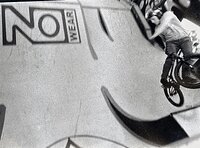
Lowlight freestyle

A
Lowlight freestyle

  • 1
  • 1
  • 62
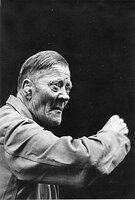
man arguing 1972

A
man arguing 1972

  • 7
  • 4
  • 123

Recent Classifieds

Forum statistics

Threads
203,026
Messages
2,848,785
Members
101,605
Latest member
Bburall33
Recent bookmarks
0

Phillip P. Dimor

Member
Allowing Ads
Joined
Oct 25, 2004
Messages
1,057
Location
Westport, MA
Format
Large Format
I have tried everything.. EI 50, 100, 150. Doubling the amount of 'A', splitting the developer into two batches (the latter being mixed right before being poured in).Reducing development time by 20%. Increasing development time. I've tried developing in trays.. I've even gone back to D76.. No matter what I do, I can not get a 'thick' negative. I mean, they are all thin. Printable on silver gelatin but for carbon, it's just not cutting it.I know i'm an idiot for trying to use WD2D+ in a continuous agitation setup, (should have gone with Pyrocat-MC or Rollo Pyro or some other magic juice)Is this film just 'thin'? I need some density! Sorry for the elementary and confusing question. I've been out of this for a few years.
 
Aerial oxidation, probably. If you really want to use WD2D+ you might have to change to tray development.
 
You dont say anything about the specifics as to how you develope and at what temperature. I have never had any problems getting good negatives from Arista edu Ultra 100 in D-76, PMK pyro or even Rodinal. Is it possible your thermometer may be off and your temps are colder than you think. If so, your times need to be longer in the developer. Your description sounds as though you arent exposing long enough though, so possibly a combination of under exposure and under development.
 
Michael, thin everywhere. I agree with the aerial oxidation part, for sure. The funny thing is that when I developed in trays my 'problem' persisted. And even with D76, my negatives are still very much 'transparent'. My leaf shutter seems to be pretty spot on. I'm metering with a Minolta IVF. I need to just 'start over' and reevaluate my entire process.
 
Your own analysis of using a developer that doesn't oxidize quickly is probably good. I've used Foma 100 in sheets (5x7, 4x5) and rolls (120, 135), and my problem has been opposite of yours, that it builds contrast too quickly, rendering negs that were useless for silver printing due to excessive contrast.

However, if you developed in trays and the problem persisted, then rotary processing is not likely the problem. Are you shooting in full daylight, normal contrast scenes? Or are you doing something else, like studio with artificial lighting? If studio lighting is used you may have to rate your film even lower EI.

Just thinking out loud.
 
Michael, D76 1:1, 6 to 10 minutes @ 20C. 1 sheet of film at a time, rocking the corners maybe four times a minute. ~400ml of developer in the tray. With an EI of 100, 6 minutes is probably closer to what i'm looking for but really I should know better. Perhaps an EI of 50? I'm trying to get a density range of 1.6 - 2.0 for carbon transfers. I remember reading somewhere to 'develop 1.5 times as long and increase film speed by 1/4 to 1/2 over manufacturers ISO. Dumb, really dumb question but should I be lowering my EI or raising it if I want to increase the density range?As things stand, by eyeball (and a calibrated step wedge) my DR is around 0.81 on a good day.As far as lighting conditions go, it's mostly indoors with available light and the help of a spotlight or two. Nothing fancy. I made the classic and fatal mistake of mucking around with way too many variables and now i'm just completely confused. I also wish I understood sensitometry.
 
You lower your EI to about 50. If you don't have enough density, develop longer until you do. 400ml of D76 should not exhaust that quickly, but that depends on whether you dilute the developer or not.
 
This is the Fomapan 100 film (it will probably say made in Czech republic on the box). The effective EI in D76 is somewhere around 50, so if you want to give 'more exposure' try exposing as EI25.

The film datasheet gives a time of seven minutes in D76 stock, hence you may need far more exposure and development than you have mentioned. In turn, that may mean an exposure time over half a second and with this film reciprocity failure becomes noticeable quite soon. From the data sheet - at 1s extend by one stop, at 10s by three stops, at 100s by four stops.

I'd suggest sticking to an ordinary developer, like D76, to get a baseline for comparisons before branching out to look for improvements.
 
I spent a few hours reading up on film curves and how to decipher them, it makes sense! Sort of! I was always aware of reciprocity failure but had NO IDEA that this film needs it's exposure to be corrected as much as it does. Thank you again.
 
I spent a few hours reading up on film curves and how to decipher them, it makes sense! Sort of! I was always aware of reciprocity failure but had NO IDEA that this film needs it's exposure to be corrected as much as it does. Thank you again.

I didn't even think about that. Reciprocity failure is pretty bad with this film.
 
For what its worth, I shoot the 400 ISO version of this film at 160 and have to dilute Xtol to 1:2 at 10:30 and 68 deg in my JOBO to get decent negatives, so I have felt your pain.
 
Phillip, I have used Wimberly WD2D+ very succesfully using Jobo expert drums with Ilford FP4+.

A) Rate all B&W film at half box speed, per WD2D+'s designer, John Wimberly.
B) Use a lot of volume of the developer ( at 1:1:100 or is it 1:1:50??) its very dilute. If you are running 6 or 10 4x5 sheets through there, the drums minimum volume will not have enough of the active developer in it.
C) Fresh developer at half time: Halfway through your development time, empty the developer, and introduce new, freshly mixed W2D2+ developer. This will eliminate aerial fogging and make negatives super beautiful: properly dense, with no base fog.
 
Photrio.com contains affiliate links to products. We may receive a commission for purchases made through these links.
To read our full affiliate disclosure statement please click Here.

PHOTRIO PARTNERS EQUALLY FUNDING OUR COMMUNITY:



Ilford ADOX Freestyle Photographic Stearman Press Weldon Color Lab Blue Moon Camera & Machine
Top Bottom