
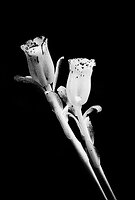
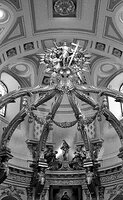
Yes! And my interest in posting Niepce's seminal photograph has more to do with interpretation by the observer than it does with the photographer's intent. Once an art piece becomes available for others to view the interpretation of it rests with the viewer and no longer with the creator. This is regardless of intent by the artist. Artist's intent in creation is important, but a transition of power happens when a piece becomes public. Of course understanding the artist's intent (if known) might make a piece more interesting.THAT was never intended to be an abstract - by virtue of close to two centuries of degradation, it can be interpreted as one (in case some readers are not aware, the image in question is widely considered the "first" photograph, made by Joseph Nicephore Niepce in 1829 at his house in Le Gras, outside Chalon-sur-Saone, France).
I agree Niepce's photograph was never designed to be an abstract. Yet, it can easily be interpreted as that now.


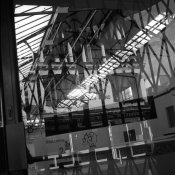


 If you can see the sand dunes there, it’s not abstract anymore. It could

