
• Welcome to Photrio!
    Registration is fast and free. Join today to unlock search, see fewer ads, and access all forum features.
    Click here to sign up

AI created images vs. Photoshop fabrications. Is there a difference?

Recent Classifieds

Forum statistics

Threads
203,566
Messages
2,856,591
Members
101,907
Latest member
BoulderCameraRepair
Recent bookmarks
0
One thing that caught my eye with Adobe's approach is below:

  • Designed to be commercially safe: You can create confidently, as Adobe Firefly is trained on Adobe Stock’s hundreds of millions of professional-grade licensed, high-resolution images, which helps ensure Adobe Firefly won’t generate content based on other people’s work, brands, or intellectual property.
 
The point is the photos can have everything to do with reality, that no one can trust what a photograph (that may or may not have been created or altered with AI) shows. Apparently Adobe along with camera manufacturers is working on an imbedded credential that would describe if any or what modifications have been made to a digital image. https://www.nytimes.com/2023/05/23/opinion/photoshop-ai-images.html There is probably a paywall. Journalists deserve to be paid.

Who's going to be impressed with someone's "photograph" that was created by a computer program written by a 27-year-old software engineer in Taiwan?
 
One thing that caught my eye with Adobe's approach is below:

  • Designed to be commercially safe: You can create confidently, as Adobe Firefly is trained on Adobe Stock’s hundreds of millions of professional-grade licensed, high-resolution images, which helps ensure Adobe Firefly won’t generate content based on other people’s work, brands, or intellectual property.

Authenticity is an oxymoron.
 
Who's going to be impressed with someone's "photograph" that was created by a computer program written by a 27-year-old software engineer in Taiwan?
A whole lot of people, because they won't even know it was created by AI. As a matter of fact, I predict the most impressive images will be created or modified by AI in the not-too-distant future.
 
Authenticity is an oxymoron.

Did you follow the link? It’s hard to tell based on your response. The link is about protecting your content that you share online, and making sure others can learn about how it has been potentially altered. And more. I’m not sure how you think authenticity is an oxymoron.
 
There is a "photo" on youtube showing an "explosion" in front of the WH and a caption
on the order of "white house attacked"
There are several giveaways as to the image either being manipulated or generated by AI.
That might be an argument for film rather than AI. Oh dear, what to do?
 
There is a "photo" on youtube showing an "explosion" in front of the WH and a caption
on the order of "white house attacked"
There are several giveaways as to the image either being manipulated or generated by AI.
That might be an argument for film rather than AI. Oh dear, what to do?

Film images must be digitized before being posted, printed or broadcast, leaving them susceptible to manipulation.
 
Did you follow the link? It’s hard to tell based on your response. The link is about protecting your content that you share online, and making sure others can learn about how it has been potentially altered. And more. I’m not sure how you think authenticity is an oxymoron.

To mark my point better, it's hard to argue that AI is authentic photography.
 
I think a way forward, might be to sell the experience of owning a guaranteed "hand-made" print to a buyer (art collector context here). It could go so far as having to invite one into the darkroom to watch! Don't know if this will work, however...
 
I think a way forward, might be to sell the experience of owning a guaranteed "hand-made" print to a buyer (art collector context here). It could go so far as having to invite one into the darkroom to watch! Don't know if this will work, however...
At this point in time AI images look like heavily photoshopped or manipulated, maybe because there is so much of that on the internet where AI "learns." Folks who buy that like the look and probably don't really care how the image was created. As a matter of fact they might be intrigued and value the image more.

The real threat of AI is portraying things that are not true, and people accepting the images at face value (no pun intended, but it would be a good one). The uses for fraud and propaganda are truly frightening. Plus photographers who have material online will just have to bite the bullet and accept that their images might become integrated into an AI production.
 
At this point in time AI images look like heavily photoshopped or manipulated, maybe because there is so much of that on the internet where AI "learns." Folks who buy that like the look and probably don't really care how the image was created. As a matter of fact they might be intrigued and value the image more.

The real threat of AI is portraying things that are not true, and people accepting the images at face value (no pun intended, but it would be a good one). The uses for fraud and propaganda are truly frightening. Plus photographers who have material online will just have to bite the bullet and accept that their images might become integrated into an AI production.

Photoshop already raises questions about honesty. The biggest threat of AI is the loss of originality. Pressing a bottom to activate someone else's art program doesn't require much effort.
 
Photoshop already raises questions about honesty. The biggest threat of AI is the loss of originality. Pressing a bottom to activate someone else's art program doesn't require much effort.

I wouldn’t be upset by lack of originality. We are surrounded by it everywhere, everyday, especially on the internet. As far as reducing the creative process to pushing a button, the same could be said of photography.

In fact, AI increases originality by letting one create images that only exist in one’s imagination.
 
Last edited:
I wouldn’t be upset by lack of originality. We are surrounded by it everywhere, everyday, especially on the internet. As far as reducing the creative process to pushing a button, the same could be said of photography.

In fact, AI increases originality by letting one create images that only exist in one’s imagination.

Then one ought to take up painting.
 
Peyote trip is another layer of reality though - it's not out of this world
 
I think a way forward, might be to sell the experience of owning a guaranteed "hand-made" print to a buyer (art collector context here). It could go so far as having to invite one into the darkroom to watch! Don't know if this will work, however...

I don't think you want to expose the man behind the curtain. When potential customers see that you are just exposing the paper under an enlarger and waving your hands around before dunking the paper in a few trays of chemicals, the mystery will be revealed and your print prices will plummet.
 
I'm not hearing anyone talk about what they want to achieve with their pictures.

Photos have always lied. Get over it. When they tell the truth, what is that truth?

What are you actually afraid of? To what do you aspire? Social media noise?

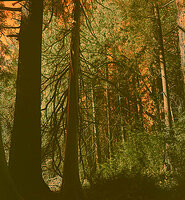
bjorke-cascade-c9a62d0d.jpg
 
I'm not hearing anyone talk about what they want to achieve with their pictures.

Photos have always lied. Get over it. When they tell the truth, what is that truth?

What are you actually afraid of? To what do you aspire? Social media noise?

View attachment 339777

First off pictures have not always lied. Sure there are those who lied with them. But I think most people like myself who grew up with photography in the 1950s, 60s etc, looked at photos as telling the truth. We sent our slides and film out to be developed and printed as they were shot. No one really edited them except "experts". So we trusted them as they were. This is no longer the case and AI will just make their phoniness more so.

The shot in your post is a bad example. First off no one is going to think that's reality. It;s obviously something from someone's mind. The issue comes up with photos that appear to be normal shots of "reality" that are just figments of someone's imagination. There's nothing wrong with those either, per se. It's just that they decrease trust of all photos. Plus, why bother getting out of your easy chair to shoot in the rain when you can stay home, keep dry, and create your own reality.
 
I'm not hearing anyone talk about what they want to achieve with their pictures.

Photos have always lied. Get over it. When they tell the truth, what is that truth?

What are you actually afraid of? To what do you aspire? Social media noise?

View attachment 339777

The images captured on film reveals what the film saw adding or deleting significant objects is a distortion or lie, using AI and representing it as being true is an anathema and outright dishonest. If one wants to add or delete significant object, use FauxTow$hop or AI and then pass it off as truth is just plain dishonest. On the other an artist can paint whatever they like because it is understood as a painting and not foisting off something as truth the way a photograph does. Now as far as the BS that since photographers in the past added or deleted significant objects somehow justifies doing it today, using the same logic, reductio ad absurdum, then one could justify bigotry and slavery since it was accepted in the past. So are you setting up a platform to justify bigotry and slavery with your argument?
 
First off pictures have not always lied. Sure there are those who lied with them. But I think most people like myself who grew up with photography in the 1950s, 60s etc, looked at photos as telling the truth. We sent our slides and film out to be developed and printed as they were shot. No one really edited them except "experts". So we trusted them as they were. This is no longer the case and AI will just make their phoniness more so.

Well, back in that era most of the photographs made were snapshots of stuff like Aunt Clara and Uncle Fred standing in front of Niagara Falls. Yep, that Clara and Fred on their trip to Buffalo.

However, I find that those old photos reveal a different truth when compared to the snapshots of today and that is that back in the 20th century people were thinner. Taking the same photos today from the same position requires a wide angle lens.
 
First off pictures have not always lied. Sure there are those who lied with them. But I think most people like myself who grew up with photography in the 1950s, 60s etc, looked at photos as telling the truth. We sent our slides and film out to be developed and printed as they were shot. No one really edited them except "experts". So we trusted them as they were. This is no longer the case and AI will just make their phoniness more so.

The shot in your post is a bad example. First off no one is going to think that's reality. It;s obviously something from someone's mind. The issue comes up with photos that appear to be normal shots of "reality" that are just figments of someone's imagination. There's nothing wrong with those either, per se. It's just that they decrease trust of all photos. Plus, why bother getting out of your easy chair to shoot in the rain when you can stay home, keep dry, and create your own reality.

Oh no! You are agreeing with me again! Cut that out!
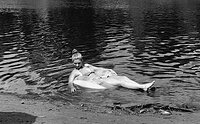
jpeg.jpeg
 
Photrio.com contains affiliate links to products. We may receive a commission for purchases made through these links.
To read our full affiliate disclosure statement please click Here.

PHOTRIO PARTNERS EQUALLY FUNDING OUR COMMUNITY:


Ilford ADOX Freestyle Photographic Stearman Press Weldon Color Lab Blue Moon Camera & Machine
Top Bottom
