• Welcome to Photrio!
    Registration is fast and free. Join today to unlock search, see fewer ads, and access all forum features.
    Click here to sign up

A "sharp" developer to use with rotary processing

Recent Classifieds

Forum statistics

Threads
202,983
Messages
2,848,399
Members
101,577
Latest member
Ostrevino
Recent bookmarks
0
Status
Not open for further replies.
I expect to make some practice prints before getting the right overall exposure, but I don't expect to spend hours dodging and burning.

That's most likely the result of not having any formal education in photography, where usually, the first thing explained is that a good print usually takes at least 3-4 hours to make, and sometimes more.
 
That's most likely the result of not having any formal education in photography, where usually, the first thing explained is that a good print usually takes at least 3-4 hours to make, and sometimes more.

There's no camera shake.... It's a rangefinder on a tripod...
 
If the exposure is long enough for water to move, its long enough for a camera to move.
Rangefinders on tripods can shake too.

I shot this specifically for this thread, there's no camera shake....
 
That's most likely the result of not having any formal education in photography, where usually, the first thing explained is that a good print usually takes at least 3-4 hours to make, and sometimes more.

Formal education in photography is not always necessary, as there are many examples of great photographers who learnt through experience. You can make a good print at leisure, or pay someone to make it for you. However, if you don't have the shot in the first place, no printing skill will compensate for this. Stone just needs time to develop his technique.
 
a print can take as long or short as you want just like an exposure.
some people make endless spot meter readings, some just sunny 16 ,,
a print can be just a test strip or 2
and lights on
evaluate then the print ...

or it can be lots of contact prints
a proof print then burn dodge , map then final print

either way can be good
 
I read this PHD thesis centered around soft focus lenses a while back. http://hdl.handle.net/10023/505

It was a very interesting walk through many of the technological changes in photography (photography's syntax) and how what we have preferred has changed along the way.

The chase of/debate about the benefits of one photographic characteristic over another has been going on a long, long time.

One of the many interesting concepts in the thesis is that as resolution and sharpness increased the need for retouching and manipulation increased. Soft focus lenses were in large part developed to address the issue of too much sharpness.

In the same way the sharpness of the lenses Stone uses on his Mamiya 7 are simply à la mode rather than a definitive answer.


By the way Stone, before you start drooling over the high resolution of albumen paper understand that you would need to make it from scratch and it would require developing your negatives differently. :wink:

Edit (can't resist the next paragraph)

A great paper, I read it a couple of years ago.
 
a print can take as long or short as you want just like an exposure.
some people make endless spot meter readings, some just sunny 16 ,,
a print can be just a test strip or 2
and lights on
evaluate then the print ...

or it can be lots of contact prints
a proof print then burn dodge , map then final print

either way can be good

I have to disagree here, unless you are working with SPT in a process lab, a good print takes hours to make. In BW often much longer then color.
There are empirical measures to what a good print is, and never forget that good and liked are not the same thing.
 
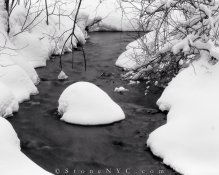
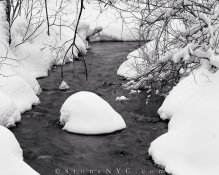
There is something going on in the second one. I will blame it on the coriolis effect. :D

They are both crops of a larger image...

GAF
ImageUploadedByTapatalk1392855339.371814.jpg
TMY-2
ImageUploadedByTapatalk1392855345.370714.jpg
 
...
There are empirical measures to what a good print is, and never forget that good and liked are not the same thing.
I don't doubt you on this, but I find this somewhat sad and so will simply admit that I'm more interested in making prints that I like than making prints that are good.
 
Where's the non-rotary "control" picture?

I've been non-rotarying long enough to know what a good shot looks like and was just testing ilfsol 3 as an option (since I had used it for the GAF before with superb results... Apparently the GAF just works, too bad it doesn't exist anymore.

Once I find something that seems to work I'll do a control to compare.
 
I have to disagree here, unless you are working with SPT in a process lab, a good print takes hours to make. In BW often much longer then color.
There are empirical measures to what a good print is, and never forget that good and liked are not the same thing.


Who honestly gives a hoot about the empirical measure of a good print?
 
Enough. Too many reports on this thread.
 
Status
Not open for further replies.
Photrio.com contains affiliate links to products. We may receive a commission for purchases made through these links.
To read our full affiliate disclosure statement please click Here.

PHOTRIO PARTNERS EQUALLY FUNDING OUR COMMUNITY:


Ilford ADOX Freestyle Photographic Stearman Press Weldon Color Lab Blue Moon Camera & Machine
Top Bottom