

• Welcome to Photrio!
    Registration is fast and free. Join today to unlock search, see fewer ads, and access all forum features.
    Click here to sign up

A Christmas Cookie from Santa

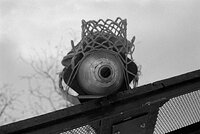
Cone and Hoop

A
Cone and Hoop

  • 0
  • 0
  • 22
Snow on Willoughby

A
Snow on Willoughby

  • 0
  • 0
  • 26

Forum statistics

Threads
202,759
Messages
2,845,212
Members
101,511
Latest member
hkoepke
Recent bookmarks
0
On my "to do" list after the book is finished:

1. High speed panchromatic emulsion (ISO 100 - 400) I have been trying with poor results, but I have a new setup as shown in other threads.

2. Color print material based on dye bleach. I have shown a single layer magenta in another thread and passed a sample around to the students at the last workshop at GEH.

3. A new book and maybe a DVD on the above along with advanced precipitation methods and mixing.

PE
 
Ron ,

New book is a great idea and in addition everyone can buy a bw film or color paper but kodachrome is gone. You are the one who will able to resurrect the kodachrome. May be you keep my wish and write.
May be forum is not the best place and offtrack and keep you busy and tired and you so, can write articles on it. Please have think about it. And I read your advises on kodachome ink jet projects and I found how excellent advises you gave.
Do you have spectrums about kodachrome dyes ? I want to learn more about them.

Thank you ,

Umut
 
Umut;

I have posted the spectra of the dyes in a thread with the words in the title "love hate". I have lost the URL for it here on APUG. But, I assure you that I have no intention of duplicating Kodachrome. It would take a genuine coating machine as shown here on APUG and it would have to be considerably different than the one shown.

As for APUG taking time, well, I run Word here and my browser so it is easy to edit and flip back and forth. I also take time away from the screen to take walks, exercise and swim, so I am not always here.

Of course, many people have said that I am not all here! :wink: (English slang expression for being somewhat crazy)

PE
 
Ron ,

My last post about Kodachrome. Is it possible to make a color print paper , transparency to positive paper , may be for contact printing , a kodachrome dyes using paper , may be it would run parallel with your color paper target.
Or can we do dye transfer system which runs with kodachrome dyes. You said me it was possible to use coupler + developer for extracting dye. May be , we could use this mixture without extraction. Its water based and water evoprates with heated air and dye remains on paper.

What do you say ?

Thank you very much ,

Umut
 
Ron ,

May be , paper would be developed with E6 and exposed with color filters :smile:

And you had been said , there would be salts in kodachrome coupler developer mix , do they effect color or stability ?

Umut
 
Color paper using Kodachrome chemistry is difficult to do with the modern process due to the difficulty of exposing the bottom layer to red light. The support blocks the light. Color papers based on Kodachrome would require the use of the old differential bleach process.

Using Kodachrome dyes for dye transfer would require modification to add a sulfonic acid or other ionic group to allow mordanting. In any event, only the cyan would be needed to get a Kodachrome like effect. Dye bleach is far easier due to the ease of purchasing the dyes and other chemicals needed.

PE
 
Color paper using Kodachrome chemistry is difficult to do with the modern process due to the difficulty of exposing the bottom layer to red light. The support blocks the light. Color papers based on Kodachrome would require the use of the old differential bleach process

When I was working at prepress , I had many paper catalogs and they were transparent but gives a polished surface.

Would it be too costly to do this paper.

Does it transparency to positive result process ? This paper could be used by ULF people also.

How many layers does it need and can we coat at home ?

Does it need to be developed by E6 ?

Using Kodachrome dyes for dye transfer would require modification to add a sulfonic acid or other ionic group to allow mordanting. In any event, only the cyan would be needed to get a Kodachrome like effect. Dye bleach is far easier due to the ease of purchasing the dyes and other chemicals needed.

You had been said many times only cyan was needed for Kodachrome effect.
Does c16 coupler and developer mix in water + alkali mixture , completes the dye transfer cyan color need.

Thank you ,

Umut
 
Umut;

ANY paper product based on Kodachrome would be difficult and would require at least 9 emulsions in at least 6 layers minimum. The same coating structure and emulsion configuration is needed for paper. The E6 process cannot be used without substantial modifications.

The Kodachrome dye can be made by dissolving the coupler in alkali and adding a color developer. Then you add an oxidant such as peroxide. The dye forms and then you extract the dye with an extraction method of some sort and recrystallize the pure dye. This dye can then be used for other purposes. If you have attached a sulfonic acid group, then it is ideal for making dye transfers, but the dye stability will not be very good as compared to the real dye transfer or the real Kodachrome.

Due to the added sulfonic acid group, the hue will also change.

PE
 
Umit,

Look at the lengthy APUG threads about every combination of forcing the out dated, difficult Kodachrome technology into every thing imaginable and unimaginable. The short version is that you can't get there from here and any practical way.

Steve
 
Does it have a prize in it like a plum pudding? Maybe a silver coin or a Super Hero toy. Either would do! :D

PE
 
How about a Nikola Tesla figurine? :smile:

We used to have the silver coin thing at Christmas.
 
Well, frankly, I like authentic plum podding better than chocolate cake. More flavor. But here, we called it "Johnny Bull Pudding".

Anyhow, I really cannot eat desserts anymore as I am trying to reduce. Thanks Dan!

:D

PE
 
No desserts?! Well you know what they say; coffee makes it possible to get out of bed, but chocolate makes it worthwhile! :smile:


I'd like to see someone try and pod plums...:laugh:
 
On my "to do" list after the book is finished:

1. High speed panchromatic emulsion (ISO 100 - 400) I have been trying with poor results, but I have a new setup as shown in other threads.

Ron, Are you using the Sands dyes that you suggested to us so long, long ago?
Are your "poor results" poor with regard to color balance? Speed? Something else?
A venture dear to me wee little (but hard as a diamond) heart!
Bill:alien:
 
Bill;

I have dyes from Sands and now from Honeywell in Germany. I will be using those.

The faults in the emulsion include sever aggregation due to less than optimal mixing as I noted in another post here. The problem also includes low speed due to the mixing and also due to the low flow rates required for the nucleation step. I am working on all of these.

If you look at most of the emulsions we make, we use high speed addition (1 - 10 mins) with very concentrated solutions of Silver Nitrate and salt. So we may add very rapidly. The modern high speed emulsions that I worked with require similar addition times for the nucleation step, but use very very dilute solutions at very very low flow rates. Then you go to the high flow rate to grow the crystal. These makes take up to 3 hours.

PE
 
Bill;

I've thought about this for a day or so since you suggested that the book be released first. I see your reasoning but I would like to bring to your attention the fact that you have seen all parts of my course, and this may be influencing your POV. For those who are wavering about homemade emulsions, perhaps the disk will be valuable to them, as much so as the book.

PE

OK, I'm flummoxed. I completely agree with the above sentiment. If just a bit of written explanatory info could be included with the DVD, I think the book will be the icing on the cake, not the other way around. Is it really so important to understand every little detail of the physical chemistry of emulsion making to make an emulsion -- a good emulsion -- and enjoy the process?

I've been cheerleading for the book for five years. I very much look forward to reading it, but it will be a wonderful addition, not a necessary starting point. All the threads here on APUG and The Light Farm have more than enough technical info for beginners. Moving pictures are the ideal next step (and I don't wanna do it :smile: ) Go, PE, go!

d
www.thelightfarm.com
 
Thanks Denise. I take delivery of a case of disks on Monday or Tuesday. Now I have to sell them or keep them in a safe place here! They are done. There was one error on the DVD, and it was corrected in a very amusing way.

I have been thinking about a stuffer for the DVD with some explanatory information.

I am editing the book at present, but the hot weather and Bob Shanebrook's very good editing have slowed me down a bit. I'll get there. After that, I have two more editorial note sheets to go over and then I have to add a section on sensitometry and one on mixing, fix the bibliography, and then renumber pages, figures and TOC. I have already finished several pages of corrections from others, so that is behind me.

I'll be done soon unless I melt from the heat.

PE
 
PE,

Do you have enough to do now that you are retired? :whistling:

Steve
 
OK, I'm flummoxed. I completely agree with the above sentiment. If just a bit of written explanatory info could be included with the DVD, I think the book will be the icing on the cake, not the other way around. Is it really so important to understand every little detail of the physical chemistry of emulsion making to make an emulsion -- a good emulsion -- and enjoy the process?

I've been cheerleading for the book for five years. I very much look forward to reading it, but it will be a wonderful addition, not a necessary starting point. All the threads here on APUG and The Light Farm have more than enough technical info for beginners. Moving pictures are the ideal next step (and I don't wanna do it :smile: ) Go, PE, go!

d
www.thelightfarm.com

Even though I am concentrating on learning on my 4"x5" photography and I cannot even think of working on making emulsion while I am working in Virginia, I found www.thelightfarm.com is one of the most fascinating websites that I have seen in years! KUDOS!!!


Steve
 
Bill;

I have dyes from Sands and now from Honeywell in Germany. I will be using those.


PE
Hi Ron,
Now I just godda ask: What is it about the Honeywell dyes that intrests you? Will you be using them to the exclusion of the Sands dyes? Do I have the wrong $150.00/gram dyes? The Sands dyes seam to be doing what they are suppoed to do. But is there a potentialy better way? O course! There is ALWAYS a better way.

---------------------------------------------------------------------
As regarding the Book first rather than the DVD first rather than the Book first:
" In The Beginning was The Word. " - Somewhere in the Christian Bible.
Not " In The Biginning was the DVD.":wink:
 
Steve,
I whole heatedly agree. (And I rarely agree with anyone about anything.) Not only is Denise's www.thelightfarm.com a very clear "no nonsense" guide to emulsion making, but Denise was of immeasurable help to me when I started actualy making emulsions. This was about 18 months after taking Ron's workshop and I was rusty, to say the least. I can attest to the fact that, when Denise says something about silver/gelatin emulsion making, it is based on rigerous testing and retesting. No B.S. ever comes from her mouth or fingers, when it comes to emulsions.
Bill
 
Bill;

Honeywell has a blue sensitizing dye, an antihalation dye and an acutance dye. Thats about it for what I have. Basically, what I could not find at Sands, I found at Honeywell and vice versa.

PE
 
PE,
A blue sensitising dye- y to uncrease overal speed(?). Is it possible for a "civilian" to purchase these dyes?
Bill
 
Photrio.com contains affiliate links to products. We may receive a commission for purchases made through these links.
To read our full affiliate disclosure statement please click Here.

PHOTRIO PARTNERS EQUALLY FUNDING OUR COMMUNITY:


Ilford ADOX Freestyle Photographic Stearman Press Weldon Color Lab Blue Moon Camera & Machine
Top Bottom
