
Is it possible to get field camera for this range of lenses, or is this only possible with a mono rail? Thanks
-
Welcome to Photrio!Registration is fast and free. Join today to unlock search, see fewer ads, and access all forum features.Click here to sign up
- Home
- Forums
- Analog Workflow Forums (100% Analog/Traditional)
- Analog Equipment
- Large Format Cameras and Accessories
You are using an out of date browser. It may not display this or other websites correctly.
You should upgrade or use an alternative browser.
You should upgrade or use an alternative browser.
5x4 camera for Schneider SA 72mm xL, 180mm, maybe 210mm
-
A
- Thread starter Neil Grant
- Start date

Recent Classifieds
-
Free French lens probably early XIXcentury
- Started by Gaston 012
-
For Sale Ilford 4x5 FP4+ (Expired June 2023)
- Started by CreationBear
-
For Sale Beseler Audible/Repeating Enlarging Timer w/ foot switch
- Started by CreationBear
-
For Sale Tanks n hangers
- Started by CreationBear
-
For Sale 5x7 Fidelity Elite Film Holders
- Started by Jammoh
Forum statistics

I can do all three with my Tachihara, I can go all the way out to 300mm.

bdial
Subscriber
Depending on the camera, you might need a recessed board for the 72, but the others should be fine.


Mick Fagan
Subscriber
I'm running 65mm through to 250mm on my Shen Hao HZX 4X5-IIA
I can use the 65mm with the standard bellows, but they are heavily scrunched up. The 65mm is running a 10mm (approximately) recessed board. With the bag bellows the 65mm is a breeze and I invariably use the bag bellows with the 90mm.
All of my lenses are Fujinon, but that shouldn't make much of a difference, if any difference at all.
I can use the 65mm with the standard bellows, but they are heavily scrunched up. The 65mm is running a 10mm (approximately) recessed board. With the bag bellows the 65mm is a breeze and I invariably use the bag bellows with the 90mm.
All of my lenses are Fujinon, but that shouldn't make much of a difference, if any difference at all.
- Joined
- May 31, 2004
- Messages
- 122
- Format
- Multi Format
Is it possible to get field camera for this range of lenses, or is this only possible with a mono rail? Thanks
Your lens range works fine with a Wista SW 5x4 field camera ~ the 72mm wide angle unscrews the rear element into the Wista and the bellows detaches to fit it in (unlike the DX model which has fixed bellows and can't accommodate such wide XL lenses.
Bit of a squeeze but it works fine for the SA 90mm XL too,right down to the 65mm f4/f5.6 lenses. The 180mm is comfortable. At 210mm, you can attain infinity focus down to portrait length and then it runs out of bellows so with top hat lens boards +10mm or + 20mm, it makes all the difference like an extension ring.
A triple extension type Chamonix, Phillips, Shen Hao all work at the longer end and have various degrees of field camera instability compared to the more robust shorter double extension field cameras.
Nothing like a real monorail to compare against though

So you can't attach the rear element onto the DX by removing the back and screwing it into the shutter?Your lens range works fine with a Wista SW 5x4 field camera ~ the 72mm wide angle unscrews the rear element into the Wista and the bellows detaches to fit it in (unlike the DX model which has fixed bellows and can't accommodate such wide XL lenses.
Fortunately, I don't have that problem with any of my lenses -- but not by much -- but I could get physically wider lenses onto my camera by using this approach.

grat
Member
speed graphic
I'm a fan of the speed graphic (and own two), but the extra complexity of the FPS isn't worth it if you don't need it, and will make wider lenses more difficult.
A triple extension type Chamonix, Phillips, Shen Hao all work at the longer end and have various degrees of field camera instability compared to the more robust shorter double extension field cameras.
The Chamonix 045N-1 and N-2 aren't really a triple extension-- It's a single focusing screw with a single bed. 210mm is ridiculously simple (and stable), as the max bellows draw is 395mm. Minimum is claimed 42, but 65 is probably more reasonable. The rear standard does move, but not enough to destablize the camera.
The opening in the standard might be an issue, as it's only 84mm, so the lens might have to be dismantled for installation. The bellows is a slider to latch in place.
Nothing like a real monorail to compare against though
Yes and no-- I think most would agree a Cambo SC2 is a "real monorail", but due to the standard design, 72mm is actually really difficult to reach.
Linhof indicates the 72 mm lens (and shorter) can be used with the Master Technika 3000.
David
David
- Joined
- Nov 23, 2012
- Messages
- 43
- Format
- Large Format
Have you considered a Sinar F2? No need for a recessed lens board, and you can get away with a using a 180mm with the bag bellows. It can fold up quite compact and it doesn't weigh much and they are now very inexpensive and accessories are everywhere.
I shot some rather intensive architectural assignments in NYC and Paris years ago using a Sinar F2, 72mm, 90mm, 120mm, 180mm, 240mm and 300mm in my setup- with the majority of the shots being taken with the 90mm and 120mm. Using a field or technical camera would have been quite cumbersome with the 72mm- the large front element makes it very finicky to use with a recessed board.
I shot some rather intensive architectural assignments in NYC and Paris years ago using a Sinar F2, 72mm, 90mm, 120mm, 180mm, 240mm and 300mm in my setup- with the majority of the shots being taken with the 90mm and 120mm. Using a field or technical camera would have been quite cumbersome with the 72mm- the large front element makes it very finicky to use with a recessed board.
- Joined
- May 31, 2004
- Messages
- 122
- Format
- Multi Format
So you can't attach the rear element onto the DX by removing the back and screwing it into the shutter?
Fortunately, I don't have that problem with any of my lenses -- but not by much -- but I could get physically wider lenses onto my camera by using this approach.
Hi,
Just coming back online!
With the Wista DX, some people do try to do this and end up deforming the bellows trying the flange locking from such an extreme remove. Wista made the SW with removable bellows for this reason.
Great to hear your lens range matches - the wider lenses are always a challenge to zero on the standards precisely on field cameras too. Smaller 65mm lenses like the Nikkor 65/4 will fit easily; the Docter Germinar 65/4.5 is way too large. It's been a long time since I tried the 47/5.6XL on the Wista SW - it fits easily with the detaching bellows however the zero-ing is very difficult and almost blackened vignetted at the corners to notice any unintended movement.
With respect to the original post, the standard monorail design like the Sinar F series; Horseman etc - not the budget Cambo S2C referred to above, should be used as a reference for monorail design for the lens range.
Why?Hi,
Just coming back online!
With the Wista DX, some people do try to do this and end up deforming the bellows trying the flange locking from such an extreme remove. Wista made the SW with removable bellows for this reason.
Great to hear your lens range matches - the wider lenses are always a challenge to zero on the standards precisely on field cameras too. Smaller 65mm lenses like the Nikkor 65/4 will fit easily; the Docter Germinar 65/4.5 is way too large. It's been a long time since I tried the 47/5.6XL on the Wista SW - it fits easily with the detaching bellows however the zero-ing is very difficult and almost blackened vignetted at the corners to notice any unintended movement.
With respect to the original post, the standard monorail design like the Sinar F series; Horseman etc - not the budget Cambo S2C referred to above, should be used as a reference for monorail design for the lens range.
the LInhof TK 45 cameras easily use 35mm through 360mm lenses by simply using the correct board and bellows. And it’s a monorail.
Hi Bob,
Different camera design. The Wista DX has its own limitations ~it's just not as versatile as a heavier monorail as a field camera design.
The TK is not heavier. We were the USA distributor for both LInhof and Wista.
With the Wista DX, some people do try to do this and end up deforming the bellows trying the flange locking from such an extreme remove
I don't see how you could possibly deform the bellows if the bellows is completely collapsed -- which is where it would be when attaching the rear element of the lens through the back of the camera.
- Joined
- May 31, 2004
- Messages
- 122
- Format
- Multi Format
I don't see how you could possibly deform the bellows if the bellows is completely collapsed -- which is where it would be when attaching the rear element of the lens through the back of the camera.
Hi,
It's not relevant for the OP. There was a reason Wista created the SW field camera to enable the bellows to be detached.
When a fixed bellows DX user tries to manipulate a large rear element lens via the back, instead of the shorter distance of the SW with detaching bellows, it is not possible for your fingers to turn and lock the flange without extending the bellows here or there, and then risk deforming the bellows.
The detaching Wista SW field bellows then enables the non-concertina wide-angle (correct) bellows to be positioned without the vignetting problems of using the wrong standard bellows, crumpling up during the short distances with any shift/tilt movements.
Kind regards
RJ
it is not possible for your fingers to turn and lock the flange without extending the bellows here or there, and then risk deforming the bellows.
Thanks for the explanation, but it leaves me in a fog. As far as I can tell, my Tokos are very similar to the Wista DX, and I can easily attach rear elements to any shutter through the back of the camera when the back is removed and the bellows collapsed. I simply screw the rear element into the shutter which is on the front standard -- no "flange locking" involved.....whatever that is.
Are you talking about a lens that is physically too wide for the front end of the bellows? I still don't see how that would be a problem. And if a recessed lens board is being used, that just makes it even easier.
Last edited:
- Joined
- May 31, 2004
- Messages
- 122
- Format
- Multi Format
Thanks for the explanation, but it leaves me in a fog. As far as I can tell, my Tokos are very similar to the Wista DX, and I can easily attach rear elements to any shutter through the back of the camera when the back is removed and the bellows collapsed. I simply screw the rear element into the shutter which is on the front standard -- no "flange locking" involved.....whatever that is.
Are you talking about a lens that is physically too wide for the front end of the bellows? I still don't see how that would be a problem. And if a recessed lens board is being used, that just makes it even easier.
Hi,
Sorry I've never used a Toko.
If it's similar to the Wista DX, the problem isn't just about mounting the lens with the fixed lens bellows recessed: it's the very extension; shift/tilt/movements of the fixed (standard) bellows which are inappropriate for wide angle lenses.
It's possible to use standard bellows for wide angle large XL type Schneider Kreuznach lenses.
This is more likely to cause the standard bellows to deform then, regardless of whether the lens can be awkwardly mounted safely by the very back of the camera, instead of a simple and elegant detachable bellows like the Wista SW - with interchangeable bellows to enable the correct wide-angle balloon shaped bellows for ultra wide-angle lenses.
I still don't get it. As Rick (post #2 above) says, he uses the 72mm XL on a Tachihara with no problem. I use my 75mm, 65mm, and 47mm XL on my Toko with no problem.
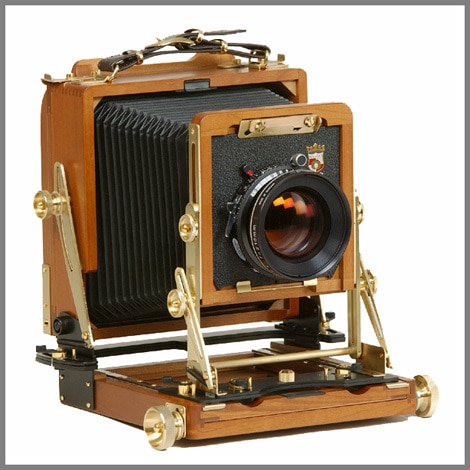
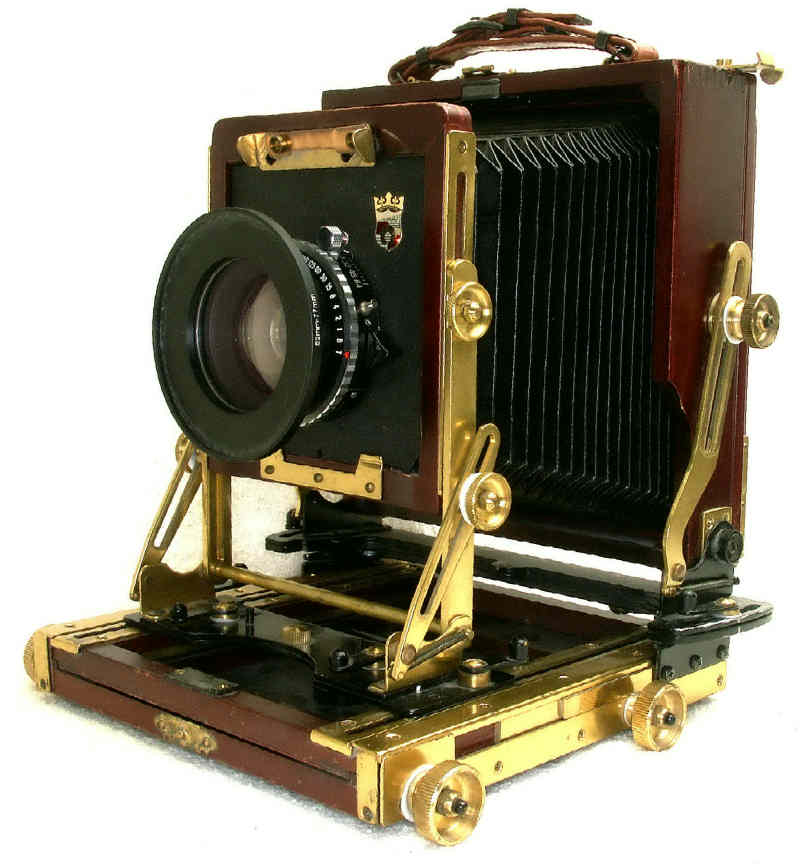
Here is a Wista DX:
Are you talking about the bellows limiting the movement of super-wide-angle lenses? That's different than getting the lens on the camera -- which is what I was talking about.
But I've never had a problem with movement either -- for two reasons. With wide angle lenses the bellows is largely compressed and the rear of the lens (its widest diameter) is deep inside the bellows at its widest diameter. This is even more so when a recessed board is used, such as with my 47mm XL. More importantly, super-wide-angle lenses don't allow that much movement anyway due to their smaller image circles.
I've never seen it (the original question) as a problem -- will these lenses fit & work. Neither has Rick with his Tachihara, nor me with my Toko (bottom), but maybe I'm still missing your point.
Here is a Wista DX:
Are you talking about the bellows limiting the movement of super-wide-angle lenses? That's different than getting the lens on the camera -- which is what I was talking about.
But I've never had a problem with movement either -- for two reasons. With wide angle lenses the bellows is largely compressed and the rear of the lens (its widest diameter) is deep inside the bellows at its widest diameter. This is even more so when a recessed board is used, such as with my 47mm XL. More importantly, super-wide-angle lenses don't allow that much movement anyway due to their smaller image circles.
I've never seen it (the original question) as a problem -- will these lenses fit & work. Neither has Rick with his Tachihara, nor me with my Toko (bottom), but maybe I'm still missing your point.
- Joined
- May 31, 2004
- Messages
- 122
- Format
- Multi Format
I still don't get it. As Rick (post #2 above) says, he uses the 72mm XL on a Tachihara with no problem. I use my 75mm, 65mm, and 47mm XL on my Toko with no problem.
..
Are you talking about the bellows limiting the movement of super-wide-angle lenses? That's different than getting the lens on the camera -- which is what I was talking about.
But I've never had a problem with movement either -- for two reasons. With wide angle lenses the bellows is largely compressed and the rear of the lens (its widest diameter) is deep inside the bellows at its widest diameter. This is even more so when a recessed board is used, such as with my 47mm XL. More importantly, super-wide-angle lenses don't allow that much movement anyway due to their smaller image circles.
I've never seen it (the original question) as a problem -- will these lenses fit & work. Neither has Rick with his Tachihara, nor me with my Toko (bottom), but maybe I'm still missing your point.
Hi - it's great if you are succeeding to do what your camera was not designed to do without damaging the bellows of the camera.
The Wista field camera design of the SW, specifically includes wide-angle bellows: if you can get away without rucking and permanently deforming the pleated standard bellows instead of using interchangeable dedicated wide-angle bellows which the Wista SW enables, that's great.
I use the Docter Germinar series (including the 65mm which has a much larger rear element than the standard 65mm lenses) and the Schneider Super Angulon 90mm XL lens (front filter needs to be about 95mm+ to avoid vignetting). A Tachihara or Wista DX won't manage either lens without destroying the form of the bellows and will require extremely small hands to manipulate the lens flange beneath the large bulbous rear elements.
The Schneider S.A. XL also covers in excess of 266mm (i.e. whole plate format) - well in excess of the 5x4inch format and offers significant room for wide angle movements.
Kind regards
RJ
| Photrio.com contains affiliate links to products. We may receive a commission for purchases made through these links. To read our full affiliate disclosure statement please click Here. |
PHOTRIO PARTNERS EQUALLY FUNDING OUR COMMUNITY:  |