

Most lenses have out of focus characteristics that change quite a bit when you compare wide-open to one stop-down. You'll have to see what you like personally as it relates to your photography. Two different lenses at f/2, with one of them being a faster lens, will be two different animals if blurry backgrounds are a big part of your images.
-
Welcome to Photrio!Registration is fast and free. Join today to unlock search, see fewer ads, and access all forum features.Click here to sign up
- Home
- Forums
- Analog Workflow Forums (100% Analog/Traditional)
- Analog Equipment
- 35mm Cameras and Accessories
You are using an out of date browser. It may not display this or other websites correctly.
You should upgrade or use an alternative browser.
You should upgrade or use an alternative browser.
50mm vs. 50mm
-
A
- Thread starter RezaLoghme
- Start date
Recent Classifieds
-
For Sale FS: Fujinon 250mm f/6.7 Lens
- Started by B.S.Kumar
-
For Sale Kodak Ektachrome Infrared EIR aka Aerochrome
- Started by YoIaMoNwater
-
Want to Buy Old Kodak 101 roll film
- Started by blee1996
-
For Sale Schneider Kreuznach Super Angulon MC 120mm f8
- Started by RoboRepublic
-
Sold JOBO MultiTank 2 2521 4 X 5
- Started by Inayat Noor
Forum statistics
- Threads
- 203,557
- Messages
- 2,856,514
- Members
- 101,904
- Latest member
- Melissa.cat.smith
- Recent bookmarks
- 0
Well the -cron is gone now, so no comparing possible anymore.
And the -lux is in the clinic and hopefully back soon with a new lease of life.

I’m debating the real-world differences between the Leica 50mm Summilux-M stopped down to f/2.0 and the Leica 50mm Summicron-M shot wide open at f/2.0.
Specifically, when viewing images on a high-resolution screen at 100% zoom, how noticeable are the differences in:
Is the Summicron noticeably crisper and more clinical, while the Summilux delivers a warmer, more “organic” look? Or are these distinctions subtle enough to be negligible for most practical uses?
- Sharpness (center vs. edges)
- Contrast and micro-contrast
- Bokeh quality and rendering
- Color rendition and tonal character
Would appreciate any real-world experience or sample comparisons if you have them.
Thanks!
If you really, really care for getting the maximum sharpness and micro-contrast, you should shoot medium format.
Don't lose your time with 35mm if ultimate sharpness and resolution is what you want. Even 6x4.5 will blow the socks off 35mm in those parameters.
Shoot a leica rangefinder if you want speed of operation, compactness and light weight.
chuckroast
Subscriber
If you really, really care for getting the maximum sharpness and micro-contrast, you should shoot medium format.
Don't lose your time with 35mm if ultimate sharpness and resolution is what you want. Even 6x4.5 will blow the socks off 35mm in those parameters.
Shoot a leica rangefinder if you want speed of operation, compactness and light weight.
That used to be true, but 35mm T-Max 100 semistand developed in Pyrocat-HD is very nearly what I'd expect from MF.

gbroadbridge
Subscriber
Cognitive impairment.Lenses "seem to improve with age"?
That used to be true, but 35mm T-Max 100 semistand developed in Pyrocat-HD is very nearly what I'd expect from MF.
I don't find this to be. TMX in 35mm is amazing, that's for sure.
chuckroast
Subscriber
I don't find this to be. TMX in 35mm is amazing, that's for sure.
The microcontrast and sharpness approach a good many MF systems. At 8x10 print size, I doubt you can tell the difference reliably, maybe even at 11x14. It all depends on print size and viewing distance.
So, sure, if you compare it to a 'Blad negative enlarged to wall size, you'll see the difference. But in real world viewing situations, the difference is very small if you create the negative properly.
I didn't believe it either until I shot some 35mm TMX and semistand developed it in Pyrocat-HDC. The results were jaw dropping - like nothing I've ever seen from a small negative like this in the past.

The microcontrast and sharpness approach a good many MF systems. At 8x10 print size, I doubt you can tell the difference reliably, maybe even at 11x14. It all depends on print size and viewing distance.
So, sure, if you compare it to a 'Blad negative enlarged to wall size, you'll see the difference. But in real world viewing situations, the difference is very small if you create the negative properly.
I didn't believe it either until I shot some 35mm TMX and semistand developed it in Pyrocat-HDC. The results were jaw dropping - like nothing I've ever seen from a small negative like this in the past.
In that case, you should try have fun with 120
 .
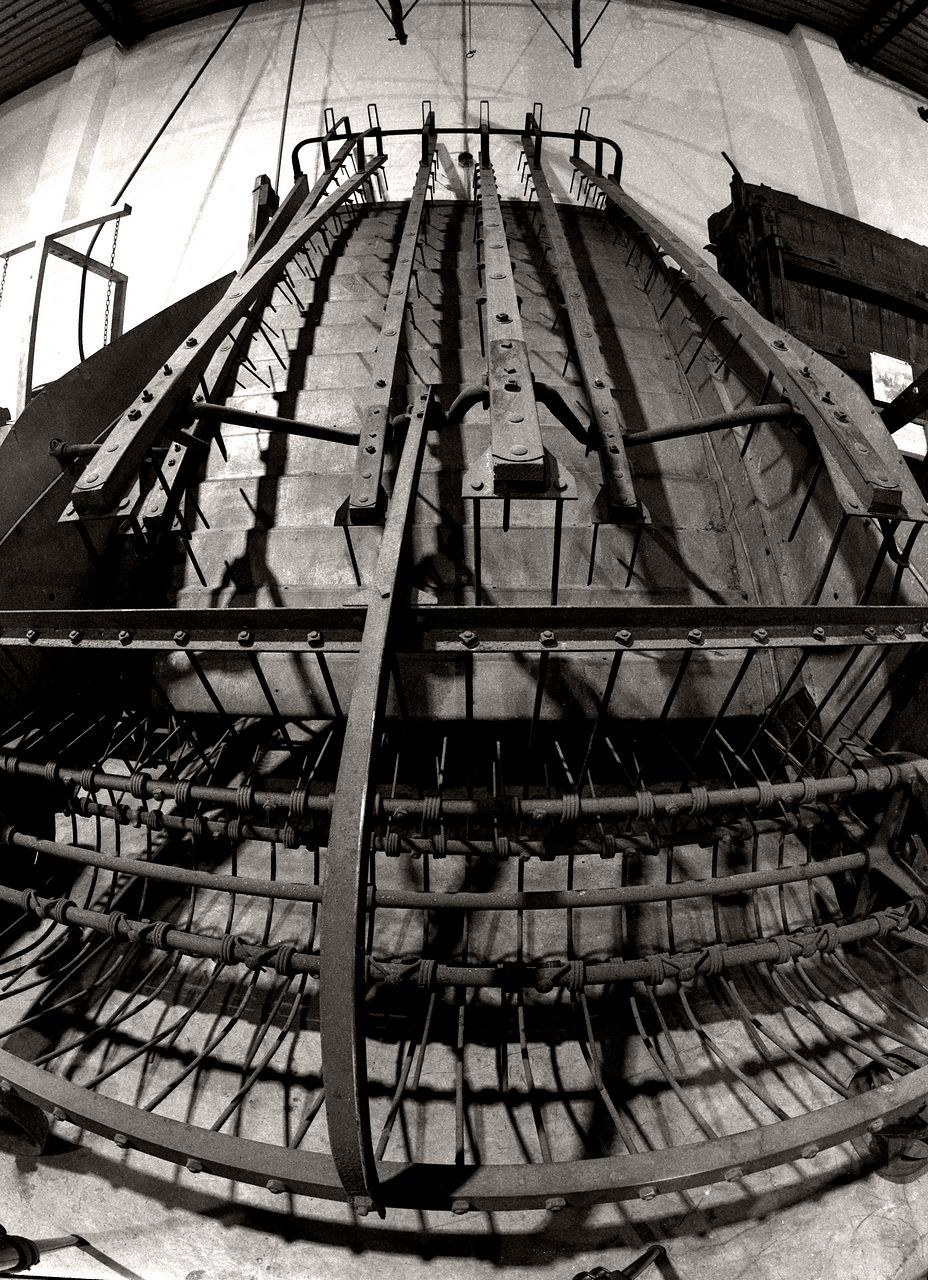
.Resized of course for Photrio.
And the -lux is in the clinic and hopefully back soon with a new lease of life.
Maybe we can go back to topic.
Still not back. Will see how it works on my M bodies..
Last edited:
chuckroast
Subscriber
In that case, you should try have fun with 120
Resized of course for Photrio.
Just don't complain when you are trying to use the grain magnifier under the enlarger.
Haha - it's already a pain with 35mm. I can't wait to try it with my 120 and 4x5 stock in the freezer waiting to be used.
Nice image, BTW.
I will say that TMX and TMY definitely have their own look. TMX doesn't look anything like Plus-X or Agfapan 100, and TMY definitely doesn't look like Tri-X.
Maybe Rodinal is the answer
Maybe Rodinal is the answer
Particularly if you are a member of the congregation.
(Hint: search "Church of Rodinal")
Nice image, BTW.
Thanks. Nice friends that lend you their exotic lenses - the 35mm for the Mamiya 645 - are to be treasured!
(thanks again @PhotoBob ).
Arent you a Mamiya expert, what do you think about the "Press" modelsThanks. Nice friends that lend you their exotic lenses - the 35mm for the Mamiya 645 - are to be treasured!
(thanks again @PhotoBob ).
Arent you a Mamiya expert, what do you think about the "Press" models
I think that is a reasonable question, but probably deserves to be in another thread - in the medium format sub-forum.
And while I'm quite familiar with lots in the Mamiya MF ecosystem, the Press cameras aren't among those I have worked with.
- RezaLoghme
- Deleted
chuckroast
Subscriber
Arent you a Mamiya expert, what do you think about the "Press" models
I owned and used both the Super 23 and Universal cameras over the years. Happy to share my experience.
As @MattKing suggests, though, this deserves it's own thread. Do tag me in if you like, should that take place.
I didn't believe it either until I shot some 35mm TMX and semistand developed it in Pyrocat-HDC. The results were jaw dropping - like nothing I've ever seen from a small negative like this in the past.
How do you mean that? Microtonal?
That used to be true, but 35mm T-Max 100 semistand developed in Pyrocat-HD is very nearly what I'd expect from MF.
...that's because you have not tried Tmax 100 or Acros 100 on Medium Format...
chuckroast
Subscriber
...that's because you have not tried Tmax 100 or Acros 100 on Medium Format...
... which I would expect to approach 4x5 quality

I have shot Acros in 6x9 and it's pretty spectacular. I've not tried Acros II very seriously (yet).
The microcontrast and sharpness approach a good many MF systems. At 8x10 print size, I doubt you can tell the difference reliably
I disagree. Even at 8x10" (OPTICAL PRINT, not silly digital prints) you can see the difference. Even moreso using color film (and real optical prints).
I can easily identify the 8x10" prints i made with my 6x7 gear versus 8x10" made with 35mm gear, of which I have many.
I love my 35mm cameras and indeed TMX or Delta 100 or Acros gives much better results than conventional films, but MF still looks better and sharper, mainly because the combined MTF (modulation transfer function) of the system(*) is far higher.
(*) System = lens + film + enlarger lens
Now, if we are going to compare doing average quality flatbed scanning, my medium format negatives, scanned by a crappy Epson flatbed, are inferior to 35mm negatives scanned using a DSLR and macro lens. But that's not fault of the format!
I disagree. Even at 8x10" (OPTICAL PRINT, not silly digital prints) you can see the difference. Even moreso using color film (and real optical prints).
I can easily identify the 8x10" prints i made with my 6x7 gear versus 8x10" made with 35mm gear, of which I have many.
I love my 35mm cameras and indeed TMX or Delta 100 or Acros gives much better results than conventional films, but MF still looks better and sharper, mainly because the combined MTF (modulation transfer function) of the system(*) is far higher.
(*) System = lens + film + enlarger lens
Now, if we are going to compare doing average quality flatbed scanning, my medium format negatives, scanned by a crappy Epson flatbed, are inferior to 35mm negatives scanned using a DSLR and macro lens. But that's not fault of the format!
I thought MF lenses are slower than 35mm lenses
chuckroast
Subscriber
How do you mean that? Microtonal?
Sharpness and tonal rendering
Sharpness and tonal rendering
Arent they mutually exclusive?!

I thought MF lenses are slower than 35mm lenses
RL....that has nothing to do with print quality comparison to negative size.....
| Photrio.com contains affiliate links to products. We may receive a commission for purchases made through these links. To read our full affiliate disclosure statement please click Here. |
PHOTRIO PARTNERS EQUALLY FUNDING OUR COMMUNITY:  |