
• Welcome to Photrio!
    Registration is fast and free. Join today to unlock search, see fewer ads, and access all forum features.
    Click here to sign up

3D printed 400ft bulk loaders

Recent Classifieds

Forum statistics

Threads
203,544
Messages
2,856,334
Members
101,897
Latest member
CNCC
Recent bookmarks
0

diyformulas

Member
Allowing Ads
Joined
May 26, 2023
Messages
13
Location
USA
Format
35mm
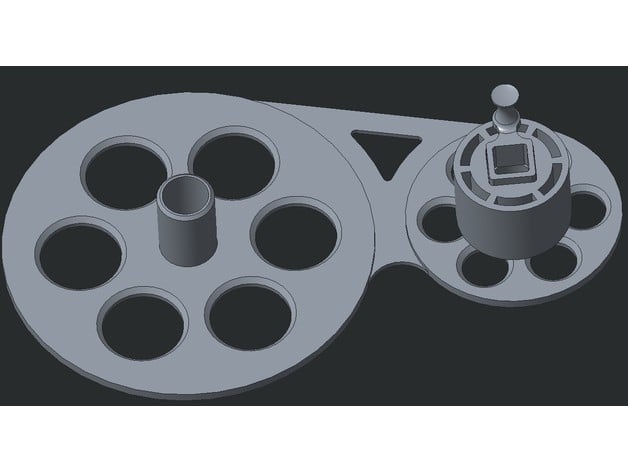
Has anyone tried using those 3d printed 400ft bulk loaders?

Examples:


I think the first one is made by @Joel_L (?)
 
Has anyone tried using those 3d printed 400ft bulk loaders?

Examples:


I think the first one is made by @Joel_L (?)

Welcome to Photrio.
 
Has anyone tried using those 3d printed 400ft bulk loaders?

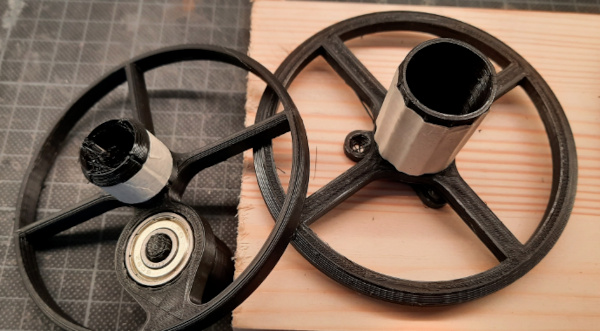
Nope, I just made some very simple reels to spool 400ft back to 4 rolls of 100ft each.
35mm-400ft-to-100ft-spooler-real2.jpg

But I already had a pair of regular 100ft bulk loaders that I could use for dispensing into individual rolls.
 
Me neither, but an issue to consider is the use of felt (actually velvet I think) to light seal the film exit as there is a risk of grit in the velvet scratching the film.

The regular 100ft bulk loaders such as the AP Bobinquick which I have (and which is also available under the Kaiser name) get round this by having a mechanism that opens the gate slightly to lift the velvet light seal off the film when the crank is inserted to wind the film onto the 35mm cassette. Therefore for these units there is only a risk of scratching the small length of film that is fed out between the closed gate light seals in order to attach it to the take-up spool in the cassette.

I believe the teardrop shaped Arden or Watson loaders also work on a similar principle of once the film is connected to the cassette an internal gate is opened so the film does not pass through a felt/velvet seal.

So with these loaders, the only risk of scratching the film comes from grit on the light seals in the actual cassette.

I can't tell how the gates on the 400ft bulk loaders you have linked to work and whether they have a similar mechanism to lift the felt/velvet seal off the film once the film has been attached to the cassette take-up spool.
 
I spool off the 400 to old Filmo style 100' reels. Probably not the best way, but it makes it easy for a moron like me.
 
I believe the teardrop shaped Arden or Watson loaders also work on a similar principle of once the film is connected to the cassette an internal gate is opened so the film does not pass through a felt/velvet seal.

That's correct; mine don't even have any kind of velvet seal. There's just the light trap. Nothing touches the emulsion side of the film during the loading process.
 
I see. Would be nice if someone created a 3d printed 400ft one without any velvet seals required.
 
The ones you linked to might be that way. I didn't study the designs very carefully. They must have solved the light trap issue one way or another; odds are that at least one of them managed to do it with just 3D printed parts. That's what I'd do in any case, if I were to design something like this.
 
I am trying to get my 3D printer tuned-up enough to attempt one of these.

It's going to take a while to get the larger nozzle and new PETG material dialed-in so the print times will be a rational amount of time; I have only printed PLA at the present.

Using a 0.4 mm standard nozzle would take way too long to print this model on my machine.

I might even try stepping up to a 0.8 mm nozzle to speed things up as looks will be less important than function.
 
The cults3D one mentions using felt to seal the film exit. I can't see sufficient detail for the other two to see how they deal with keeping the light out of the film exit.

Edited to add: So does the first one but I can't tell if either have a mechanism like the AP that lifts the felt off the film when winding it into the cassette.
 
On my side, I opted to print a 400ft -> 100ft re-spooler, and stick with one of the tried and true 100ft bulk loaders (e.g., the AP Bobbinquick).


I have yet to use it, but I can't see why it wouldn't do the job for my needs.
 
The cults3D one mentions using felt to seal the film exit. I can't see sufficient detail for the other two to see how they deal with keeping the light out of the film exit.

Edited to add: So does the first one but I can't tell if either have a mechanism like the AP that lifts the felt off the film when winding it into the cassette.

Maybe @Joel_L can comment but I don't see any mechanism either.
On my side, I opted to print a 400ft -> 100ft re-spooler, and stick with one of the tried and true 100ft bulk loaders (e.g., the AP Bobbinquick).


I have yet to use it, but I can't see why it wouldn't do the job for my needs.

Having a 400ft seems a lot more convenient than splitting out 100ft.
 
I am trying to get my 3D printer tuned-up enough to attempt one of these.

It's going to take a while to get the larger nozzle and new PETG material dialed-in so the print times will be a rational amount of time; I have only printed PLA at the present.

Using a 0.4 mm standard nozzle would take way too long to print this model on my machine.

I might even try stepping up to a 0.8 mm nozzle to speed things up as looks will be less important than function.

Would PLA not work for any of these? Not sure what advantages PETG provides.
 
Would PLA not work for any of these? Not sure what advantages PETG provides.

I have only printed with PLA and it does seem it might work, but I have also noticed it is very brittle and cracks easily.
 
I did the one that is heliflier. I have three of them in use and they are working well.

The felt on mine is fixed, have not had any issues with E100D, V3 250D, or Double X.

I did one in PLA originally, I found cracks in it after a couple cycles coming out of my fridge. All three that I'm currently using are PETG and don't have a problem with the temperature cycles.
 
Last edited:
Maybe @Joel_L can comment but I don't see any mechanism either.


Having a 400ft seems a lot more convenient than splitting out 100ft.
Perhaps, if you can acquire a reliable 400ft bulk loader. The added step of breaking down the 400ft roll into 100ft rolls is, in my opinion, offset by the availability of reliable and tried-and-true 100ft bulk loaders.
 
I did the one that is heliflier. I have three of them in use and they are working well.

The felt on mine is fixed, have not had any issues with E100D, V3 250D, or Double X.

I did one in PLA originally, I found cracks in it after a couple cycles coming out of my fridge. All three that I'm currently using are PETG and don't have a problem with the temperature cycles.

@Joel_L could you post a picture of how you installed the felt on your print? I'm not quite envisioning how its installed through the Thingiverse description.
 
Has anyone tried using those 3d printed 400ft bulk loaders?

Examples:


I think the first one is made by @Joel_L (?)

I have not, but the concern I would have is whether these properly bleed static electricity. The older 100' units were mostly made of Bakelite and did not have this problem. But I wonder (and I am unsure) whether the plastics used in 3D printing will behave themselves in dry, high static environments.

Also, I note that absence of a film gate dust/light trap (again something, the smaller units had, which would also be a concern.
 
@Joel_L could you post a picture of how you installed the felt on your print? I'm not quite envisioning how its installed through the Thingiverse description.

Since posting it on Thingiverse I changed how I install the felt. I'll post some pictures tomorrow.

@chuckroast - the felt is the light trap, works well. between the 3 loaders I have, I have probably rolled 60 or so cassette now, no issues.

I have a few 100ft loaders, not all are Bakelite
 
Just out of curiosity -- what is the general diameter of a 400 foot roll? I ask because I bought, a long time ago, a bulk loader that looks like a "normal" 100 loader on steroids. I'm wondering if I own a 400 foot bulk loader...
 
I have a factory sealed can of Kodak 5231 and it is 7 inches across, so 6.5 inches approximately?

This would be on a 2 inch camera core, not a bulk loader core.
 
This is the method I went with. I had this printed, and then I got a bunch of extra 2" kodak cores. I had to invent a new crank so that it would fit the standard cores, but it wasn't hard. I managed to split a 400 ft roll down to 100 ft successfully with minimal stress. I originally opted for this method of 400' → 100' so that I could put them in regular bulk loaders, and they fit, even on the 2" cores. The 100' rolls on 2" cores are about 3.5" in diameter.
I am considering some sort of 400' direct to 135 canister bulk loader, but what I have going suits my needs at the moment. Plus, for me, it's nice to be able to freeze three rolls and start with one and work my way through them. When I go back to college and start bulk loading for my photography society, things might change, but that's a later problem.
 
Photrio.com contains affiliate links to products. We may receive a commission for purchases made through these links.
To read our full affiliate disclosure statement please click Here.

PHOTRIO PARTNERS EQUALLY FUNDING OUR COMMUNITY:


Ilford ADOX Freestyle Photographic Stearman Press Weldon Color Lab Blue Moon Camera & Machine
Top Bottom