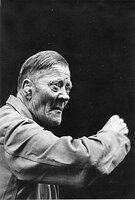
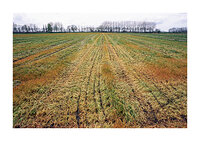
"Subject matter" is also highly subjective... mine ususally has lots of detail. This is why, along with tonality for rendering texture, I use the big cameras.
Big enlargements, over 6x - 8x, lose the tonality and detail which I usually take pictures to express. I use the biggest negative possible when I plan a photograph.
Conversely, I neither like nor dislike enlargements and contact prints, based on whether there's grain or not, or what the level of detail or resolution is. I'm
never amazed by a picture just because I can see lots of detail. That is something I might appreciate from a technical level, like with aerial photography for example, but to me it adds zero value to a print. Nothing.
Grain, sharpness, resolution, detail - it ranks so far down the list that it isn't even a consideration when I shoot. I only worry about capturing what I want to capture, and that is all about moments, emotions, feeling of place, mood, gesture, composition, history, meaning, context, etc., knowing that there will be enough resolution and print quality for 99% of those who care to look at my prints, even from 35mm film enlarged 16X, 20X, or possibly more.
There are two things missing from the discussion, vital aspects of ‘the bigger the better’ that I feel is often missing:
1. Lots of people simply can not afford to photograph 8x10 and even less so the equipment needed to enlarge it. Furthermore, the space required for most 8x10 enlargers is daunting at best.
2. Not everybody wants to photograph with an 8x10 camera. I’m one of those people who absolutely detest working with sheet film because of how incredibly slooooooow the process is. It just doesn’t suit my style. I gladly sacrifice all of that detail in favor of the ability to capture fleeting moments (90% of what I photograph is not planned).
So, while some don’t like big enlargements from small negatives, there are plenty that do. How else could artists like Salgado, Cartier-Bresson, Gibson, Erwitt, etc get big prints up in museums and galleries?