
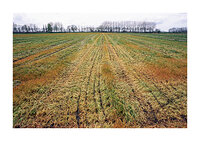
No, any more development than 6 mins 1t 70-72 degrees just runs up contrast and gives no help on speed. Am in the middle of fabricating my shutter tester to eliminate shutter as the problem, but so far I'm leaning towards a final ASA of 32. I realize this is only ortho film, but that's no reason not to expect a proper tonal range on most outdoor scenes.
-
Welcome to Photrio!Registration is fast and free. Join today to unlock search, see fewer ads, and access all forum features.Click here to sign up
You are using an out of date browser. It may not display this or other websites correctly.
You should upgrade or use an alternative browser.
You should upgrade or use an alternative browser.
2 Unknowns--Exposure & Develpment
-
A
- Thread starter Tom1956
- Start date
Recent Classifieds
-
Want to Buy View Camera Shutter
- Started by Beevo
-
For Sale Sam Abell - The Photographic Life
- Started by Rayt
-
For Sale Expired Film: Kodak, Agfa, Ilford and Fuji 4x5/5x7
- Started by Jammoh
-
For Sale Harrison Pub film changing tent, Harrison Dark Cloth Large
- Started by Jammoh
-
For Sale Sinar Copal Shutter
- Started by Jammoh
Forum statistics
One thing I'd like to pick MichaelR1974's brain about is that he calls D-23 a compensating developer, while having once taken issue with me when I called Microdol a compensating formula. Since Microdol is bacically a D-25 derived formula, and D-23 and D-25 are both 100G/7.5G per liter base mixtures, then if one is compensating, then is not the other? And how in the World could D-76 bear any similarity to D-23 in final results? D-76 is a Metol/HQ formula with 6 or 8 other things in it. At this time, I'm avoiding going the pyro route because it'll cost me 35 bucks to get the first drop of it here from the Formulary. Plus the fact, my bare fingers spend a lot of time in the tray. I hear that pyro can be some nasty stuff to keep your fingers dipped in.
- removed account8
- Deleted
- removed account8
- Deleted

As an engineer I felt compelled to go through a similar path (step wedges, density tests, varied development) for several of my favorite films about 20-25 years ago. It was an interesting learning experience but I would not recommend it in this case. X-ray film is not designed to give you a conventional rendition so a more pragmatic approach should serve you better:... So lets start with straight D-76 in a tray ... I'm thinking find a development starting time first, then move on to finding a film speed. Starting with what I might know as a standard, is that I BELIEVE film speed will be 80-100 range. ....
1. Shoot five frames of a normal scene at different ISO values +/-2 steps from the suggested ISO (about 100) and develop for the suggested time. Pick the ISO that results in the most satisfactory shadow detail. Remember that this is orthochromatic film so the shadows will be lighter in daylight. Development time should not affect the shadow detail much.
2. Using the ISO for the shadow detail you favor, shoot the same scene in the same light and develop for the recommended time and +/-20 and 40%. Dilute the developer for all cases if any of these times is less than about 5 minutes. Select the development time that gives you the most pleasing rendition and that is easy to print or scan.
This should give you a reasonable place to start and you will not be disappointed like you might be when you transfer your carefully calculated sensitometry test into the world of reality.
All of this can be accomplished with ten exposures. You can always tweak you ISO and development later based on your experience with scenes you normally shoot.

- Joined
- Dec 10, 2009
- Messages
- 6,295
- Format
- Multi Format
Very observant!
The film is GREEN sensitive. Tungsten light is reddish which the film is not very sensitive to. I think the film speed test should be done in daylight with a neutral colored subject.
EDIT: I should add since you're using x-ray film, film speed and contrast could be all over the place under tungsten or daylight conditions etc. If you're doing your step wedge tests with tugsten light for example, I'd expect very poor speed.
The film is GREEN sensitive. Tungsten light is reddish which the film is not very sensitive to. I think the film speed test should be done in daylight with a neutral colored subject.
Thank you MR74. Although at 2 and 5 G respectively of Elon and HQ, it's hard to imagine the HQ playing only a minor supporting role to the elon. Recalling a book I have here "This Is Photography", Doubleday,1963, Miller and Brummitt of EK, an experiment is carried out with DK60a with Elon removed, then with HQ removed, and the results were quite varied. I say this to note that Elon and HQ are more-or-less equally reactive by weight, in that there are 2.5 G apiece per liter in the DK60a formula.
Wile none of this is pertinent to today's experimenting, it does go to show that they don't have lopsided characteristics by weight. This is what has me leaning toward buying a bottle of metol for the sulfite I have here, and going with a D-23 derivative to fight contrast. As far as shadow detail in the "more pragmatic" approach which I had also already decided to undertake, I'm not getting any shadow detail till I get down to at least ASA 40, and I think 32 and 25 would be more like what I'm looking for. Since all these other guys are getting ASA 80 and up, I can see that my ASA 32 is going to cause dens highlight problems, hence my interest in pyro or a weak D-23. For now I'm avoiding the pyro because I have a habit of keeping my fingers in the soup the whole time. Thanks, guys.
Wile none of this is pertinent to today's experimenting, it does go to show that they don't have lopsided characteristics by weight. This is what has me leaning toward buying a bottle of metol for the sulfite I have here, and going with a D-23 derivative to fight contrast. As far as shadow detail in the "more pragmatic" approach which I had also already decided to undertake, I'm not getting any shadow detail till I get down to at least ASA 40, and I think 32 and 25 would be more like what I'm looking for. Since all these other guys are getting ASA 80 and up, I can see that my ASA 32 is going to cause dens highlight problems, hence my interest in pyro or a weak D-23. For now I'm avoiding the pyro because I have a habit of keeping my fingers in the soup the whole time. Thanks, guys.
- removed account8
- Deleted
- removed account8
- Deleted
Pardon for my bringing this thread up before the eyes of the disinterested. OK, today's experiment in shooting the side of my log house in the late afternoon after some tree shadowing had already set in because of the early autumn sun. Not the optimal conditions, but I squeezed it in anyway. A 12 inch uncoated in a Betax #4 set at 1/5 tested as accurate, and about f/24. Film speed on a known-accurate Luna Pro was rated at ASA 20 with a K2 filter on the lens. Film developed 6 minutes, 70-72 degrees in D-76 1 :3. Henceforth, a K2 will be a permanent installation for this Fuji HRT. When using ortho film, a K2 is the only hope in correcting to anywhere near pan film with a K2.
The results: Still a bit underexposed. Unbelievable. How slow is this stuff? Shadow detail is definitely a battle to achieve. Next trial--ASA 16, same development. That should about get it pegged. But not a bit of forgiveness on underexposure, because shadow detail with this film is at a precious premium.
The results: Still a bit underexposed. Unbelievable. How slow is this stuff? Shadow detail is definitely a battle to achieve. Next trial--ASA 16, same development. That should about get it pegged. But not a bit of forgiveness on underexposure, because shadow detail with this film is at a precious premium.
When using ortho film, a K2 is almost like using a safelight. I would expect it to have a much higher filter factor than it would have for Pan film.
Good to hear from you Bill. Thanks. I had also known this before making the decision. BTW-The tentative new ASA 12 I've chosen has the filter factor included. But since my shots will more often be landscape type scenes, it's necessary for getting clouds to show in the sky. I refuse to shoot color-blind scenes with no sky. But it is surely the only trick in the camera bag to get ortho film to correct.
I've reconsidered an earlier idea I had tossed out concerning permanent filtration. I say permanent because this film would be useless for landscape without it, for the sake of sky and clouds. I'm going to move over to a mis-marked 62mm X1. As we know, X1 is a designation for a #58 green, which is quite green. Not cyanny, not yellowish, either one. A very neutral PMS green. The filter I have is more yellow-green (see Pantone 368), yet marked as X1 and not the No. 11 I believe it really is. The problem with the #8 K2 is that it seems to kill off any hope of shadow detail, shadows being blue in hue. I will perform one more experiment at ASA 16, yellow-green factored in, and continue same development. Green x-ray film is tough-stuff. But I really do believe it is workable for landscape and outdoor work.
http://www.google.com/imgres?imgurl...RAsUuq5A5LQ8wSPoYGoBg&ved=0CDQQ9QEwAQ&dur=679
http://www.google.com/imgres?imgurl...RAsUuq5A5LQ8wSPoYGoBg&ved=0CDQQ9QEwAQ&dur=679

- Joined
- Feb 9, 2010
- Messages
- 9,555
- Format
- 4x5 Format
I'm not suggesting that you can't use K2... Just that the filter factor might be surprising.
An idea that may work for you... Look up "Hutching Filter Factors" for a technique (not specific factors in your case) of light reading shadows through the filter, placing on shadow Zones, then applying a filter factor.
So work out the factors needed to get shadow detail. That's where you usually lose out (for instance with a red filter and normal pan film, blue shadows and red filter often combine to lead to unprintable negatives because of the double-whammy).
You say you'd refuse to have blank skies, but I allow for exceptions because there are plenty of landscape compositions that work fine without clouds.
An idea that may work for you... Look up "Hutching Filter Factors" for a technique (not specific factors in your case) of light reading shadows through the filter, placing on shadow Zones, then applying a filter factor.
So work out the factors needed to get shadow detail. That's where you usually lose out (for instance with a red filter and normal pan film, blue shadows and red filter often combine to lead to unprintable negatives because of the double-whammy).
You say you'd refuse to have blank skies, but I allow for exceptions because there are plenty of landscape compositions that work fine without clouds.
| Photrio.com contains affiliate links to products. We may receive a commission for purchases made through these links. To read our full affiliate disclosure statement please click Here. |
PHOTRIO PARTNERS EQUALLY FUNDING OUR COMMUNITY:  |