
Keith;
Better clarify "redacted" for some people here.
With big apologies and no criticism intended. Just amused me.
PE
Better clarify "redacted" for some people here.
With big apologies and no criticism intended. Just amused me.
PE


 I was merely speculating about ways to make use of what Kodak knows. There, now the lawyers are going to come after Ron!
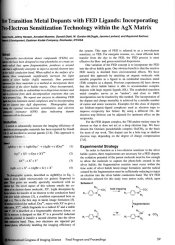
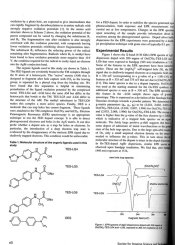
The process uses what is called an FED or Fragmentable Electron Donor. Even that paper does not show it in much detail.
Thanks for the reference. I have a few more plus the abstract to their talk in 2006 if anyone is interested and I manage to find the time to scan it.
PE
They were in the same journal.For clarity, I should note that I have no official status as a representative of APUG.Ray Rogers from APUG
lol
Well sometimes my fingers work faster than my brain :rolleyes:
In this case, 'redacted' just means that these idle musings be worth something to somebody somewhere at some time in the future
that concept of Anabel Muenter works with donors brought onto the surface of the crystal.
That means it can only take gain out of those holes which succeeded in reaching the surface instead of having recombined, which they are believed to do quite fast.
That was a critique then uttered on that concept.
 There will always be some nutjob (ahem, dedicated scientist) in some remote lab, toiling away, turning over stones that nobody thought of and enjoying that process of discovery. Look at it this way, we have been in the "web information age" for a few decades now and what is known now will be disseminated and preserved. It's not like this knowledge will vanish into thin air, there will always be people like us to appreciate it and push it forward.
I get what you are saying. It makes me sad. On one hand, it sounds like a lot - 15 educated people working with full lab facilities. On the other hand, it's only 15 people. I know it costs money to pay those people and put them in a lab, but in the big picture, it's not that much. It always frustrates me how short sighted our culture is in terms of funding research.
I'm sure though that that would never come about.  I have talked to one of the sensitizing dye chemists and he never wants to discuss synthetic organic chemistry again in his entire life!
I can invite people for seminar here, I really can.... with everything paid for...
I have talked to one of the sensitizing dye chemists and he never wants to discuss synthetic organic chemistry again in his entire life!
I can invite people for seminar here, I really can.... with everything paid for...

| Photrio.com contains affiliate links to products. We may receive a commission for purchases made through these links. To read our full affiliate disclosure statement please click Here. |
PHOTRIO PARTNERS EQUALLY FUNDING OUR COMMUNITY:  |