• Welcome to Photrio!
    Registration is fast and free. Join today to unlock search, see fewer ads, and access all forum features.
    Click here to sign up

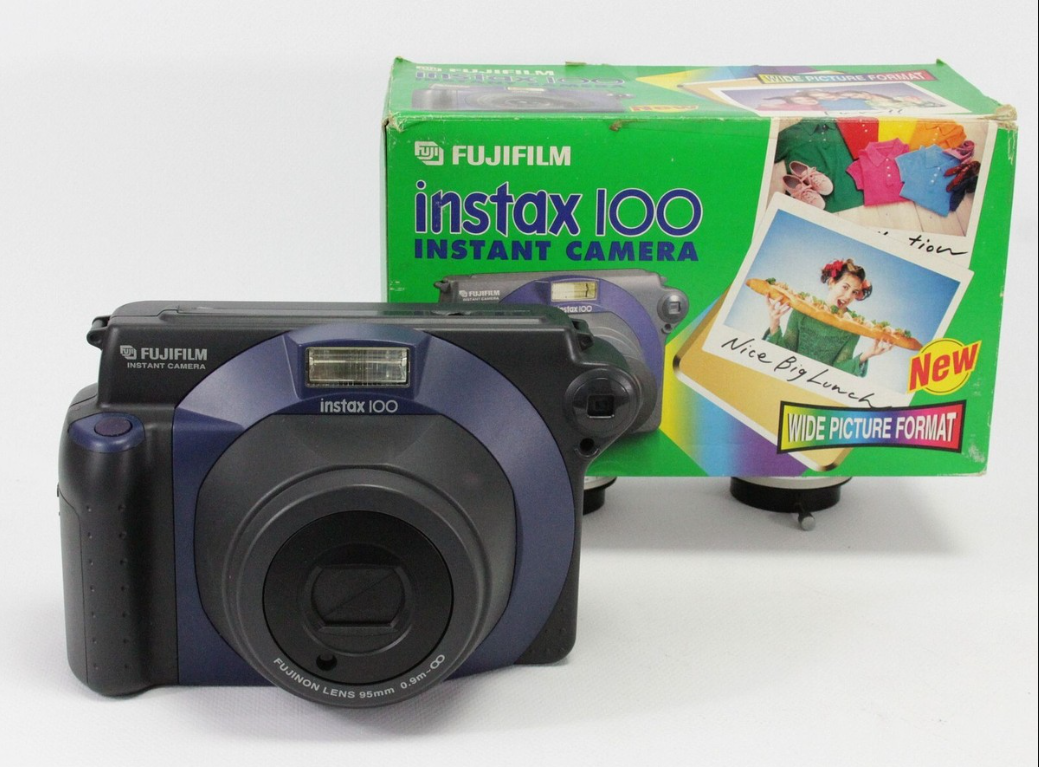
I bought a 1999 Fujifilm Instax 100

Recent Classifieds

Forum statistics

Threads
204,282
Messages
2,866,593
Members
102,207
Latest member
gustavocf
Recent bookmarks
0

Pedroga

Member
Joined
Feb 4, 2026
Messages
57
Location
Brazil
Format
35mm
I recently bought a 1999 Fujifilm Instax 100 because I found one for only $20. I’ve never owned or used an instant camera before, so now I’m curious: is the experience of shooting with one actually worth it?To be honest, after seeing some Instax photos from friends, I thought the image quality looked a bit rough at times. In many shots the background is completely blown out while the subject ends up very dark. I’ve also noticed that a lot of scanned Instax photos online seem to have visible Newton rings, which honestly drives me crazy lol.Because of that, I’m still undecided whether I should actually go out and shoot with the camera or just leave it on display in my room as a cool vintage piece.Does anyone here have experience with the Instax 100? I’d really appreciate any tips for getting better results, especially when scanning Instax photos. And if anyone has high-quality scanned Instax examples, I’d love to see them shared here on the forum.I have a feeling this little experiment is going to be fun either way lol.
1779989457409.png
 
Instax is one of the most successful marketing exercises of the century. It came back from almost zero to massive success.

the image quality looked a bit rough at times. In many shots the background is completely blown out while the subject ends up very dark.
You have very little control over exposure with cameras like this one, so it's kind of a gamble what comes out. On your model, the flash always fires, which is supposed to help avoid underexposed subjects in bright backlight, but this only works if the subject is sufficiently close to the camera, since the flash just doesn't have a lot of reach. I.e. group photos may end up grossly underexposed because the flash just doesn't cut it, unless you ensure the group is in favorable light to begin with.

It has a fixed aperture of f/14 and shutter speeds of 1/64-1/200 (which is only about 1.5 stops range!). The Instax material is rated nominally at ISO 800, so that means you should get OK results in open shade or cloudy conditions. Photos in very bright sunlight may blow out and/or render with washed out colors. Photos taken with less light than open shade will turn out underexposed unless the subject is within reach of the flash. If the subject is within range of the flash, but lighting conditions are otherwise poor, the subject will render bright against a dark or solid black background.

Under optimal conditions, you can get decent/fun results with it. Resolving power of the medium is very low, so it's not considered useful for 'serious' photography.

a lot of scanned Instax photos online seem to have visible Newton rings
Yeah, that's unsurprising. The top layer of the Instax photo is basically smooth plastic, so it'll easily make Newton rings against the glass of a scanner. You will get better results photographing the print under diffuse light with a digital camera.
 
Yeah, that's unsurprising. The top layer of the Instax photo is basically smooth plastic, so it'll easily make Newton rings against the glass of a scanner. You will get better results photographing the print under diffuse light with a digital camera.

I was researching Newton rings while thinking about scanning Instax photos with a flatbed scanner, and I had the idea of placing either a transparent sheet or maybe another very thin piece of glass between the scanner glass and the Instax photo itself.


But honestly, I’m probably being kind of dumb thinking that would actually work, because the more I think about it, the more it seems like it would basically create the exact same problem anyway lol.
 
Yeah, you got it - smooth glass will do the same thing as the scanner glass itself, so you're just adding two more surfaces that can get dirty/dusty. The 'proper' solution is AN glass (Anti-Newton ring), but it can be difficult to obtain and expensive. The practical solution is really to just snap a digital pic of the Instax original. Even a decent smartphone will do a pretty OK job. Use diffuse light to avoid glare & reflections.
 
Yeah, you got it - smooth glass will do the same thing as the scanner glass itself, so you're just adding two more surfaces that can get dirty/dusty. The 'proper' solution is AN glass (Anti-Newton ring), but it can be difficult to obtain and expensive. The practical solution is really to just snap a digital pic of the Instax original. Even a decent smartphone will do a pretty OK job. Use diffuse light to avoid glare & reflections.

I guess I’ll just scan them using my smartphone then. But now you’ve really made me curious — I had no idea anti-Newton ring glass even existed.


If that kind of glass already exists, why don’t scanners just come with it built in from the factory?
 
It's far more expensive than just plain flat glass and it's not really necessary in most cases. E.g. for scanning film, most flatbed scanners (if they support film scanning in the first place) come with film holders that raise the film a bit above the glass so it's no physical contact. Some film holders do use (plain) glass (e.g. later Epson flatbed scanners) and those are also know to cause similar issues. What helps in most cases is that if you scan film (not Instax) with the emulsion side on the glass, there are usually no Newton rings because the emulsion side on many films (esp B&W) is a little rough. This is not true for films like Kodak TMAX as well as Kodak color films, which also readily make Newton rings when in direct contact with glass.

Short answer is still: because of the cost.
 
I think it's worth noting that there are Instax cameras (and Instax backs for medium and large format cameras) that will give you more control over your exposure. For example, I have a MiNT SF-670 that is a rangefinder with full manual and aperture priority exposure control. Some of Fuji's current cameras give you a bit more control than the Instax 100 (but not full manual shutter/aperture settings). The Instax 100 is interesting as it was the first Instax Wide camera, though.

For scanning, I 3D printed a frame that holds the photo just above the scanner glass so that there's an air gap between the surface of the photo and the scanner glass. I also sometimes use my camera scanning setup (mostly used for 35mm film) to scan instant photos.
 
It's far more expensive than just plain flat glass and it's not really necessary in most cases. E.g. for scanning film, most flatbed scanners (if they support film scanning in the first place) come with film holders that raise the film a bit above the glass so it's no physical contact. Some film holders do use (plain) glass (e.g. later Epson flatbed scanners) and those are also know to cause similar issues. What helps in most cases is that if you scan film (not Instax) with the emulsion side on the glass, there are usually no Newton rings because the emulsion side on many films (esp B&W) is a little rough. This is not true for films like Kodak TMAX as well as Kodak color films, which also readily make Newton rings when in direct contact with glass.

Short answer is still: because of the cost.

That’s actually really interesting. Some time ago I spent a lot of time researching scanners I even asked about them here on the forum but eventually I realized that, for the quality I wanted, it would probably be both better and cheaper to simply take my photos to a professional lab for development and scanning.


I also considered using a digital camera to digitize my Instax photos through camera scanning, but I tend to avoid borrowing expensive gear like that from other people.


At one point I thought about just using my iPhone camera, but after watching a few videos online, I noticed that reflections of the person taking the photo often appeared on the glossy Instax surface. Honestly, I thought it looked kind of awkward and unprofessional. Not that I’m a professional myself far from it, actually I just really like things to look as clean and “perfect” as possible, you know?


So if I can’t find a lab nearby that can properly scan them, I guess I’ll end up going with a scanner after all. But I definitely don’t want to invest in one until I’m completely sure the scans won’t end up with those awful Newton rings.

I think it's worth noting that there are Instax cameras (and Instax backs for medium and large format cameras) that will give you more control over your exposure. For example, I have a MiNT SF-670 that is a rangefinder with full manual and aperture priority exposure control. Some of Fuji's current cameras give you a bit more control than the Instax 100 (but not full manual shutter/aperture settings). The Instax 100 is interesting as it was the first Instax Wide camera, though.

For scanning, I 3D printed a frame that holds the photo just above the scanner glass so that there's an air gap between the surface of the photo and the scanner glass. I also sometimes use my camera scanning setup (mostly used for 35mm film) to scan instant photos.

I watched a few videos of people scanning Instax photos using scanners like the Canon LiDE 300 and the Epson Perfection V39, and honestly I couldn’t really notice any Newton rings in the results they were getting.


Of course, to achieve something on a higher level like your scans, I imagine I’d probably need a CCD scanner instead, which is also something I’ve been considering as an option.
 
I scan them on a flatbed in an empty Instax film cartridge. It lifts the print surface just enough to avoid Newtons rings. And I like the black border.
I would be leery of scanning a print through anti Newton glass. The glass is roughened and would tend to slightly blur the image. The way anti Newton glass is used for scanning negatives, the glass is between the light source and the negative, so the scanner lens sees the negative without any blurring. Reflective scanning is different.
Untitled by Howard Sandler, on Flickr
 
Last edited:
I scan them on a flatbed in an empty Instax film cartridge. It lifts the print surface just enough to avoid Newtons rings. And I like the black border.
I would be leery of scanning a print through anti Newton glass. The glass is roughened and would tend to slightly blur the image. The way anti Newton glass is used for scanning negatives, the glass is between the light source and the negative, so the scanner lens sees the negative without any blurring. Reflective scanning is different.
Untitled by Howard Sandler, on Flickr

I really liked the colors, the sharpness, and the overall look of the image.


I’ll probably end up doing the same thing, at least until the 3D-printed photo holder arrives and I can start experimenting with it properly. I also found an HP ScanJet G4050 for a very good price in my area, and a few people have told me it should be more than capable of handling this kind of work, especially if I use VueScan with it.


So for now, that’s probably the route I’m going to take. It seems like a good balance between image quality, cost, and simplicity.
 
Photrio.com contains affiliate links to products. We may receive a commission for purchases made through these links.
To read our full affiliate disclosure statement please click Here.

PHOTRIO PARTNERS EQUALLY FUNDING OUR COMMUNITY:



Ilford ADOX Freestyle Photographic Stearman Press Weldon Color Lab Blue Moon Camera & Machine
Top Bottom