• Welcome to Photrio!
    Registration is fast and free. Join today to unlock search, see fewer ads, and access all forum features.
    Click here to sign up

Are there any hand-held rangefinders good for zone focusing?

Recent Classifieds

Forum statistics

Threads
202,232
Messages
2,837,657
Members
101,214
Latest member
Digitalbill1
Recent bookmarks
0

hardly any color

Member
Allowing Ads
Joined
Jan 12, 2022
Messages
50
Location
New York City
Format
Multi Format
There are many laser based rangefinders for not too much money, there are also professional grade ones, and even some sold under the Leica brand. They work well and will show you the distance in whatever unit you choose.
 

BobDavid

Member
Allowing Ads
Joined
Jan 14, 2026
Messages
2
Location
Colorado
Format
Medium Format
To be clear, I am not looking for a rangefinder camera. I want a device to measure distances to help me set the focus distance on cameras with zone focusing.

A quick online search shows the major markets for this kind of device seem to hunters and golfers. I think devices made for hunters and golfers are possibly optimised for longer distances? As a photographer, I am more concerned about accuracy in the range of 1 to 25 meters than I am at 100 or 1000 meters.

Any tips or specific recommendations from photographers?

Check out Watameters. There's a company in England, Filmburbish that sells reconditioned ones. Many consider them to be the best overall. Here's a link: https://www.filmfurbish.com/rangefinders
 

film4Me

Subscriber
Allowing Ads
Joined
Feb 22, 2025
Messages
158
Location
Australia
Format
Medium Format
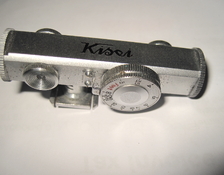
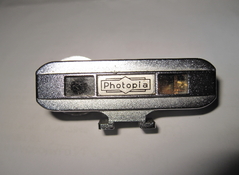
These are the only rangefinders I use. I bought a dozen different brands and apart from these two, they all ended up in my parts/repair box for various reasons.

The Kisei is the better of the two, but they are both excellent rangefinders.

IMG_0123.JPGIMG_0126.JPG
 

250swb

Member
Allowing Ads
Joined
Apr 22, 2012
Messages
1,630
Location
Peak District
Format
Multi Format
You should also try the Watameter cold shoe rangefinder which are usually around the £20 mark on eBay (Voigtlander also do one that is very similar)

https://photothinking.com/20170822watameter-what-the/

Many of these will have been fiddled with and badly adjusted over the years but they are designed to be recalibrated by the user and it's an easy job, plus you can get them either in metric or imperial scales.
 

Ardpatrick

Subscriber
Allowing Ads
Joined
Sep 7, 2023
Messages
237
Location
Ireland
Format
Med. Format RF
I can estimate distance much better than I can set that distance on the focusing ring so the accurate rangefinder isn't useful to me. What about a laser distance sensor? You may not want to use it for people they are accurate at close distance 30ft or less and not too expensive. Farther distance you really don't need.
Something like this should be just fine https://www.amazon.com/RockSeed-Dis...11646395011_d_sccl_2/142-2080171-9458716?th=1

Just on the idea you don’t need to worry about focus at farther distances. It all depends on the focal length of the lens you’re trying to focus.
 

snusmumriken

Subscriber
Allowing Ads
Joined
Jul 22, 2021
Messages
2,802
Location
Salisbury, UK
Format
35mm
@runswithscissors, I appreciate that you have identified the need for another gadget, and I've succumbed to that a few times myself in the past. But it's another item to bother about, and the whole point of zone focussing is to make things simpler. So please excuse my perversity, but I’d like to argue the case that you don’t need another gadget! I suspect you know all that follows already, but here goes nevertheless.

If you really do mean zone focussing, and not just scale focusing, then you are using a small aperture to maximise depth of field and make distance judging less critical. In this way, you only need to think in terms of a few types of subject (e.g. close-up, portrait, groups, landscapes) and equally few focus settings.

If you simply want to make best use of scale-focussing, then besides the clever human rangefinder already mentioned, you already possess helpful yardsticks: the distance you can reach in front of you; your own height (imagine yourself lying prone); your own height plus outstretched arm; twice your own height (also easy to imagine - my limit is three times, though). Then, note at what distance does a human figure fit comfortably within the framelines of your camera in portrait mode, and in landscape model. If you are photographing objects further away still, they are likely not time-critical, and you could pace it out. Infinity isn't far away, even with a 50mm lens at full aperture.

If you are using a wide angle lens, accuracy is less critical, and infinity closer. My only scale-focusser (a Rollei 35) has an f/3.5 40mm lens, and everything beyond about 35ft (11m) is effectively at infinity whatever the aperture, or at f/8 everything beyond about 25ft (8m).

Even if you do get an accessory rangefinder, you will need to transfer its measurements to the lens focus ring. How accurate do you suppose the markings are on the lens? To get critical optical performance from a lens, a coupled rangefinder, an SLR, or a LF camera with focussing screen are the only options that make sense to me. It's not really the strength of scale-focussing cameras.

I don't imagine I have persuaded you, so good luck with the new gadget! Do let us know how useful it proves to be.🙂

PS - Also beware that laser rangefinders are not accurate in photogenic misty conditions or rain, the longer distances being most affected of course.
 

Ian C

Member
Allowing Ads
Joined
Feb 8, 2009
Messages
1,313
Format
Large Format
Per the specifications of Post #1:

Here is a typical laser rangefinder used in construction work. The maker claims a maximum range of 30 meters and an accuracy of +/- 2 mm. Optical rangefinders aren't nearly that accurate. It’s priced at $130.

https://www.uline.com/Product/Detai...MIvceinqTMkgMVkCStBh1AxBHGEAQYASABEgKAnfD_BwE

You can find many models using the search string “construction type laser rangefinder” in Google.
 

OAPOli

Member
Allowing Ads
Joined
Sep 26, 2022
Messages
864
Location
Toronto
Format
Medium Format
I would suggest to get any shoe-mounted accessory rangefinder. Those are plentiful and inexpensive. Then you'll realize they are not particularily useful as @snusmumriken explained. The scale on the lens isn't made for precise focusing. There are no tick marks for the distance markings and there is no good way to interpolate a distance between the markings. Plus it can be awkward to squint through the RF, reach around for the distance knob to focus, check the distance, approximately transfer to the lens and finally compose and shoot.

It's much simpler to guess the distance and use a small f/stop.
 

loccdor

Subscriber
Joined
Jan 12, 2024
Messages
2,908
Location
USA
Format
Multi Format
Your extended arm should be around 2.5 feet. If your minimum focus distance is a little longer use your arm length plus one or two extra hand lengths. Imagine your body falling forward to the ground and you've got 5-6 feet depending on your height. Longer distances can be 2x height, 3x height, 5x height. These visualization techniques work very well with wide to normal lenses and are enough for most zone-focusing purposes.
 
OP
OP
runswithsizzers

runswithsizzers

Subscriber
Joined
Jan 19, 2019
Messages
2,047
Location
SW Missouri, USA
Format
Multi Format
@runswithscissors, I appreciate that you have identified the need for another gadget, and I've succumbed to that a few times myself in the past. But it's another item to bother about, and the whole point of zone focussing is to make things simpler. So please excuse my perversity, but I’d like to argue the case that you don’t need another gadget! I suspect you know all that follows already, but here goes nevertheless.
Probably all true, but this wouldn't be Photrio if we didn't argue about it discuss it. ;-)

If you really do mean zone focussing, and not just scale focusing, then you are using a small aperture to maximise depth of field and make distance judging less critical. In this way, you only need to think in terms of a few types of subject (e.g. close-up, portrait, groups, landscapes) and equally few focus settings.
Presently I have two point-and-shoot cameras, one with zone focusing. But I am considering the possibility of getting a 6x9 folding camera, and I believe many of those will require scale focusing, right?

My "Debonair" (from Film Photography Project) has icons on the focusing ring for portrait, group, and landscape. These icons are not really relevant to me, because I never make portraits or group shots, and I rarely shoot landscapes.

If you simply want to make best use of scale-focussing, then besides the clever human rangefinder already mentioned, you already possess helpful yardsticks: the distance you can reach in front of you; your own height (imagine yourself lying prone); your own height plus outstretched arm; twice your own height (also easy to imagine - my limit is three times, though). Then, note at what distance does a human figure fit comfortably within the framelines of your camera in portrait mode, and in landscape model. If you are photographing objects further away still, they are likely not time-critical, and you could pace it out. Infinity isn't far away, even with a 50mm lens at full aperture.
I'm afraid the framelines of my point-and-shoot cameras are not going to be very good indicators. Both cameras shoot rectangular images, but the viewfinders are square, so must be inaccurate in at least one dimension.

When trying to estimate distance or heights, I do sometimes mentally project lengths that (in my mind) are about 10 ft increments, but I can't claim to be very good at it. And when laying out my vegetable garden, I do often pace out the row spacing, heel-to-toe, which is fairly accurate for me, tho not practical for more than 10-15 ft.

You choose to visualize distance in units related to the human body; I might prefer to visualize distance in units of feet. yards, or meters. But regardless of what units we choose to visualize, the fundamental problem is the same -- trying to mentally quantify what we see in 3D space. Some of us have brains which are better at 3D visualization than others, and practice can probably improve what capabilities we were born with. Fortunately, for our purposes, great precision is not required.

If you are using a wide angle lens, accuracy is less critical, and infinity closer. My only scale-focusser (a Rollei 35) has an f/3.5 40mm lens, and everything beyond about 35ft (11m) is effectively at infinity whatever the aperture, or at f/8 everything beyond about 25ft (8m).
My Holga/Diana-style Debonair shoots 6×4.5 cm and has a 60mm lens with a single fixed aperture of f8. I just finished the first roll, so will soon see how well zone focusing is working for me.

My Agfa Clack shoots 6x9 with a fixed focus 95mm lens, and I believe it will have two apertures, f11 and either f13 or f16. It also has a macro setting which rotates an internal close-up lens into the optical path. The first Clack I bought has problems, but a replacement has been ordered.

Pretty sure I won't need a range finder for these point-and-shoots -- but I will need to work out some kind of defined distances for the icons on the focus rings. The manufacturers of these cameras did not translate their icon settings to actual distance ranges. I can use depth-of-field information to define the range for the landscape icon (from x meters to infinity at a given f/stop) -- but it looks like I'll need to do some trial-and-error testing to define the other ranges.

Even if you do get an accessory rangefinder, you will need to transfer its measurements to the lens focus ring. How accurate do you suppose the markings are on the lens? To get critical optical performance from a lens, a coupled rangefinder, an SLR, or a LF camera with focussing screen are the only options that make sense to me. It's not really the strength of scale-focussing cameras.
My main interest in range finder accessories is for the possibility of getting a 6x9 folding camera which lacks a built-in rangefinder. I was kind of hoping to find a folding 6x9 camera with a less-than-modern lens, and I'm pretty sure none of the less-sophisticated models are going to have built-in rangefinders, right?

I agree, it might be better to get a folding camera which does have a built in range finder, but I wonder about this: Can anyone who has used both folders with (uncoupled) built-in rangefinders and shoe-mount-type range finders such as the Kodak Service Rangefinder or the Watameter -- how do they compare? Are the brightness and ease-of-focus approximately the same?

I also agree, the best solution -- by far - would be to get a 6x9 folder with a coupled rangefinder. And I may do that if I can find one which I like, and if I can afford it, and if I can find one that works. But those "ifs" are starting to add up -- getting up into unicorn territory, so compromises are likely.

I don't imagine I have persuaded you, so good luck with the new gadget! Do let us know how useful it proves to be.🙂

PS - Also beware that laser rangefinders are not accurate in photogenic misty conditions or rain, the longer distances being most affected of course.
I have already eliminated range finders which rely on lasers from consideration.

Thanks for your feedback.

 
Last edited:

MattKing

Moderator
Moderator
Joined
Apr 24, 2005
Messages
55,508
Location
Delta, BC Canada
Format
Medium Format
I should probably start by saying that I have been scale focusing cameras for years, and have been happy with the results I have been able to achieve through estimating distances.
YMMV - but emphasis on the "May".
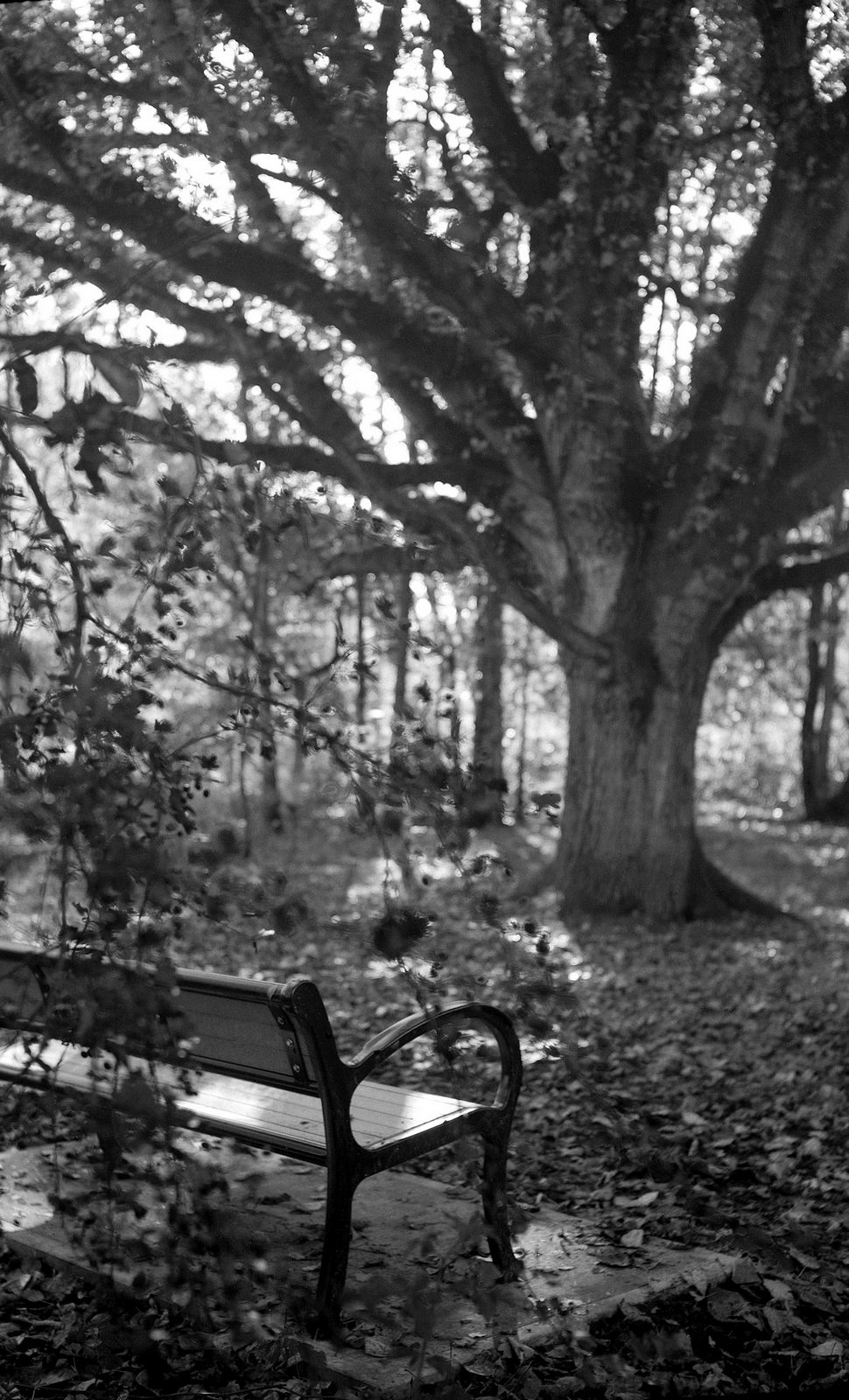
This is scale focused, using a 6x9 camera with a 105mm lens, and estimating the distance to the bench:
This is scale focused using a 6x6 camera with a 75mm lens (IIRC), and estimating the distance to the table top:
12b-picnic-2015-05-14.jpg


All of which is to say that it is worth your while to get your 6x9 camera and use it and get familiar with it and what may turn out to be your surprise yourself ability to estimate distances:smile:.
FWIW, the closest focus distance on any 6x9 folder is unlikely to be much less than 1 meter/yard. And it is pretty easy to get good at estimating distances between 3 and 12 feet.
Past 12 feet, it isn't that hard either, and you start to enjoy the forgiveness of your friend, depth of field!
 

DREW WILEY

Member
Allowing Ads
Joined
Jul 14, 2011
Messages
14,930
Format
8x10 Format
Laser distance devices have dramatically improved, as long as it's a reputable pro brand, and will be far more precise at short to medium range than an optical rangefinder, potentially within millimeters. I see that one of the Bosch models was posted; I was one of the first people to test that as a major Bosch distributor, along with Spectra and PLS equivalents. The problem will be very long distances approaching infinity.
Handheld optical rangefinders can be selected from rifle applications as well as from scientific optical suppliers like Edmund. But for bargains, one can always try scrounging from military surplus sources.
 

Shaps

Subscriber
Allowing Ads
Joined
Mar 29, 2024
Messages
128
Location
Hawaii
Format
Medium Format
Laser distance devices have dramatically improved, as long as it's a reputable pro brand, and will be far more precise at short to medium range than an optical rangefinder, potentially within millimeters. I see that one of the Bosch models was posted; I was one of the first people to test that as a major Bosch distributor, along with Spectra and PLS equivalents. The problem will be very long distances approaching infinity.
Handheld optical rangefinders can be selected from rifle applications as well as from scientific optical suppliers like Edmund. But for bargains, one can always try scrounging from military surplus sources.

When I have something near my camera I use my Bosch laser, and by near usually 1.5 to 7-8 meters, to set my near focus. I then rely on DOF to bring infinity into focus.
 

film4Me

Subscriber
Allowing Ads
Joined
Feb 22, 2025
Messages
158
Location
Australia
Format
Medium Format
Can anyone who has used both folders with (uncoupled) built-in rangefinders and shoe-mount-type range finders such as the Kodak Service Rangefinder or the Watameter -- how do they compare? Are the brightness and ease-of-focus approximately the same?

They compare well if the accessory rangefinder is in good condition, with a good mirror, and with a slightly firm and smooth dial action. How do you get a good one? Check out the condition in the photos and read the description. If it looks new, buy it.

Watameters come in different distances, long distance (short to infinity). Short distance (measured in centimeters up to one meter), and another one called a "Super", it is also short distance. Be aware of what you're looking at when browsing. A Watameter II with the distance readings internally will only be as good as the mirror's light reflection. The readings are not battery powered, so the condition of the mirror is important.

One rangefinder I have has both imperial and metric scales. Hanimex was kind enough to arrange that for us, nice little rangefinder too. It's in my bag at all times, with my other rangefinders, for metric cameras.

If everything is in good nick, the view will be bright and the split image will be very clear. Also the dial will be firm with no play or backlash.

If the rangefinder is properly adjusted, you can't go wrong, just check your images after you've developed them. I can always spot the exact place in the image I focused on by it's sharpness in that area. Of course the camera's focus ring must be set accordingly.
 
Last edited:

250swb

Member
Allowing Ads
Joined
Apr 22, 2012
Messages
1,630
Location
Peak District
Format
Multi Format
I agree, it might be better to get a folding camera which does have a built in range finder, but I wonder about this: Can anyone who has used both folders with (uncoupled) built-in rangefinders and shoe-mount-type range finders such as the Kodak Service Rangefinder or the Watameter -- how do they compare? Are the brightness and ease-of-focus approximately the same?

A good Watameter on the cold shoe and a built in rangefinder on an uncoupled folder are pretty much the same thing to use, you still have to transfer a scale reading to the lens manually and they are pretty much equally as bright generally speaking. The Watameter can also be used off the camera and kept in a pocket so long as you are close to the camera taking a reading. A Watameter can also be used with a camera that doesn't have distance markings on the lens/shutter assembly or helicoid by calibrating with coloured paint. You open the back and put a ground glass screen over the film gate, you find something say twenty feet away using the Watameter, focus whatever it is on the ground glass screen, and put a dab of paint top dead centre on the lens focus barrel or sliding track and from then on you know the point where twenty feet is. Continue at different distances with dabs of different coloured paint and make a reminder of colour/distance to tape on the back of the camera.

Of course you could instead carry a 35mm rangefinder camera, say an Olympus 35RC, and use that as the rangefinder for your folder, and it handily doubles up as a camera and even a light meter. But one of the cold shoe rangefinders is a neater option in the scheme of things.
 

Ardpatrick

Subscriber
Allowing Ads
Joined
Sep 7, 2023
Messages
237
Location
Ireland
Format
Med. Format RF
This thread has greatly improved my knowledge of rangefinder accessories. I have an older cold shoe one myself - can’t recall the brand but looks like some of those above referenced. Despite my efforts to calibrate it it wasn’t accurate when tested against a cheap laser device. Which means nothing in the scheme of things other than that these accessories are old and a fairly high percentage of them don’t work well anymore.

Aside from the iPhone lidar tool mentioned above, and the Bosch construction industry laser tool which is quite pricy, I’m still puzzled as to why nobody seems to consider the far less expensive and modern option of a golf / hunting rangefinder. A quick online search indicates they can measure as close as 5 metres / 16 feet. Granted I’ve never actually used one.
 

DREW WILEY

Member
Allowing Ads
Joined
Jul 14, 2011
Messages
14,930
Format
8x10 Format
I've been out of the loop for awhile, due to both me being retired and my industry contacts as well. But say, a decade ago, there was a staggering drop in quality and accuracy once laser distance meters dropped down into home center price ranges of, say, a hundred dollars are less. But in the previous decade, accuracy performance of a what had previously been a $750 laser, for example, could be around the $200 option category - not necessarily distance power or all the bells n' whistles calculator functions (which aren't needed for simple distance measuring anyway).

There was a last round of really small Bosch laser which I bought in sufficient volume to sell for around $125 apiece, which was quite accurate up to 50 yards or so. I can't remember if I have one of those myself, stored away in a "that stuff" container.
 

Shaps

Subscriber
Allowing Ads
Joined
Mar 29, 2024
Messages
128
Location
Hawaii
Format
Medium Format
This thread has greatly improved my knowledge of rangefinder accessories. I have an older cold shoe one myself - can’t recall the brand but looks like some of those above referenced. Despite my efforts to calibrate it it wasn’t accurate when tested against a cheap laser device. Which means nothing in the scheme of things other than that these accessories are old and a fairly high percentage of them don’t work well anymore.

Aside from the iPhone lidar tool mentioned above, and the Bosch construction industry laser tool which is quite pricy, I’m still puzzled as to why nobody seems to consider the far less expensive and modern option of a golf / hunting rangefinder. A quick online search indicates they can measure as close as 5 metres / 16 feet. Granted I’ve never actually used one.

Two reasons why I chose not to use a golf/hunting rangefinder, 1-they did not measure close enough and 2-all the ones I saw were too expensive
 

BrianShaw

Member
Allowing Ads
Joined
Nov 30, 2005
Messages
17,044
Location
La-la-land
Format
Multi Format
Two reasons why I chose not to use a golf/hunting rangefinder, 1-they did not measure close enough and 2-all the ones I saw were too expensive

Plus their accuracy is often specified as plus/minus 1 yard/meter. What they don't say, though, is if this is at all measuring ranges or only at long distances. The long-distance aspects of golf/hunting rangefinders doesn't seem to benefit most photography applications of interest to me. The lack of documentation on the close-up performance of those tools (plus the size and cost) make me not willing to try.

For me, the most useful range to get measured accurately is 50 ft and below, assuming a normal FL lens. I've verified a couple of Watameter II rangefinders, as well as a Kodak Retina close-up rangefinder and find them to be accurate and useful tools for photography.
 
Last edited:

DREW WILEY

Member
Allowing Ads
Joined
Jul 14, 2011
Messages
14,930
Format
8x10 Format
One problem with lasers is that it can be difficult to detect where you beam is aimed in bright sunlight. It helps to have a pair of red laser glasses, which also work great for visualizing the effect of a red filter on your camera.

If a "golf rangefinder" is only good for plus/minus a yard accuracy, what use would it be at relatively close distances? At long distances you could simply set your lens to the infinity mark instead.
 
OP
OP
runswithsizzers

runswithsizzers

Subscriber
Joined
Jan 19, 2019
Messages
2,047
Location
SW Missouri, USA
Format
Multi Format
Q. What is the practical, useable range of distances required for photography that a range finder should cover?

As a photographer, the closest distance I would need to measure accurately is the minimum focusing distance of my particular lens. For most situations, that is going to be less than one or two meters, and there may be other methods which may be as good (or better?) than a range finder for measuring such short distances.

Correct me if I'm am wrong, but isn't the farthest distace I would ever want to measue be the hyperfocal distance of whatever lens and the widest aperture I actually use, right?

Some of the medium format folding cameras I am interested in have focal lengths in the range of 80-105mm, and maximum apertures as wide as f3.5. But I think I would be more likely to use the widest apertures only when my subject is much closer than infinity, and more likely to choose a smaller aperture when I want good focus at infinity.

As a hypothetical example, let's assume I have a 105mm lens for a 6x9 medium format folding camera. And also assume, for any photo that I want acceptable focus at infinity I will use an aperture no less than f8. So what would be the hyperfocal distance be for this situation? I have found the formula to calculate hyperfocal distances, but I have no idea what value to choose for the circle of confusion. BTW, I am not really concerned with getting the maximum sharpness from any photos I will be making with this gear.
 
Photrio.com contains affiliate links to products. We may receive a commission for purchases made through these links.
To read our full affiliate disclosure statement please click Here.

PHOTRIO PARTNERS EQUALLY FUNDING OUR COMMUNITY:


Ilford ADOX Freestyle Photographic Stearman Press Weldon Color Lab Blue Moon Camera & Machine
Top Bottom