• Welcome to Photrio!
    Registration is fast and free. Join today to unlock search, see fewer ads, and access all forum features.
    Click here to sign up

New to darkroom photography. Recommendations for safelights?

Viaduct.jpg

A
Viaduct.jpg

  • 3
  • 1
  • 48
Durham walk.jpg

A
Durham walk.jpg

  • 0
  • 0
  • 35

Recent Classifieds

Forum statistics

Threads
202,539
Messages
2,842,076
Members
101,369
Latest member
hluvmiku
Recent bookmarks
0

Premier

Subscriber
Allowing Ads
Joined
Oct 23, 2025
Messages
24
Location
Ohio
Format
35mm RF
Hello,

I am new to darkroom photography. I am setting up an enlarger in a spare bedroom, and developing trays in the bathtub in my only bathroom. Can anyone recommend what you consider a good safelight? I am only working in black and white, and with variable contrast papers.

Thanks,

Phil
 
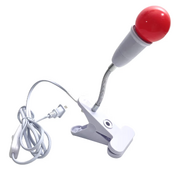
Get a single red LED bulb, dim is better. You're going to need to test it if you are interested. There's no such thing as a perfect safelight. If you can stay in dim light between prints, your eyes will adapt to the dark.
 
Adox makes a red led one that I think is pretty good. I do keep it pointed at the ceiling as to get indirect light from it though. I am probably a bit too paranoid after having a different manufacturer’s safe light fog a few dry plates.
 
Welcome to posting on Photrio.
There are a few safelights still being sold by businesses that supply darkroom users, but they tend to be expensive.
The trick with safelights is that the spectrum of light emitted is as important as how bright they are.
Many of us have had success re-purposing other light sources, designed for other purposes, that just happen to be usable for a darkroom.
In my case, I've had a lot of success with LED rope lights that emit red light - in many cases designed as Christmas lights!
The challenge though is that you can't tell by just looking at the light emitted. Just because the light is red doesn't mean it is the right type of red.
So you have to be willing to test.
This link is to a very detailed and comprehensive test - so detailed and comprehensive that it is downright boring. But it is worth doing the entire test, because it helps confirm whether or not the safelight fogs paper and whether or not the safelight has an affect on the speed and contrast behavior of the paper.
https://www.kodak.com/content/products-brochures/Film/KODAK-A-Guide-to-Darkroom-Illumination-K-4.pdf
 
Recently I set up my small darkroom and bought darkroom safe red LED light for darkroom. They work fine for small room, since I only have a closet. They might be slightly dim if you have a large darkroom.
 

Attachments

  • Screenshot_20260123-213215.png
    Screenshot_20260123-213215.png
    304 KB · Views: 35
Welcome aboard @Premier!
Can anyone recommend what you consider a good safelight? I am only working in black and white, and with variable contrast papers.
There's a difference between papers; some papers work OK with an amber safelight (they will also work OK with red) and others (esp. Foma) that really need a red safelight as amber will fog them. So the safest bet is a red safelight. I've personally used red LED strips shielded with an extra layer of rubylith. This has worked well for me for years. There's a limit to how bright you can make it before the paper starts to fog; this depends mostly on the paper you use. E.g. Fomaspeed will fog a a few stops earlier than the much slower Fomatone. So whichever solution you choose, be sure to perform adequate tests as @MattKing outlines above. Note that only testing for fogging of the whites is not adequate! You really need to determine as well whether there's an effect on the contrast, even if the safelight doesn't generate image tone by itself. It can still act as a contrast-reducing fogging exposure.
 
It depends very much of the paper. Dark red is always safe, but be sure there is no green in the spectrum. Verify it with the reflection at a CD which will show the light spectrum. Foma paper needs strictly dark red without any other content.

For me, I dislike the red darkroom illumination. I use Ilford paper, because it can be handled at bright and very comfortable orange safelight. The Ilford SL1 darkroom lamp is very bright and safe for Ilford multigrade papers.

You may find some old green darkroom lamps on the second hand market. Forget them. They are for fixed grade papers only.
 
Last edited:
For me, I dislike the red darkroom illumination. I use Ilford paper, because it can be handled at bright and very comfortable orange safelight. The Ilford SL1 darkroom lamp is very bright and safe for Ilford multigrade papers.
This is quite plausible, and to add a little theory to it: part of the reason why amber safelight is preferred by some is because it's just inherently brighter due to the sensitivity of the human eye. See for a brief explanation this page: https://light-measurement.com/spectral-sensitivity-of-eye/ You simply need a lot less yellow light for the same perceived brightness compared to red light.
 
I'm using a 660nm LED strip mounted on the ceiling that's running at around 10w. Super bright and based on my testing as long as the paper is more than about 2ft away from the light it doesn't fog in any meaningful amount of time.
 
Hello,

I am new to darkroom photography. I am setting up an enlarger in a spare bedroom, and developing trays in the bathtub in my only bathroom. Can anyone recommend what you consider a good safelight? I am only working in black and white, and with variable contrast papers.

Thanks,

Phil

I have three of the Premier safelights. They are still available new.
 
Adox makes a red led one that I think is pretty good. I do keep it pointed at the ceiling as to get indirect light from it though. I am probably a bit too paranoid after having a different manufacturer’s safe light fog a few dry plates.

I use the little Adox lamp as well. It is fairly cheap and very bright.
I too was a bit worried that the brightness would fog the paper, but it is as safe as advertised.
Much better and brighter than any conventional lamp I have used.
Highly recommended.
 
What sort of light socket do you currently have in your spare bedroom and bathroom?
 
I'm using a 660nm LED strip mounted on the ceiling that's running at around 10w. Super bright
A word of warning concerning "red" LED.

I changed from red tungsten bulbs (dim) to red led strips. Using a CD (or DVD, don't remember) as a makeshift spectroscope, I could determine that, while the visual appearance was indeed "red", there was a small admixture of green light. And that lighting did not pass the Kodak test with Fomabrom Variant paper --as pointed out by @koraks, Foma papers are less tolerant.

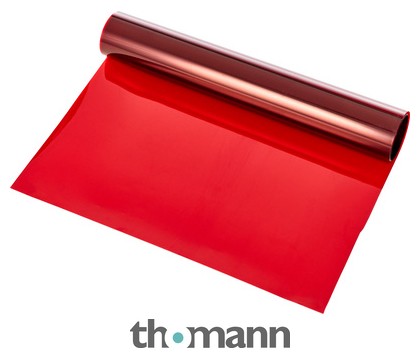
After shielding the LED strip with a strip of Lee 103 Primary Red acetate my safelight passed the Kodak test (see above post #4 by @MattKing). Bright. Maybe too bright.

And that improved LED fogs Ilford Commercial Ortho sheet film...
 
I could determine that, while the visual appearance was indeed "red", there was a small admixture of green light.
I've found this to be virtually universally the case with red LEDs. There's always a small peak in the green spectrum as well. I expect it's due to a minor impurity in the semiconductor. Since it generally doesn't hurt in other applications, apparently it's not worthwhile to fix this.
 
Lots of good choices on ebay as well. I prefer amber whenever possible but red gives you that TV drama darkroom look.

Good luck!
 
A word of warning concerning "red" LED.

I changed from red tungsten bulbs (dim) to red led strips. Using a CD (or DVD, don't remember) as a makeshift spectroscope, I could determine that, while the visual appearance was indeed "red", there was a small admixture of green light. And that lighting did not pass the Kodak test with Fomabrom Variant paper --as pointed out by @koraks, Foma papers are less tolerant.
That all may be true, but the light I'm using at the distance I'm working doesn't cause any fog and iirc I did the test with a foma paper (though I didn't realize they were more sensitive than others). Interesting idea with the CD, I'll have to try that.
 
the light I'm using at the distance I'm working doesn't cause any fog
Your safelight may well be safe, but did you perform the Kodak test?
An illumination that, alone, will not cause visible fogging can, added to the imaging exposure, alter the sensitivity near the threshold; in other words, degraded separation of highlights.
 
Using a CD (or DVD, don't remember) as a makeshift spectroscope, I could determine that, while the visual appearance was indeed "red", there was a small admixture of green light.
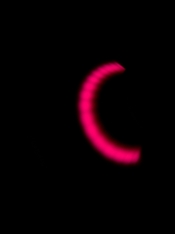
I just tried this and it's a pretty cool trick. Almost impossible to capture the results on camera but it's a pretty clean spectrum. By eye it extends slightly into the more orange-red that my previous 630nm light source was producing, but there's not a trace of visible green. IIRC the strip I bought was intended for horticultural use and uses Samsung LEDs
 

Attachments

  • 1000013976.jpg
    1000013976.jpg
    104 KB · Views: 35
That looks pretty good!
Most red LEDs I've used gave a very distinct side-band emission in yellow-green part of the spectrum. Yours looks very clean, at least insofar as it's possible to judge from a photo.
 
That looks pretty good!
Most red LEDs I've used gave a very distinct side-band emission in yellow-green part of the spectrum. Yours looks very clean, at least insofar as it's possible to judge from a photo.

Yeah, I had to use the manual exposure mode on my phone to get something that wasn't entirely blown out, but it seems pretty good. I'm gonna try doing the Kodak test now and see what that reveals, but I suspect given I haven't had any issues printing previously it'll be fine.
 
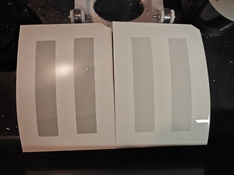
Alright, so my test results were a little surprising but not particularly problematic. I did two tests using fomaspeed variant 312.

Did a first test (1.5 second exposures) with the light where I've had it mounted (about 8ft away on the bottom of a joist with line of sight to my trays) and there's definitely a notable difference at 7 minutes. Given I'm usually into the fix within 3 minutes this wouldn't have given me any trouble. There's a tiny difference between 1 and 3 minutes but it's barely noticeable by eye and I don't think the camera picks it up.

I remounted the light bar turned 90 degrees on the side of the joist and did a second test (used a 1 second exposure to try and make any changes more obvious) and there's no visible difference in density across the strips. Even in this configuration it's still a far brighter safelight than I've used previously which is pretty convenient.

For posterity, I'm using this LED strip in the 660nm configuration with a 3D printed housing: https://growdaddyleds.com/products/...730nm-emerson-effect-led-sun-board-grow-strip

Edit to include the 3d model of the diffuser. I printed it in clear PETG, you need to print one standard and then one mirrored
 

Attachments

  • 1000013982.jpg
    1000013982.jpg
    384.5 KB · Views: 39
  • safelight_diffuser.zip
    9 KB · Views: 33
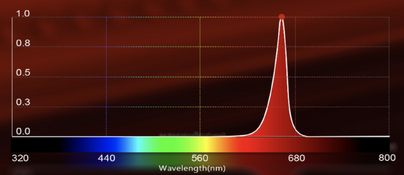
I'm still on the lookout for some cheap, small, red LED strip kind of light - have been reading quite a few times that some people apparently do well with christmas-type lighting, as readily available on eBay, amazon, etc. -
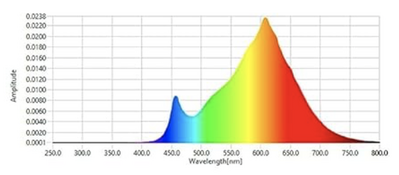
looking at the technical data sheets of those lights (if they are provided at all) I get the impression that basically none of them are strictly red-spectrum only, but they all are "predominantly red", like this:

screenshot 123.png
..I suppose this is not suitable at all, right?


Basically, the only LED lights that are strictly red (around 650nm usually) are the ones some indoor gardeners are using
(yet they are quite expensive, and also way brighter / powerful than you'd ever need it in a darkroom : )

screenshot 124.png


I'm kind of at a loss here to be honest.
Just buying some of the christmas lights and properly testing them all seems a lot of work; might rather get another SL-1 instead.


As a sidenote - is there perhaps somebody from Germany / Europe in here, that can tell me whether we have an alternative to Rubylith over here?

Thanks!
 
..I suppose this is not suitable at all, right?
That's the spectrum for a warm white LED. You may be looking at an ad for LED products that are offered in various colors and the spectral plot you found was for a warm white type instead of the red variant you're interested in.

Basically, the only LED lights that are strictly red (around 650nm usually) are the ones some indoor gardeners are using
For horticulture 650-660nm is usual, yes, but most decorative red LEDs are 620nm. In principle either would work OK for darkroom safelights but it depends mostly on secondary emission bands in the green and yellow part of the spectrum. Even they are there, they are not always included in the spectral plots, so you will have to do additional testing and possibly filtering (using e.g. rubylith) to get rid of the green/yellow light.

As a sidenote - is there perhaps somebody from Germany / Europe in here, that can tell me whether we have an alternative to Rubylith over here?
You can buy Rubylith from eBay; there's at least one mainland Europe seller.
 
Photrio.com contains affiliate links to products. We may receive a commission for purchases made through these links.
To read our full affiliate disclosure statement please click Here.

PHOTRIO PARTNERS EQUALLY FUNDING OUR COMMUNITY:


Ilford ADOX Freestyle Photographic Stearman Press Weldon Color Lab Blue Moon Camera & Machine
Top Bottom