

• Welcome to Photrio!
    Registration is fast and free. Join today to unlock search, see fewer ads, and access all forum features.
    Click here to sign up

The future of SLR repair (2/3): Following manufacturer guidelines or creative DIY solutions?

Untitled

A
Untitled

  • 1
  • 0
  • 20
The Hot Waters

A
The Hot Waters

  • 0
  • 0
  • 36

Forum statistics

Threads
204,317
Messages
2,867,098
Members
102,222
Latest member
forest_f2026
Recent bookmarks
0

Andreas Thaler

Subscriber
Joined
Nov 19, 2017
Messages
5,172
Location
Vienna/Austria
Format
35mm
When it comes to repairing film SLRs, opinions are divided:

Some argue that only adherence to manufacturer specifications ensures flawless results.

After all, only the manufacturer has the expertise to properly restore its own products.

Others counter that creative solutions can also achieve the desired outcome.

Moreover, the manufacturer could not have foreseen or accounted for problems that arise decades after production and service have ceased. These include signs of aging such as material fatigue and wear and tear.

If our goal is to repair and service historic SLRs and thus restore them to working order

which of these positions should we follow? And what reasonable compromise should we arrive at?

After all, both positions have their limitations:

Manufacturer specifications can only be followed if they can be implemented in the actual repair situation.

Creative solutions—that is, modifications to the manufacturer’s specifications—can only be successful if they are compatible with the manufacturer’s specifications.

An example to illustrate this:

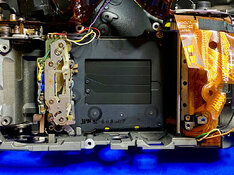
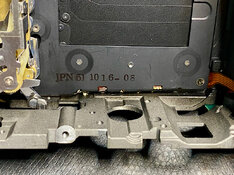
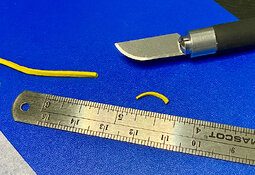
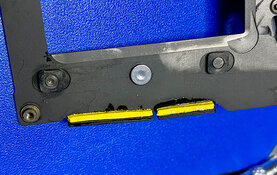
The shutter of the Minolta (Maxxum, Alpha) 9000 AF has a plastic damper that has chemically degraded over the decades and become sticky. This renders the shutter unreliable or inoperable. A repair according to the manufacturer’s specifications requires replacing the entire shutter unit.
IMG_6692.jpeg
IMG_6690.jpeg
IMG_6691.jpeg

However, new replacement shutters have long been unavailable, and even these are subject to the aging process described above too. Consequently, the 9000 AF could no longer be repaired according to the manufacturer’s specifications.
IMG_6684.jpegIMG_6685.jpeg
IMG_6686.jpeg

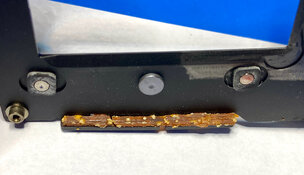
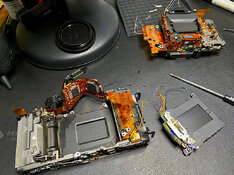
A creative solution is to disassemble the shutter, remove the old damper, and install a replacement. All of this is done without technical documentation, as these shutters were rarely documented and must therefore be regarded as black boxes. They were replacement units.

Consequently, the original condition can no longer be restored. This is relevant for high-performance shutters, as they must operate with microsecond precision and are subjected to high mechanical stresses. This is all the more true when they are operated in motorized high-speed mode.

If, as discussed in this post, we wish to share repair and service knowledge (because these SLRs are no longer, or only to a limited extent, professionally serviced), how should we proceed?

Strict adherence to manufacturer specifications would mean that the 9000 AF cannot be restored.

A creative DIY solution (in this case, a cut-to-size rubber band as a shock absorber replacement) puts the 9000 AF into an undocumented state.


In other words, it may function permanently according to manufacturer specifications again, but only for a short time, or it may develop new problems as a result.

Why am I asking these questions?

When we curate obsolete SLRs and provide service/repair instructions for them, we need to be clear about what makes sense—whether it’s an electromechanical SLR or a purely mechanical one.

This also entails a responsibility toward users. Because shortcuts that are often taken turn out to be botched jobs that do more harm than good.

That’s why I’d like to discuss this in principle.


See also

 
Last edited:
For me, it's simple: Functionality over authenticity. After all, cameras are tools and as a camera repairer your obligation is to make them work again. You do not work in a museum where authenticity is the first priority. If you do not have the original spare parts think about which DIY solution may help. Yes, the manufacturer did not certify the substitute parts and materials you use but, on the other hand, the manufacturer never thought that their cameras would be in use 40+ years after their production. Maybe, the DIY solution works in the long run, maybe it fails. In the latter case, learn from it and try something new. As long as you repair your own cameras, it's completely up to you. Only if you repair cameras as a business, you have to transparent towards the customer if you use such solution. If the alternative is to have a broken camera, use whatever helps to make it work again.
 
Maybe, the DIY solution works in the long run, maybe it fails. In the latter case, learn from it and try something new. As long as you repair your own cameras, it's completely up to you. Only if you repair cameras as a business, you have to transparent towards the customer if you use such solution. If the alternative is to have a broken camera, use whatever helps to make it work again.

I’m looking at this from a broader perspective.

When it comes to helping others repair their SLRs—because no one else is doing it, or because professional services aren’t available or aren’t sufficient—we need to ask ourselves what kind of knowledge we’re imparting.

I’m taking the liberty of having this discussion here on PHOTRIO, which is unquestionably the leading platform for discussions about film and everything related to it.

Specifically: If I write a repair guide for eg. the Nikon FA, I need to clarify what I’m basing it on.

On the manufacturer’s documentation as the primary source, supported by secondary sources (always SPT Journal for SLRs), or on my personal opinions.

I favor the former, because as a DIY amateur, I can’t know any better than the manufacturer or Master Larry Lyells (SPT). Unless, of course, I discover new methods myself, as previously discussed. But I must disclose that. Those who then choose to repair on their own will do so.

In short, I’m concerned with standards for how we can document and pass on old technology.

Chris Sherlock, Rick Oleson, and Richard Haw do this from the same non-profit perspective, each in their own area of expertise.

As far as I can tell, they all work strictly on a manufacturer-specific basis. However, I am not familiar with the specifics of the work done by the first two gentlemen, as that is not my area of expertise.
 
Last edited:
Regarding this topic, we have to distinguish between procedures and spare parts.

For most of the necessary repairs, the manufacturer or the renowned professional repairers of back then have developed and documented procedures on how to perform them. Of course, if we know of these procedures we should follow them. As far as I know, there might be some gaps, like the infamous "Canon Cough/Squeak" for which the manufacturer (to my knowledge) did not give any procedure simply because it occurs only after a couple of years. For these, we can follow the procedures of later repairers which we trust (not the ones with the syringe 😉).

For spare parts, it is a different picture. If all the spare parts would still be available today (to anyone and for an affordable price) it would be a no-brainer to use these spare parts. There would be hardly any need for a DIY solution that would often take longer to figure out (and might be less reliable) than the use of an original spare part. However, in the real world, NOS spare parts are scarce, expensive, or cannot be found at all on the market. In this case, you could either cannibalize a donor camera (that might have been worth to repair, too). However, these spare parts are already used and might fail much earlier than a new part would. Or you think about a DIY solution and make your own "spare part". This might not conform to the manufacturer's standards (but most of these standards for individual parts are anyway unknown to us) but it can help to bring back the camera to life. I will always be willing to go this way.

An example from my workbench. I had a Canon A-1 with a stuck shutter. After disassembling the shutter mechanism almost completely I found the problem: There was a small metal shaft with a plastic sleeve. The plastic sleeve was probably used to dampen the impact of a gear on the shaft at the end of the curtain movement. Unfortunately, part of the plastic just crumbled away over the years. Due to this, the gear "jumped" over the shaft and the shutter mechanism got out of sync and jammed.

20250709_152418-2.jpg


What to do? For this shaft with its plastic sleeve, there is not even a spare part since it is integral part of the shutter frame. In the old days, this would be a no-brainer. You would just replace the complete shutter unit. But to find a NOS shutter unit for an A-1 is almost impossible and if you take one from a donor camera who guarantees that its plastic sleeve isn't already crumbled away, too, or will be in the near future. In this situation, I just removed the plastic sleeve and replaced it by the silicon sleeve of a loudspeaker cable that had about the right inner and outer diameter. Is this a repair the manufacturer or Larry Lyells would approve: Certainly not. But it worked for me and the camera is in good working order again. Would I do it again in a similar situation: Definitely.

20250710_181450-2.jpg


Maybe, it is only my mindset to do it this way. I was born and raised in an economically struggeling planned economy where almost anything was scarce and the first rule of survival was "Improvise!". Might have been a good school for today's camera repair 😉.
 
With electromechanical SLR cameras, it’s not so much defective parts as problems with electrical contacts that cause issues. At least in my experience so far.

In both cases, fixing the problem requires disassembly to a greater or lesser extent, which probably deters DIYers because it looks complicated. But I don’t think taking apart a fully mechanical Nikon F2 is any easier. Add the electromechanical Photomic AS viewfinder to the mix, and you’ve got plenty of complications.

I think sourcing parts from discarded SLRs of the same type is the solution that comes closest to the original condition. Creative DIY solutions are effective if they’ve been tested and documented. For this reason, too, it would be helpful to see as many project reports on service and repair as possible.

Large-scale projects like kamerastore.com, which inspect, restore, label with condition details, and sell cameras, can help secure the future of these models.

For private collectors, it’s worth collecting cameras for spare parts. Up to the Nikon F3 as a benchmark, it should even be possible to replace the electronics; starting with the Nikon F4, this is possible with some limitations. With the Nikon F5, DIY is no longer an option, as it requires the manufacturer’s hardware and software.
 
Last edited:
Heck, I'd be happy just to be able to rebuild the TTL metering systems on my Exakta and Bronica. But the electronics are so old I can't even find datasheets for some of them to be able to identify alternates. Particularly the photodiodes.
 
My thoughts on this are that, as my own point of view of a camera user and not collector, what matters is the functionality.

Most of the cameras we work on aren't rare items, so fixing them with a working but unofficial/unapproved solution is no big deal.

If/when I'm selling such cameras, I make it clear if they were modified during restoration, and this is generally well understood.
 
It's not always appropriate to follow manufacturer's recommended service procedures too closely, because said procedures assumed that replacement parts were cheap, and the technician's labor was expensive. Hence, the emphasis on replacing complete PCBs instead of troubleshooting the old part at the component level. But in 2026, most of us are doing this as a hobby, and do not have quotas to meet. We can even improve upon the factory's mistakes if we want to. For example, even if I had new, old stock Minolta X700 PCBs in stock, I would not install them without first replacing the failure-prone capacitors with higher quality solid tantalum capacitors. The stock Minolta part might have had a useful lifespan of a dozen years; the modified part might last for multiple decades, if not longer.
 
It's not always appropriate to follow manufacturer's recommended service procedures too closely, because said procedures assumed that replacement parts were cheap, and the technician's labor was expensive. Hence, the emphasis on replacing complete PCBs instead of troubleshooting the old part at the component level. But in 2026, most of us are doing this as a hobby, and do not have quotas to meet. We can even improve upon the factory's mistakes if we want to. For example, even if I had new, old stock Minolta X700 PCBs in stock, I would not install them without first replacing the failure-prone capacitors with higher quality solid tantalum capacitors. The stock Minolta part might have had a useful lifespan of a dozen years; the modified part might last for multiple decades, if not longer.

Interestingly, replacing entire electronic assemblies is not recommended in either the manufacturers’ repair manuals or in the secondary literature (SPT, CCM, CC), with the exception of shutter units. The manuals describe repairs at the component level. The fact that assemblies have been replaced in practice is therefore due to economic reasons.

Creative DIY solutions make sense, but they should be tested, documented and publicly discussed when it comes to seriously passing on knowledge.

One example is the well-known problem with the release solenoid in the Canon T90, which has been proven to be caused by contaminated contacts. Cleaning provides a verifiably lasting solution. To do this, the problem must be understood and the solenoid removed. Both require effort.

The common shortcut shown in videos is to use a magnetized screwdriver to influence the magnetic field during release, thereby separating the stuck contacts. This does not address the root cause—contamination—and so the problem recurs. This shortcut is marketed as „remagnetizing the shutter“ which is complete nonsense.

For the Canon T50 and T90, and the Minolta 7000 and 9000, I’ve taken on the role of curating service and repair knowledge because no one else is doing it publicly. There are likely others who can do this just as well or even better, but they keep their knowledge to themselves.

For this reason, I say that there are no shortcuts for these SLRs because they are too complex. However, once the camera has been properly disassembled, you can implement DIY solutions, such as replacing the damper in the shutter of the Minolta 9000 (see above). But this must be documented and open to discussion, for example here on PHOTRIO.

My personal goal is to pass on reliable knowledge, not shoddy work.

The first person I hold to this standard is, of course, myself 🙂
 
Last edited:
Can you give a specific example of that?

I mean I don't mind making a new part (that may happen to the Yashica depending on my ability to fix the winding lock issue I may turn a new pivot to be able to fix a friction issue) or mixing cameras (the Yashica inherited a spring from a FTb, screws from an AE1 and new screws, I also made a FTb "Panda" with two FTbs of different colors)
 
I have already noted that I am sometimes criticized for my stance on repair methods as being dogmatic, rigid, elitist, inflexible, and a self-righteous guardian of a personal truth. Those interested in DIY are reportedly deterred by high barriers to entry. Quick fixes are also considered legitimate.

I can only convey what I have learned myself, and I always cite my sources. If there are any truths, they lie in the natural sciences and technology. These are verifiable.

In any case, it’s an interesting discussion 🙂
 
I mean I don't mind making a new part (that may happen to the Yashica depending on my ability to fix the winding lock issue I may turn a new pivot to be able to fix a friction issue) or mixing cameras (the Yashica inherited a spring from a FTb, screws from an AE1 and new screws, I also made a FTb "Panda" with two FTbs of different colors)

This should also be possible for electronic components. For example, by programming a new microcontroller to take over camera control and, if necessary, enable new functions. We had a discussion about this; I'm looking for the link
 
This should also be possible for electronic components. For example, by programming a new microcontroller to take over camera control and, if necessary, enable new functions. We had a discussion about this; I'm looking for the link

Interesting. I could imagine that such kind of substitution is extremely tricky for multiple reasons, at least for the Canon A series cameras I know:
  • Usually, the ICs contain a mix of analog signal processing and digital logic.
  • The form factor has to fit.
  • The pinout has to fit unless you also want to create new flex boards.
I did a bit of microprocessor programming myself (ATmega) but only for completely digital logic.
 
Interesting. I could imagine that such kind of substitution is extremely tricky for multiple reasons, at least for the Canon A series cameras I know:
  • Usually, the ICs contain a mix of analog signal processing and digital logic.
  • The form factor has to fit.
  • The pinout has to fit unless you also want to create new flex boards.
I did a bit of microprocessor programming myself (ATmega) but only for completely digital logic.

Maybe I can inspire you as an expert to take on this kind of work? 💐😃
 
I have already noted that I am sometimes criticized for my stance on repair methods as being dogmatic, rigid, elitist, inflexible, and a self-righteous guardian of a personal truth. Those interested in DIY are reportedly deterred by high barriers to entry. Quick fixes are also considered legitimate.
I know that this has occurred. However, it is not just black and white. Constructive criticism must be allowed and not everyone that criticizes a specific part of your work or the presentation thereof is an advocate of "quick fixes". I don't believe that even the laws of nature and the state of technology determine that there is only exactly one solution to every engineering task in camera construction and repair. Often, there are several ways to achieve the same goal and that the manufacturer or the renowned camera repairers choose and documented exactly one of them does not necessary imply that there aren't also others. I don't speak about the infamous "quick fixes" but valid alternatives.
 
I also made a FTb "Panda" with two FTbs of different colors)
+1. I have a Rollei Baby that contains parts from 4 different cameras. (I bought them cheaply way back when they had no significant "collector value" as desk ornaments.) I come down firmly on the side of functionality: if I can figure out a fix for a problem that has made a camera junk, even if it's likely not "permanent" (whatever that means) i reckon I've done a good thing. I don't work on other people's cameras, so I don't need to guarantee the work. And, to be realistic, no old camera has parts that are factory spec: they've all been worn or even abused over the years and adjustments need to be made to accommodate that fact. A significant benefit to fixing old cameras is the need for creative thinking: it keeps the brain sharp as we get older...
 
I know that this has occurred. However, it is not just black and white. Constructive criticism must be allowed and not everyone that criticizes a specific part of your work or the presentation thereof is an advocate of "quick fixes". I don't believe that even the laws of nature and the state of technology determine that there is only exactly one solution to every engineering task in camera construction and repair. Often, there are several ways to achieve the same goal and that the manufacturer or the renowned camera repairers choose and documented exactly one of them does not necessary imply that there aren't also others. I don't speak about the infamous "quick fixes" but valid alternatives.

Anyone can criticize me—why not? That’s part of why I’m here. And I’m happy to discuss things, as long as the conversation stays objective.

There is one principle I will not compromise on, however: the manufacturer’s manuals and secondary literature on repairing electromechanical SLRs are the definitive guides.

I stick to them, and since I’ve been doing so, many of my projects have been successful. Tinkering around, unscrewing things on a whim to take a look inside, or dousing switches with isopropyl alcohol leads to disaster. I read your recent comment on Reddit (Canon A-1)—you’re absolutely right.

But we should talk openly about the approaches to repair.

There’s a lot of nonsense circulating on the internet, unfortunately mostly on the platforms that appeal to (young) DIY enthusiasts: video and social media. That doesn’t make the cameras any better.

The highlight for me so far has been the claim that PCBs have a lifespan of about 15 years (!). People believe this and other nonsense instead of seriously looking into the issues.
 
There is one principle I will not compromise on, however: the manufacturer’s manuals and secondary literature on repairing electromechanical SLRs are the definitive guides.

In my eyes, the specifications regarding procedures and parts/materials made by the manufacturers can be considered as guidelines (not laws). However, we have to keep realistic on what can, what should, and what has to be achieved in our current time by us hobbyists. Just some examples from the world of Canon A* cameras (sorry that I always stress this model but it's the one I have most experience with):
  • When you apply oil or grease, do you really use Lozoid #72090, Photolub PL-15, GE-7, and Astro-Oil as requested by the manufacturer?
    If you use other oils and greases, how do you ensure that they would meet the specifications of the manufacturer?
    Do you even know these specifications regarding viscosity, temperature range, oil separation, etc.?
  • The same for capacitors, diodes, or transistors you replace: Do you use the exact models as the manufacturer specified?
    If not, which are the relevant specifications (voltage, temperature range, drift, ESR value, etc.) and how do you ensure that they are met by your substitutes?
  • Do you measure the torque of springs as defined by the manufacturer? What measuring device you use for this?
  • Do you have the bus checker tool Canon used to measure the data transmission over the different bus systems?
  • Do you have the special tools (mainly "funny-shaped" screwdrivers) that Canon requests in their service tools list?
These questions are not intended to prove that you do something "wrong". They are only intended to show that it is practically impossible to follow the words of the manufacturer's service manual literally. It's important to distinguish between what the manufacturer wanted to achieve (like putting grease on a camera part to reduce friction) and what they used to achieve it (like using Lozoid #72090). Today, we have to understand the former and then think about appropriate ways for the latter under the limitations we have today regarding tools, materials, and spare parts. By being too much of a purist here will mean that you will leave people behind that either will stop trying camera repairs or that will fallback to the sloppy and dirty "DIY tricks" that flood the Internet.
 
The specific points you list do not change the fact that the manufacturer’s technical documentation, along with secondary literature, is intended to specify the target state for good reason.

Forty years later, we must of course try to get as close as possible to that using the information available. The fact that this is not possible, or only possible to a limited extent, in some cases does not contradict this.

By being too much of a purist here will mean that you will leave people behind that either will stop trying camera repairs or that will fallback to the sloppy and dirty "DIY tricks" that flood the Internet.

You're misunderstanding me. I'm actually very keen on encouraging people to try DIY—see my posts.

What I'm against is shoddy work that has nothing to do with what we're discussing here. Sticking cameras in the oven, slamming them on the table, dousing them with oil or lighter fuel, trying to „remagnetize“ something, or simply unscrewing SLRs, poking around inside, and then calling for help (Reddit). And then passing that on and recommending it.

If you look through my posts, you’ll also find instances where I’ve tried my own shortcuts to solve problems:
  • Getting the mirror box mechanism of the Leica R3 ELECTRONIC working again with an oil injection from the outside.
  • Treating the aperture control of the Nikon F4 using the sequence electronic cleaner – graphite powder/benzine – oil, also applied via a syringe from the outside.
  • Cleaning the aperture magnet of the Minolta 7000 AF from the outside and melting a hole in its cover to do so.
  • Canon T90: removing sticky damper residue from the bottom of the shutter with a pointed probe before cleaning the rear shutter curtain with acetone from the outside.
I tried all of these methods, documented them here on PHOTRIO, and ultimately rejected them publicly as unsuitable or only partially suitable. So that others can avoid the mistakes and errors I’ve made.

The only shortcut I found that works is bypassing the front flex connector on the Canon T90 when removing the mirror box.

The standard procedure is to open it.

During reassembly, it happened to me several times that the gold-plated connector strips inserted in between caused contact issues. The contacts were no longer making a reliable connection. This caused electronic malfunctions, rendering the camera inoperable. I went through about four T90s before I identified the problem and found a solution:


But I replaced everything else with the specifications in the technical documentation or followed them as appropriate. After all, the signs of aging we’re talking about here couldn’t have been taken into account back then.


I know my monologues and essays 😇

But when it comes to the Canon T90 and the Minolta AF SLRs, I’m still the only one who talks publicly about repairing them. I wish that weren’t the case.
 
Last edited:
This should also be possible for electronic components. For example, by programming a new microcontroller to take over camera control and, if necessary, enable new functions. We had a discussion about this; I'm looking for the link

That would be another level, I'd love to be able to do it, but even as a programmer I'm afraid my skills* are below the bar


* and will to spend the time to learn what's needed, I'm having more fun with purely mechanical cameras
 
Interesting. I could imagine that such kind of substitution is extremely tricky for multiple reasons, at least for the Canon A series cameras I know:
  • Usually, the ICs contain a mix of analog signal processing and digital logic.
  • The form factor has to fit.
  • The pinout has to fit unless you also want to create new flex boards.

Additionally, camera repair manuals were often focused on diagnosis and parts replacement. Line replaceable units (LRUs). That is a very efficient and effective technique but relies on the availability of those parts. Without the parts supply, there is the necessity to get creative and the repair documentation does not even give a clue as to the specs on many parts. Sometimes it might not even be possible. Whether that is planned obsolescence or just the ravages of time, I'm not always sure. Extremely tricky is an understatement.
 
Photrio.com contains affiliate links to products. We may receive a commission for purchases made through these links.
To read our full affiliate disclosure statement please click Here.

PHOTRIO PARTNERS EQUALLY FUNDING OUR COMMUNITY:


Ilford ADOX Freestyle Photographic Stearman Press Weldon Color Lab Blue Moon Camera & Machine
Top Bottom