
• Welcome to Photrio!
    Registration is fast and free. Join today to unlock search, see fewer ads, and access all forum features.
    Click here to sign up

Why so much hate towards the Orwo NC500 and Orwo NC400?

Recent Classifieds

Forum statistics

Threads
204,279
Messages
2,866,557
Members
102,207
Latest member
gustavocf
Recent bookmarks
0

Pedroga

Member
Joined
Feb 4, 2026
Messages
57
Location
Brazil
Format
35mm
I was searching online for a new film stock to try and ended up coming across the Orwo NC500 and the Orwo NC400. Even after doing a lot of research, I noticed there really isn’t that much information about them online, and most of what I found was pretty negative. I saw a lot of people saying the colors are bad, the saturation is terrible, the sharpness is lacking… and so on.


I also found out that the Orwo NC500 is apparently, in practice, more of an ISO 400 film at least that’s what Orwo’s own website says about it. On the other hand, I watched a few videos on YouTube, especially one where the photographer shot the film at ISO 200, and honestly… the results didn’t look that bad at all. In my opinion, it feels like this is a film that isn’t really trying to compete directly with other traditional color films, but instead has its own identity and aesthetic.


Even so, I’m still not sure if it’s worth taking the risk, especially because the price is definitely something that makes me hesitate.


I was thinking about buying the Orwo NC400 and shooting it at ISO 200 as well. The problem is that I’m not sure if that’s actually the best choice for this specific film, since I’ve only seen people doing that with the NC500. If anyone could give me some guidance on that, I’d really appreciate it.


Another thing that really makes me curious is: what would be the best type of environment or scenario to shoot this film in? Especially considering where I live, where the sunlight is usually very harsh and scenes tend to be full of strong colors.


At the end of the day, does this film really deserve all the hate it gets? lol

 
These color films are kind of experimental and in a way, resemble the color films from around 1960 or so. They're not really comparable to modern Kodak films. I guess that's what people respond to; the objective quality in several areas is just less than what you get with a bog standard Kodak Gold roll.

what would be the best type of environment or scenario to shoot this film in?
Use these films in whatever setting you feel best exploits the particular characteristics w.r.t. color rendering and grain. Also, you can reconstruct/adjust the colors quite considerably after scanning in digital post processing, rendering at least some of the criticism kind of moot.
 
These color films are kind of experimental and in a way, resemble the color films from around 1960 or so. They're not really comparable to modern Kodak films. I guess that's what people respond to; the objective quality in several areas is just less than what you get with a bog standard Kodak Gold roll.


Use these films in whatever setting you feel best exploits the particular characteristics w.r.t. color rendering and grain. Also, you can reconstruct/adjust the colors quite considerably after scanning in digital post processing, rendering at least some of the criticism kind of moot.

What really attracts me to this film is exactly the fact that it feels different from Kodak films. I wouldn’t necessarily call it “experimental” lol, but it definitely seems to have its own look and character.


Right now, I’m thinking about picking up some rolls of the Orwo NC400 since it’s a bit cheaper, and shooting it at ISO 200. My biggest concern is ending up with terrible results by exposing it at ISO 200. I’m worried about overexposing the film too much and possibly ruining the shots or not getting usable photos at all.


I’m already used to pushing film, but doing the opposite still feels a bit strange to me. Do you have any advice or tips about that?


Speaking of Kodak Gold, I’m also thinking about getting a few rolls of either Kodak Gold or Ultramax to shoot the beaches in Rio de Janeiro at the end of the year.
 
I don’t see the hate you talk about.

Orwo colour films are inferior in every way and more expensive than Kodak’s consumer films. But, different they are.

It probably won’t kill you if you buy a couple of rolls and shooting them at ISO 200 won’t kill the film either.
 
I’m already used to pushing film, but doing the opposite still feels a bit strange to me. Do you have any advice or tips about that?
Not really; with all respect, it seems to me you're in the early stages of learning the ropes of color negative film and at this stage in your learning process, there's so much elementary stuff happening that dramatically affects the outcome that I just wouldn't fuss too much about whether or not to 'pull' film, or even how much benefit you might perceive in using experimental films like these Orwo products. (And yes, they really are experimental; they're the intermediate outcomes of a product development process that goes in the direction of a more regular C41 product as marketed by Kodak and in the past other manufacturers).

At this stage, whether or not you manage to nail focus and exposure, to what extent you get the hang of composition and start developing your style, how you manage to see or create favorable light, your recognition of colors, structures and patterns in the world around you and manage to frame them effectively, the degree to which you manage to work your way through the fickle woods of digital post processing - all of these factors have far more of an influence on the images you'll walk away with than the question whether you're shooting Portra or NC400, and what EI you happen to rate it at.

Don't mistake this for discouragement when it comes to trying things out. By all means, do as you please. Even if you'll recognize at a later stage that you're currently not really in a position to attribute characteristics of your image to a factor like film choice with any degree of certainty, it can still be fun to just try things out and see what happens. Merely the notion of seeing your film arrive in a differently designed box and a different logo can be meaningful, or knowing that some photographer you admire is using the same product that you're holding in your hands. That can be valuable or at least enjoyable in itself. So go ahead and explore!

But from a rational perspective, there's not a whole lot I could say to the question you ask presently. My honest remark would be "it doesn't matter much, pick any film of reasonable quality, set your camera/light meter to its box speed and work on the other stuff first." And my the same token, as to the shoots towards the end of the year - I'd decide around that time how you'll approach it with the knowledge and experience you will have gained by then. It's only May; the end of the year is still far off.
 
I don’t see the hate you talk about.

Orwo colour films are inferior in every way and more expensive than Kodak’s consumer films. But, different they are.

It probably won’t kill you if you buy a couple of rolls and shooting them at ISO 200 won’t kill the film either.

I’ve seen some older threads here where people constantly say they really don’t like this film at all… Are you sure I wouldn’t ruin the film by shooting it at ISO 200? What kind of results would I actually get?
 
Not really; with all respect, it seems to me you're in the early stages of learning the ropes of color negative film and at this stage in your learning process, there's so much elementary stuff happening that dramatically affects the outcome that I just wouldn't fuss too much about whether or not to 'pull' film, or even how much benefit you might perceive in using experimental films like these Orwo products. (And yes, they really are experimental; they're the intermediate outcomes of a product development process that goes in the direction of a more regular C41 product as marketed by Kodak and in the past other manufacturers).

At this stage, whether or not you manage to nail focus and exposure, to what extent you get the hang of composition and start developing your style, how you manage to see or create favorable light, your recognition of colors, structures and patterns in the world around you and manage to frame them effectively, the degree to which you manage to work your way through the fickle woods of digital post processing - all of these factors have far more of an influence on the images you'll walk away with than the question whether you're shooting Portra or NC400, and what EI you happen to rate it at.

Don't mistake this for discouragement when it comes to trying things out. By all means, do as you please. Even if you'll recognize at a later stage that you're currently not really in a position to attribute characteristics of your image to a factor like film choice with any degree of certainty, it can still be fun to just try things out and see what happens. Merely the notion of seeing your film arrive in a differently designed box and a different logo can be meaningful, or knowing that some photographer you admire is using the same product that you're holding in your hands. That can be valuable or at least enjoyable in itself. So go ahead and explore!

But from a rational perspective, there's not a whole lot I could say to the question you ask presently. My honest remark would be "it doesn't matter much, pick any film of reasonable quality, set your camera/light meter to its box speed and work on the other stuff first." And my the same token, as to the shoots towards the end of the year - I'd decide around that time how you'll approach it with the knowledge and experience you will have gained by then. It's only May; the end of the year is still far off.

kkkkkk I won’t get discouraged. I know I’m still a complete beginner — like, really at the very beginning of all this. You saw how my first roll of film turned out lol. But even so, I can’t help being super excited to test new things.


And honestly, my friend, you have no idea how grateful I am for all the opinions, advice, and knowledge you’ve shared with me here on the site over time. It genuinely means a lot to me.
 
Alright man, sounds great! Have fun and definitely give this film a try if you fancy it. See what happens, if you like it, repeat the experience.
 
I'm one of those guys who loves NC400 and I shoot it a lot. My best results have been EI 200 (so a stop overexposure) + ECN-2 xpro. I think there's a few reasons why a lot of people didn't take to it:

1. ORWO (Filmotec/InovisCoat) is terrible at messaging, advertising, and customer outreach. Combined with some bouts of bad luck, like COVID wrecking their supply chain during their online storefront launch causing delays, it understandably

2. The Kodak/Fuji professional photography crowd won't shoot it because it's a more experimental, fussy, art film, and the Lomography crowd didn't take to it because it isn't warm toned or really out there, like Harman Phoenix.

3. Most people these days don't realize that films are made with editing in mind, there is an expectation of you having to set the black point at least. Kodak and Fuji films look decent enough for Instagram straight from raw lab scans. ORWO color films absolutely require black and occasionally white point setting in GIMP/Photoshop/etc., otherwise raw scans from a Noritsu look dull and have a noticeable green cast.

I like shooting NC400 because it has a unique mood, it is a very different film than all the other color stocks out there. Filmotec claims that it is derived from Agfa XT320, but in my opinion, it - like all their other films - derive a lot more from their East German ancestry, and through them, pre-war Agfa emulsions (Agfa Wolfen became ORWO after the split).

ORWO color films all have a distinctive red pop, that is very attractive to see in scenes with any red-toned objects. The light balance of NC400 is around 4300K, or halfway into tungsten, which can really emphasize a sense of harshness in the scene depending on what you shoot, and the grain plays into that. The result is to my eyes, a vintage looking, somewhat melancholic and gritty film, that can stand on its own artistic merits.

Regarding NC500, I have shot it but I don't like it, it is too desaturated and grainy for my taste. NC400 is better in almost every aspect. Also, I recently checked and it seems that ORWO discontinued NC500, so all that's left is NC400, and the superb NC200. I highly recommend checking that out (sold as Kono Color 200 or Opticolor 200) if you're interested in NC400, as NC200 is a whole technological leap over it.

Here's some of my favorite shots with NC400:

55146950516_c5fe934270_b.jpg

Contax RX, Zeiss 35-70/3.4 Vario-Sonnar. This is what I mean by popping reds.

55042011016_5c21ee5479_b (1).jpg

Contax RX, Zeiss 180/2.8 Sonnar. Grain is visible with a little bite. Metallic surfaces sparkle nicely.

55056782233_b5f2ebdf3d_b.jpg

Contax RX, Zeiss 85/1.4 Planar. I find the cold, almost tungsten-like balance of the film is very fitting for overcast days or snowy winters.
 
I'm one of those guys who loves NC400 and I shoot it a lot. My best results have been EI 200 (so a stop overexposure) + ECN-2 xpro. I think there's a few reasons why a lot of people didn't take to it:

1. ORWO (Filmotec/InovisCoat) is terrible at messaging, advertising, and customer outreach. Combined with some bouts of bad luck, like COVID wrecking their supply chain during their online storefront launch causing delays, it understandably

2. The Kodak/Fuji professional photography crowd won't shoot it because it's a more experimental, fussy, art film, and the Lomography crowd didn't take to it because it isn't warm toned or really out there, like Harman Phoenix.

3. Most people these days don't realize that films are made with editing in mind, there is an expectation of you having to set the black point at least. Kodak and Fuji films look decent enough for Instagram straight from raw lab scans. ORWO color films absolutely require black and occasionally white point setting in GIMP/Photoshop/etc., otherwise raw scans from a Noritsu look dull and have a noticeable green cast.

I like shooting NC400 because it has a unique mood, it is a very different film than all the other color stocks out there. Filmotec claims that it is derived from Agfa XT320, but in my opinion, it - like all their other films - derive a lot more from their East German ancestry, and through them, pre-war Agfa emulsions (Agfa Wolfen became ORWO after the split).

ORWO color films all have a distinctive red pop, that is very attractive to see in scenes with any red-toned objects. The light balance of NC400 is around 4300K, or halfway into tungsten, which can really emphasize a sense of harshness in the scene depending on what you shoot, and the grain plays into that. The result is to my eyes, a vintage looking, somewhat melancholic and gritty film, that can stand on its own artistic merits.

Regarding NC500, I have shot it but I don't like it, it is too desaturated and grainy for my taste. NC400 is better in almost every aspect. Also, I recently checked and it seems that ORWO discontinued NC500, so all that's left is NC400, and the superb NC200. I highly recommend checking that out (sold as Kono Color 200 or Opticolor 200) if you're interested in NC400, as NC200 is a whole technological leap over it.

Here's some of my favorite shots with NC400:

View attachment 424123

Contax RX, Zeiss 35-70/3.4 Vario-Sonnar. This is what I mean by popping reds.

View attachment 424122

Contax RX, Zeiss 180/2.8 Sonnar. Grain is visible with a little bite. Metallic surfaces sparkle nicely.

View attachment 424124

Contax RX, Zeiss 85/1.4 Planar. I find the cold, almost tungsten-like balance of the film is very fitting for overcast days or snowy winters.

This whole idea of developing C-41 film in ECN-2 is completely new to me. I honestly didn’t even know it was possible or that it could work well. I’ve heard of some photographers in my city developing C-41 film in black and white chemicals before, but your method is something entirely new to me.


As for the scanner, I think there’s probably one available near my city as well — a Noritsu LS-600.


And seriously, I thought the photos you took looked absolutely incredible. The colors came out very differently from most of the examples I’ve seen online
 
I ended up buying 5 rolls each of NC500 and NC400 when Freestyle had it on sale last year. So far I really like NC400, but didnt really like NC500 from my latest scans I got.
 
I ended up buying 5 rolls each of NC500 and NC400 when Freestyle had it on sale last year. So far I really like NC400, but didnt really like NC500 from my latest scans I got.

What made you dislike the NC500? Do you happen to have any sample images you shot with it? If it’s not too much trouble, of course.
 
What made you dislike the NC500? Do you happen to have any sample images you shot with it? If it’s not too much trouble, of course.

Kind of what polaromar mentioned on the two films, NC500 looks too desaturated but looking at the shots I shot with it back in December, almost all of them were shot in cloudy conditions, rainy in Florida, snowing in NY on my Olympus XA. I just thought in those conditions, I prefer the look of NC400/Lomo metropolis a bit more. But will need to try it in fully sunlight to see again.

His reasons why he likes NC400 more is also why I like it a lot too.

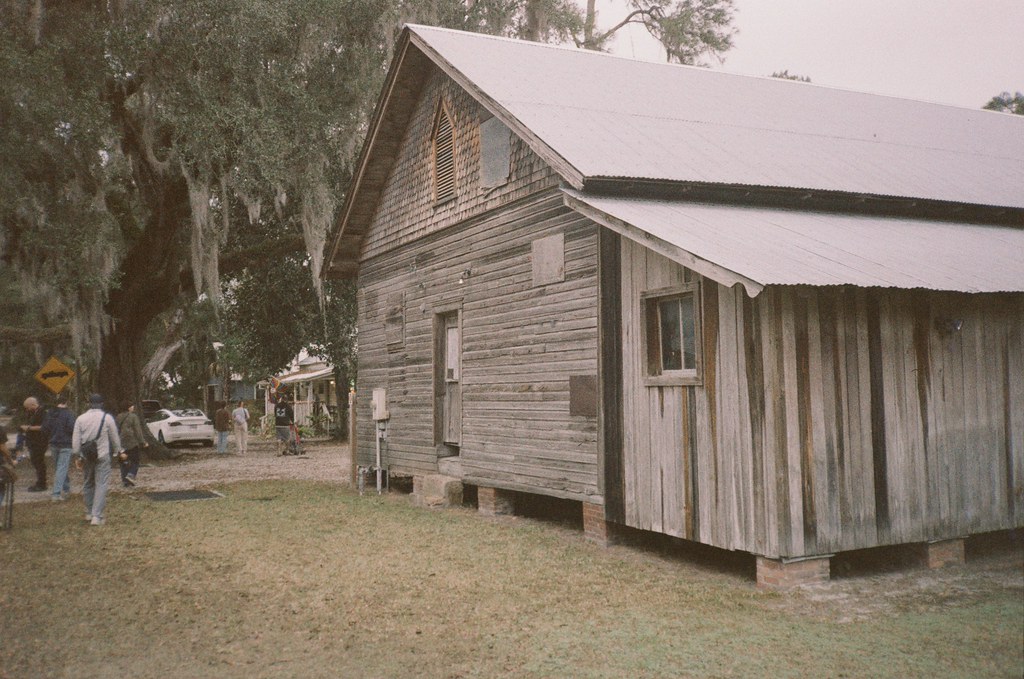
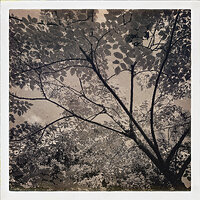
Here are some photos from NC500 using an Olympus XA

Here are some photos from NC400 using a Minox MB
 
Kind of what polaromar mentioned on the two films, NC500 looks too desaturated but looking at the shots I shot with it back in December, almost all of them were shot in cloudy conditions, rainy in Florida, snowing in NY on my Olympus XA. I just thought in those conditions, I prefer the look of NC400/Lomo metropolis a bit more. But will need to try it in fully sunlight to see again.

His reasons why he likes NC400 more is also why I like it a lot too.

Here are some photos from NC500 using an Olympus XA

Here are some photos from NC400 using a Minox MB
I’ll be honest with you — I really, really liked both images. Like, a lot actually.
I'm one of those guys who loves NC400 and I shoot it a lot. My best results have been EI 200 (so a stop overexposure) + ECN-2 xpro. I think there's a few reasons why a lot of people didn't take to it:

1. ORWO (Filmotec/InovisCoat) is terrible at messaging, advertising, and customer outreach. Combined with some bouts of bad luck, like COVID wrecking their supply chain during their online storefront launch causing delays, it understandably

2. The Kodak/Fuji professional photography crowd won't shoot it because it's a more experimental, fussy, art film, and the Lomography crowd didn't take to it because it isn't warm toned or really out there, like Harman Phoenix.

3. Most people these days don't realize that films are made with editing in mind, there is an expectation of you having to set the black point at least. Kodak and Fuji films look decent enough for Instagram straight from raw lab scans. ORWO color films absolutely require black and occasionally white point setting in GIMP/Photoshop/etc., otherwise raw scans from a Noritsu look dull and have a noticeable green cast.

I like shooting NC400 because it has a unique mood, it is a very different film than all the other color stocks out there. Filmotec claims that it is derived from Agfa XT320, but in my opinion, it - like all their other films - derive a lot more from their East German ancestry, and through them, pre-war Agfa emulsions (Agfa Wolfen became ORWO after the split).

ORWO color films all have a distinctive red pop, that is very attractive to see in scenes with any red-toned objects. The light balance of NC400 is around 4300K, or halfway into tungsten, which can really emphasize a sense of harshness in the scene depending on what you shoot, and the grain plays into that. The result is to my eyes, a vintage looking, somewhat melancholic and gritty film, that can stand on its own artistic merits.

Regarding NC500, I have shot it but I don't like it, it is too desaturated and grainy for my taste. NC400 is better in almost every aspect. Also, I recently checked and it seems that ORWO discontinued NC500, so all that's left is NC400, and the superb NC200. I highly recommend checking that out (sold as Kono Color 200 or Opticolor 200) if you're interested in NC400, as NC200 is a whole technological leap over it.

Here's some of my favorite shots with NC400:

View attachment 424123

Contax RX, Zeiss 35-70/3.4 Vario-Sonnar. This is what I mean by popping reds.

View attachment 424122

Contax RX, Zeiss 180/2.8 Sonnar. Grain is visible with a little bite. Metallic surfaces sparkle nicely.

View attachment 424124

Contax RX, Zeiss 85/1.4 Planar. I find the cold, almost tungsten-like balance of the film is very fitting for overcast days or snowy winters.

Out of curiosity, did you ever try this same process — shooting at a lower ISO and developing in ECN-2 — with the Orwo NC500 as well?
 
My negative attitude isn't really toward film itself (I actually like the retro look), but rather toward the marketing. I spent six months on waiting lists for a 400 ft roll of NC400 - from the first batch. When I finally got the notification, it turned out they had released it two days earlier and were DOUBLING THE PRICE every 12 hours. I opened the link from the email just a few minutes after receiving it, but by then the price had already gone up so much that the film had become more expensive than Kodak Portra.
 
I had a whole roll of NC500 shot at box speed come out with blue splotches sort of like underexposure artifacts. It was recommended to me to shoot it at 250, but I haven't tried it yet.
 
I had a whole roll of NC500 shot at box speed come out with blue splotches sort of like underexposure artifacts. It was recommended to me to shoot it at 250, but I haven't tried it yet.
So, I was thinking of using the film at ISO 200 or 250. I just bought a roll of NC500, a little while ago, I just have to wait for it to arrive and shoot a lot with it.I hope to get a good image.


https://phillipreeve.net/blog/analogue-adventures-part-25-wolfen-color-nc500-ecn-2/
 
I shot half a roll of NC400 (sold as Shanghai 400) a few years ago.

1778654134384.png


It produced rather grainy images with very low color saturation/purity. From an objective viewpoint, it's really a pretty poor product if you compare it to a typical C41 color negative film. I figure it might work well for certain subjects where the muted colors would be beneficial; some types of portraits, for instance. The color rendition is certainly something that could be exploited. If undesirable, it's also something that can be 'fixed' in digital post processing; here's the same scan with boosted saturation - as you can see, it starts to look pretty normal at this point:
1778654105483.png


I see a lot of scans online that make me wonder what happened to them in terms of colors. Some of the images look like the film spent a few years sitting in a hot car, then someone developed it by running it through a dishwasher and ran a truck a couple of times over the film strips before scanning them with a low-end smartphone in candle light. I think the examples above illustrate how these films really can produce quite normal results that don't look as outlandish as some of the stuff I see on various websites.
 
I shot half a roll of NC400 (sold as Shanghai 400) a few years ago.

View attachment 424512

It produced rather grainy images with very low color saturation/purity. From an objective viewpoint, it's really a pretty poor product if you compare it to a typical C41 color negative film. I figure it might work well for certain subjects where the muted colors would be beneficial; some types of portraits, for instance. The color rendition is certainly something that could be exploited. If undesirable, it's also something that can be 'fixed' in digital post processing; here's the same scan with boosted saturation - as you can see, it starts to look pretty normal at this point:
View attachment 424511

I see a lot of scans online that make me wonder what happened to them in terms of colors. Some of the images look like the film spent a few years sitting in a hot car, then someone developed it by running it through a dishwasher and ran a truck a couple of times over the film strips before scanning them with a low-end smartphone in candle light. I think the examples above illustrate how these films really can produce quite normal results that don't look as outlandish as some of the stuff I see on various websites.

I haven’t seen your photos enlarged, but even from what I saw, I thought they looked really beautiful — especially after the editing you did.


What exactly causes the difference when you take a 400 ISO film and shoot it at 200 ISO, for example? And does changing the development process make a noticeable difference too, like taking these ORWO films and developing them in ECN-2 instead of the standard process?
 
Thanks for the compliment; I might scan one or two of these frames at higher resolution, but so far I've never bothered because they were quick test snaps that I mostly shot to get a feeling for what the film does.

Exposing this film at EI200 will give more shadow detail; not much else would change.
Developing in ECN2 will induce color crossover, making them more difficult to edit in post processing to obtain natural colors across the tonal range (from dark to light). There's no benefit to be expected here unless you're specifically looking for something that's kind of unpredictable and 'odd' without being very fundamentally different from what you're seeing already.
 
Thanks for the compliment; I might scan one or two of these frames at higher resolution, but so far I've never bothered because they were quick test snaps that I mostly shot to get a feeling for what the film does.

Exposing this film at EI200 will give more shadow detail; not much else would change.
Developing in ECN2 will induce color crossover, making them more difficult to edit in post processing to obtain natural colors across the tonal range (from dark to light). There's no benefit to be expected here unless you're specifically looking for something that's kind of unpredictable and 'odd' without being very fundamentally different from what you're seeing already.
The photos from @polaromar were developed in ECN-2 and honestly they don’t look strange at all. If anything, they actually look more like Vision3 shots maybe lol.
1778682808666.png

Now you’ve put me in a really tough dilemma about whether I should ask the lab to develop it in ECN-2 or not lol. I honestly think I might just stick with the standard process after all, because I actually liked a lot of the photos I saw on Reddit.
 
they actually look more like Vision3 shots maybe lol.
The looks are mostly determined by how the film is scanned and how the digital post processing is being done. I've shot quite a bit of Vision3 films and none of my images come out like the example shown - but I could aim for that if I wanted to. It's a matter of adjusting the curves and saturation to taste.

Now you’ve put me in a really tough dilemma about whether I should ask the lab to develop it in ECN-2 or not lol.
I don't see any benefit to it whatsoever. If the lab offers ECN2 at a cheaper rate, that might swing the balance if it's otherwise the same to you. My choice would be to start by handling the film as it's intended, so process C41.

The most dramatic gain in image quality of your negative scans will come not from how the film is developed, but by taking control over the scanning and color balancing process.
 
The looks are mostly determined by how the film is scanned and how the digital post processing is being done. I've shot quite a bit of Vision3 films and none of my images come out like the example shown - but I could aim for that if I wanted to. It's a matter of adjusting the curves and saturation to taste.


I don't see any benefit to it whatsoever. If the lab offers ECN2 at a cheaper rate, that might swing the balance if it's otherwise the same to you. My choice would be to start by handling the film as it's intended, so process C41.

The most dramatic gain in image quality of your negative scans will come not from how the film is developed, but by taking control over the scanning and color balancing process.

I’m going to stick with the standard development process then — decision made lol. And I’ll shoot it at ISO 200 exactly. I just don’t want the lab to heavily modify or alter the images during scanning.
 
I can say that NC400 definitely is nothing like Vision 3. It's got an ORWO sort of look that, if you shoot NC200/Opticolor 200/etc., you'll see the resemblance.

My two cents is, C41 is a good baseline to start with. But the thesis here is that it is a native ECN-2 film that, since CD-3 couplers can bind to CD-4 chemistry, ORWO labeled the stills as C41 chemistry for ease of development. This is supported by their claim of it being derived from the Agfa XT320 cine film recipe, and the cine rolls of NC400 are labeled as being usable in both ECN-2 and C41 chemistry. But ORWO hasn't published details and we can't know without more extensive testing.

To be clear, I did mention that you need to do some editing with the scans. Blackpoint setting at least; that is what I've done with all my images, and like koraks said, it's heavily affected by how it is scanned. Your mileage may vary as such.

Pedroga, honestly, doing it in C41 is a good idea for your first roll. Maybe then shoot a second roll in ECN-2, and see which one comes out the best. My C41 results are good too; I shot these with my Voskhod:

54692376799_82a9acd2a5_b (3).jpg

55198569063_4d87b0a34b_b.jpg

54695070355_3e86bfacee_b.jpg

Regarding NC500, I did the same process (EI 200 and ECN-2), but I just didn't like the outcome.

And thank you for your kind words about them! I really appreciate it.
 
I can say that NC400 definitely is nothing like Vision 3. It's got an ORWO sort of look that, if you shoot NC200/Opticolor 200/etc., you'll see the resemblance.

My two cents is, C41 is a good baseline to start with. But the thesis here is that it is a native ECN-2 film that, since CD-3 couplers can bind to CD-4 chemistry, ORWO labeled the stills as C41 chemistry for ease of development. This is supported by their claim of it being derived from the Agfa XT320 cine film recipe, and the cine rolls of NC400 are labeled as being usable in both ECN-2 and C41 chemistry. But ORWO hasn't published details and we can't know without more extensive testing.

To be clear, I did mention that you need to do some editing with the scans. Blackpoint setting at least; that is what I've done with all my images, and like koraks said, it's heavily affected by how it is scanned. Your mileage may vary as such.

Pedroga, honestly, doing it in C41 is a good idea for your first roll. Maybe then shoot a second roll in ECN-2, and see which one comes out the best. My C41 results are good too; I shot these with my Voskhod:

View attachment 424546

View attachment 424547

View attachment 424545

Regarding NC500, I did the same process (EI 200 and ECN-2), but I just didn't like the outcome.

And thank you for your kind words about them! I really appreciate it.

How can you look at these photos and say you didn’t like them? They look beautiful. Just look at the color of that sky!!! Such an amazing blue. I can never seem to get blues like that in my own photos.


I honestly loved the colors a lot. Since you said those were developed in ECN-2, do you happen to have any examples that you shot at ISO 200, or close to that, and developed normally in C-41 instead?
 
Photrio.com contains affiliate links to products. We may receive a commission for purchases made through these links.
To read our full affiliate disclosure statement please click Here.

PHOTRIO PARTNERS EQUALLY FUNDING OUR COMMUNITY:


Ilford ADOX Freestyle Photographic Stearman Press Weldon Color Lab Blue Moon Camera & Machine
Top Bottom