

• Welcome to Photrio!
    Registration is fast and free. Join today to unlock search, see fewer ads, and access all forum features.
    Click here to sign up

We switched to microphen from d76 at photography course

The Hot Waters

A
The Hot Waters

  • 0
  • 0
  • 13
The Hot Waters

A
The Hot Waters

  • 0
  • 0
  • 9

Recent Classifieds

Forum statistics

Threads
204,285
Messages
2,866,622
Members
102,207
Latest member
gustavocf
Recent bookmarks
0
Joined
Oct 29, 2006
Messages
4,969
Location
İstanbul
Format
35mm
We switched to microphen from d76 at photography course. Yet , noone developed film and is there any advantage of microphen to d76 ? I had been read microphen has been manufactured to make small negative acts like big negative. Honestly talking I looked to the galleries and I could not find any successful photo developed by microphen. Is there any extra dilution , stand development for this developer. Shed some light please .
 
I view Microphen as a special purpose developer. It’s great for getting maximum film speed out of any film. Its grain is larger than D-76/ID-11. It does a great job maximizing film speed, but tonality suffers IMO compared to D-76/ID-11, which is the classic all purpose developer. I would stick with D-76.
 
Don't worry too much about developers @Mustafa Umut Sarac . Worry about the light, and where you point the camera. Then follow whatever experience, book, guide or tutor you happen to have on hand for developing the negatives. If they come out well, it's because you captured something worthwhile. If they don't it can be a technical issue, but honestly, most of the time, that's not really the problem.

You can get perfectly fine negatives with microphen or any other developer.
 
I view Microphen as a special purpose developer. It’s great for getting maximum film speed out of any film. Its grain is larger than D-76/ID-11. It does a great job maximizing film speed, but tonality suffers IMO compared to D-76/ID-11, which is the classic all purpose developer. I would stick with D-76.

How one improve tonality with microphen , I saw 1+3 dilution , what is the maximum dilution. Is it possible to do stand development ?
 
Don't worry too much about developers @Mustafa Umut Sarac . Worry about the light, and where you point the camera. Then follow whatever experience, book, guide or tutor you happen to have on hand for developing the negatives. If they come out well, it's because you captured something worthwhile. If they don't it can be a technical issue, but honestly, most of the time, that's not really the problem.

You can get perfectly fine negatives with microphen or any other developer.

As you said I follow light or reflections. My best photos are that kind. Developers tend to reveal two kinds of grains , one front sharp and other back in halo. I understood best quality comes from HC110 but I cant import.
 
For an introduction to photography class I would not recommend Microphen which I consider to be nitch developer, as noted above Microphen maximizes film speed and edge sharpness but compresses contrast and produces negatives with larger grain. There is a reason D76 and it clones to popular a 100 years after it was introduced. I use Acufine, an American developer that has the same properites as Microphen with Foma medium and large formate to complentate for low film speed, but too much gain in 35mm negatives.
 
Last edited:
Sorry, that doesn't make much sense at all. And it's not really relevant anyway. The image isn't really in the grains.

Sorry , can you explain little bit , I found an site with micrographs , I liked the grains of HC110 but I dont know that these grains wouldnt form image.
 
Like I said, it's not relevant. What I meant with 'the image isn't in the grains' is that you can fuss over grain geometry all you want, but it doesn't have much to do with photography. If you're interested in emulsion design etc, then sure, have at it.
 
Umut,
At this stage, you will barely notice a difference between Microphen, D76, HC-110 or ny of the common developers.
Just use what is made available to you, and try to get the exposure and development right, and enjoy the photography.
 
We switched to microphen from d76 at photography course. Yet , noone developed film and is there any advantage of microphen to d76 ?

Was the switch to Microphen the decision of the course tutor and if so did he/she say why? Why has no-one used Microphen if you have switched to it? Is it because no-one has yet finished a film but you will all use it for the next film you finish?

If you all develop the film at the course then in the next few weeks you will all have negatives developed in Microphen so it might be worth all of you on the course comparing your results with each other and then deciding if you wish to stay with Microphen or switch back to D76 when you continue to process film after the course has finished

pentaxuser
 
For 35mm film and average to bright daylight scenes I would certainly stay with D76. You really can't go wrong with D76 since it give you better results with 35mm than some of the other higher speed developers like Microphen. Remember, speed increasing developers like Microphen will usually increase the grainy look right along with increasing film speed.
 
I doubt that Microphen produces more grain than D-76 when films are developed to the same contrast. It's not a "nitch" (sic) developer. It is a phenidone-based version of D-76.
 
I have bought ilford ortho 80 asa 35mm film and I learned microphen is an speed increasing developer. Which asa setting I should use ? 100-125-150-200 ?
 
I have bought ilford ortho 80 asa 35mm film and I learned microphen is an speed increasing developer. Which asa setting I should use ? 100-125-150-200 ?

For the first try Mustafa I would use the films rated speed of ISO 80 and see how you like the negatives ISO 80 produces. After you evaluate the negative then decide which way to go with the film speed. If the negatives a a little dense then set the ISO speed to ISO 125. If they are thin with very little shadow detail then set your ISO to ISO 50 or 32. You should be very close at the box speed of ISO 80 and that's a good starting point to fine-tune your film speed. Good luck!
 
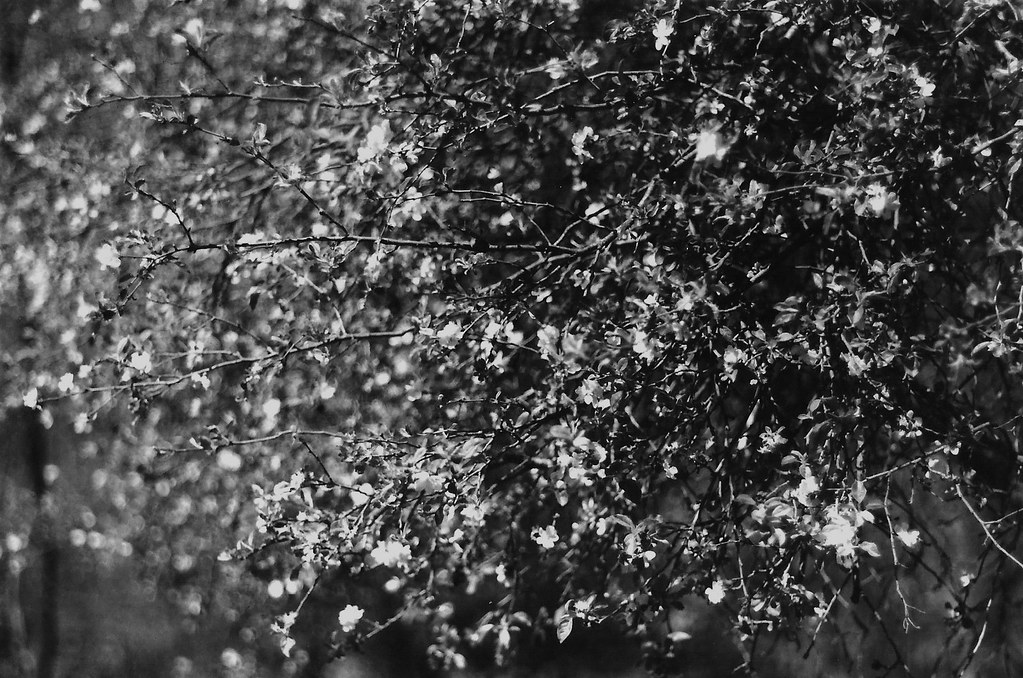
Maki Orwo 22 6x9 sheet Microphen by Nokton48, on Flickr

Testing some extremely old Orwo NP22 6.5x9cm sheet film, purchased from seller in Bulgaria. Microphen used per suggestion. I have quite a bit of this film. Focus thin but looks sharp on the branch I focused on. Omega D2 120mm WA Rodagon LED head 5x7" paper Arista #2 Multigrade dev. Plaubel Makiflex 270 Schneider Tele-Xenar barrel lens. I think I will continue to use Microphen with this olde slow film.
 
We tested microphen on fomapan ortho cine film, delta 100 and people amazed with contrast and sharpness. We printed on multigrade ilford and now prints look like 1955-1965 photography annual prints. I really loved this developer and I was the referrer and success. Super developer but weather was good for last 3 weeks when the photographs taken and this weather and sun could cause the success.
 
Sliced bread is the best thing since D76.
 
I have used Microphen on and off for the last 50 years and it is really good with some films like Pan F+ for box speed and printable contrast, Hp5+ for ei 800 and Acros for the same reason as Pan F +.
 
Photrio.com contains affiliate links to products. We may receive a commission for purchases made through these links.
To read our full affiliate disclosure statement please click Here.

PHOTRIO PARTNERS EQUALLY FUNDING OUR COMMUNITY:


Ilford ADOX Freestyle Photographic Stearman Press Weldon Color Lab Blue Moon Camera & Machine
Top Bottom