• Welcome to Photrio!
    Registration is fast and free. Join today to unlock search, see fewer ads, and access all forum features.
    Click here to sign up

Help lazy platinum printer be consistent with palladium

Recent Classifieds

Forum statistics

Threads
204,295
Messages
2,866,801
Members
102,214
Latest member
AvGordon
Recent bookmarks
0

Ales'

Subscriber
Joined
Aug 12, 2022
Messages
71
Location
Napoli
Format
8x10 Format
Hi, I started platinum printing when it was cheaper to print in pure platinum than platinum-palladium or palladium only.
I know Irwing Pen quote that two materials behave diffferently.
At the begging I had a problem because all the modern literature was based on palladium printing because at the time of publishing palladium was cheaper I suppose.
Now printing in palladium is cheaper again and I am of metal salt so I want to try palladium.
My first kit contained ammonium citrate as a developer and edta and sulfite as clearing agents.
By reading a scan of ancient platinum printing manual I switched first to hot potassium oxalate and then to started adding potassium phosphate to the developer instead of heating it, so called cold bath developer.
I always printed by looking at the image formation in spring back contact printing frame, and get quite close.
But my process was always inconsitent developer clearing agent paper acidifying.
Help me build efficient workflow.
Im to first starting making my sodium citrate developer, using muriatic or citric acid to acidify the paper and something to brine it back to neutral ph.
I just want to keep one jug - developer, and using clearing agents one shot.
So I have some questions
1) how much print out image differ between pure platinum and pure palladium at the same humidity?
2) do I have to wash the paper in tap water after acidifaing it?
3) what is most efficient one shot clearing agent?
4) and in general what to expext by printing in palladium instead of platinum aside from warmer color and longer scale?
5)shoud the paper be dryed to crispness like with pure platinum?

I am also swithing from 4x10 crops to 7x17, so 3 Times more chemistry, 3 times more expensive mistakes.

Appreciate any adwice.
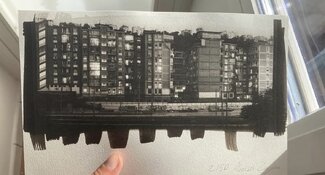
 

Attachments

  • IMG_0645.jpeg
    IMG_0645.jpeg
    196.5 KB · Views: 77
What specific Palladiotype process are you working with? If it is the printing-out type process like Malde-Ware, there is a lot of useful practical information here including the clearing baths that need to be used for archival purposes:

OTOH if yours is a developing-out process, as hinted by your mentioining of Sodium Citrate developer, the instructions provided by Bostick & Sullivan for their kit can be helpful:

In the developing-out process, judging exposure by visually checking the degree of print-out can be often misleading as humidity level significantly affects the print-out.

Ferric Oxalate for Pt/Pd processes can handle a slight excess of Oxalic Acid and hence if one is acidifying the paper with Oxalic Acid as many Pt/Pd printers do, there is no need to wash the paper after acidifying. However, washing wouldn't hurt. If one insists on using Citric Acid for acidification, would the residual Citric Acid in the paper interfere in the working of the sensitiser? I doubt that but hopefully the chemists in the forum can provide more insight. If I were you, I would just go ahead and give the paper a wash after acidification.
 
1) how much print out image differ between pure platinum and pure palladium at the same humidity?
2) do I have to wash the paper in tap water after acidifaing it?
3) what is most efficient one shot clearing agent?
4) and in general what to expext by printing in palladium instead of platinum aside from warmer color and longer scale?
5)shoud the paper be dryed to crispness like with pure platinum?

1. Palladium has a very different look than platinum – much warmer/browner. And it's generally more forgiving and easier to use – e.g. with room temperature developer.
2. I've found it better to rinse acidified paper before drying it. This gets rid of any reaction by-products.
3. It depends what you mean by 'one shot'. I've used citric acid for years with the three bath method. I mix up three baths at the start of a session, replenish as the day progresses, then dump everything when I finish.
4. You've got the main differences – tone and scale. You can also use NA2 for contrast control with palladium – it's a great contrast control agent but it only works with palladium.
5. The old instructions to keep paper dry before use were for manufactured paper, not self-coated paper. Mike Ware's theory is that manufactured paper likely contained gelatin that would lock-up the platinum if allowed to get humid. It's much better to coat, dry and then use paper immediately – better Dmax, smoother tones with both platinum and palladium. The sensitiser should be almost humid enough to stick to your negative, but not quite. Put a thin sheet of transparent plastic sheet between them to protect the negative.
 
Ferric Oxalate for Pt/Pd processes can handle a slight excess of Oxalic Acid and hence if one is acidifying the paper with Oxalic Acid as many Pt/Pd printers do, there is no need to wash the paper after acidifying. However, washing wouldn't hurt. If one insists on using Citric Acid for acidification, would the residual Citric Acid in the paper interfere in the working of the sensitiser? I doubt that but hopefully the chemists in the forum can provide more insight. If I were you, I would just go ahead and give the paper a wash after acidification.

Papers with alkali buffers need acidification before use. Ferric oxalate is not sufficient. A bath of oxalic acid works, as does a bath of sulphamic acid. I use the latter. It's better to rinse the paper after acidification to remove reaction by-products.
 
Papers with alkali buffers need acidification before use. Ferric oxalate is not sufficient.

You're absolutely right. What I meant was the residual Oxalic Acid in the acidified but unwashed paper isn't going to affect Pt/Pd sensitiser as the latter usually has some excess Oxalic Acid in it. This is unlike Kallitype process where any excess in Oxalic Acid in the sensitiser or paper is undesirable due to the possibility of weakly soluble Silver Oxalate forming.
 
Thanks for the reply, what about the muriatic acid, my cleaning lady use it and in old manuals its mentioned.

Two more questions
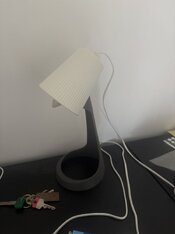
1) what kind of safe light shoud I use if I want to use it close to the paper? I have 3€ Ikea bulb holder for this purpose, shoud i add uv filter gelatin to it?
2) how to bring ph back to neutral after 3 acid bath?
 

Attachments

  • image.jpg
    image.jpg
    139.4 KB · Views: 34
You're absolutely right. What I meant was the residual Oxalic Acid in the acidified but unwashed paper isn't going to affect Pt/Pd sensitiser as the latter usually has some excess Oxalic Acid in it. This is unlike Kallitype process where any excess in Oxalic Acid in the sensitiser or paper is undesirable due to the possibility of weakly soluble Silver Oxalate forming.

I misread your post, sorry. You are correct – an excess of oxalic acid won't affect the print. It may actually be beneficial because platinum likes an acidic paper. However, there may be other by-products from the acidification that should be washed out. Full disclosure: I know there are by-products when sulphumic acid is used, but I haven't done the analysis for oxalic acid.
 
Thanks for the reply, what about the muriatic acid, my cleaning lady use it and in old manuals its mentioned.

Two more questions
1) what kind of safe light shoud I use if I want to use it close to the paper? I have 3€ Ikea bulb holder for this purpose, shoud i add uv filter gelatin to it?
2) how to bring ph back to neutral after 3 acid bath?

Dilute hydrochloric acid is a good clearing agent, but has fallen out of favour because: (1) there are less toxic alternatives; and (2) it can damage the paper fibres. If you're happy using it then there's no need to stop.

I use a red LED light for platinum/palladium. Some people say it's OK to use normal room lighting but I'm not convinced. I'd recommend testing.

Soak in EDTA after the acid clearing and before washing. Check pH if you're doing long printing sessions or keeping it overnight.
 
Photrio.com contains affiliate links to products. We may receive a commission for purchases made through these links.
To read our full affiliate disclosure statement please click Here.

PHOTRIO PARTNERS EQUALLY FUNDING OUR COMMUNITY:


Ilford ADOX Freestyle Photographic Stearman Press Weldon Color Lab Blue Moon Camera & Machine
Top Bottom