• Welcome to Photrio!
    Registration is fast and free. Join today to unlock search, see fewer ads, and access all forum features.
    Click here to sign up

Is this poor film flatness or a lens problem (RB67 Pro-S, 220 film back, 50mm Sekor C)?

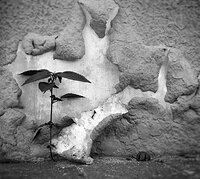
Weed

A
Weed

  • 2
  • 3
  • 48
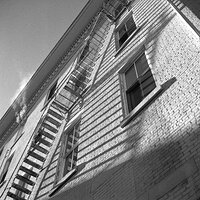
Fire escape.

H
Fire escape.

  • 2
  • 3
  • 43

Recent Classifieds

Forum statistics

Threads
204,351
Messages
2,867,451
Members
102,232
Latest member
redhossu
Recent bookmarks
0
That would be the 100mm, 80mm and 50mm lenses for that.

I called out lenses that are actually reasonably common for RB67. I don't think I've ever seen an 80. And doesn't the Xpan have a 27 or so? Hence the wide filter to go on the 50...
 
I called out lenses that are actually reasonably common for RB67. I don't think I've ever seen an 80. And doesn't the Xpan have a 27 or so? Hence the wide filter to go on the 50...

I was speaking my use of my Hasselblad lenses.
 
re: OP
looks like it could be a scanning issue, are those dark stripes (which would be light bands) on the negative? If you scan the negative un-masked, light sometimes pipes in from the edge of the negative. If it's on the negative, then you may have an internal reflection issue in the body, although those are not usually that uniform the dark stripe is usually on one side only.
 
re: OP
looks like it could be a scanning issue, are those dark stripes (which would be light bands) on the negative? If you scan the negative un-masked, light sometimes pipes in from the edge of the negative. If it's on the negative, then you may have an internal reflection issue in the body, although those are not usually that uniform the dark stripe is usually on one side only.

Thanks, it's on the negatives.
 
I don't think it's related to the 220 back. The higher pressure would tend to make the film flatter no? And also increase required torque which is why this is not recommended. Don't know about the Mamiya, but on other cameras, the 220 backs have milled channels on the edges. You can shim them with tape to reduce pressure a bit. Film plane isn't affected by using a 220 back.

Likely culprit are internal reflections. Check if the bands are more pronounced in sunny scenes?

Edit: the milled channels would be on the pressure plate.
 
Last edited:
I don't think it's related to the 220 back. The higher pressure would tend to make the film flatter no? And also increase required torque which is why this is not recommended. Don't know about the Mamiya, but on other cameras, the 220 backs have milled channels on the edges. You can shim them with tape to reduce pressure a bit. Film plane isn't affected by using a 220 back.

Likely culprit are internal reflections. Check if the bands are more pronounced in sunny scenes?

Thanks for the tip.

The bands are more pronounced in sunny scenes. However, I do still see the issue in scenes shielded by trees. Should I expect many internal reflections if I don't use a lens hood midday? Or would that be a sign I need to redo some light seals?
 
The nice thing about a modular camera like the RB67 is that you could just take it apart in the field and look. Set the camera up on a tripod as if you were taking a picture of your bright scene, remove the back, fire the shutter on B and hold it open. Look around the inside of the camera and see if there's light shining on, for example, the bottom of the mirror box area.

RB67 lenses illuminate a somewhat large image circle. It rarely hurts to use a lens hood, and my feeling is I never want the sun shining on the front element of the lens if I can avoid it. I use my hand or any convenient item to cast a shadow on the lens front (being careful not to get my hand in the picture of course).
 
RB67 lenses illuminate a somewhat large image circle.

Most are designed to actually cover 6x8, which means they need to cover most of an 8x8 cm frame.
 
Most are designed to actually cover 6x8, which means they need to cover most of an 8x8 cm frame.

I don't think they really do need to cover 8x8, because the horizontal and vertical 6x8 rectangles can be inscribed in the same circle, smaller than 8x8. I don't have an RB67 myself to look. But many lenses (for any system) cast light somewhat outside their image area - it is difficult to fully baffle a lens without introducing significant vignetting.
 
I don't think they really do need to cover 8x8, because the horizontal and vertical 6x8 rectangles can be inscribed in the same circle, smaller than 8x8.

That was why I said "most of" :smile:.
In addition, the 6x8 backs only work fully in portrait orientation, so the circle one needs to notionally draw can probably be determined just using that 6x8 rectangle.
 
Did you try to load the film, take the lens off and check flatness of film.
If thickness of emulsion of 120 and 220 is the same than focal plane of these two films in camera is identical no matter how thick is the filmbase or paper.
 
Last edited:
Did you try to load the film, take the lens off and check flatness of film.
If thickness of emulsion of 120 and 220 is the same than focal plane of these two films in camera is identical no matter how thick is the filmbase or paper.

One of the big differences between 120 and 220 film after length is the film [+paper] thickness. The two thicknesses are not the same thus neither are the backs.
 
The two thicknesses are not the same thus neither are the backs.

That would matter in a 120 back (excess clearance, never mind reflection from the pressure plate), but 120 in a 220 back just compresses the pressure plate spring a few more thousandths of an inch (or about .1 mm).
 
That would matter in a 120 back (excess clearance, never mind reflection from the pressure plate), but 120 in a 220 back just compresses the pressure plate spring a few more thousandths of an inch (or about .1 mm).

Since I could never, that is from back when 220 first came out, get all the emulsions I wanted in 220 and using 120 in a 220 back causes the loss of one frame, I have only used 220 backs as bookends and doorstops. So I would not know.

We could start a thread on why don't film manufacturer make more 220 film emulsions.
 
why don't film manufacturer make more 220 film emulsions.

Content would be one word ("Money") and then endless argument. Even when professionals used film only, 220 was a specialty product for model shoots (and virtually nothing else).

I find it fun, and a 220 back is also useful to load 35 mm in a medium format camera (because it'll handle the length), but I have no expectation of a 220 comeback. I'm just happy to be able to get GP3 in that format.
 
Content would be one word ("Money") and then endless argument. Even when professionals used film only, 220 was a specialty product for model shoots (and virtually nothing else).

I find it fun, and a 220 back is also useful to load 35 mm in a medium format camera (because it'll handle the length), but I have no expectation of a 220 comeback. I'm just happy to be able to get GP3 in that format.

Always, lack of market.
 
We could start a thread on why don't film manufacturer make more 220 film emulsions.

Don't you mean we could start another thread........?
It is already well travelled ground.
 
  • Sirius Glass
  • Sirius Glass
  • Deleted
  • Reason: argument for argument's sake
Hello everyone! Here's an update:

I tested that 220 back again with a different lens and proper start arrow alignment (i.e., I did not "cheat" and start the roll early to get an extra frame). I did not notice the same problem with the border of unsharpness around the negatives.

Unfortunately, I couldn't get more time to evaluate that 50mm lens. I had other reservations about it, so I returned it. I will test this out again once I can find another bargain on a 50mm because who knows if longer lenses somehow "mask" this problem.

My update might be a long, long time from now because quality 50mm lenses are not cheap, and I'm prioritizing stocking up on film and paying for portfolio shoots.

 
Hello everyone! Here's an update:

I tested that 220 back again with a different lens and proper start arrow alignment (i.e., I did not "cheat" and start the roll early to get an extra frame). I did not notice the same problem with the border of unsharpness around the negatives.

Unfortunately, I couldn't get more time to evaluate that 50mm lens. I had other reservations about it, so I returned it. I will test this out again once I can find another bargain on a 50mm because who knows if longer lenses somehow "mask" this problem.

My update might be a long, long time from now because quality 50mm lenses are not cheap, and I'm prioritizing stocking up on film and paying for portfolio shoots.

Hello, here is my final update on this.

I repeated the test I quoted above with a new 50mm lens and a few rolls. You can view one of those images in comment #87 in this Photrio thread I made. I did not see that mysterious border of unsharpness around any of the film rolls.

In conclusion, you may want to avoid starting a 120 film roll early in a 220 film back to get an extra frame. Otherwise, you could experience the unsharp border.
 
Photrio.com contains affiliate links to products. We may receive a commission for purchases made through these links.
To read our full affiliate disclosure statement please click Here.

PHOTRIO PARTNERS EQUALLY FUNDING OUR COMMUNITY:


Ilford ADOX Freestyle Photographic Stearman Press Weldon Color Lab Blue Moon Camera & Machine
Top Bottom