
• Welcome to Photrio!
    Registration is fast and free. Join today to unlock search, see fewer ads, and access all forum features.
    Click here to sign up

Current wisdom for printing color negatives? Roller transport?

Recent Classifieds

Forum statistics

Threads
204,282
Messages
2,866,577
Members
102,207
Latest member
gustavocf
Recent bookmarks
0

keithostertag

Member
Joined
Feb 11, 2008
Messages
596
Location
Louisville,
Format
Multi Format
I have been away from the darkroom for about a decade, and a few things have changed (hah!). I'd like to start again fresh as I gear up. I'm skilled at hand printing B&W, but have very little experience printing color. If practical, I'd like to avoid (or minimize) scanning, and I am not interested in using an computer/ink jet for printing.

What is your current wisdom for optical printing largish color prints from negatives (print size 16x20, maybe 20x24)? I would probably do a lot at one time, then none for a few weeks. I only shot MF and LF film.

I'm attracted to the _idea_ of getting a used roller transport processor, but have never used one. What's the current lineup and cautions of options in that area?

For some reason, I'm not particularly attracted to Jobo- just seems expensive, complicated and tedious (from my limited knowledge of it).

AFAIK, very few labs do optical printing anymore... want to recommend any in case I need to occasionally go that route?

I don't have an enlarger yet, and figure I can get one later when I'm ready (is that naive?).

Thanks,
Keith Ostertag
 
Ive seen ra4 roller transport for under a$1000. that can do 40" or was it 32" W.
 
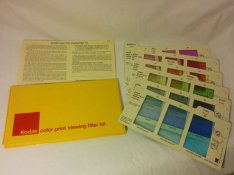
An Ilford ICP-42 can do 16x20 RA-4 and you should be able to pick one up for a song or even a few bars. If you can find one. But there are many others. Some kind of roller transport sounds ideal for your expected hi-low output. But you almost have to do high volume now and then to make them worthwhile, because you have to dump at least a couple liters of chemicals into them. I'd wager that most people use simple drums on a roller base (like me) or Jobos both of which are better suited to occasional small volume printing IMO. But I have an ICP on standby if I ever go crazy again. I've never succumbed to the lure of Jobos, just seems expensive and complicated for what it does. I can't afford one anyway. Enlargers are cheap to free if you are patient. Get a print viewing kit


ee1537047dcf50b2909d401ec8509dea.jpg
 
Thanks Wayne. When you do RA4 in a drum, how do you temp control? Maybe someone can point to a primer on doing RA-4 in a drum...

Though, the roller transport seems like a better idea if I could find a 20" one that's dependable. I have yet to calculate the expenses involved with the chemistry.

Keith
 
I'm still very much a beginner at RA-4 so I'm not the best one to ask. Lots of more experienced people will be along shortly I'm sure. Some people process at room temp and that's something I want to explore soon because I don't have a reliable temp control system.
 
RA4 printing must be dome methodically, taking notes on each test print to dial in the correct final Cyan Magenta Yellow values. The processing of the paper must be done with precision too. I use a 16x20 Nova slot processor. One of the best investments I ever made.

I bought a new one in the last year. They are well made. You will need an 110 to 220 up box (about $70) if you live in USA as England only makes 220v version Nova Slot processors.
 
I process RA-4 in trays at room temperature ( up to 11x14) but the chemical fumes bother some people (not me) so a drum or processor is often used. If the fumes don't bother you, trays are a cheap way to go. Drums can be inexpensive if you roll them instead of motorizing them. I have used both methods and trays are much faster and more productive for me. You can use Kodak RA-RT Developer/Replenisher at 68 degrees for 2 minutes for development and save you the trouble of heating it. The same with the Kodak RA-4 Bleach-Fix.
 
This is worth reading: http://www.kodak.com/global/en/professional/support/techPubs/j39/j39.pdf

There are also many APUG threads on this.

I use 8x10 and 11x14 drums on a Unicolor Uniroller base but I believe 16x20 drums are available; I've found the Cibachrome drums (with friction ends) to be the best drums. I use Kodak Ektacolor chemicals one-shot: RA4 Developer Replensisher RT to make 10 liters (no starter) - $15 at Unique Photo; and RA4 Bleach Fix to make 10 liters - $15 at Unique Photo. For temperature control I use a digital thermometer with a wire probe (calibrated to a Paterson Color Thermometer) and adjust the temperature of the pre-measured pre-wash water, developer, blix, and post-wash water to 83F just prior to addition to the drum using pots of hot and cold water. Times for 83F, per the J39 document are 1 minute pre-wash, 2 minutes developer, 2 minutes blix, 1.5 minutes post-wash water rinse. I use Fuji Crystal Archive Type II color paper and the prints come out great. I would avoid old color paper.

I recommend using plenty of ventilation and wearing lab googles and nitrile gloves.
 
I don't have a reliable temp control system.

That's not entirely true; I did pick up an old lab tempering bath for a few bucks on ebay, so the chemicals go into the tube at the right temp. I just don't know what temp they come out at.
 
You can find used Jobos for not too too much money - what will kill you will be the paper drums. If you're going 20x24, I THINK you'll have to get one of the Jobo Expert 3063 drums. Plan on spending around $3-400 for the drum. The processor can be had with a little patience for $5-600. If you are doing small volume and/or infrequent printing, the Jobo is the way to go if you want to automate. You'll waste so much money on chemistry, and spend way too much time disassembling, cleaning and re-assembling your roller transport machine - they're really meant to be used 8+ hours a day, five+ days a week to be kept at peak performance. If you're not using a roller transport machine heavily, then waste product from the developer will start to crystalize on the gears and rollers, damaging the machine and the prints you run through it. It will also be hard to keep the chemistry in balance so one print will not match the next even when exposed the same.

The Nova slot processor Andre Noble mentioned is a great alternative if you can find one- I have one with the 120v power supply that I bought when they were being officially exported to the US back in the 1990s. The largest one they made that I'm aware of was 16x20, but they may exist in 20x24. Between it and my 16x20 print washer, I had to brace my darkroom sink - the way the Nova regulates temperature is through a water jacket around the chemical baths, so they get HEAVY - there's two water baths in between the three slots, each of which holds maybe 2 gallons, and then each slot holds close to that much as well. The instruction manual tells you NOT to move it when full - they're not kidding. If you don't slip a disk in your spine, you could break the processor from the weight of the water and chemistry.
 
I'm attracted to the idea of getting a used roller transport processor, but have never used one. What's the current lineup and cautions of options in that area?

The only current line up, in the meaning of available off the shelf from the manufacturer, is the ACP-range from Thermaphot.
(At least still listed at their website.)
 
I don't know that they ever went as large as you want to go, there were Fujimoto and Durst modular roller transport systems that might be viable (and certainly affordable today). I don't know that any of them are still supported by the manufacturer though. Bigger roller transport systems were made by Wing-Lynch and Hope. Both of those are definitely out of production, and even if you can find one in good working order that hasn't been scrapped, parts for them will be extremely hard to come by and they will require probably 4 gallons of chemistry per bath just to start operating. And they will need significant ventilation to operate safely - that much chemistry at 100 F creates a LOT of vapors.
 
ICPs only take 2 liters, and were designed for smaller operations than 8 hour per day labs. Still, they are a time investment that one must consider along with the expected throughput. I think a machine of that or similar capacity is practical if a person is putting at least 2-3 dozen sheets per week through it (while it's filled). In that case it would save some time and hassle. If you're only doing 10 prints every other weekend even the smaller machines will certainly be a waste of time and money.


You can find used Jobos for not too too much money - what will kill you will be the paper drums. If you're going 20x24, I THINK you'll have to get one of the Jobo Expert 3063 drums. Plan on spending around $3-400 for the drum. The processor can be had with a little patience for $5-600. If you are doing small volume and/or infrequent printing, the Jobo is the way to go if you want to automate. You'll waste so much money on chemistry, and spend way too much time disassembling, cleaning and re-assembling your roller transport machine - they're really meant to be used 8+ hours a day, five+ days a week to be kept at peak performance. If you're not using a roller transport machine heavily, then waste product from the developer will start to crystalize on the gears and rollers, damaging the machine and the prints you run through it. It will also be hard to keep the chemistry in balance so one print will not match the next even when exposed the same.

The Nova slot processor Andre Noble mentioned is a great alternative if you can find one- I have one with the 120v power supply that I bought when they were being officially exported to the US back in the 1990s. The largest one they made that I'm aware of was 16x20, but they may exist in 20x24. Between it and my 16x20 print washer, I had to brace my darkroom sink - the way the Nova regulates temperature is through a water jacket around the chemical baths, so they get HEAVY - there's two water baths in between the three slots, each of which holds maybe 2 gallons, and then each slot holds close to that much as well. The instruction manual tells you NOT to move it when full - they're not kidding. If you don't slip a disk in your spine, you could break the processor from the weight of the water and chemistry.
 
I tried to google Colex as I thought they may be the last RA4 mid to large size paper processing manufacturing company left.. I would be interested in hearing about any
other company making commercial grade process machines.
 
ICPs only take 2 liters, and were designed for smaller operations than 8 hour per day labs. Still, they are a time investment that one must consider along with the expected throughput. I think a machine of that or similar capacity is practical if a person is putting at least 2-3 dozen sheets per week through it (while it's filled). In that case it would save some time and hassle. If you're only doing 10 prints every other weekend even the smaller machines will certainly be a waste of time and money.

I should have made that clearer that I was referring to bigger roller transport machines when talking about chemical volumes and throughput. Tabletop machines like your ICP are much more efficient, but they have size limits as well. I would imagine that at 2 liters per bath, your ICP doesn't go much bigger than 11x14. The OP was talking about running 20x24 prints. I don't remember if the Fujimoto or Durst processors came in sizes bigger than 16x20, so I was picturing one of the Hope/Kreonite/Wing-Lynch/Colex processors when I was talking about chemistry volumes and throughput.
 
Understood...the ICP goes to 16x20 though.
 
Thanks to all for your generous responses! I appreciate the details particularly. I am not convinced at this time whether I will go for printing color, but this gives me some data to begin investigating many of my options. Thanks so much!

Keith
 
I do home-based RA-4 printing with the Fujimoto CP-31 and -51 processors. I'd recommend those as the best choice for home use. The CP-51 can do up to 20" wide, and only requires 6L of chemistry per bath. It's a well-built unit, and sells for a pittance compared to new. (New: $15-20k+, now, usually < $1k).
 
The larger Thermaphot ones accept paper 20" wide @ 5.5L .
 
You should. We need you and anyone else who may be interested to keep the supply of materials going. If you're considering it, don't delay; just do it. Color materials are dropping left and right.


I am not convinced at this time whether I will go for printing color,

Keith
 
New Nova 16x20 RA-4 slot Processor

Nova Trimate 16x20.jpg This has a very small footprint.You don't need a roller transport to make beautiful professional RA4 prints at home.
 
Photrio.com contains affiliate links to products. We may receive a commission for purchases made through these links.
To read our full affiliate disclosure statement please click Here.

PHOTRIO PARTNERS EQUALLY FUNDING OUR COMMUNITY:


Ilford ADOX Freestyle Photographic Stearman Press Weldon Color Lab Blue Moon Camera & Machine
Top Bottom