

• Welcome to Photrio!
    Registration is fast and free. Join today to unlock search, see fewer ads, and access all forum features.
    Click here to sign up

Your favorite traditional high silver content film in large format

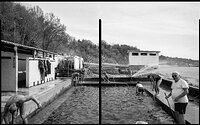
Three Pears

A
Three Pears

  • sly
  • Mar 17, 2026
  • 1
  • 0
  • 0
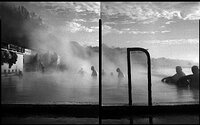
Windows - Valencia

A
Windows - Valencia

  • 0
  • 0
  • 6

Recent Classifieds

Forum statistics

Threads
202,810
Messages
2,845,777
Members
101,542
Latest member
sshhane
Recent bookmarks
0

bigdog

Member
Allowing Ads
Joined
Feb 16, 2006
Messages
31
Format
Multi Format
I started my journey with 35mm traditional emulsions shooting many until I found my sweet spot with APX 100 , Tri-X 400 and EFKE 25 as my go to films and stocked my freezer accordingly. I stumbled on the EFKE 25 as my only option to shoot landscape in 35mm and get decent enlargements

More recently I have a acquired a full compliment of medium and large format cameras/lenses.

I was lucky to score 50 sheets of EFKE 50 in 4x5 and just recently APX in 120 format. I always loved the combination and glow I got with APX 35mm and Rodinal and I love the look of EFKE/Rodinal combination especially with stand development.

I have a couple of boxes of TMAX 100 and Acros in 4x5. I develop with Rodinal or FX-39 which is nice but I'm not as big a fan of the T-grain films. To my critical eye and due to the grain structure, they lack character of traditional emulsions.

I have had good luck with FOMA/Arista Edu 100 in both Rodinal and Fx-39 (which is supposed to be more for the T-grain film)
So far the availability and cost of Arista Edu 100 is great and the look is as close as I can get to the above mentioned expired film stock. Arista Edu film has a bit more grain, although very nice grain, with poor reciprocity characteristics.

So, what is the closest I can get to a traditional slow speed high silver content film to replace my stock when my EFKE 50 in 4x5 and APX100 in medium format run dry?

Anyone shooting Rollei RPX25 in 4x5 before I order a box? I picked up some RPX 25 and RPX 100 in medium format and will be testing those.

Can anyone tell me their experience with Tri-X 320 in 4x5 and how the grain compares to Arista Edu 100 in 4x5? I love Tri-X 400 in 35mm. What's up with the Tri-x 320 version ...is it a different emulsion?

Thank you!
 
Last edited:
high silver content film
How much silver per square meter (square foot) for APX100? for EFKE50? For Tri-X 320?
I just returned to the excellent series of tests:
http://www.fotoimport.no/filmtest/fkd76.html
and looked at TMAX100 (modern film??) and Silvermax (High silver, if I go by the name??), both developed in D76 1+1 and with pictures of the same scene. I have a hard time seeing a difference in the character of the grain in a side-by-side comparison, so I guess that in normal use it's even less likely I would notice anything. Maybe it's my eyes or my brain that are deficient.
Time for me to step aside and let the golden eyes (analogous to the golden ears of esoteric HiFi) speak.
 
I have never seen any specifications for what constitutes "high silver content" films nor have I seen any data on the silver content of individual films so that a comparison could be made. I think it is probably left up to the marketing department.
 
One of the advantages of shooting large format is not worrying about the grain of the film you use. That is, of course, if you're not blowing them up to mural sized prints. So I choose my 4x5 film based more on their contrast, how they handle being pushed or pulled, reciprocity characteristics, spectral sensitivity, etc. Grain is a 35mm problem.
 
I started my journey with 35mm traditional emulsions shooting many until I found my sweet spot with APX 100 , Tri-X 400 and EFKE 25 as my go to films and stocked my freezer accordingly. I stumbled on the EFKE 25 as my only option to shoot landscape in 35mm and get decent enlargements

More recently I have a acquired a full compliment of medium and large format cameras/lenses.

I was lucky to score 50 sheets of EFKE 50 in 4x5 and just recently APX in 120 format. I always loved the combination and glow I got with APX 35mm and Rodinal and I love the look of EFKE/Rodinal combination especially with stand development.

I have a couple of boxes of TMAX 100 and Acros in 4x5. I develop with Rodinal or FX-39 which is nice but I'm not as big a fan of the T-grain films. To my critical eye and due to the grain structure, they lack character of traditional emulsions.

I have had good luck with FOMA/Arista Edu 100 in both Rodinal and Fx-39 (which is supposed to be more for the T-grain film
So far the availability and cost of Arista Edu 100 is great and the look is as close as I can get to the above mentioned expired film stock. Arista Edu film has a bit more grain, although very nice grain, with poor reciprocity characteristics.

So, what is the closest I can get to a traditional slow speed high silver content film to replace my stock when my EFKE 50 in 4x5 and APX100 in medium format run dry?

Anyone shooting Rollei RPX25 in 4x5 before I order a box? I picked up some RPX 25 and RPX 100 in medium format and will be testing those.

Can anyone tell me their experience with Tri-X 320 in 4x5 and how the grain compares to Arista Edu 100 in 4x5? I love Tri-X 400 in 35mm. What's up with the Tri-x 320 version ...is it a different emulsion?

Thank you!

Very simply there is no evidence that 'high silver content' has any useful characteristics, unless you are dealing with a reversal film, where a higher quantity of silver per square metre does have important photochemical properties in terms of DMax (thus why Silvermax/ new Scala has a higher silver content). It's not about how much silver, but how well it is used - that which is not able to be sensitised & used is wasted. The 'magical' properties you ascribe to the silver content instead has to do with the characteristic curve (and the heavy metal salts used to modify them), colour sensitisation, the nature of the grain in the film (uncontrolled K-grain in the case of Efke, varying methods of controlled crystal growth in the case of everything else) & how you expose/ process the film.

TXP (sheet Tri-X) is quite different from 135/120 TX - look up the data sheet & compare the characteristic curves. You should also try Ilford's HP5+ if you're looking for a classic emulsion with more distinct grain character.

Silvermax is only available in 135, but it is essentially a version of Agfapan APX 100 modified with a higher silver content to produce a replacement for Agfa Scala.
 
I have never seen any specifications for what constitutes "high silver content" films nor have I seen any data on the silver content of individual films so that a comparison could be made. I think it is probably left up to the marketing department.

How much silver per square meter (square foot) for APX100? for EFKE50? For Tri-X 320?
I just returned to the excellent series of tests:
http://www.fotoimport.no/filmtest/fkd76.html
and looked at TMAX100 (modern film??) and Silvermax (High silver, if I go by the name??), both developed in D76 1+1 and with pictures of the same scene. I have a hard time seeing a difference in the character of the grain in a side-by-side comparison, so I guess that in normal use it's even less likely I would notice anything. Maybe it's my eyes or my brain that are deficient.
Time for me to step aside and let the golden eyes (analogous to the golden ears of esoteric HiFi) speak.

Perhaps putting various film in to categories based on perceived silver content is the wrong way to characterize the various emulsions.

The link you included clearly shows differences in the emulsion/developer combinations and is an excellent resource. I have had good results with FX-39 developing TMAX 100 and 400, Acros 100, Ilford 3200 and surprisingly even Arista 100!

That is an excellent resource to compare my two developers. Perhaps I should not complain about losing my older film options.

I need to just select a few and get a familiar with a film/developer choice and work flow that allows for the results I desire.

Would still like to hear about your favorite combination of film/developer and how it suits your work flow.

Thank you!
 
Very simply there is no evidence that 'high silver content' has any useful characteristics, unless you are dealing with a reversal film, where a higher quantity of silver per square metre does have important photochemical properties in terms of DMax (thus why Silvermax/ new Scala has a higher silver content). It's not about how much silver, but how well it is used - that which is not able to be sensitised & used is wasted. The 'magical' properties you ascribe to the silver content instead has to do with the characteristic curve (and the heavy metal salts used to modify them), colour sensitisation, the nature of the grain in the film (uncontrolled K-grain in the case of Efke, varying methods of controlled crystal growth in the case of everything else) & how you expose/ process the film.

TXP (sheet Tri-X) is quite different from 135/120 TX - look up the data sheet & compare the characteristic curves. You should also try Ilford's HP5+ if you're looking for a classic emulsion with more distinct grain character.

Silvermax is only available in 135, but it is essentially a version of Agfapan APX 100 modified with a higher silver content to produce a replacement for Agfa Scala.

The notion of "high silver content" is a myth started by the ignorant..
Thanks for the useful contribution to the discussion.
 
I have never seen any specifications for what constitutes "high silver content" films nor have I seen any data on the silver content of individual films so that a comparison could be made. I think it is probably left up to the marketing department.

So far it was the industry's strive to use in any halide product as little silver as possible. This of course means stretching far technology.
Those who do not succeed then can try to make the best of their incapability and market their product as silver rich.
 
'Silver rich', etc was a marketing ploys by the marketing weasels at EFKE and other second tier manufacturers. It was a ploy and NOT fact,
 
Last edited:
'Silver rich' was a marketing ploy by the marketing weasels at EFKE and other second tier manufacturers. It was a ploy and NOT fact,
Not at EFKE (they didn't care) but at certain EFKE vendors.
 
Dear bigdog,

Good news! Pretty much everything you can buy today is outstanding.

Enjoy,

Neal Wydra
 
I need to just select a few and get a familiar with a film/developer choice and work flow that allows for the results I desire.

I think this is the best approach.

Would still like to hear about your favorite combination of film/developer and how it suits your work flow.

In 4x5, my favorites are: Ilford Delta 100 and Kodak TMY...oh, and sometimes Ilford FP4+ but I try to stick with just one at a time.
Lately, its been Ilford Delta 100.
 
I shoot a lot of Foma 200, seems to more of a ISO 100 in my testing, has good grain in 4X5, nice tones. I have a roll of Bergger (sp?) 400 in 120, I plan on shooting it sometime this week and I like the resluts may give a box of 4X5 a try. I tend to buy in 25 sheet boxes so have not bought any TriX or Tmax in years.
 
I shoot a lot of Foma 200, seems to more of a ISO 100 in my testing, has good grain in 4X5, nice tones. I have a roll of Bergger (sp?) 400 in 120, I plan on shooting it sometime this week and I like the resluts may give a box of 4X5 a try. I tend to buy in 25 sheet boxes so have not bought any TriX or Tmax in years.

I shot Bergger 400 in both 120 and 4x5 and did not like the results. I tried the 120 in FX-39 and it looked fogged and grainy. The 4x5 looked slightly better in Rodinal but I did not like the look. It did not seem to have an extended range exhibiting mostly mid grays with no deep black. I shot it rated at 200 and developed normally. I may try shooting it at box speed or closing down a stop or two. I read it performs well pushed. I don't know how it performs with Bergger's recommended developer.
 
Try dry plate photography (your own emulsion or my dry plates). Extremely fine grain, low speed, any format. As classic in silver gelatin as you can get.
 
I shot Bergger 400 in both 120 and 4x5 and did not like the results. I tried the 120 in FX-39 and it looked fogged and grainy. The 4x5 looked slightly better in Rodinal but I did not like the look. It did not seem to have an extended range exhibiting mostly mid grays with no deep black. I shot it rated at 200 and developed normally. I may try shooting it at box speed or closing down a stop or two. I read it performs well pushed. I don't know how it performs with Bergger's recommended developer.
Grey here too for Bergger...only used the 120 though shot at box speed
 
Thanks for the feedback, I think I will shoot 3at box speed, 3 one stop under and 3 one stop over and develop in MCM 100 18mint with Unicolor film drum. MCM produces fine grain with full range of tones, it is toxic so not too happy when developing in 4X5 with hanger, guess I can try using paper drums.
 
What is available has enough silver, but I would like to be able to get Kodak Tri-X 400 in 4"x5".
 
I shoot LF for the tonality it can produce, not the grain. In my case, the combo I like best is Delta 100 in Xtol, lovely stuff.
 
Try dry plate photography (your own emulsion or my dry plates). Extremely fine grain, low speed, any format. As classic in silver gelatin as you can get.
I think I saw your dry plates offered on that auction site. I was intrigued because I have collected a dozen beautiful glass plates of portraiture from late 1800's Japan that are beautiful and have held up quite well. I admire your commitment to the process. For now, I am spread a bit thin already exploring different emulsions and experimentation with direct positive paper exposures. My current process is a make due bathroom darkroom by way of changing bag and 4 sheet Stearman Press day light tank (highly recommended takes 450ml solution to process 4 sheets). I am curious about your plates and how people are utilizing them. Do they have any distinct advantage if doing contact printing, anything related to increased density for Platinum/Palladium printing? I also do not have the proper plate holders. Again, I tip my hat for your commitment to that workflow.
 
Last edited:
Photrio.com contains affiliate links to products. We may receive a commission for purchases made through these links.
To read our full affiliate disclosure statement please click Here.

PHOTRIO PARTNERS EQUALLY FUNDING OUR COMMUNITY:


Ilford ADOX Freestyle Photographic Stearman Press Weldon Color Lab Blue Moon Camera & Machine
Top Bottom
