• Welcome to Photrio!
    Registration is fast and free. Join today to unlock search, see fewer ads, and access all forum features.
    Click here to sign up

Your favorite analog format? Why?

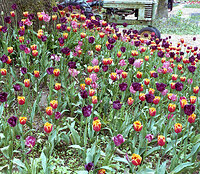
Tractor & Tulips

A
Tractor & Tulips

  • 1
  • 1
  • 34
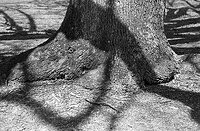
Tree with Big Shadows

Tree with Big Shadows

  • 3
  • 0
  • 82

Forum statistics

Threads
203,458
Messages
2,855,079
Members
101,853
Latest member
DJFOX
Recent bookmarks
0
It varies with camera use. When I use my Rolleicord or Bronica S2, I think I prefer 6x6. When I use my 6x12 camera, I think I prefer 6x12... likewise with 35mm.

I suppose the actual preference is when printing - in which case, 5x4 wins every time!


Steve.
 
The 8x10 contact photograph is it! Reasons:

The 8x10 contact is a canonical form with a deep history in photography.
Grievous error aside all 8x10 contacts are technically equivalent; mine, yours, Ed Weston's, Ansel Adams'.
No upgrade is possible or necessary.
No grain ever. Infinite sharpness and gradation are available with no particular effort.
Cheap materials. From go to whoa for less than $5.
Enough possibilities for a lifetime of work.
Thousands of 8x10s can be stored, they can be mailed, displayed conveniently, and they won't become a nightmare like a huge pile of big pictures.
No elaborate darkroom is required, no enlarger; just a safelighted work space, a lightbulb, and a few trays.
I can do everything from film exposure to mounting, matting, and framing. No need to buy expensive services from back-room people.
No competition. Why would I strive against 50 million talented digital shooters climbing over each other's backs trying to get noticed?
Anything well photographed on 8x10 seems to acquire a nobility that invites attention.
The 8x10 photographer is pretty well guaranteed to be taken more seriously than someone plinking away with a cell-phone.
Ultimate conceptual integrity. The 8x10 is seen, exposed, processed, finished, mounted, and displayed without changing its original size or its original vision.
There is no cropping. The photographer takes full responsibility for the content right to the edges and corners. The viewer knows they are not short-changed.
No digital technology is used or required. No files need reformating into new media. Everything is eye readable. The medium guarantees it.

What do you think? Did I miss something?

This is really intriguing! I'll have to read up on 8x10 :smile:.

Keep them coming guys! It's awesome to see firsthand how diverse film is.
 
Which ever format I have chosen at the time. It is situational dependent.
 
135.
Because I was able to use as I was eighteen and I'm still able to use it twenty plus years later. Even more, it is exactly the same camera then and now.
 
35mm, because that 3 : 2 ratio is a beautiful aspect ratio that lends itself to golden section and beautiful compositional framing. I sometimes wonder if Oskar was aware of this when he designed the Leica.
 
Not sure what my favorite would be, I guess 6x6 is my most used format, but I like working with large format cameras too.
That said, I've been having a recent affair with 35mm, and it's been great fun.:smile:


For me 645 is the perfect compromise.

The dimensions make it easy to compose both in landscape and portrait orientation.

It's large enough to put grain out of the equation but small enough to give a good amount of exposures per roll.

Shooting 645 just feels right to me.
 
My favorite format to look at the prints from is 8x10. My favorite format to walk long distances with is 6x6/7. My favorite film to process is 120.
My most used format is 8x10.... also the biggest PIA format.
Dennis
 
The 8x10 contact photograph is it! Reasons:

The 8x10 contact is a canonical form with a deep history in photography.
Grievous error aside all 8x10 contacts are technically equivalent; mine, yours, Ed Weston's, Ansel Adams'.
No upgrade is possible or necessary.
No grain ever. Infinite sharpness and gradation are available with no particular effort.
Cheap materials. From go to whoa for less than $5.
Enough possibilities for a lifetime of work.
Thousands of 8x10s can be stored, they can be mailed, displayed conveniently, and they won't become a nightmare like a huge pile of big pictures.
No elaborate darkroom is required, no enlarger; just a safelighted work space, a lightbulb, and a few trays.
I can do everything from film exposure to mounting, matting, and framing. No need to buy expensive services from back-room people.
No competition. Why would I strive against 50 million talented digital shooters climbing over each other's backs trying to get noticed?
Anything well photographed on 8x10 seems to acquire a nobility that invites attention.
The 8x10 photographer is pretty well guaranteed to be taken more seriously than someone plinking away with a cell-phone.
Ultimate conceptual integrity. The 8x10 is seen, exposed, processed, finished, mounted, and displayed without changing its original size or its original vision.
There is no cropping. The photographer takes full responsibility for the content right to the edges and corners. The viewer knows they are not short-changed.
No digital technology is used or required. No files need reformating into new media. Everything is eye readable. The medium guarantees it.

What do you think? Did I miss something?

No.

Whole plate has similar advantages too...

RR
 
Hey everyone!

Excuse me if this is the wrong subsection as I'm new. :D I couldn't help but notice many users here have multi-format listed on their profile.

More specifically, what is your absolute favorite analog photography format and why?

GO!

Thanks everyone,

Dan
Which one of your children do you love the most ?, I have 2 children and use 35mm and 6X6 they are as different as my children are in character and appearance, but love both of them for different reasons.
 
Best for me is 35mm. Good enough for prints up to 40x60cm (for my standards), fast, nice different lenses from micro to tele, cheap.

Medium format I use when I want square frame, not grainless or better tonality (I don't care about the grain - I like the grain; Grain for me is never a problem).

I am planing to use large format for collodion.

Instant formats I like for obvious reasons.

Half frame I like when I want to combine 3, 4, 5, 6 or more small frames in one panorama or in one story.

Don't like the 110 format - too small and films are too expensive.
 
Ennnh, it depends on what day and what sort of project I'm contemplating [ya see where this goes...]. If I look at the last couple of years, I might say 6x6 -- 1:1 aspect ratio -- but most of my teenage and early to middle age adult years I shot 35mm (well even before that there was 6x9 in my Brownie Target Six-20) so I cut my teeth on 3:2. I also stumbled into some 4x5 work for a while but never did a lot with it, partly due to expense and lack of a good enlarger. I still own every camera I've ever bought, though two are rather defunct, and a third needs a CLA on its shutter. [Speaking of GAS, and hoarding .... :cool: ]

Since my "sudden" retirement in 2002 and a rekindled interest in the darkroom, as wedding photographers have abandoned medium format for zapped bits, I've acquired a significant stash of Bronica gear which I consider my go-to for "serious" work (whatever that is); that's 6x6. But it's pretty hefty to carry around, so I added a Perkeo II folder (6x6, 80mm Color Skopar) for more casual and/or travel situations. And then I added an Ercona II, a 6x9 folder (105mm Carl Zeiss Jena Tessar), mostly for cool factor. It's awesome to look at that sucker with that 105mm f/3.5 on the front! Then because I could, I added a Yashica Mat 124G that's 6x6, is considered benign by people on the street, and works nicely for infrared as one isn't trying to look through an 89B filter to compose and focus.

So I guess I kinda like 120 roll film. Currently the Bronica has the most shots, followed by the Perkeo (but I've also had them longest in this post-retirement period).

But guess what -- Tuesday I was out with my 8x10 pinhole camera playing with x-ray film!
(And there's a Minox B around here if film becomes more available -- I recall that's about 11:8! :blink:)

I still have a bunch of Canon FD 35mm stuff which I occasionally use, but admit I actually do a lot of casual shooting with "other technology" and out of several formats find the 4:3 probably most to my liking.

Good grief [sobs, grabs Kleenex] I even have recently sunk [sniff!] to owning an iPhone 5c -- that's 4:3. (Although it wasn't acquired for photography, but naturally, I've tried it -- surprisingly good -- on stationary objects in daylight ...)

Um, what was the question .... :munch:

 
Hmm, some of that answer for me is about the end process, one of my favorite formats is 127, much more detail than 35mm and not as bulky as 120, but the hand rolling and the fact they don't make a standard scanner mount for it, means that it's a pain to scan, if I were a darkroom printer maybe that feeling would change.

Next would be 8x10, I've just gotten into it, but I can tell already that it's a really good format for me, lots of film options and big enough for a decent contact print when I start doing that.

I think IF 5x7 were readily available in E-6 films without special orders, or cutting yourself, I might like that format a lot, it's a great ratio and can make 6x17 images with a roll film back as well, so there's that. But I don't own one, I've only shot 2 5x7 sheets and just holding them in my hand I can see how the format really is pleasing.

But I guess 8x10 is my ultimate answer at this time.

~Stone
 
I'm a multi-formatter that unlike Dorothy Parker's quip about Katherine Hepburn's acting, runs the gamut from 35mm to 14x17. But my absolute most-used format is 120. I was shooting a lot of whole plate (until my Seneca took a tumble over a 30-foot waterfall and needed rehabilitation, which it still needs) and 5x7. If you held a gun to my head and said "You MUST choose", I would keep the Rolleiflex.
 
I really like 4x4 - 127 film. It's larger than 35mm and will enlarge better yet cameras are generally smaller than 35mm SLR's or rangefinders. The problem is that I have to cut down and re-spool 120 film to use it. Sometimes, I will cut it a hair too short and then have trouble loading it in reels for developing.
Most of what I shoot, however, is 6X6 and 6X4.5 because of the convenience of just loading the film and going.
 
Most used is 35mm; I love using my 35mm gear. But, I don't love enlarging 35mm negatives. I find 8x10s (my preferred print size) to lack the feel that 645 gives on paper. I really don't like the way my 35mm looks scanned.

My favourite (as hinted at) is 120. I grealty enjoy my 645 camera (Bronica ETR-Si), although it is less easy to use than 35mm. I love enlarging from 645 to 8x10. The prints reward looking closely and seeing details. And to be honest, getting a good looking 8x10 is just so easy with a 645 negative. While my scanner does a lousy job with 35mm negatives (equivalent to a noisy 8mp DSLR), the medium format scans are great (still no where near the detail of an enlargement, but very useable images)

My favourite artists (Karsh and Heisler) did/do a lot of work with LF, and much of my favourite works by them were done on 8x10 view cameras. I'd love to give that a try some time. I'm less interested in 4x5 simply because to get the size of prints I want, I would need an enlarger, and I don't have space for a 4x5 enlarger. I think a 5x7 view camera would be an excellent compromise: lower costs, slightly smaller camera, can contact print a 5x7.

Finding a 5x7 or 8x10 enlarger would be much harder than 4x5 (I know of two 4x5 enlargers in town I can get access to for a healthy sum of money, I only know of one enlarger that can handle 5x7 or 8x10, and I need to enrolled in classes to use it - so lots of money), but I do have the option of scanning in the negatives...

It seems that APUG has a lot of love for the humble 120 roll film.
 
Last edited by a moderator:
Most used is 35mm; I love using my 35mm gear. But, I don't love enlarging 35mm negatives. I find 8x10s (my preferred print size) to be lack the feel that 645 gives on paper. I really don't like the way my 35mm looks scanned.

My favourite (as hinted at) is 120. I grealty enjoy my 645 camera (Bronica ETR-Si), although it is less less easy to use than 35mm. I love enlarging from 645 to 8x10. The prints reward looking closely and seeing details. And to be honest, getting a good looking 8x10 is just so easy with a 645 negative. and while my scanner does a lousy job with 35mm negatives (equivalent to a noisy 8mp DSLR), the medium format scans are great (still no where near the detail of an enlargement, but very useable images)

My favourite artists (Karsh and Heisler) did a lot of work with LF, and much of my favourite works by them were done on 8x10 view cameras. I'd love to give that a try some time. I'm less interested in 4x5 simply because to get the size of prints I want, I would need an enlarger, and I don't have space for a 4x5 enlarger. I think a 5x7 view camera would be an excellent compromise: lower costs, slightly smaller camera, can contact print a 5x7.

Finding a 5x7 or 8x10 enlarger would be much harder than 4x5 (I know of two 4x5 enlargers in town I can get access to for a healthy sum of money, I only know of one enlarger that can handle 5x7 or 8x10, and I need to enrolled in classes to use it - so lots of money), but I do have the option of scanning in the negatives...

It seems that APUG has a lot of love for the humble 120 roll film.

Yea finding an 8x10 enlarger will be the hardest part for me, especially since I want one for free :wink:
 
All of them. I shoot a lot of 35 right now but it could be 120 next month.

If I had to pick an absolute favorite it is 8x10. The camera is big and bulky, but I can contact print the negatives and get a beautiful print without having to fiddle around with an enlarger. If I want I can also shoot paper negatives or modify a film holder for glass plate. Now all I need is an ultralight 8x10 that I can carry around like a little suitcase.

But I suppose, if I could afford 16x20 I'd be shooting that too. What a contact print that would be! :smile:
 
Yea finding an 8x10 enlarger will be the hardest part for me, especially since I want one for free :wink:

shouldn't be too hard getting a free enlarger ..
around here a few years ago
they were giving them away like
prizes in a cereal box ...
... i think the hardest part isn't getting a free enlarger,
but it is finding a place to set it up ... ( they are kind of big )
 
shouldn't be too hard getting a free enlarger ..
around here a few years ago
they were giving them away like
prizes in a cereal box ...
... i think the hardest part isn't getting a free enlarger,
but it is finding a place to set it up ... ( they are kind of big )

Eh, they give away 4x5 enlargers (like my D2) but not as much 8x10's.

But let me know if you see one.
 
Eh, they give away 4x5 enlargers (like my D2) but not as much 8x10's.

But let me know if you see one.

won't see them anytime soon
all the pro labs that gave them away and schools that gave them away ... gave them away.
 
Remember to budget fork lift rental for placing it in your darkroom!

I'm still confused why they are so much heavier than 4x5's, I can see the color head weighing money, but the actual bellows device I can't see weighing much, but I guess I'll find out some day... or build my own! lol
 
I'm still confused why they are so much heavier than 4x5's, I can see the color head weighing money, but the actual bellows device I can't see weighing much, but I guess I'll find out some day... or build my own! lol

Well, as I understand it 8x10 enlargers were basically targeted to commercial/industrial use and frequently freestanding floor based units with hefty beams or castings for highly rigid support and large easel tables, etc. They were not one of those lamp in a tin can hobbyist gizmos!
 
Well, as I understand it 8x10 enlargers were basically targeted to commercial/industrial use and frequently freestanding floor based units with hefty beams or castings for highly rigid support and large easel tables, etc. They were not one of those lamp in a tin can hobbyist gizmos!

Oh I see, that makes sense, thanks for explaining, do you happen to know if they made any that are less industrial?

PS I really like 110 format for little tiny spy cameras, They're so fun and fit in your pocket, So I guess you could call that one of my favorites too, not obviously for the same reasons as 8 x 10
 
Photrio.com contains affiliate links to products. We may receive a commission for purchases made through these links.
To read our full affiliate disclosure statement please click Here.

PHOTRIO PARTNERS EQUALLY FUNDING OUR COMMUNITY:


Ilford ADOX Freestyle Photographic Stearman Press Weldon Color Lab Blue Moon Camera & Machine
Top Bottom