
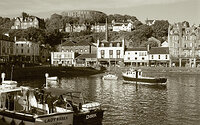
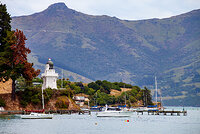

I'm trying to understand the difference in practice between using no filter, using a yellow 8 and using an orange 22 filter. I typically shoot with Tri-X and have always been told to use a yellow 8 filter under daylight.
I've got Way Beyond Monochrome 2 and Ralph's graph in there that shows the sensitivity of B&W film with and without a yellow 8 filter compared to the human eye is very helpful. I seem to keep coming back to the following questions in my head though.
1. Do you "need" a yellow 8 filter only under blue skies, on an overcast day does it make a difference? By "need," I think I mean that it's necessary to get the film to respond in a way my eye responds.
2. How about indoors when you're window lit by open sky?
3. Is there much of a difference between using a yellow 8 filter and an orange 22 filter? Out of habit more than out of knowledge, I use a yellow during the day and red 29 if I want something more dramatic. I rarely use the red filter.
4. I've found from my own testing that shooting Tri-X at EI 320 developed in HC-110 or D-76 is about right. With the yellow filter in place, giving a full stop of correction seems a bit much, so I usually expose at EI 200. Do other people find that a full-stop of correction is a bit much under daylight?
Thanks in advance,
Jonathan
I've got Way Beyond Monochrome 2 and Ralph's graph in there that shows the sensitivity of B&W film with and without a yellow 8 filter compared to the human eye is very helpful. I seem to keep coming back to the following questions in my head though.
1. Do you "need" a yellow 8 filter only under blue skies, on an overcast day does it make a difference? By "need," I think I mean that it's necessary to get the film to respond in a way my eye responds.
2. How about indoors when you're window lit by open sky?
3. Is there much of a difference between using a yellow 8 filter and an orange 22 filter? Out of habit more than out of knowledge, I use a yellow during the day and red 29 if I want something more dramatic. I rarely use the red filter.
4. I've found from my own testing that shooting Tri-X at EI 320 developed in HC-110 or D-76 is about right. With the yellow filter in place, giving a full stop of correction seems a bit much, so I usually expose at EI 200. Do other people find that a full-stop of correction is a bit much under daylight?
Thanks in advance,
Jonathan

