

• Welcome to Photrio!
    Registration is fast and free. Join today to unlock search, see fewer ads, and access all forum features.
    Click here to sign up

Xenar "Type D"

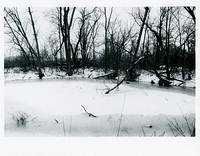
Frozen Pool

Frozen Pool

  • 12
  • 8
  • 190

Recent Classifieds

Forum statistics

Threads
202,426
Messages
2,840,635
Members
101,329
Latest member
Debra W
Recent bookmarks
27

Abbazz

Member
Allowing Ads
Joined
Nov 16, 2005
Messages
57
Location
Sofia
Format
Med. Format RF
I have one of these strange Xenar Type D lenses. It is a 165mm f/3.5 triplet with nice OOF rendering. I have found a few threads on this site and others relative to these lenses. Ole seems to have a 150mm and there is a 180mm for sale on Camera Eccentric. Are there other people actually using theses lenses? Apart from the two lines featured in the Vademecum, does anybody have more information about these rather unique Xenars?

Abbazz
 
Except for the two lines of incorrect information in the Vademecum ("for small cameras"??) and my own lens, I know nothing.

It's a fun lens - the "soft" rendering at full aperture, coupled with the minimal DoF, is quite special. It's far more interesting than the 135/3.5 Planar in terms of rendition!
 
I had also a Type D Xenar for Mediumformat (3,8/10,5 cm). It wasn't marked as a Type D, but I'm sure it was one of these "strange Xenar Type D lenses". The pictures looks very interesting and "old". For examples see http://glasmaster.blogspot.com/
 
My Typ D is also a reverse Tessar-derivative, and not a triplet.

I believe the "non-typ-D" fast Xenars are "normal Tessars", and can confirm that at least one Typ D is a reverse Tessar with negative power uncemented rear cell (two air-spaced lenses in the rear cell, a cemented pair in the front cell).

Until I see a Typ D triplet with my own eyes, I'm prepared to assume that the Vade Mecum is yet again in error when describing less common German lenses, and that all Typ D's are reverse Tessars. It wouldn't be the first such error.
 
Ole, here my suggestion: An older usage in german is to say "triplet" even to the Heliar. Authoritative is the architecture, the lens design. So we can find triplets with three, four (one cemented group) or five (two cemented groups) lenses. What is the english equivalent for "Vierlinser" and "Fünflinser"?? Dr. Helmut Naumann states in "Das Auge meiner Kamera", site 92, all xenars as "Tripletts mit verkitteter Hinterlinse" - including the faster f/3.5-design (35 to 300 mm).
My only problems are the curious 3.8-Aperture of my type D, the missing "Typ D"-signature, the missing proof in the literature and that I resold it too hasty.
 
Photrio.com contains affiliate links to products. We may receive a commission for purchases made through these links.
To read our full affiliate disclosure statement please click Here.

PHOTRIO PARTNERS EQUALLY FUNDING OUR COMMUNITY:


Ilford ADOX Freestyle Photographic Stearman Press Weldon Color Lab Blue Moon Camera & Machine
Top Bottom
