• Welcome to Photrio!
    Registration is fast and free. Join today to unlock search, see fewer ads, and access all forum features.
    Click here to sign up

with or without glass...

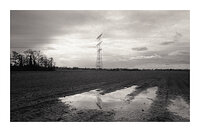
Pond

H
Pond

  • 0
  • 0
  • 8
1000002053.jpg

A
1000002053.jpg

  • 2
  • 0
  • 59

Recent Classifieds

Forum statistics

Threads
202,696
Messages
2,844,382
Members
101,475
Latest member
Melascha
Recent bookmarks
0
What material did you use to hot mount silver prints onto Diabond??
I bought sheets, cut to my custom size (12x16") with adhesive under protective paper. Actual name is Dilite, often called Dibond in photo context; I think Dilite is the "light" version (2 or 3mm thick) of Dibond. Not sure if the version with adhesive is produced by the OEM https://graphicdisplayusa.com/products/dibond/ or if it's a service of the distributor. But more convenient and less error-prone than adding myself an adhesive film.
I bought from the French distributor:
https://www.filmolux.com.fr/Nos-Pro...n-adhesifs-pour-collage/247/Filmoboard-dilite
I paid 90€ for 20 pieces.

So no hot mounting. Probably does not meet archival standards. At my age I don't care. 4 years later no sign of degradation.
 
I like to show prints unglazed, having taken the trouble to adjust exposure to show shadow detail I hate to see it destroyed by glazing. Most black and white silver gelatin prints are pretty tough compared to some drawing and painting methods. Go to your local art gallery or museum and observe the images on display, the drawings paintings and prints, probably most are unglazed, even some very valuable famous items are unglazed. Ask yourself what it is about your print that demands the extreme visual distraction of glazing when a Monet doesn't?
 
I like to show prints unglazed, having taken the trouble to adjust exposure to show shadow detail I hate to see it destroyed by glazing. Most black and white silver gelatin prints are pretty tough compared to some drawing and painting methods. Go to your local art gallery or museum and observe the images on display, the drawings paintings and prints, probably most are unglazed, even some very valuable famous items are unglazed. Ask yourself what it is about your print that demands the extreme visual distraction of glazing when a Monet doesn't?
I don't think I have ever seen an unglazed or otherwise unprotected drawing on display in a reputable museum.
 
Given a choice -- no glass over my platinum prints or carbon prints...and 8-ply board.
 
It seems our experiences differ. I am not a philosopher and my use of logic is far from perfect and I believe this may be one of those situations where the truth is not simple and cannot be proved or disproved with a single example. Nevertheless I feel impelled to defend my case with one example of an original painting displayed without glazing, it is well known and in museum that I think can be described as reputable. The image shows the picture and includes an area where bright light is reflected from the surface of the work, the texture visible suggests strongly to me that this is unglazed. If it is good enough for them it is good enough for me. I like being able to see the picture free from reflections of the light sources from glazing.


prado3.jpg
 
It seems our experiences differ. I am not a philosopher and my use of logic is far from perfect and I believe this may be one of those situations where the truth is not simple and cannot be proved or disproved with a single example. Nevertheless I feel impelled to defend my case with one example of an original painting displayed without glazing, it is well known and in museum that I think can be described as reputable. The image shows the picture and includes an area where bright light is reflected from the surface of the work, the texture visible suggests strongly to me that this is unglazed. If it is good enough for them it is good enough for me. I like being able to see the picture free from reflections of the light sources from glazing.


View attachment 206407

There's quite a few glazing products that have been invented for art galleries/ museums specifically for this purpose - the Optium Acrylic I referred to upthread is one of them. There are others that offer even greater levels of physical protection with minimal viewing changes. I have seen people walk up to images under anti-reflective glazing & get most perplexed when they cannot touch the image or print!
More to the point, unglazed, yet matted & framed darkroom prints look at best pretentious or amateurish - if you're framing it, spend the money & use the coated anti-reflective glass or acrylic, it does make a huge difference in the quality of presentation.
 
It seems our experiences differ. I am not a philosopher and my use of logic is far from perfect and I believe this may be one of those situations where the truth is not simple and cannot be proved or disproved with a single example. Nevertheless I feel impelled to defend my case with one example of an original painting displayed without glazing, it is well known and in museum that I think can be described as reputable. The image shows the picture and includes an area where bright light is reflected from the surface of the work, the texture visible suggests strongly to me that this is unglazed. If it is good enough for them it is good enough for me. I like being able to see the picture free from reflections of the light sources from glazing.


View attachment 206407

Has someone pointed out to you that a painting can be cleaned carefully without damaging it, while photographic prints are much less robust and cannot be cleaned without damaging them?
 
It seems our experiences differ. I am not a philosopher and my use of logic is far from perfect and I believe this may be one of those situations where the truth is not simple and cannot be proved or disproved with a single example. Nevertheless I feel impelled to defend my case with one example of an original painting displayed without glazing, it is well known and in museum that I think can be described as reputable. The image shows the picture and includes an area where bright light is reflected from the surface of the work, the texture visible suggests strongly to me that this is unglazed. If it is good enough for them it is good enough for me. I like being able to see the picture free from reflections of the light sources from glazing.


View attachment 206407
Not a drawing. Huge difference.
 
Sirius,

things change with time, some age gracefully some less so, this applies to everything including photographic prints and we don't always need to undo the effects of time.

I should have stated earlier that my remarks address black and white silver gelatin prints and not color, with color all bets are off.

What puzzles me is that some people seem to believe that a photographic print hung on a wall is a fragile thing in a hostile world that is subject to attack that needs to be hidden behind a glass wall. The places I see photographic prints don't meet this description, most of them are rooms for human occupation with the benign ambience that goes with it. I don't see prints hung against the exhaust stacks of power stations, in rivers downstream from sewage farms or on the sides of urban subway trains.

Restoration of paintings often involves a lot more than "cleaning" in some cases it amounts to controlled damage in the form of removal and replacement of pigments. I wonder how a watercolor would respond to "cleaning"? I am not sure I would put watercolors in the robust category. Photographic prints are different from paintings in so many ways the issue of "cleaning" also is different and not comparable.
 
Last edited:
I always used AR glass, but now am using Plexi more often as I ship my work around more and Plexi is lighter and will not break in shipping.
Some of the best galleries and museums are using plexi in our area on all their work and I am kind of following suit .

Like Bob, I have also had to ship framed work several times in recent years, and so I have them framed with plexiglas if I need to ship the work somewhere. Otherwise I frame with glass.
 
Sirius,

things change with time, some age gracefully some less so, this applies to everything including photographic prints and we don't always need to undo the effects of time.

I should have stated earlier that my remarks address black and white silver gelatin prints and not color, with color all bets are off.

What puzzles me is that some people seem to believe that a photographic print hung on a wall is a fragile thing in a hostile world that is subject to attack that needs to be hidden behind a glass wall. The places I see photographic prints don't meet this description, most of them are rooms for human occupation with the benign ambience that goes with it. I don't see prints hung against the exhaust stacks of power stations, in rivers downstream from sewage farms or on the sides of urban subway trains.

Restoration of paintings often involves a lot more than "cleaning" in some cases it amounts to controlled damage in the form of removal and replacement of pigments. I wonder how a watercolor would respond to "cleaning"? I am not sure I would put watercolors in the robust category. Photographic prints are different from paintings in so many ways the issue of "cleaning" also is different and not comparable.

Well you must be one of those fortunate enough to live in a smog free environment, blessed by clean air.
 
. . . What puzzles me is that some people seem to believe that a photographic print hung on a wall is a fragile thing in a hostile world that is subject to attack that needs to be hidden behind a glass wall. The places I see photographic prints don't meet this description, most of them are rooms for human occupation with the benign ambience that goes with it. I don't see prints hung against the exhaust stacks of power stations, in rivers downstream from sewage farms or on the sides of urban subway trains. . . .

I've had several unglazed darkroom prints fail, apparently to airborne pollutants, in living quarters. Apparently us humans are more durable than some of our art. However, the appearance of matte photographs does suffer greatly when veiled by ordinary glass.
 
Sirius: yes I am fortunate where I live the air is fairly clean I think. Previously I lived in cities, smog can be unpleasant and unhealthy. I am curious to know what you believe smog does to unglazed silver gelatin prints, please can you say more?

Alan: here's a radical suggestion. Discard the glass wall currently hiding your photo and instruct the cleaning girl not to dust things hanging on the wall. How hard would it be to care for those treasured images by taking care of the dusting yourself?

Jim: is there evidence that glazing would have made a difference?
 
I prefer to not have glazing in a gallery setting. My carbon prints have a raised relief that carries more impact w/o glass, as does the paper texture of my platinum/palladium prints and the way the platinum shines from within the surface of the paper.

But I would not hang them w/o glass at home for any long period of time (week?). Cooking oils, smoke when I space out pre-heating the cast iron frying pan on the stove, spiders galore and other flying/crawling insects (not many, but it takes just one...8-ply rag board is/was $10 for a 16x20.) Humidity varies from 50% to 99%, but the temps are low. Many years ago a slug slime up a lithograph -- a beautiful even black background with slime trails. In another home, ants once made nests in three of my archival boxes of matted 16x20 prints...twenty dry-mounted prints matted 20x24 per box...the space created by the windows made the boxes instant 20-story condos for the ants! Glass would not help of course, but just thought I'd mentioned that not everyone lives in a sterile environment.
 
I frame with glass because it keeps dirt, pollution and finger prints off. I use anti reflective UV blocking glass. It coast more but my prints are worth it.
+1
 
. . . Jim: is there evidence that glazing would have made a difference?

I have no hard evidence that glazing would have presented the problem, but have never had that problem with properly glazed photos. At this late stage of a long life I'll leave it up to someone else to do a side by side comparison.
 
The mat should keep the glass of the emulsion.
 
I use glass or UV-blocking plexi, the latter for prints that are being shipped. The stuff I buy from American Frame doesn't seem to have any color tint.

Having said that, last weekend I saw the Sally Mann exhibit up at the Peabody Essex Museum in Salem, MA. A number of the prints on exhibit had no glazing at all.
 
Photrio.com contains affiliate links to products. We may receive a commission for purchases made through these links.
To read our full affiliate disclosure statement please click Here.

PHOTRIO PARTNERS EQUALLY FUNDING OUR COMMUNITY:



Ilford ADOX Freestyle Photographic Stearman Press Weldon Color Lab Blue Moon Camera & Machine
Top Bottom