

grainyvision
Subscriber
I've been reading through Denise Ross's excellent paper coating book, but looking over each different proposed method, none of them seem ideal for my situation though, limited working room (but ample drying room, a dark cabinet) and no ability to really get a super level (previously said flat. I can get flatness) surface in my current setup. (I do plan on building a large dedicated darkroom eventually, but I want to mess around with emulsions before then!)
Anyway, the big concerns I have for coating are:
* Consistency! I understand it's difficult to really determine how good the coating is while under safelights. I want a method that I can use to get consistent emulsion thickness and covering, even if that means some waste of emulsion and paper
* Being able to clearly mark (and potentially then cut) where the emulsion borders in and knowing absolutely sure that within those borders is good and printable.
* Not requiring a huge amount of space. I'm ok with coating fairly small sizes at this stage, like the final printable size being 4x6 and maybe on 5x7 total paper size. 8x10 would be as big as I'd imagine going until I get a much larger dedicated darkroom.
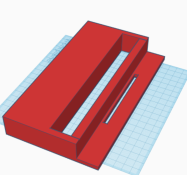
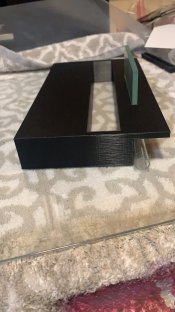
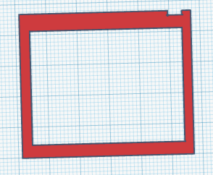
The idea I'd like feedback on is where I 3D print (or alternatively get a thin sheet of metal custom fabricated) a simple "window frame", of appropriate thickness (4 or 5 mils) and with the open window having an appropriate printable size (ie, 4x6) and the "frame" being enough room to hold onto (ie, 1/2" so that I can easily do 4x6 emulsion area on 5x7 cut paper) and figuring out some way of clamping it or simply weighting it down onto the paper so that it stays precisely lined up. Assuming I want to cut the paper down to only emulsion area, then I'd trace around the window using a pencil or marker and use that as a guide for cutting under safelight. With the frame affixed onto the paper, I'd use a puddle pusher (or very straight metal blade) to actually move the emulsion. The idea would be using slightly more emulsion than actually needed, and put it at the top of the "window" and drag the puddle pusher down, then push it back up to flatten out the top of the window where the emulsion was placed. Ideally I can even add additional emulsion if determined to be needed by calibration tests and drag the window with the puddle pusher multiple times to get it perfectly consistent. I'd expect some emulsion will go under the frame, but this isn't a big concern. Note the frame here would be flexible (glass of this thickness would be very fragile, nothing else can be rigid at this thickness) but I don't think this is a real problem. In theory the frame can be either clamped on all sides or just held down by the over-length of the puddle pusher as needed.
Finally, after coating, I'd just move the paper to a dark cabinet for drying (unsure how big of a concern flatness is for drying? If it's a bigger concern than I think, then I'd follow the stuff in Denise's books to clamp the paper down to keep it flat)
Does this idea have a name already and/or does it seem at all reasonable? I feel like there is probably something I'm missing as I don't see why it wouldn't already be an established method.
Anyway, the big concerns I have for coating are:
* Consistency! I understand it's difficult to really determine how good the coating is while under safelights. I want a method that I can use to get consistent emulsion thickness and covering, even if that means some waste of emulsion and paper
* Being able to clearly mark (and potentially then cut) where the emulsion borders in and knowing absolutely sure that within those borders is good and printable.
* Not requiring a huge amount of space. I'm ok with coating fairly small sizes at this stage, like the final printable size being 4x6 and maybe on 5x7 total paper size. 8x10 would be as big as I'd imagine going until I get a much larger dedicated darkroom.
The idea I'd like feedback on is where I 3D print (or alternatively get a thin sheet of metal custom fabricated) a simple "window frame", of appropriate thickness (4 or 5 mils) and with the open window having an appropriate printable size (ie, 4x6) and the "frame" being enough room to hold onto (ie, 1/2" so that I can easily do 4x6 emulsion area on 5x7 cut paper) and figuring out some way of clamping it or simply weighting it down onto the paper so that it stays precisely lined up. Assuming I want to cut the paper down to only emulsion area, then I'd trace around the window using a pencil or marker and use that as a guide for cutting under safelight. With the frame affixed onto the paper, I'd use a puddle pusher (or very straight metal blade) to actually move the emulsion. The idea would be using slightly more emulsion than actually needed, and put it at the top of the "window" and drag the puddle pusher down, then push it back up to flatten out the top of the window where the emulsion was placed. Ideally I can even add additional emulsion if determined to be needed by calibration tests and drag the window with the puddle pusher multiple times to get it perfectly consistent. I'd expect some emulsion will go under the frame, but this isn't a big concern. Note the frame here would be flexible (glass of this thickness would be very fragile, nothing else can be rigid at this thickness) but I don't think this is a real problem. In theory the frame can be either clamped on all sides or just held down by the over-length of the puddle pusher as needed.
Finally, after coating, I'd just move the paper to a dark cabinet for drying (unsure how big of a concern flatness is for drying? If it's a bigger concern than I think, then I'd follow the stuff in Denise's books to clamp the paper down to keep it flat)
Does this idea have a name already and/or does it seem at all reasonable? I feel like there is probably something I'm missing as I don't see why it wouldn't already be an established method.
Last edited:
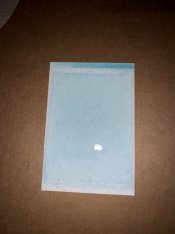
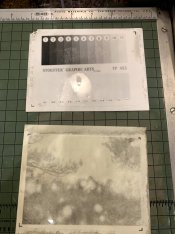
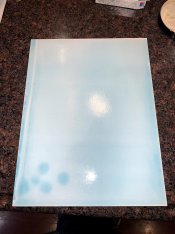
 ). Measuring the actual coating is where things get weird. No matter how I measure I see that the coating is no thicker than 2mils, and is often more like 1 mil. This is within measurement error, but wondering if maybe my emulsion was too warm or absorbed into the paper I used. I also tried wet measurement where the difference looked more like 4 mils. Measuring paper like this is definitely up against the capabilities of these cheap calipers so I'll take it with a grain of salt while assuming the frame thickness measurement is right, which basically means I'm coating at 10 mils which should work. I'll be trying to make a simple chloride contact printing emulsion this weekend and report back with how it works with a real emulsion on my more expensive water color paper (though I'll try this inkjet paper as well, it shows some promise maybe and it'd be great to have a cheap paper for testing)