• Welcome to Photrio!
    Registration is fast and free. Join today to unlock search, see fewer ads, and access all forum features.
    Click here to sign up

why'stops'?

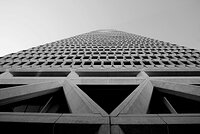
Up_the_TransAm.jpg

D
Up_the_TransAm.jpg

  • 0
  • 0
  • 11
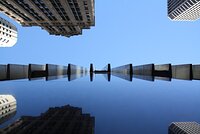
IMG_3569 800x533.jpg

IMG_3569 800x533.jpg

  • 1
  • 0
  • 22

Recent Classifieds

Forum statistics

Threads
202,871
Messages
2,846,796
Members
101,579
Latest member
And ee
Recent bookmarks
0
I do not know, but I would hazard a guess but it might have to do with the detents many lenses have.

 
Presumably because it stops excessive light reaching the film.
 
I do not know, but I would hazard a guess but it might have to do with the detents many lenses have.

bell-1.gif
 
Just call it a Step
 
Stops sounds better than Gos?
 
I use Waterhouse type stops. The smaller the aperture, the more light they stop. No hole, and they stop all the light. ;-)
 
I use Waterhouse type stops. The smaller the aperture, the more light they stop. No hole, and they stop all the light. ;-)

Now that makes sense.
 
After reading Mary Street Alinder's book, I had a thought that maybe it came from the telegraph word for the period punctuation: So f.64 might be called out as "f stop 64."

But never could confirm that.
 
Here's the earliest I have found thus far . . . . published in 1738 . . . It was already a term being used to describe an aperture used in optics.

"But unless the stop or aperture bb be just where the rays intersect, it does a great deal of mischief . . . "

https://books.google.com/books?id=X...wIViYUNCh3SAwBY#v=onepage&q=lens stop&f=false

Several paragraphs prior to that is this . . . "Between these lenses, at the distance of about one inch from the second, there is placed a wooden circular stop, or aperture, which shuts up all the tube, ..except a hole of an inch and a quarter diameter in the middle of the wood . . . ."

I probably should "stop". :laugh:
 
Last edited by a moderator:
Mark got it right. It's the indents on the lenses, or at least older lenses. If there was an indent in the middle of two normal stops (let's say between f/8 and f/11) it would be called a half stop. Two indents between two normal stops, you got 1/3 stops. Of course, there is a similar stop for the shutter. Stops are great when you have to set them manually. I use the process all the time when I bracket on my MF manual camera. The lenses have half stop on the aperture dial and full stops on the shutter dial. Also, when you want to change to reduce the light let's say by half or one stop closing using the aperture, it's a simple matter of increasing the light for the same exposure changing the shutter dial by one stop increasing by two. You don't have to think much; just stop away.
 
Here's the earliest I have found thus far . . . . published in 1738 . . . It was already a term being used to describe an aperture used in optics.

"But unless the stop or aperture bb be just where the rays intersect, it does a great deal of mischief . . . "

https://books.google.com/books?id=X...wIViYUNCh3SAwBY#v=onepage&q=lens stop&f=false

Several paragraphs prior to that is this . . . "Between these lenses, at the distance of about one inch from the second, there is placed a wooden circular stop, or aperture, which shuts up all the tube, ..except a hole of an inch and a quarter diameter in the middle of the wood . . . ."

I probably should "stop". :laugh:

DannL congratulations

I think in your purfuit of happinefs... you found the root to the etymology...

It started out as an ftop
 
DannL congratulations

I think in your purfuit of happinefs... you found the root to the etymology...

It started out as an ftop

I think that in the 1700's most folks were missing their front teeth. That's probably why the ftop turned into an fstop. :blink: If only we had a photograph of these folks.
 
Last edited by a moderator:
Well at least you established that "stops" was the name for these optical contrivances long before Sir John Herschel gave us our fix.

And for that matter, it pre-dates the telegraph, so my idea is rot.
 
I use Waterhouse type stops. The smaller the aperture, the more light they stop. No hole, and they stop all the light.

Hopefully not all of it!


Steve.
 
Here's the earliest I have found thus far . . . . published in 1738 . . . It was already a term being used to describe an aperture used in optics.

"But unless the stop or aperture bb be just where the rays intersect, it does a great deal of mischief . . . "

https://books.google.com/books?id=X...wIViYUNCh3SAwBY#v=onepage&q=lens stop&f=false

Several paragraphs prior to that is this . . . "Between these lenses, at the distance of about one inch from the second, there is placed a wooden circular stop, or aperture, which shuts up all the tube, ..except a hole of an inch and a quarter diameter in the middle of the wood . . . ."

I probably should "stop". :laugh:

Well that trumps 1858. Old as the hills by the look of it.
 
Here's a reference to the term being used in another field prior to 1700 . . . (published in 1716, London)

https://books.google.com/books?id=Q...o8NCh3TkwOa#v=onepage&q=aperture stop&f=false

Wikipedia states the term was in use in the 1500's . . . but since my Latin ain't what it should be, I may have trouble locating documents to validate that. Damn!

https://en.wikipedia.org/wiki/History_of_photographic_lens_design#cite_note-38

Many of these terms we use today, I would imagine are hold-overs from other fields. Considering the folks employed to create these new contraptions would most likely employ their own vernacular in the process.
 
Last edited by a moderator:
Photrio.com contains affiliate links to products. We may receive a commission for purchases made through these links.
To read our full affiliate disclosure statement please click Here.

PHOTRIO PARTNERS EQUALLY FUNDING OUR COMMUNITY:



Ilford ADOX Freestyle Photographic Stearman Press Weldon Color Lab Blue Moon Camera & Machine
Top Bottom