• Welcome to Photrio!
    Registration is fast and free. Join today to unlock search, see fewer ads, and access all forum features.
    Click here to sign up

Why LEICA M lenses are so expensive...'

Recent Classifieds

Forum statistics

Threads
202,793
Messages
2,845,655
Members
101,538
Latest member
Hazoret
Recent bookmarks
1
Status
Not open for further replies.
In my opinion, the Hasselblad HCD 28mm and the Leica S 35mm (the only digital "medium format" lenses I have) are impressively sharp and rectilinear SLR lenses. They are approximate equivalents to 21 and 24mm lenses for 35mm cameras.

Try this…!
 

Attachments

  • IMG_2701.jpeg
    IMG_2701.jpeg
    1.1 MB · Views: 121
  • IMG_2702.jpeg
    IMG_2702.jpeg
    739.2 KB · Views: 105
I remember the Hermès Leica at one show that had the Hermès leather peeling from the camera.
Luxury items are, well, luxury items. At one time Mercedes made elegant, trouble free cars (the universal taxi cars) that ran trouble free for years, but now their market is the customer to drive for two or three years, then dump for a new one. There are people in the yachting world who give less thought to spending a million $$$$, than many of us contemplating the difference in cost between a roll of Kodak or Ilford film. Such is the marketing strategy of Leica. But they still have a way to go...their ad for Leica watch (with discreetly placed red dot) in Wall Street Journal for a measly $14,000 clearly lacked the elegance of watch on facing page for only $54,000.
 
Most reviews I have seen Leica beats Zeiss in the corners.

I'm curious what the purpose of those reviews was. I've noticed over the many years I've done this that people who buy Leica have to convince themselves they have the best regardless of the truth. I had a 35mm Summicron and bought a Zeiss Biogon f/2. One short test and it wasn't even close. The Biogon wiped the floor with the Summicron, especially in the corners. I sold the Summicron for twice what I bought it for. So if that is your metric for evaluating lenses, why bother with Leica?

The last two lenses I've picked up that fit Leica were both Chinese, from 7Artisans. So cheap. I bought them because they were Sonnars. The 35mm f/2 and the 50mm f/1.1. The 35mm is a fantastic little lens. Not the greatest over the whole frame but there is nothing else like it. The 50 1.1 isn't a very good lens, but it is rather unique. I paid $125 and $150 for them respectively since Leica snobs won't go near them. They are missing out.

I also use mostly a Konica Hexar RF even though I also own a Leica M3. The Konica is just a better camera. All around probably the best Leica mount camera that has ever been made. Leicas are beautiful cameras no doubt, but when you want to make a picture in a hurry from scratch they are fiddly.

The final point I'll make is once an image is on the wall literally no one cares about what camera you took a picture with. Everything else is just egotistical nonsense.

Don't drink the Leica KoolAid. Of course if you like using a Leica and their lenses, by all means, enjoy them. It isn't a one size fits all world.
 
I'm curious what the purpose of those reviews was. I've noticed over the many years I've done this that people who buy Leica have to convince themselves they have the best regardless of the truth. I had a 35mm Summicron and bought a Zeiss Biogon f/2. One short test and it wasn't even close. The Biogon wiped the floor with the Summicron, especially in the corners. I sold the Summicron for twice what I bought it for. So if that is your metric for evaluating lenses, why bother with Leica?

The last two lenses I've picked up that fit Leica were both Chinese, from 7Artisans. So cheap. I bought them because they were Sonnars. The 35mm f/2 and the 50mm f/1.1. The 35mm is a fantastic little lens. Not the greatest over the whole frame but there is nothing else like it. The 50 1.1 isn't a very good lens, but it is rather unique. I paid $125 and $150 for them respectively since Leica snobs won't go near them. They are missing out.

I also use mostly a Konica Hexar RF even though I also own a Leica M3. The Konica is just a better camera. All around probably the best Leica mount camera that has ever been made. Leicas are beautiful cameras no doubt, but when you want to make a picture in a hurry from scratch they are fiddly.

The final point I'll make is once an image is on the wall literally no one cares about what camera you took a picture with. Everything else is just egotistical nonsense.

Don't drink the Leica KoolAid. Of course if you like using a Leica and their lenses, by all means, enjoy them. It isn't a one size fits all world.

I like-a your comment...!
 
Exactly, why pay $200 for a Nikkor 28mm f/2.8 AI-s when you can pay 25 more for a Leica 28mm ASPH...!
 
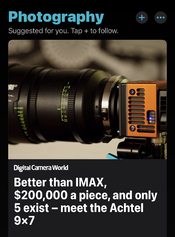
Yes, $200,000 is even more than a Leica...!

If you had listened to me in 2007, I was posting everywhere that Hasselblad lenses were between $400US to $800US for almost all the used lenses. There is a cost to not listening to me.
 
I admittedly haven't read all the previous posts, but there seems to be a little bit of semi-mythological legend to all this. In theory, it should be easier to design rangefinder lenses, since they don't need to be retro-focus in wide angles like SLR lenses. And today, Japanese manufacture has not only caught up with German expectations, but often exceeded it. Many Zeiss branded 35mm lenses aren't made in Germany at all, but in Japan. The ability to produce aspheric lenses is now more widespread, and far ahead of what Leica ever had done.

Sure, vintage lenses often have their own look, and if they're scarce and attached to cult lens status, they're going to fetch higher prices within that category of people willing to pay it. Oven some old boot which accidentally came out of a swamp on a fishing line might have "Rare and Collectable" on its EBay listing.

No different with large format lenses, with current asking prices for old cult lenses, which actually don't perform a bit better than later versions selling for a tenth the price. Some people just like the idea of owning fine things, and tend to buy Leica or Hassie, and rarely if ever actually shoot the thing.

But none of this effect me much. My quite affordable Fuji 6X9 rangefinder will blow anything 35mm completely out of the water when it comes to print quality. And it is hand-holdable if necessary;
better than even my Nikon in that respect.

 
Last edited:
In my opinion, the Hasselblad HCD 28mm and the Leica S 35mm (the only digital "medium format" lenses I have) are impressively sharp and rectilinear SLR lenses. They are approximate equivalents to 21 and 24mm lenses for 35mm cameras.

It’s easer to make a medium format lens sharp
 
I admittedly haven't read all the previous posts, but there seems to be a little bit of semi-mythological legend to all this. In theory, it should be easier to design rangefinder lenses, since they don't need to be retro-focus in wide angles like SLR lenses. And today, Japanese manufacture has not only caught up with German expectations, but often exceeded it. Many Zeiss branded 35mm lenses aren't made in Germany at all, but in Japan. The ability to produce aspheric lenses is now more widespread, and far ahead of what Leica ever had done.

Sure, vintage lenses often have their own look, and if they're scarce and attached to cult lens status, they're going to fetch higher prices within that category of people willing to pay it. Oven some old boot which accidentally came out of a swamp on a fishing line might have "Rare and Collectable" on its EBay listing.

No different with large format lenses, with current asking prices for old cult lenses, which actually don't perform a bit better than later versions selling for a tenth the price. Some people just like the idea of owning fine things, and tend to buy Leica or Hassie, and rarely if ever actually shoot the thing.

But none of this effect me much. My quite affordable Fuji 6X9 rangefinder will blow anything 35mm completely out of the water when it comes to print quality. And it is hand-holdable if necessary;
better than even my Nikon in that respect.


Modern computerized lens design allowes the creation of amazing lenses. But it is a balancing act between performance and price. And Leica go the extra 50 miles.

P.S. I agree on the fuji 6x9. Get yourself the 135 mask and adapter. The Texas leica “at least wide one”shoots amazing panoramic.
 
Why do people like 35mm sooooo much? I’ve sold all of mine . Years ago for larger formats

I really don’t get it, isn’t 35, just for entry into film?

Not trying to be obnoxious, but when you find out about 2-1/4,when you are starting out with 35mm, your love affair with 35 it’s all over, and then when you find out large format, 2-1/4 love affair is all over
 
Why do people like 35mm sooooo much? I’ve sold all of mine . Years ago for larger formats

I really don’t get it, isn’t 35, just for entry into film?

Not trying to be obnoxious, but when you find out about 2-1/4,when you are starting out with 35mm, your love affair with 35 it’s all over, and then when you find out large format, 2-1/4 love affair is all over

It replaced my phone for snaps. Since I'm looking through a VF, I end up thinking about composition which I find fun. The film being cheaper means I can take more risks to see the world differently and possibly find a respite from my current creative rut. Sometimes I use 35 to shoot what I thinking I may want on a 2.25 rig with a tiny aperture on a tripod. Kinda like a bookmark: I'll return to this place (maybe).
Its similar reasoning as why folks into drawing carry tiny sketch pads around, its cheap and quick and allows for more risk.
 
Why do people like 35mm sooooo much? I’ve sold all of mine . Years ago for larger formats

I really don’t get it, isn’t 35, just for entry into film?

Not trying to be obnoxious, but when you find out about 2-1/4,when you are starting out with 35mm, your love affair with 35 it’s all over, and then when you find out large format, 2-1/4 love affair is all over

I really like a 35mm lens to go with a 28mm lens which I feel helps my demands for my attraction to landscape photography...!
 
Since I shoot up to 8x10 film, I see no reason to push the limits of what 35mm can realistically do. I think of 35mm more as my alter-ego, when I deliberately want poetic little grainy prints instead of big highly detailed ones. But I suspect it's more the advent of small 35mm cameras entering the realm of digital moving images which has fueled the drive for 36mm lenses of higher performance than ever before. Film makers are perfectly willing to go out and spend 40 or 90 thousand dollars for a lens if it gives them a distinct edge over the competition in a feature documentary film possibly taking a decade or more to make. But Hollywood cinematographers are known to seek out and adapt old funky lenses too, for sake of some special look. But once word gets out, suddenly those same old lenses jump 2,000% in asking price. Just the psychology of it. It doesn't necessarily have to make sense. Likewise, it Leica puts its official logo on a nail clipper, it would probably cost $400.

But cost is relative. There's a lens and mirror fabricator less than 5 miles from me that can make anything you wish, provided you have a NASA or NSA credit card. If you can afford to launch a Hubble or Webb space telescope, you can afford the lenses and mirrors which go with it. In terms of earth-bound or Naval applications, they've made some amazing optics too; but I wouldn't ask too many things about those, or the FBI might start looking at you. How about a sample shot clear across a 3-mile wide harbor so densely foggy that one couldn't see ten yards, but where the image came out so crisp that a man clear across the harbor was seen breaking into a car, identified, and arrested? Hint - state of the art "hybrid" optical medical microscopes sometimes use analogous technology; but that's only a partial hint. The full story they wouldn't know themselves - they just provide the special optics as specified. Spies have better opportunities elsewhere.
And you wouldn't want to hang the camera around you neck like a Leica. It was something like 1200 lbs, nice and stable, even at sea. I think the main intended application was for Coast Guard drug running surveillance.
 
Last edited:
silver gelatin prints made from 35 are so . . . . Underwhelming

Depends on the print.
About 1/3 of the prints I have exhibited in the various group shows I've participated in have been from 35mm negatives.
 
Since I shoot up to 8x10 film, I see no reason to push the limits of what 35mm can realistically do. I think of 35mm more as my alter-ego, when I deliberately want poetic little grainy prints instead of big highly detailed ones. But I suspect it's more the advent of small 35mm cameras entering the realm of digital moving images which has fueled the drive for 36mm lenses of higher performance than ever before. Film makers are perfectly willing to go out and spend 40 or 90 thousand dollars for a lens if it gives them a distinct edge over the competition in a feature documentary film possibly taking a decade or more to make. But Hollywood cinematographers are known to seek out and adapt old funky lenses too, for sake of some special look. But once word gets out, suddenly those same old lenses jump 2,000% in asking price. Just the psychology of it. It doesn't necessarily have to make sense. Likewise, it Leica puts its official logo on a nail clipper, it would probably cost $400.

But cost is relative. There's a lens and mirror fabricator less than 5 miles from me that can make anything you wish, provided you have a NASA or NSA credit card. If you can afford to launch a Hubble or Web space telescope, you can afford the lenses and mirrors which go with it.

Well, putting things into perspective, my “hobby“ in 35mm film photography shooting landscapes for prints of 4x6 put into albums satisfies me enough to not venture any more beyond the 35mm medium…!
 
There's nothing wrong with that. Perhaps it's a blessing not to be a format schizophrenic like me.
 
Could it be the sharpness of the Leica lenses is more of the result of the rangefinder’s ability to focus more easily while not having the vibration of SLR mirrors compounding the image making it not as sharp then it being the quality of the lens…?

The answer is use a tripod - A bloody heavy one at that! I have proved it to myself, time and time again an older not so advanced lens on a tripod can equal a far more expensive and later lens used without.
Recently I bought an almost mint late (Dated from October 1979) model of a Nikon F2a and of course my AF lenses will work quite happily with it it but for a 'walk about lens' all I had was a cheap and cheerful 35/70AF The lens I use on my Digital camera for the same purpose is a Nikon 24/120AFS F4 constant aperture
Then I saw for not a lot of money a Tamron AD11 35/135 zoom which would suit my purpose better so bought it and used it on the F2a fitted to a Manfrotto 55B tripod. The quality is actually as good as the 24/120 - if not better than the modern lens with image stabilisation a 12x16 B&W print is so very very good.

Yes the F2a does vibrate a tiny amount with the shutter/mirror action but like most other SLR's the most vibration comes when the mirror returns down,by which time the exposure is made so it will not affect it one iota. Use something like an Exacta !!b with a non instant return mirror and the vibration from the mirror/shutter is almost non existent
 
I’m beginning to understand the lenses for rangefinder systems require more refinement than those used for SLR’s.
This could be the reason they cost so much...!

Because you always pay disproportionally more for smaller and smaller increases in performance and refinement whether it's a Leica lens or a hand made wristwatch. But these increments in performance will be irrelevant most of the time for the majority of photographers, just as telling the time can be done with an iPhone. True Leica lenses do work well with Leica cameras, and some of my favourite lenses are by Leica (notable my 50mm Summilux which is worth every penny), but I'll leave that at home if I'm doing some street photography or stuff where the difference isn't important.

I mean I have Nikon lenses that if used between f/4 and f/11 are as sharp as the nearest equivalent M lens, it's only if you persistently us a lens wide open that you 'may' discover a Leica works better. But if you think as I do that a photograph should not be a failure just because of soft edges then the call of super-expensive lenses is a moot point. I love nearly all my Leica M lenses, but I love some cheaper M mount lenses even more. So you are paying for accuracy of assembly, refinement generated over time in the lab, fractionally more overall performance (but not guaranteed), and the name, and that is what makes them expensive.
 
I have a VERY limited experience with Leica rangefinder lenses (only owned Summicron 28), but Leica M lenses seem to be optically very good, well made and have good ergonomics. What I consider their biggest advantage is that they are smaller than comparable (in speed and performance) lenses from other manufacturers, although a lot of latest Voigländer lenses are just as small.

If only Voigtländer would stop f***ing around with their ridiculous "retro" design. Every lens they introduce looks different; focusing levers, focusing tabs, cone shaped, knurled focusing rings, chrome rings... c'mon! The worst of all is that all of them now focus down past the rangefinder coupling without any feedback of when you lose the coupling. I hope that they copy the feature of "decoupling bump" from Leica's 35 APO. Leica was 70 years late copying that from Nikon LTM lenses, lets hope it takes Voigländer less than that...
 
Status
Not open for further replies.
Photrio.com contains affiliate links to products. We may receive a commission for purchases made through these links.
To read our full affiliate disclosure statement please click Here.

PHOTRIO PARTNERS EQUALLY FUNDING OUR COMMUNITY:


Ilford ADOX Freestyle Photographic Stearman Press Weldon Color Lab Blue Moon Camera & Machine
Top Bottom