• Welcome to Photrio!
    Registration is fast and free. Join today to unlock search, see fewer ads, and access all forum features.
    Click here to sign up

Why did magazines prefer slides to negatives?

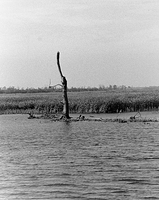
Horicon Marsh-5

A
Horicon Marsh-5

  • 1
  • 0
  • 35
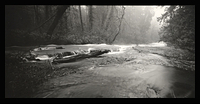
Millstone, High Water

A
Millstone, High Water

  • sly
  • Dec 17, 2025
  • 7
  • 5
  • 102

Recent Classifieds

Forum statistics

Threads
201,246
Messages
2,821,165
Members
100,616
Latest member
daveOM
Recent bookmarks
0

flavio81

Member
Allowing Ads
Joined
Oct 24, 2014
Messages
5,240
Location
Lima, Peru
Format
Medium Format
On a similar note: Why does slide film have higher resolution and finer grain than print film?

I'm not sure if it has higher resolution. Certainly it has finer grain and this is thanks to the reversal process: The reversal process gives finer grain than the normal process.

What I remember clearly, by taking a look at many film datasheets, is that modern (XXI century) color negative films are sharper (higher MTF) than slide films. And I think one of the reasons was that more inter-layer enhancing tricks could be used on negative films as opposed to slide films.

They (negs) are also supposed to have more accurate colors.
 

wiltw

Subscriber
Allowing Ads
Joined
Oct 4, 2008
Messages
6,620
Location
SF Bay area
Format
Multi Format
So much debate about issues, let me contribute points apropos to lithographic reproductions, with excepts from Tonal Range (1992) by Bill Norman of Norman Enterprises

(exhibit of photos taken with bracket of exposures on color transparency vs. color neg):
  • "Notice that with transparency files, correct exposure is especially critial for maximizing tonal quality...dark transparencies can be improved upon a certain degree..by adjustments in making 4-color separations. Transparency film is the widely used emulsion for color lithography." (no explanaiton of Why is provided)
  • "Notice that negative color film is more forgiving (has more latitude) than transparency color."
  • "Remember, our eyes have a greater tonal range that is recorded on film. Color (neg) film has a greater tonal range than will be produced on the photographic print. Transparency color prints mahy tend to build contrast more than negative colo rprints. Reproducing these imaged on a printing press introduce other variables that affect tonal range"
  • "The tonal range of film might be over 6-stops. The (lithographic) print condensces it to about 4-1/2 to 2-1/2 stops, depending on the color separations, the paper, the line screen, and other factors." A graph shows that the tonal range (in f/stops) for news print is about +-1.5EV, for Litho printing is about +-2.25EV, for Color Prints is about +-2.5EV, while color film is about +2.5 to -4EV.

In shooting product shots for catalogs, one had to use lighting to control the tonal range to be captured, to fit the narrower tonal range of the offset press (which is not as severe as controlling tonal range for newsprint) We could not use the tonal range possible on film to its full capabilities.

All the above gives insight into how things were before digital photography. The problems of reproduction on the offset press is largely the same as it was 30 years ago, athough our camera sensors and processing software permits a whole lot we would not dreamed about back then, although more basic version of Photoshop existed in the 1980s. And the preparation of images for print by the photolithographer are very different in methodology today than 30 years ago.

 
Last edited:

Alan Edward Klein

Member
Allowing Ads
Joined
Aug 29, 2017
Messages
9,982
Location
New Jersey formerly NYC
Format
Multi Format
So much debate about issues, let me contribute points apropos to lithographic reproductions, with excepts from Tonal Range (1992) by Bill Norman of Norman Enterprises

(exhibit of photos taken with bracket of exposures on color transparency vs. color neg):
  • "Notice that with transparency files, correct exposure is especially critial for maximizing tonal quality...dark transparencies can be improved upon a certain degree..by adjustments in making 4-color separations. Transparency film is the widely used emulsion for color lithography." (no explanaiton of Why is provided)
  • "Notice that negative color film is more forgiving (has more latitude) than transparency color."
  • "Remember, our eyes have a greater tonal range that is recorded on film. Color (neg) film has a greater tonal range than will be produced on the photographic print. Transparency color prints mahy tend to build contrast more than negative colo rprints. Reproducing these imaged on a printing press introduce other variables that affect tonal range"
  • "The tonal range of film might be over 6-stops. The (lithographic) print condensces it to about 4-1/2 to 2-1/2 stops, depending on the color separations, the paper, the line screen, and other factors." A graph shows that the tonal range (in f/stops) for news print is about +-1.5EV, for Litho printing is about +-2.25EV, for Color Prints is about +-2.5EV, while color film is about +2.5 to -4EV.

In shooting product shots for catalogs, one had to use lighting to control the tonal range to be captured, to fit the narrower tonal range of the offset press (which is not as severe as controlling tonal range for newsprint) We could not use the tonal range possible on film to its full capabilities.

All the above gives insight into how things were before digital photography. The problems of reproduction on the offset press is largely the same as it was 30 years ago, athough our camera sensors and processing software permits a whole lot we would not dreamed about back then, although more basic version of Photoshop existed in the 1980s. And the preparation of images for print by the photolithographer are very different in methodology today than 30 years ago.
What things should we know about printing our own coffee table books through Blurb or others services as far as using scanned chromes vs. negative color originals? Should the editing in Photoshop be different? Other factors to consider?
 

DREW WILEY

Member
Allowing Ads
Joined
Jul 14, 2011
Messages
14,785
Format
8x10 Format
Color neg films themselves have changed or improved quite a bit since some of those things were written.
 

wiltw

Subscriber
Allowing Ads
Joined
Oct 4, 2008
Messages
6,620
Location
SF Bay area
Format
Multi Format
What things should we know about printing our own coffee table books through Blurb or others services as far as using scanned chromes vs. negative color originals? Should the editing in Photoshop be different? Other factors to consider?

Start with the understanding that the offset print (book) does NOT reproduce as wide a dynamic range as we can get from even our inkjet...dots of color in a lithographed page is not as good as the 4800 or 9600 dpi (dots of ink per inch) inkjet.
 

wiltw

Subscriber
Allowing Ads
Joined
Oct 4, 2008
Messages
6,620
Location
SF Bay area
Format
Multi Format
Color neg films themselves have changed or improved quite a bit since some of those things were written.

But that does not change much about reproduction via lithographed page vs a print or slide....we are still ultimately constrained by the inherent limitations of the lithography process and the paper it is printed on.
 

MattKing

Moderator
Moderator
Joined
Apr 24, 2005
Messages
54,743
Location
Delta, BC Canada
Format
Medium Format
What things should we know about printing our own coffee table books through Blurb or others services as far as using scanned chromes vs. negative color originals? Should the editing in Photoshop be different? Other factors to consider?
Nothing really.
The requirements and capabilities of Blurb are what they are. If you are trying to achieve scanned files that match those requirements, it is about the same challenge as processing your scans to match the particular requirements of the presentation medium you are using.
It would be normal to customize your output formats to the presentation medium you are using - website posts, inkjet prints, Lambda prints, low resolution digital projectors (as if there were any other kind), moderate resolution screens, 4K resolution screens, 8K resolution screens, cel phone screens, digital negatives, Blurb books, etc., etc.
You should plan on having available customized versions of your files for each presentation medium you use.
 

DREW WILEY

Member
Allowing Ads
Joined
Jul 14, 2011
Messages
14,785
Format
8x10 Format
wltw - I would see it more as seeking to match to inherent limitations of the specific output medium involved. I have several books on my shelves by otherwise eminent color photographers whose work looked lovely in a gallery, but downright awful in books because they just farmed that job out to some printing house without understanding how to communicate within the given parameters of that industry. In this day and age, certain necessary corrections can obviously be achieved post-scan in order achieve a balanced color profile without certain ink colors looking like they were grossly pasted onto the surface of the page afterwards. One merely has to look at the opposite scenario, when it has been done right, even when the same kind of film was involved to begin with.
Magazine demands might be somewhat different. In my experience, the more expensive glossy ones simply reject any image that seems out of bounds, especially contrast-wise, from their ability to accurately reproduce it. And that is much more easily done by simply reviewing potential images as transparencies over a lightbox than by wasting a lot of time on a fishing expeditions scanning color negs.
The more casual publications seem more open to publishing digital images. I quit subscribing to Natl Geo once they went mainly digital. It seems their workflow got simplified by flattening everything contrast-wise. Even the paper is now flat. That might make sense as a cost-saving option, but has sure created an annoying veneer of bland blaaah in the process.
 
Last edited:

wiltw

Subscriber
Allowing Ads
Joined
Oct 4, 2008
Messages
6,620
Location
SF Bay area
Format
Multi Format
I don't disagree, Drew. If shooting now one does not have to plan in advance the purpose of a photo, so that lightning properly need not need to be done so well. We can digitally scan and alter the dynamic range much more easily than 'in the old days'. But the photographer still needs to understand what media a particular version of a shot is intended for, to alter the image in a suitable way for best reproduction.

I will pull out an old copy of NatGeo and compare the photo quality to today's publication.
 
Last edited:

Ronv69

Member
Allowing Ads
Joined
Feb 15, 2024
Messages
1
Location
Texas
Format
ULarge Format
Novice question alert.

I have heard magazine publications used to prefer slides to negatives (some even asking for inter-positives from negative images). I have also heard the reason being that slides worked best with offset printing.

Unfortunately most attempts at googling only return information for offset printing in the digital age.

How were analog offset prints created and why were slides more suitable for this?

cheers.

I did this for 20 years. If you send a negative, we didn't know what to match. Yes, we could measure several areas and hope that we were right. We didn't have any color film processing in house so most likely we would send it out for a positive. Of course I'm long retired from the printing business. I ran the process camera for 16 years and the big digital scanners for the last 4 years. On the scanner, it was easy to flip the negative to positive, but you still didn't know if it was what the customer wanted.
As for the slides, they had to be mounted and masked on the camera, sometimes mounted in oil. If it was only going up to 16x20 we used an enlarger, anything bigger had to go on the process camera. I always felt silly using a 3 ton piece of equipment on a 35mm slide.
The process was to shoot color correcting masks, these were then placed over the separation film and exposed 4 sheets through C, M, and Y filters the black separation used all 3 masks stacked. Note that the masking film was different than the separation film. So we are up to 7 sheets of film already. Then the screen images for each color were made on a very high contrast film in a contact vacuum frame with a special film screen between the films that gave us positive prints. With some pre-press proofing systems we used the positives. Anyway, the positives had to be reversed to negatives before they were sent to the strippers. So we are up 15 sheets of film at this point. I don't know if you are still around or still interested, but there is a quick summary.

If anyone wants to know more, I suggest trying to find a copy of The Lithographers Manual from around 1975.
 
Photrio.com contains affiliate links to products. We may receive a commission for purchases made through these links.
To read our full affiliate disclosure statement please click Here.

PHOTRIO PARTNERS EQUALLY FUNDING OUR COMMUNITY:


Ilford ADOX Freestyle Photographic Stearman Press Weldon Color Lab Blue Moon Camera & Machine
Top Bottom